
Spanish Living
What this pilot’s court battle means for expats who travel for work


Spanish court rejects Ryanair pilot’s tax exemption for international flights.
Photo Credit: Blake Guidry / Unsplash
Expatriates and international workers living in Spain may be in for a stark reality check following a recent ruling by the High Court of Justice of the Basque Country. The court has dismissed the appeal filed by a Ryanair pilot in Biscay, after he claimed tax exemption for work performed abroad, arguing that most of his flight time was spent outside of Spain. This ruling may shatter a belief common among cross-border professionals, digital nomads, and airline crew members about income taxes while physically working outside of Spain.
The argument: Ryanair pilot spent most of his daily life outside Spain in 2022
The pilot, according to local outlet El Diario Vasco, had aimed to reduce his personal income tax settlement for the 2022 fiscal year by €20,940. The Ryanair pilot is a tax resident in Biscay, and argued that since most of his work was carried out beyond the country’s borders and directly benefited the Irish airline, he met the requirements for the tax exemption outlined in the region’s legislation.
To talk numbers, the pilot received a gross salary of €124,382 in the 2022 fiscal year, and had €43,360 withheld for personal income tax (IRPF, as it is known in Spain). He had applied for the exemption to reduce his taxes by €20,940.
The pilot also cited a Supreme Court ruling from April 2025, regarding crew members of Spanish Navy warships operating in international waters.
Basque court rejects appeal
However, the ruling issued by the Basque court rejected the claim, ruling that the pilot’s workplace was located at the Barcelona-El Prat airport in Catalonia, from where he started and ended his workday on a daily basis. The court found that all the flights piloted by the Ryanair employee departed from and returned to Barcelona on the same day, and the payments of income tax were made and declared for tax purposes by Ryanair’s representative office in Spain.
According to the ruling, as El Diario Vasco reports, pilots and other workers linked to commercial airlines are all assigned a “base” from which they operate, and this is the determining factor to establish where their work activity is carried out daily.
The Basque Country High Court of Justice also rejected the comparison to the crew members of the Spanish Navy warships, stating that the situation was “completely different” and that, to qualify for this exemption, it is not enough merely to travel outside of Spanish territory, but the workplace must also be located, even temporarily, abroad.
What this means for expats who travel for work: Tax exemptions may not apply, even if you spend most of your time outside Spain
For many expatriates working in Spain (especially those who are high-earning, consultants, or regional remote workers), this case highlights the distinction between travelling for work and displacing the workplace. People who live in Spain but travel, even frequently, to other countries for meetings, client pitches, or other obligations, cannot automatically assume that income is exempt from taxes.
That is to say, if your contract is with a Spanish subsidiary, you get paid into a Spanish bank account, and you return home to your Spanish residence at the end of the day or week, Hacienda will still review your tax obligations as if you had never left the country; if your ‘home base’ is here, so are your tax obligations.








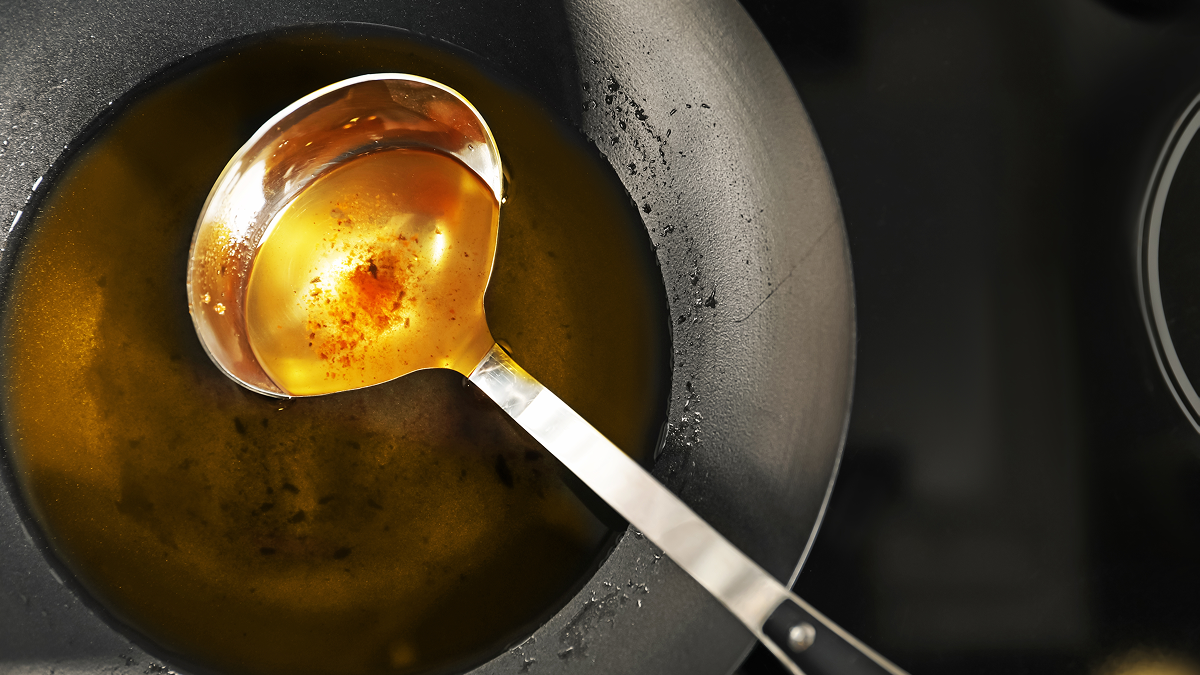
Olive oil can be reused, but only while it stays clean, clear and well stored. Credit: New Africa / Shutterstock
With olive oil still treated like liquid gold in many kitchens in Spain, more households are saving used oil after frying. Mercadona says it can be reused in some cases, but food safety advice makes clear there are warning signs shoppers should not ignore.
How Spain households can make olive oil last longer without spoiling the pan
Olive oil has always had a special place in Spanish households. It goes on toast, into salads, over grilled vegetables and, for many families, into the frying pan. But after years of sharp price swings, that familiar bottle now gets treated with a little more caution.
Recent supermarket price trackers still show olive oil as a product many shoppers monitor closely, with some litre bottles in Spain sitting around the €4 to €5 mark and premium options costing more. The Ministry of Agriculture, Fisheries and Food also publishes dedicated oil consumption and price data because olive oil remains such a significant household staple in Spain.
Any advice on reusing olive oil usage is welcome in Spain, and Mercadona has recently promoted its online guide to choosing olive oil, while consumer advice from Spain’s Organisation of Consumers and Users (OCU) says frying oil can be reused if it is properly maintained. However, “can” doesn’t mean “always should”.
How reused olive oil should be stored before it goes back in the pan
OCU advises keeping frying oil away from light and heat, covering it to limit contact with oxygen and avoiding very high frying temperatures. Its guidance says oil kept in good condition can be reused several times, but only when the oil has not deteriorated.
It should be allowed to cool, strained to remove crumbs or food remains, then stored in a clean, covered container away from sunlight and heat. Leaving old oil open in a pan, especially with bits of batter, fish or breadcrumbs still floating in it, is where the saving starts to turn a little sour.
The food being fried also matters. Potatoes tend to leave fewer residues than breaded meat, croquetas or fish. Strong-flavoured foods can also carry their taste into the next batch, which is why oil used for boquerones is unlikely to be welcome in a plate of churros, however Spanish the experiment may seem to be.
When used olive oil should not be reused again
OCU advises changing oil when it looks reddish, foams, smells strange or produces too much smoke. Oil that has turned thick, dark, sticky or bitter should not go back into food.
Temperature is another key point. OCU recommends keeping frying oil between 160C and 175C in a fryer, noting that temperatures above 175C can favour the formation of acrylamide in some starchy foods, while temperatures below 160C can make food absorb more fat.
Spain’s Agency for Food Safety and Nutrition (AESAN), also highlights acrylamide as a substance that can form when foods such as potatoes, bread or biscuits are cooked at high temperatures. AESAN points to frying temperature and cooking methods as factors that influence how much acrylamide is formed.
The most accurate visual queue is that golden is better than brown. Burnt or heavily browned fried food is not just less pleasant to eat, it is also a sign that the oil and the food may have been pushed too far.
How to stretch olive oil safely before it reaches the bin
An easy save is to use a smaller pan, the right amount of oil and steady heat. This can reduce waste without needing to keep old leftover oil for too long. Overloading the pan lowers the temperature and can make food absorb more oil, which wastes money and usually gives worse results.
Keeping separate oil for different foods can also help. Oil used for potatoes may be easier to reuse than oil used for battered fish. Mixing different oils is best avoided unless the cooking purpose and heat tolerance are understood, because oils can degrade differently at frying temperatures.
There is also a difference between oil for frying and oil for raw use. Oil that has already been heated and filtered may still be acceptable for another frying session, but a line should be drawn for using it as garnish on salads, toast or drizzling over gazpacho. For this it is best to follow Spanish-suit and use fresh extra virgin olive oil.
How used cooking oil should be thrown away in Spain
As easy and enticing as it may seem, when oil has reached the end of its useful life, the sink is the wrong place to dispose of it. Spain’s Ministry for Ecological Transition and the Demographic Challenge describes used cooking oils as household waste once they are discarded, while Madrid City Council warns that used vegetable oil should not be poured into the sink or toilet because the grease film can affect water oxygenation and later treatment.
The best option is to let the oil cool, pour it into a sealed bottle or container, and take it to a local used-oil collection point, recycling container or punto limpio, the municipal recycling facility used in Spain for waste that should not go into normal bins. Some towns also have mobile puntos limpios or specific used-oil containers.
There is a balance to be found in Spanish households regarding the use of olive oil during a cost of living crisis that is keeping people checking supermarket receipts and the prices of basic kitchen ingredients. Throwing away oil after one clean frying session isn’t necessary, but neither is chasing savings once the oil has changed. If it smells wrong, smokes too easily, foams, darkens or carries burnt bits, the bottle has done its job.
Pies, pints & pipas. What football fans eat at stadiums around the world
Airlines are calling to suspend new border checks just weeks before summer travel chaos
What this pilot’s court battle means for expats who travel for work
Dinosaurs are roaring over to Estepona this summer in a massive 5,000m² exhibition

Families Caring For Elderly Parents In Spain Say Brexit Has Left Them With Impossible Choices
Denia launches new La Marineta music festival this summer with Fangoria and Nil Moliner


-
Costa del Sol1 week ago
Dinosaurs are roaring over to Estepona this summer in a massive 5,000m² exhibition
-
 %2 weeks ago
Families Caring For Elderly Parents In Spain Say Brexit Has Left Them With Impossible Choices
-
Costa Blanca North2 weeks ago
Denia launches new La Marineta music festival this summer with Fangoria and Nil Moliner
-

 ElPais2 weeks ago
Primary Elections In New York, Maryland, And Utah: Date And How To Vote
-

 %2 weeks ago
One Of Spain’s Top Supermarkets Has Just Been Ranked Among Europe’s Most Innovative In A Major New Report
-
Latest2 weeks ago
KEY POINTS: What Changes About Life In Spain In July 2026
-
Finland2 weeks ago
Finns abroad keep Juhannus traditions alive on Spanish coast in 2026
-

 Foreign demand2 weeks ago
Barcelona Home Sales Rose Just 1pc Last Year As Foreign Buyers Hit A Record High