
Bulgaria
What To Do With 30,000 Gouged-Out Eyes? Writer David Toscana Takes On The Story Of Basil II’s Punishment Of The Bulgarians

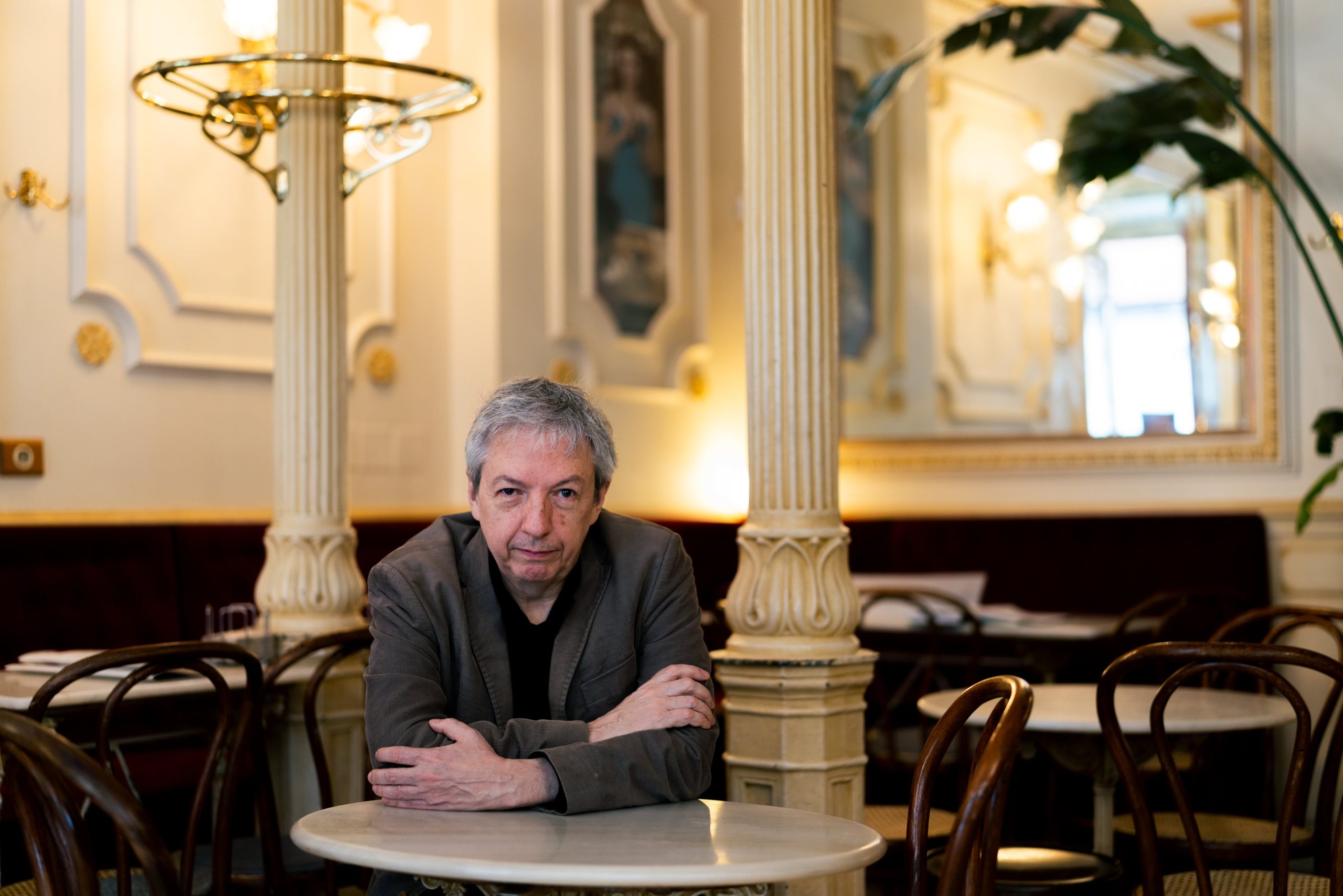
He was an engineer before he was a writer (although he’s more of a writer than an engineer). Mexican novelist David Toscana spent 10 years at companies like General Motors, Mattel (“Making Barbie dolls,” he says) and Coca-Cola. He worked as an engineer in the maquiladoras, those Mexican assembly plants along the U.S. border, where laborers put together parts that are received from around the world. This industry is part of the labyrinth that is globalized production.
Toscana says that his work as an engineer didn’t help him assemble novels. “In engineering, there’s that very Japanese philosophy about doing things right the first time, [drawing up] designs that don’t fail… in writing, I work more by trial and error. Although I do believe in the concept of efficiency: saying the right thing, with the right words,” he notes.
Those jobs did bring him close to glory, however. “The closest I ever came to the Nobel Prize was working at a nylon and polyester company that was partnered with Nobel Chemicals,” he jokes.
Nowadays, he dedicates himself solely to writing. And, while the 2026 Nobel Prize hasn’t yet been awarded, for now, he’s the latest winner of the prestigious Alfaguara Novel Prize for El ejército ciego (The Blind Army).
Toscana, smiling and with a calm voice, says that he isn’t quite sure where he lives, because he lives in many places. He lives in Mexico, because he’s Mexican; in Krakow, because his wife is Polish; and in Madrid (where the interview takes place), because he loves it so much: “I spend as much time here as the law allows.” He says this inside the classic Café Manuela, in the Malasaña neighborhood, where he checks the time (it’s one in the afternoon) before deciding to order a beer.
At the time of his interview with EL PAÍS, he’s about to begin the extensive book tour that’s associated with the award. First, he’ll visit some other cities in Spain, before heading to various Latin American countries. He handles the book promotion well. “I think all writers like it, but some deny it in interviews, just to liven up the conversation,” he opines. “But they complain even more when they don’t get any promotion at all!”
El ejército ciego begins with an unusual event: In 1014, the Byzantine Emperor Basil II (popularly known as “the Bulgar Slayer”) – after his victory at the Battle of Klyuch – ordered the blinding of 15,000 Bulgarian soldiers. In a kind of engineered cruelty, he blinded 99 men out of every hundred, so that the few unscathed soldiers – each left with one eye – could guide the rest home. When the ragged, blinded troop reached the Bulgarian capital, Tsar Samuel, emperor of the First Bulgarian Empire, was so devastated that he died a few days later from the humiliation and grief. His son Gavril, heir to the throne, found himself with the task of raising the troops’ morale and managing this multitude of defeated men. It has never been easy to find a place for those returning from war with injuries and trauma.
The story is told in the 12th-century Byzantine codex, the Madrid Skylitzes. It’s a kind of medieval comic strip with miniatures in gold and lapis lazuli, housed in the National Library of Spain. The idea behind the meeting with Toscana was also to visit the manuscript. However, since the library is undergoing renovations, the meeting turned into a casual get-together.
Although it sounds like a legendary tale, historians consider the story to be true (though perhaps the number of blinded people is exaggerated). Some historians also consider it to be worthy of a novel, and since no one in Bulgaria had addressed the topic, Toscana saw an opportunity and took the plunge. “I had the story of the 15,000 blind people returning home in my head for years, but I didn’t know how to tell it,” he explains. Despite the tragic nature of the event, he treats it with a certain level of humor, giving the narrative the feel of a folk tale, a fantastical story, a legend: “It’s almost like a children’s story… but it’s not quite child’s play.”

Eyes, and their absence, are central to the novel. One of the peculiar characters is Master Zosimo, the eye-gouger of the Court of Constantinople, who considers his work to be an artform. “Gouging out eyes was a common punishment, though mainly for individual cases: a traitor, a pretender to the throne,” the writer says. He offers some examples: a Bulgarian tsar who left the throne to his son and, when the latter disappointed him, returned to gouge out his eyes. One of the earliest references might be the Bible, in which Samson’s eyes are gouged out. And, in some versions of the play, Oedipus blinds himself with his fingers.
Certainly, there’s something of an art to it: according to Toscana, there are chronicles of very clumsy eye extractions that caused infections, hemorrhaging and even agonizing deaths. To avoid carnage, the use of fingers is always more appropriate than that of sharp and cutting instruments. But not to worry: in the novel, Toscana spares readers the most gory details. Ismail Kadare, by the way, has a hard-to-find novel, The Blinding Order (1991), which offers a thorough overview of eyeball removal techniques. Don’t try this at home.
It was a cruel era. “Although one would have to judge whether gouging out eyes or bombing a school is more cruel,” the writer says, “we’re less accustomed to the cruelties of the past, which were often attributed to divine punishment… but I don’t think we’ve progressed very much.”
He cites the siege of rebellious Babylon by Darius, recounted by Herodotus: the Babylonians killed their own women “except for a few, [who were kept alive] to cook,” the author clarifies and, when Darius entered the city, he impaled 3,000 men. Or the crucifixion of the 6,000 slaves led by Spartacus, on the road between Capua and Rome. “I don’t want to imagine what that’s like,” the author sighs, “but just 80 years ago we had gas chambers and extermination camps.” War has never ceased, but it’s resurging now, which is why Toscana admires the European Union: “It represents the understanding of people who once fought each other. In that same generation, a union was forged, borders were shared and a [common] currency was established. I wish that Latin America had something like that,” he adds.
El ejército ciego possesses a certain epic quality to the defeat: those who return home, even defeated and blinded, retain their dignity, their claims and their aspirations. And Toscana imagines an adventure about what isn’t written in the chronicles. We see what it’s like for the blinded men to reunite with their city and their families, as well as how some of them – a ceramist, a carpenter, a pig farmer, a baker – try to resume their daily lives and even find new niches in the market. We see what Kozaro, the scribe, can contribute to society from his new situation, by imagining stories. “Actually, the novel is about literature. Literature isn’t read with the eyes, but with the mind. I’ve always wondered what the best novel is for a blind person, which novel reaches the essence of perception.”
Toscana shies away from current affairs and contemporary realism. However, he doesn’t dislike these topics per se. “It’s necessary, for example, to have people in Mexico writing about femicides, drug trafficking or corruption. That needs to be aired,” he affirms. But he prefers his own writing to be an “adventure” that introduces him to new worlds. His novels usually have an imaginative starting point: in Evangelia (2016), he imagines what would have happened if the Virgin Mary had had a daughter. In Our Lady of the Circus (1998), he describes a strange society made up of circus performers. And, in El peso de vivir en la tierra (The Weight of Living on Earth), he imagines a kind of Mexican Don Quixote who, instead of trying to recreate chivalric romances, does the same with Russian epics.
“Talking about myself bores me, because I already know myself. I don’t mind reading about other people’s selves. But I prefer to spend two years discovering a new world: reading gospels, medieval texts, military strategies, archeology, theology, alphabets… for me, writing is an adventure.”
Sign up for our weekly newsletter to get more English-language news coverage from EL PAÍS USA Edition

Killer whale boat attacks are back. Recent Spain rescue raises fresh safety concerns.
Navarro Segura – Official SEAT and CUPRA Dealer

E

Stylish 3-Bedroom Apartment With Panoramic Sea Views – Benalmádena
Brussels warns Spain that migrants regularised under controversial scheme will be deported back to Spain if they try to move to other EU countries

Poland Disconnects Utilities At Russian Consulate That Moscow Refuses To Hand Over


-
 New Developments4 weeks ago
Stylish 3-Bedroom Apartment With Panoramic Sea Views – Benalmádena
-
eu response to spain migration policy3 weeks ago
Brussels warns Spain that migrants regularised under controversial scheme will be deported back to Spain if they try to move to other EU countries
-
 %4 weeks ago
Poland Disconnects Utilities At Russian Consulate That Moscow Refuses To Hand Over
-
Costa Calida3 weeks ago
Murcia unveils monument marking 175th anniversary of Burial of the Sardine
-
Costa del Sol3 weeks ago
Easter on the Costa del Sol: a time of renewal
-
400 years of Space travel4 weeks ago
Project Hyperion plans 58‑km spacecraft to carry 1,000 humans on 400-year interstellar journey
-
Fish Counters Being Removed4 weeks ago
Mercadona removes fish counters: T9 format brings shift to pre-packaged seafood
-

 Ataque contra Irán3 weeks ago
Última Hora De La Guerra De Estados Unidos E Israel Contra Irán, En Directo | EE UU Asegura Que Dos De Sus Buques Militares Han Cruzado Ormuz Para Desminar El Estrecho E Irán Lo Niega