Spain’s Oscar entry “The Black Ball” has proven buzzy across the festival circuit, as its powerful message championing LGBTQ rights emerges from intertwined storylines revolving around sexuality and the Spanish Civil War.
The drama featuring cameos by the likes of Penélope Cruz and Glenn Close received a standing ovation Tuesday at the Toronto Film Festival (TIFF), accolades that arrived the eve before Spain selected the film — known as “La Bola Negra” in Spanish — as its international feature film Academy Award contender.
Directors Javier Ambrossi and Javier Calvo, a creative duo affectionately known as “Los Javis” and who were until recently a couple, are famous in Spain particularly for their television work, if less widely known on the international stage.
But their stars are rising after a smash debut of the film at Cannes, where it won the best director award that was shared with Pawel Pawlikowski (“Fatherland”).
Along with Cruz and Close, “The Black Ball” stars Miguel Bernardeau, and weaves the stories of three gay men across different eras in Spain.
“It’s a tribute to the LGBTQ+ community” of the past that fought for human rights, Ambrossi told AFP.
Speaking to journalists at a press conference at TIFF, he said “we wanted to make it big.”
The story spooled into existence as they developed the film, he explained.
It started “fragile” and “intimate,” Ambrossi said, “but we understood there was a political statement behind it” that allowed for an “epic gay drama for everyone.”
‘Empathy and humanity’
The filmmakers noted that many countries still have anti-LGBTQ laws, and people within the community can be persecuted or even killed for their sexuality.
Calvo emphasized that the film is “about empathy and humanity and seeing the other as a person.”
Early inspiration came from the unpublished play written by Federico García Lorca, the poet who was executed by fascist forces at the beginning of the Spanish Civil War.
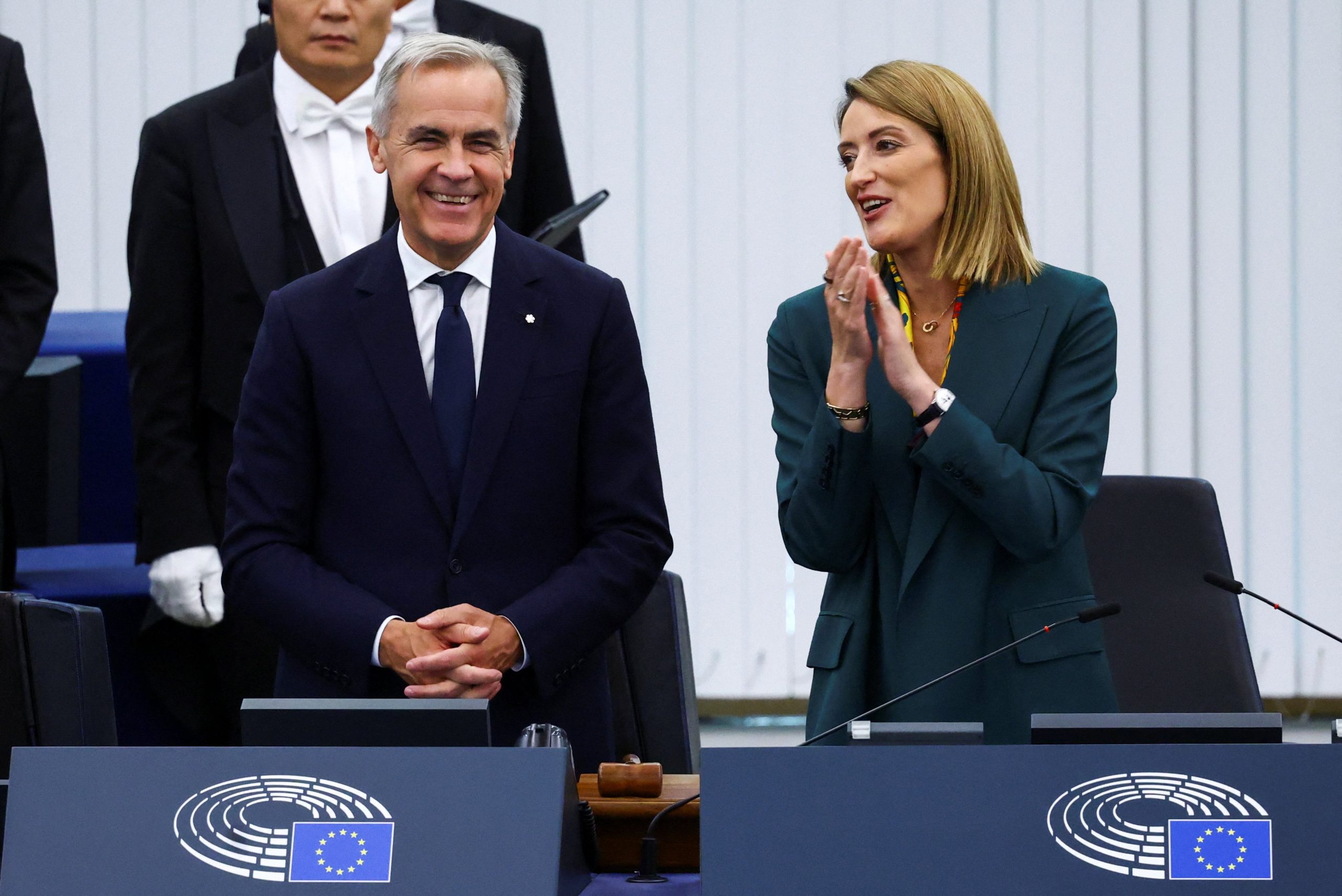
Canadian Prime Minister Mark Carney said on Thursday, speaking from the heart of the European Union, that his country and the EU are “stronger together” and that deeper cooperation between two regions with shared values will allow them to become a “beacon for other democracies” at a time when the international order is wobbling.
“We are not fair-weather allies. We do not pursue zero-sum deals. Our commitment to the rule of law, and our unyielding defense of human dignity, individual freedom, and democracy share the same deep roots, the same unwavering dedication,“ he said in an address to the European Parliament in Strasbourg. ”Canada and Europe are each strong. Europe and Canada are stronger together.”
Although he was never named explicitly, U.S. President Donald Trump—and the tariff threats he voiced this Wednesday over a closer Ottawa-Brussels relationship—hung over the entire hemicycle. “Today, our societies are being shaken by new storms: the upheaval caused by climate change, the erosion of democratic norms, the weaponisation of trade,” said Carney, alluding to the tariff war started by Trump.
A day after European Commission President Ursula von der Leyen used the same rostrum to propose making Canada the EU’s “first associate member,” Carney framed the alliance as not about self-sufficiency, but about collective resilience. “We do not seek power to dominate others. On the contrary, we are pursuing resilience so that no one can control our open markets, impair our sovereignty, threaten our territorial integrity, or undermine our freedoms, our democracies, our rule of law.”
Carney’s presence this week at the European Parliament plenary is another sign of the push for closer ties between the bloc and Canada, reinforced since the abrupt return of Trump to the White House upended the world order. There have been multiple gestures and nods toward a country that is also a NATO member and, like many European allies, under Washington’s scrutiny for its allegedly low defense spending.
Transatlantic sympathies intensified especially after Carney’s now-famous Davos Forum speech earlier this year, when, amid tensions over Trump’s expansionist appetite for Greenland, the Canadian prime minister spoke of the need for “middle powers” — a term that does not convince everyone in a European bloc of some 450 million inhabitants — to band together to present a united front against abusive powers.
It was in that context that Von der Leyen, in the address marking the start — and the pivot — of the political year, announced this Wednesday her intention to “open the door to Canada” so it could become the EU’s first “associate member.”
Although it is far from clear what that would mean, even to Brussels and to other European capitals —simply put, that status does not exist in the treaties— the proposal risks becoming a new fracture that would serve neither the EU nor Canada, and could complicate relations with a volatile United States under Trump.
Although Von der Leyen made sure, just before proposing the idea to Carney, to say that closer ties between the EU and Canada “are not an alliance against anyone,” in Washington the interpretation was precisely the opposite: hours after the European Commission president’s speech, the U.S. president again launched his favorite threat, vowing to impose “very serious tariffs” on the EU if that rapprochement with its northern neighbor went ahead, a neighbor with whom he is reengaging in a tariff showdown.
Sign up for our weekly newsletter to get more English-language news coverage from EL PAÍS USA Edition
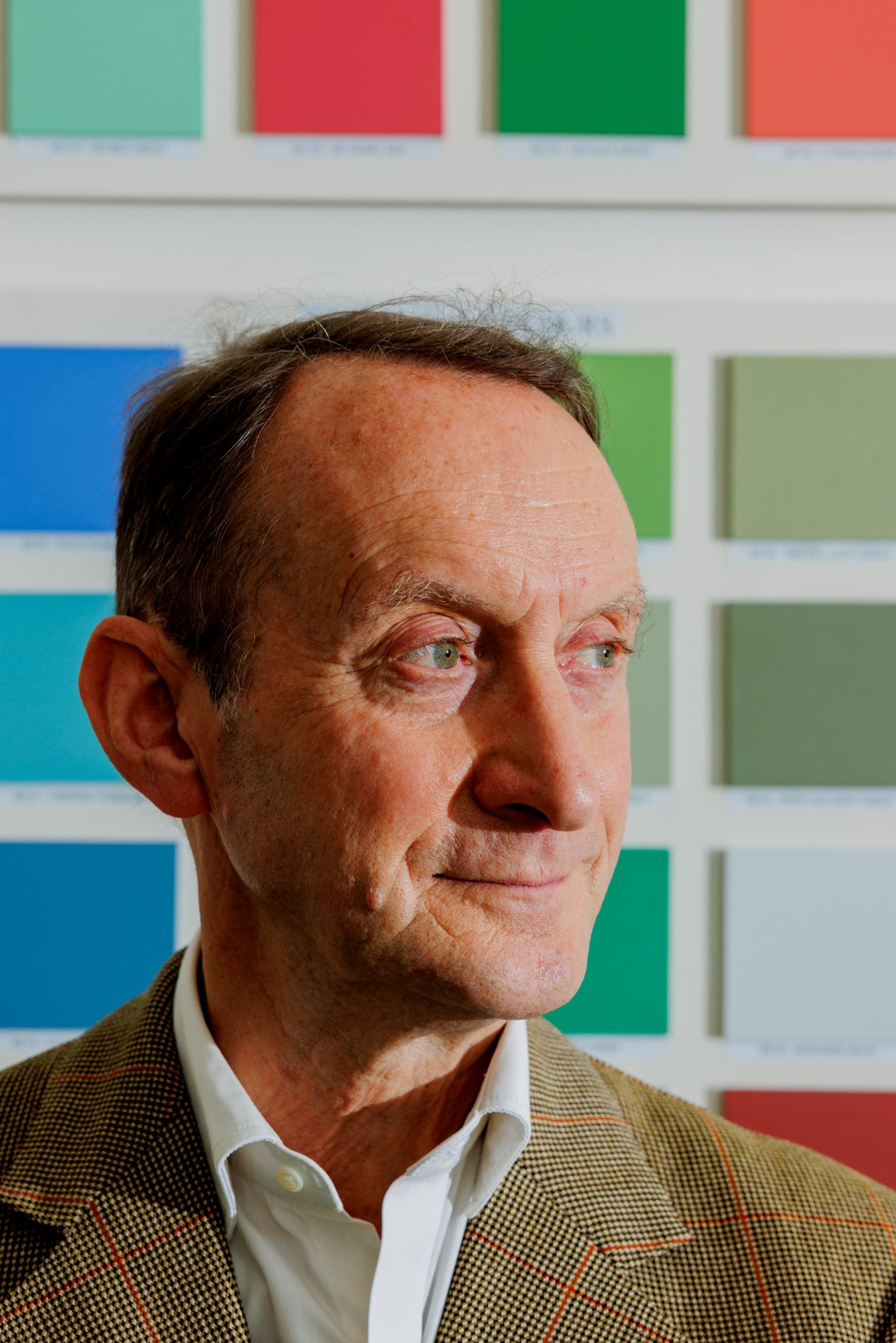
Patrick Baty, the “paint guru,” in his shop in the Chelsea neighborhood of London.Manuel Vázquez
Patrick Baty, 70, thought the greatest adventure of his life would culminate in the fight against the communist insurgency in the Dhofar region of southern Oman in the 1970s. Britain’s elite Special Air Service, the feared SAS, was involved in the covert operation, and the young Baty, then a captain in the 9th/12th Royal Lancers, had already begun learning Arabic and was preparing to emulate Lawrence of Arabia.
“And then, in one of those strange turns large organizations sometimes take, they decided to send me to Northampton, two hours from London, to train and lead a group of cadets,” he tells EL PAÍS on a warm July morning as he sips his coffee in the Royal Festival Hall café on the Thames. “So I handed in my resignation. I didn’t want to steer myself toward a life of frustrations that would end with me spending my last years running a shooting range in Wales,” he says with a wry smile.
Today, in the world of interior decoration and architectural restoration, he is known as the “paint detective” or the “paint guru.” Public institutions and private owners alike seek his services to uncover the hidden past of their properties.
When he ended his army career, Baty realized that he had training from the Royal Military Academy Sandhurst and some knowledge of early 20th-century British painting, sparked by his childhood fascination with the work of his great-grandparents, Robert Bevan and Stanislawa de Karlowska. What he did not have was a university degree. That background was enough, for a time, to find work in the art galleries of London’s Bond Street, where he soon became bored stiff.
He then turned to his father, who ran a painting and wallpaper business in Chelsea, and offered to help. It was there, driven by customers’ questions and requests, that his curiosity led him into the field where he would finally achieve the fame he sought.
“Someone would come into the shop asking for the interior wall color of the Forbidden City in Beijing, or what color Robert Adam [the 18th-century architect famous for his neoclassical interior designs] would have chosen, or how to recover Sir John Soane’s masterful use of light and saturated colors,” Baty recalls.
He spent his afternoons researching treatises on color and decoration at the Royal Institute of British Architects, the National Art Library at the Victoria & Albert Museum and the British Library. His efforts culminated in an 80,000-word thesis on 18th-century decorative art at what was then the Polytechnic of East London, and in the building of a reputation as an expert in recovering long-buried colors.
Baty understood that theoretical knowledge had to be paired with forensic investigation: a scientific-detective method to unearth a building’s past before recommending the right color for a restoration.
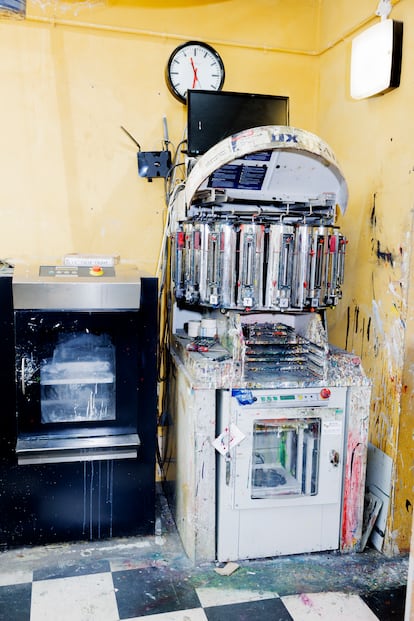
Using a spectrophotometer, an instrument that measures in the lab the amount of light absorbed or transmitted, Baty analyzes wall samples under a microscope to find historic layers of paint. Each layer tells him a story about the building or monument.
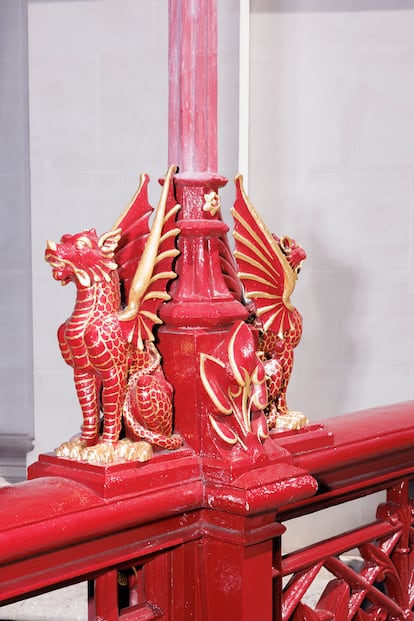
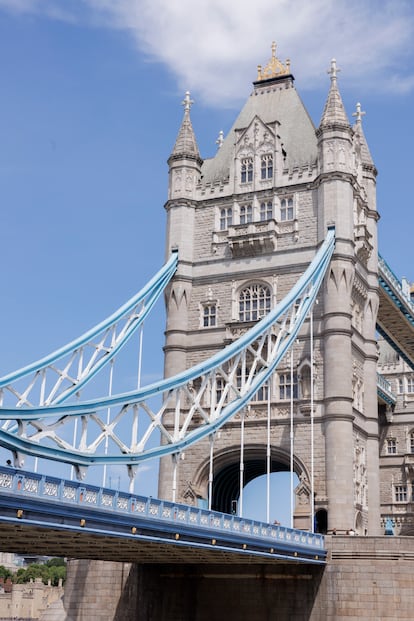
The right color is not always the original one. Among Baty’s commissions is the iconic Tower Bridge in London, with its bright blue and restrained white and red. It was painted that way in 1976 to mark the late Queen Elizabeth II’s silver jubilee. Before that, it had been light blue, grey and bronze-green. Both its color schemes and its structure changed over the decades.
“That was my recommendation to the City of London Corporation, which administers the bridge. Because if we had reverted to one of the historic colors, people would have been confused and the media would have stirred up a fuss. It was justified to keep the existing look,” explains Baty, who applies logic to something as seemingly subjective as color.
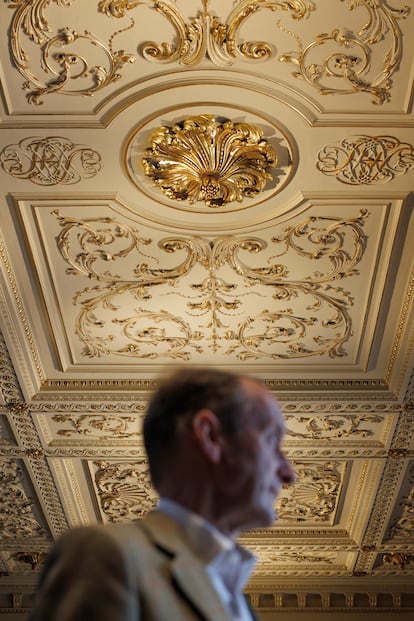
Baty is behind many restoration projects at Buckingham Palace, Windsor Castle (after the devastating 1992 fire), Hampton Court Palace, 10 Downing Street and the historic BBC Broadcasting House, as well as numerous private residences.
All of that knowledge is distilled in an exquisite, 300-plus-page art manual published by Thames & Hudson, the specialist publisher renowned for such carefully produced editions. The book is titled The Anatomy of Color.
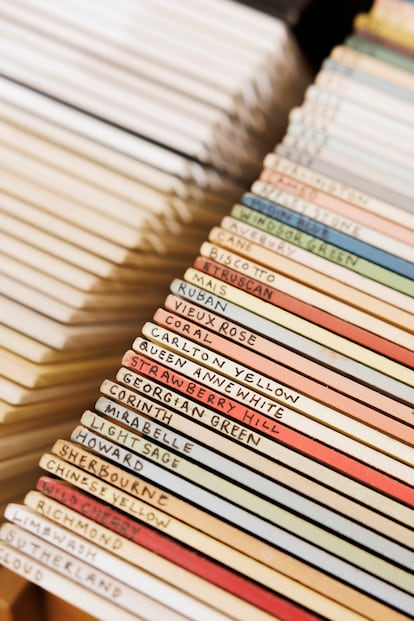
His wife, Alex, runs the business and the shop, Papers and Paints, which remains in Chelsea, where the Batys keep an immense catalog of historic hues. Thanks to that generous division of labor, Patrick was able to focus on his work as a historical and artistic consultant.
The central lobby of the Royal Festival Hall, one of the first public buildings constructed in London after World War II, is ringed by glass walls with some retaining walls. In its original scheme, a red surface sat next to a muted green, while a chocolate-brown area met a canary yellow. “A mad use of colors, until I found the hidden logic: what they call the ‘solidity of color,’ a way to provide a visual sense of strength by contrast against so much glass that, at the time, still conveyed a sense of fragility,” Baty explains.
His artistic vision embodies that blend of romanticism, Cartesian thought, and martial spirit that has produced so many British adventurers. In fact, until recently, he remained a member of the military reserves, assigned to the 21st SAS Regiment — known as the Artists’ Rifles — founded in 1859 by Edward Starling in response to fears of a new Napoleonic invasion of the island. The entire Pre-Raphaelite generation — including Dante Gabriel Rossetti and William Morris — was part of it. It attracted young painters, sculptors, musicians, and architects, as well as engineers and scientists. It eventually became one of the most prestigious military units in the United Kingdom
“Intelligent, motivated people who would go on to do extraordinary things — and whose very existence immediately drew me in,” says Baty, who recalls those experiences and that camaraderie as, curiously enough, something far more precious than his successful career as an interior restorer. “After all, paint and colors are very superficial,” he quips.
Sign up for our weekly newsletter to get more English-language news coverage from EL PAÍS USA Edition
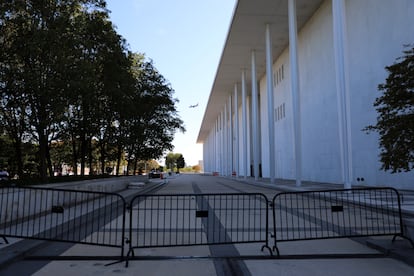
For the past 96 days, a huge tarp has hung over the facade of the Kennedy Center, a fitting symbol of Donald Trump’s assault on Washington’s cultural institutions.
Those attacks intensified on Wednesday with the announcement that Interior Secretary Doug Burgum is preparing to place a series of signs at the entrance to the National Museum of American History (NMAH) warning visitors about the “personal viewpoints” of those who curate its exhibitions. The White House accuses the museum, which is part of the Smithsonian network, of having “explicitly adopted an ideological framework that no longer treats the American story as a shared national inheritance to be taught or celebrated, but as a political instrument to divide, dispirit, and discourage” U.S. citizens.
Once installed, the signs, priced at $7,000 apiece, will join the tarp at the Kennedy Center as symbols of Trump’s determination to turn culture into a vehicle for advancing his MAGA agenda, burnishing his legacy and feeding his ego.
The tarp is a relic of the battle over Trump’s move to add his name to the Kennedy Center. A board of Trump loyalists had approved the name change, but in June, a judge ordered that the giant letters be removed. Dozens gathered to watch in person while tens of thousands followed online, expecting to see the white facade revealed once more. But the tarp never came down.
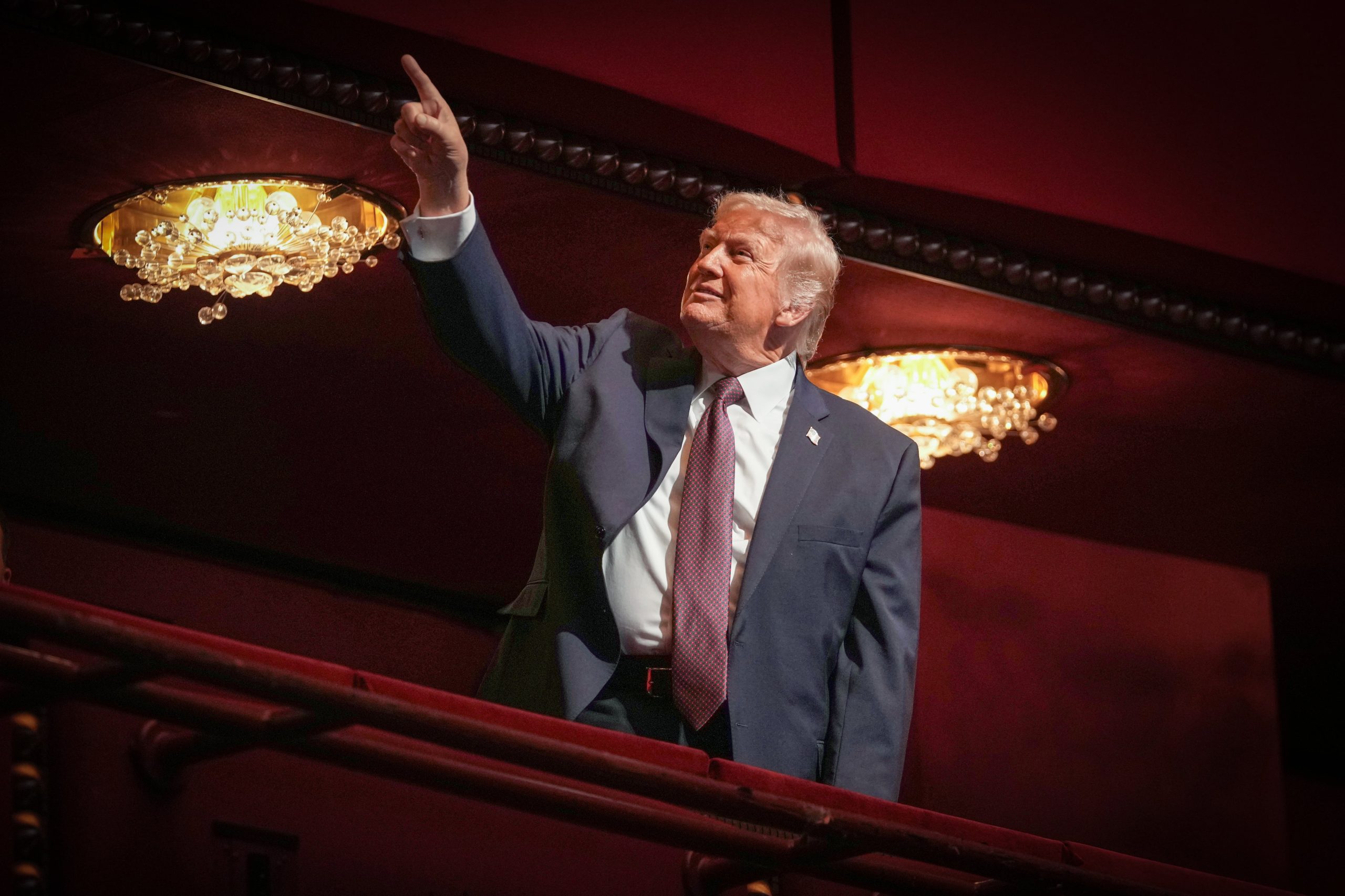
On Tuesday, the board voted, during a meeting that witnesses said ended with Trump shouting, to proceed with the closure of the institution that the president first announced in February. At the time, he argued that the center required a complete reconstruction because it was “tired, broken, and dilapidated.” Now, after the White House released a video apparently showing part of the grand foyer ceiling collapsing, Trump is threatening to withhold approval for the $257 million renovation unless the institution once again displays his name alongside that of John F. Kennedy, the president in whose honor the center opened in 1971.
On Wednesday, with the Kennedy Center closed since the previous afternoon, a new symbol had been added to the growing list of evidence of Trump’s cultural crusade: barriers workers erected around the institution to block access to the complex on the banks of the Potomac.
The latest chapter in the saga comes less than 50 days before the midterm elections. Polls suggest voters would rather see Trump focused on issues such as inflation and gasoline prices than on the skirmishes of his culture war.
‘Ideological cleansing’
It also comes just a week after Lonnie Bunch III, president of the Smithsonian Institution, announced his resignation. He cited personal reasons, but his departure followed a year and a half of pressure from the Trump administration on the Smithsonian network of 21 national museums and a zoo. The White House set its sights on the institution in March last year with an executive order titled Restoring Truth and Sanity to American History, which called for what critics described as an “ideological cleansing” of the Smithsonian.
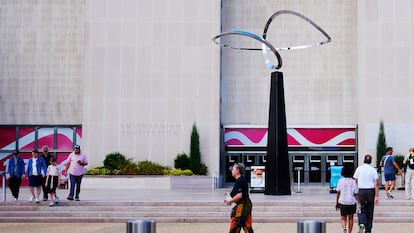
Days after Bunch’s departure, Trump, who had already successfully pushed the National Portrait Gallery to alter how it presented him, ordered the Smithsonian to replace Infinity (1967), José de Rivera’s abstract sculpture outside the National Museum of American History, with a 10-meter-tall statue of George Washington.
In an unprecedented blurring of the roles of president and museum curator, Trump also demanded in a social media post that the institution mount an exhibition devoted to the first U.S. president and keep it on display for “five years.”
Beyond its artistic value, Infinity is a symbol of Washington’s modernization. It was the first work of modern sculpture to break into the then overwhelmingly neoclassical landscape of the National Mall, an aesthetic Trump has repeatedly sought to revive.
Nor is it the only piece of public art in the capital to make political headlines in recent days. The order to dismantle and remove Joel Shapiro’s Blue (2019) from the plaza outside the Kennedy Center earlier this month provided yet another example of the president’s hostility toward modern and contemporary art.
The warnings that Burgum is preparing to place at the entrance to the NMAH stem from a 160-page report, complete with 500 footnotes, released on July 4, the nation’s 250th birthday. Its anonymous authors accused the museum of focusing too heavily on the Founding Fathers’ contradictions, slavery and the genocide of Native Americans. They also faulted it for presenting an unflattering account of Christianity’s role in the nation’s founding and for engaging in activism “against white people” and in favor of transgender people and “illegal” immigrants.
In a phone interview, M. J. Rymsza-Pawlowska, a public historian at American University in Washington, described the White House report as “ridiculous and absurd” and Trump’s attacks on cultural institutions as “classic authoritarian tactics.” “In the Smithsonian’s case, they also show ignorance about how it functions,” she added.
“NMAH exhibitions host an immense range of ideological viewpoints,” the expert said. “And during their development they undergo multiple peer reviews and consultations with communities and stakeholders. They are never at the whim of curators, who, moreover, are historians of the highest caliber who leave positions at prestigious universities to serve the public.”
Rymsza-Pawlowska also rejected the need for an exhibition about Washington. “There is already a museum entirely dedicated to him, Mount Vernon, a twenty-minute drive away,” she noted.
She also trusts that NMAH visitors will understand how much of Trump’s attacks are “political pantomime.” For regulars of the Kennedy Center — an institution with which many of the city’s music lovers have almost emotional ties — it is already too late.
Shortly after returning to the White House, Trump moved to put the center at the service of MAGA ideals. He dismissed its board, installed himself as chairman and replaced members with loyalists with no experience in cultural management or philanthropy. He then added his own name to the center’s. And when boos during visits by Trump and members of his administration, together with artist boycotts, subscriber cancellations and falling ticket sales, compounded the turmoil, he concluded that the institution should be shut down for a sweeping renovation, one he now says depends on the courts ruling in his favor.
Toni Codinas, one of such patron, says that over these 18 months he has felt, in order, “incredulity,” “anger” and “sadness.” Incredulity “at how easily he took control of the center” with “brazen disregard for norms and a politics of faits accomplis.” Anger when he turned it “into a MAGA party venue and an example of his administration’s rampant corruption, using the opera to screen Melania’s documentary or to throw a FIFA party [for the World Cup draw].”
The sadness, says Codinas, a board member of the Washington Bach Consort, stems from seeing how Trump “has pummeled the remnants” of the Kennedy Center, whose facade remains shrouded, 96 days later, by a giant tarp that stands as a reminder of Trump’s attacks on the capital’s cultural institution.
Sign up for our weekly newsletter to get more English-language news coverage from EL PAÍS USA Edition