Connect with us

%

Where Are Spain’s Richest And Poorest Towns? See How Your Municipality Compares

Published

on

where-are-spain’s-richest-and-poorest-towns?-see-how-your-municipality-compares

Madrid and Barcelona feature particularly heavily among the highest-income municipalities. Photo credit: Kirk Fisher/Shutterstock

If you have ever wondered whether the place you call home is actually as well-off as it feels, Spain’s latest income figures offer a way to check. The numbers vary dramatically from one municipality to another, with the average declared gross income in the richest town more than six times that of the lowest-ranked municipality.

The latest figures from Spain’s Tax Agency were published on September 30, and cover income declared for 2024. They allow residents to compare municipalities across the country. The national average gross income declared through IRPF reached €33,239 that year, after rising by around 6 per cent. Average disposable income reached €26,616, up 5.5 per cent.  But where you live makes a surprisingly large difference.

The richest municipalities in Spain

At the top of the table is Pozuelo de Alarcón in Madrid, where the average declared gross income was €92,564 in 2024. That was followed by Benahavís in Málaga, at €79,041, and Boadilla del Monte in Madrid, at €76,478.

The rest of the top ten were:

  • Matadepera, Barcelona: €76,238 
  • Sant Just Desvern, Barcelona: €69,706 
  • Sant Cugat del Vallès, Barcelona: €69,096 
  • Alcobendas, Madrid: €68,574 
  • Alella, Barcelona: €66,847 
  • Torrelodones, Madrid: €66,236 
  • Cabrils, Barcelona: €65,126 

The figures cover municipalities with more than 1,000 inhabitants in Spain’s common tax regime, so this is not a ranking of every tiny village in Spain. The Basque Country and Navarra are excluded because they operate under separate tax systems. 

Madrid and Barcelona feature particularly heavily among the highest-income municipalities, with several affluent commuter towns appearing near the top rather than the centres of the two major cities themselves. That is worth remembering when looking at headline figures about the wealthiest parts of Spain. Different datasets can produce different rankings because they measure different things. The Tax Agency figures here refer specifically to average gross income declared by IRPF taxpayers, rather than an individual’s salary. 

And at the other end?

The difference becomes particularly striking when the table is turned upside down. Guadahortuna in Granada had the lowest average declared gross income among the municipalities included in the latest statistics, at €14,514. Next came La Parra in Badajoz, at €15,384, followed by Benamargosa in Málaga, at €15,502. That puts Guadahortuna at less than half the national average of €33,239.

The figures also show how dramatically income can vary between municipalities in different parts of Spain. At the top of the table, several municipalities around Madrid and Barcelona record average declared incomes above €65,000, while the lowest-ranked municipalities are below €16,000.

What about the provinces?

The same pattern appears when the figures are examined geographically, although the municipal figures can be very different from the averages for an entire province. The latest municipal figures show particularly high-income areas concentrated around Madrid, Barcelona and parts of Málaga, with Benahavís standing out because of its extraordinary jump between 2023 and 2024.

The Costa del Sol municipality recorded an average gross income of €79,041 in 2024, compared with €43,159 the previous year. That represents an increase of 83.14 per cent in just one year and moved Benahavís from 56th place nationally to second.  For anyone living in Andalucía, that makes the municipal figures particularly interesting. The region contains municipalities with very different income levels, while a single average for the entire region can hide substantial differences between individual towns.

The figures are also useful alongside other measures of household pressure. EWN has previously looked at how rising everyday costs are affecting people living in Spain, with basic household spending taking an increasing share of income. Spain’s rising cost of living Housing creates another major difference between locations. EWN has also reported on the growing income requirements facing people trying to buy property in Spain, with the amount needed varying sharply between cities and regions. Buying a home in Spain is slipping further out of reach

So where does your municipality sit?

The Tax Agency’s IRPF statistics by municipality allow people to go beyond the national headlines and look at individual municipalities with more than 1,000 inhabitants. The database provides figures including gross and estimated disposable income for municipalities across the common tax regime.  That means you can check the figures for your own town rather than assuming that the average for your province or autonomous community tells the whole story.

It is also worth remembering what the number does, and does not, mean. A municipal average is not the salary that every resident receives, nor does it tell you what an individual household has left after rent, mortgage payments, energy bills and other costs. It does, however, provide a snapshot of how declared income differs across the places where people live. And the gap is substantial: €92,564 in Spain’s highest-income municipality compared with €14,514 in the lowest.

%

Mijas Donkey Retirement Park

Published

on

mijas-donkey-retirement-park

Visitors to Mijas Pueblo have long met its working donkeys on the village streets. Now, those animals are a step closer to a quiet sanctuary as Mijas Town Hall has received the project plans for ‘El Burrito’, a recreational park to be built on the village’s Vial Sur.

Room for up to 48 donkeys

Up to 48 animals will have a home here, in a space fully adapted to their needs. Adult donkeys needing time to recover will also be welcome before they are moved to new homes. Plans cover two separate areas: a refuge for the animals’ care, and a visitor centre dedicated to the donkey, one of Mijas’ best-known attractions.

Welfare is front and centre of the design. The refuge will have grazing areas, stables, quarantine pens, veterinary shelters and handling zones, plus paths, fencing and waste facilities.

Beds in the stables will be renewable and absorbent, so the animals will not have to lie directly on concrete, much gentler on their joints and hooves. The Town Hall has also required compartments big enough for the donkeys to walk in, turn around, move freely and lie down. Each stable will have a drinking trough, lighting and fixing rings to make cleaning and maintenance easier.

Buildings will follow the lie of the land, using timber, planted roofs and earthy colours so they fit into the landscape. Natural ventilation and drainage-friendly flooring are also included.
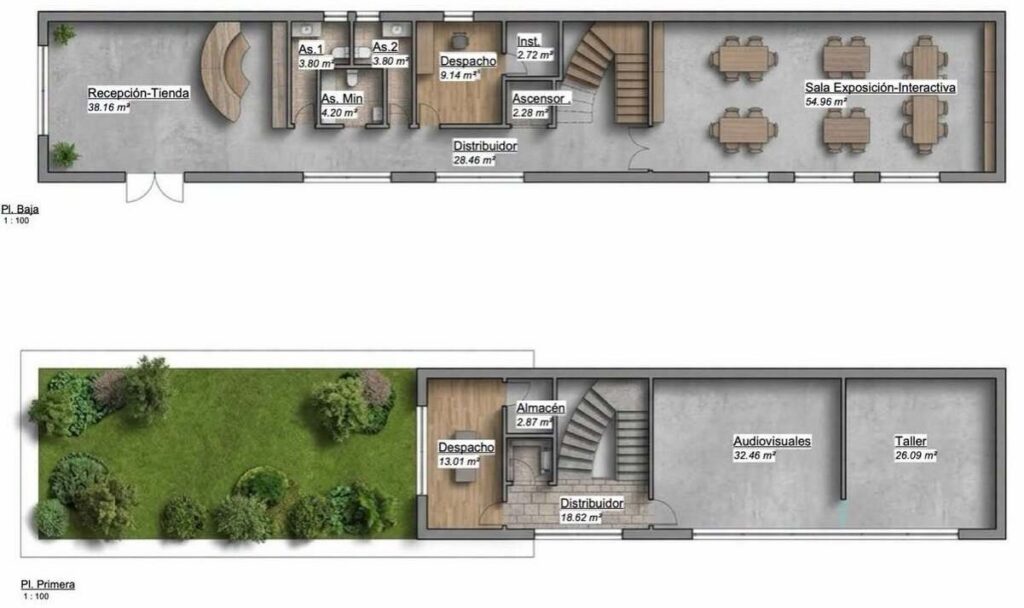
El Burrito donkey sanctuary plans
New layout plans
Credit:MijasTH/FB

Extra care for donkeys who need it

A veterinary shelter, larger than the ordinary stables, will look after animals needing observation, rest or special treatment. It will make life easier for the staff and allow care tailored to each animal’s needs.

Anyone interested will also be able to learn about the donkeys too. An existing building will be renovated as a cultural and educational interpretation centre, doubling as the visitor reception. It will explain the donkeys’ characteristics and their place in Mijas’ identity.

Donkeys became famous here through the ‘burro-taxi’, the village’s tradition of donkey rides in the early 1960s, when workers riding home were asked by visitors for photos and rides, the council’s tourism website currently lists 60 burro-taxis still work in the service today.

For even more information on the project, you can see our earlier report on the El Burrito donkey sanctuary here by EWN.


Continue Reading

%

More Than 4,200 Rental Homes Withdrawn

Published

on

more-than-4,200-rental-homes-withdrawn

Less and less for rent. Credit: Victor Sanchez G – Shutterstock

Estate agents report more than 1,500 rental contracts have been put on hold as property owners reconsider their plans following the Government’s latest housing decrees.

A total of 4,235 homes have been withdrawn from Spain’s long-term rental market or redirected towards other uses in just ten days, according to the Federation of Real Estate Associations (FAI).

The figures, gathered from more than 600 estate agencies, point to an immediate reaction among property owners following the announcement of the Government’s latest housing measures. The federation says 88.9 per cent of the agencies surveyed have detected changes in second homeowners’ behaviour.

FAI’s findings also suggest that the disruption extends beyond properties being advertised. A further 1,523 rental contracts have reportedly been delayed or put on hold, leaving prospective tenants waiting to find out whether their agreements will go ahead.

Where have the 4,235 homes gone?

The federation’s survey breaks down the changes reported by estate agents over the ten-day period.

  • 2,067 homes were withdrawn directly from the long-term rental market.
  • 1,224 properties were redirected towards the sales market.
  • 944 homes were switched to seasonal rentals or room-by-room lets.
  • 1,523 rental contracts were reportedly blocked or delayed.

The 4,235-property figure combines homes withdrawn from ordinary residential renting with those moved into other uses. It does not mean that all these homes have been left empty or removed permanently from the housing stock.

FAI says the changes have been particularly noticeable among small property owners, some of whom are reconsidering whether to offer their homes under long-term rental agreements.

The survey also found that 72.4 per cent of agencies had experienced delayed or suspended rental contracts. Meanwhile, 56.6 per cent reported owners putting properties up for sale instead of renting them, while 38.9 per cent had seen homes redirected towards seasonal or room rentals.

Rental activity could fall by up to 30 per cent?

FAI warns that the number of completed rental transactions could fall by between 25 and 30 per cent in the coming weeks. That is a forecast from the federation, rather than a confirmed fall in completed rentals. It is based on the combination of properties leaving the long-term market and agreements that have been delayed or suspended.

The association attributes the changes to uncertainty following the Government’s housing decrees, which include measures affecting rental contracts and protections for tenants.

The decrees were rejected by Congress but the Government has sought to revive them through the parliamentary process. The resulting uncertainty has become a concern for property owners and investors trying to assess the rules that will apply to rental homes.

FAI president José María Alfaro has acknowledged the difficulties tenants face in accessing housing and the financial pressure caused by high rents. However, he argues that the measures have also raised concerns among small landlords about protection against unpaid rent and the procedures involved in recovering a property. The survey records what estate agents say they have observed; it does not establish that the decrees alone caused every property owner’s decision.

Investors are also becoming more cautious

The concerns extend beyond individual landlords. A report published by Cinco Días on October 13 said property investors were becoming more cautious following the housing measures and the announcement of a general election for November 29.

The report said some residential investment transactions were being reviewed or potentially delayed. One major transaction under consideration involves a portfolio of around 1,900 rental homes owned by Greystar and Vía Célere, valued at approximately €530 million. The potential buyer was expected to wait for greater political clarity before proceeding, according to the report. The transaction has not been confirmed as cancelled.

Spain was still on course for a record year in overall property investment, but industry experts warned that prolonged uncertainty could have a greater effect on future investment decisions, particularly projects involving homes intended for long-term rental.

What happens next?

The immediate question is whether the changes reported by estate agents will be reflected in wider rental-market statistics over the coming months. Idealista’s figures published on October 15 show that competition for advertised rental properties was already intense, with an average of 43 people per listing bidding for the same home during the third quarter of 2026, up 16 per cent on a year earlier.

If fewer homes are offered for long-term rent while demand remains strong, tenants could face even less choice. However, the latest FAI survey does not establish how many of the reported withdrawals will be permanent, nor how the changes will affect rents nationally.

For people looking for a home, the figures provide another reason to monitor local availability closely. For the property sector, the coming weeks should show whether the reported disruption is temporary or signals a more lasting change in landlords’ willingness to offer long-term rentals.

Continue Reading

%

SMC Doctors Brings A New Approach To Private Healthcare On The Costa Del Sol

Published

on

By

smc-doctors-brings-a-new-approach-to-private-healthcare-on-the-costa-del-sol

Accessible, personal and multilingual medical care for residents and seasonal visitors

Access to reliable healthcare is important for anyone spending time on the Costa del Sol, whether they live here permanently, own a second home or spend two to four months a year in the region. SMC Doctors offers an alternative for those seeking private GP care, with clinics in Fuengirola, Benalmádena and Nerja.

SMC Doctors has recently opened a new clinic in Fuengirola, bringing its approach to accessible, convenient primary healthcare to one of the Costa del Sol’s busiest international communities.

The concept is straightforward: make everyday healthcare more accessible, predictable and convenient through an annual membership that provides direct access to a private general practitioner.

For €195 per person per year, members benefit from unlimited GP consultations, with same-day appointments available from 9am to 4pm, Monday to Friday, and from 9am to 2pm on Saturdays. There are no age restrictions, making the service suitable for individuals and families looking for a straightforward way to manage their healthcare needs while in Spain.

For seasonal visitors and second-home owners, having access to a local GP can provide valuable peace of mind. Rather than searching for medical assistance when a health concern arises, members have a clear annual fee and access to primary care during their time on the Costa del Sol.

One important consideration for the international community is language. Explaining symptoms, understanding a diagnosis and discussing treatment are easier when patients can communicate comfortably. SMC Doctors provides consultations in English and Spanish, alongside free translation assistance in Danish, Swedish, Norwegian and Finnish.

The membership also includes a World Medical Card, adding further value beyond everyday consultations. Having a dependable point of contact for medical advice can encourage patients to seek help early rather than postpone a visit because of uncertainty about costs or appointments.

Healthcare across the Costa del Sol

Alongside the newly opened Fuengirola clinic, SMC Doctors also operates in Benalmádena and Nerja, serving residents, international families, retirees and people who divide their time between Spain and other countries.

Private GP membership does not replace emergency services, hospital treatment or specialist care when required. However, straightforward access to a doctor can make everyday healthcare easier to navigate, particularly for people who spend only part of the year in Spain.

To find out more about membership and services, visit smcdoctors.com or contact info@smcdoctors.com.

Continue Reading

Trending

Copyright © 2017 Spanish Property & News