
Agencia Tributaria
Where are Spain’s richest and poorest towns? See how your municipality compares


Madrid and Barcelona feature particularly heavily among the highest-income municipalities. Photo credit: Kirk Fisher/Shutterstock
If you have ever wondered whether the place you call home is actually as well-off as it feels, Spain’s latest income figures offer a way to check. The numbers vary dramatically from one municipality to another, with the average declared gross income in the richest town more than six times that of the lowest-ranked municipality.
The latest figures from Spain’s Tax Agency were published on September 30, and cover income declared for 2024. They allow residents to compare municipalities across the country. The national average gross income declared through IRPF reached €33,239 that year, after rising by around 6 per cent. Average disposable income reached €26,616, up 5.5 per cent. But where you live makes a surprisingly large difference.
The richest municipalities in Spain
At the top of the table is Pozuelo de Alarcón in Madrid, where the average declared gross income was €92,564 in 2024. That was followed by Benahavís in Málaga, at €79,041, and Boadilla del Monte in Madrid, at €76,478.
The rest of the top ten were:
- Matadepera, Barcelona: €76,238
- Sant Just Desvern, Barcelona: €69,706
- Sant Cugat del Vallès, Barcelona: €69,096
- Alcobendas, Madrid: €68,574
- Alella, Barcelona: €66,847
- Torrelodones, Madrid: €66,236
- Cabrils, Barcelona: €65,126
The figures cover municipalities with more than 1,000 inhabitants in Spain’s common tax regime, so this is not a ranking of every tiny village in Spain. The Basque Country and Navarra are excluded because they operate under separate tax systems.
Madrid and Barcelona feature particularly heavily among the highest-income municipalities, with several affluent commuter towns appearing near the top rather than the centres of the two major cities themselves. That is worth remembering when looking at headline figures about the wealthiest parts of Spain. Different datasets can produce different rankings because they measure different things. The Tax Agency figures here refer specifically to average gross income declared by IRPF taxpayers, rather than an individual’s salary.
And at the other end?
The difference becomes particularly striking when the table is turned upside down. Guadahortuna in Granada had the lowest average declared gross income among the municipalities included in the latest statistics, at €14,514. Next came La Parra in Badajoz, at €15,384, followed by Benamargosa in Málaga, at €15,502. That puts Guadahortuna at less than half the national average of €33,239.
The figures also show how dramatically income can vary between municipalities in different parts of Spain. At the top of the table, several municipalities around Madrid and Barcelona record average declared incomes above €65,000, while the lowest-ranked municipalities are below €16,000.
What about the provinces?
The same pattern appears when the figures are examined geographically, although the municipal figures can be very different from the averages for an entire province. The latest municipal figures show particularly high-income areas concentrated around Madrid, Barcelona and parts of Málaga, with Benahavís standing out because of its extraordinary jump between 2023 and 2024.
The Costa del Sol municipality recorded an average gross income of €79,041 in 2024, compared with €43,159 the previous year. That represents an increase of 83.14 per cent in just one year and moved Benahavís from 56th place nationally to second. For anyone living in Andalucía, that makes the municipal figures particularly interesting. The region contains municipalities with very different income levels, while a single average for the entire region can hide substantial differences between individual towns.
The figures are also useful alongside other measures of household pressure. EWN has previously looked at how rising everyday costs are affecting people living in Spain, with basic household spending taking an increasing share of income. Spain’s rising cost of living Housing creates another major difference between locations. EWN has also reported on the growing income requirements facing people trying to buy property in Spain, with the amount needed varying sharply between cities and regions. Buying a home in Spain is slipping further out of reach
So where does your municipality sit?
The Tax Agency’s IRPF statistics by municipality allow people to go beyond the national headlines and look at individual municipalities with more than 1,000 inhabitants. The database provides figures including gross and estimated disposable income for municipalities across the common tax regime. That means you can check the figures for your own town rather than assuming that the average for your province or autonomous community tells the whole story.
It is also worth remembering what the number does, and does not, mean. A municipal average is not the salary that every resident receives, nor does it tell you what an individual household has left after rent, mortgage payments, energy bills and other costs. It does, however, provide a snapshot of how declared income differs across the places where people live. And the gap is substantial: €92,564 in Spain’s highest-income municipality compared with €14,514 in the lowest.




Agencia Tributaria
Benahavis Now Ranks As Spain’s Second Richest Municipality With An Average Gross Income Of Nearly €80,000 Per Resident

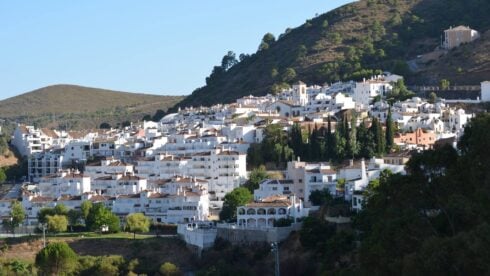
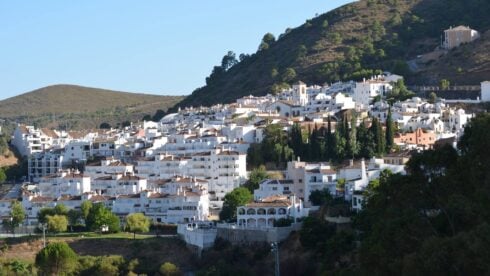 Average declared income jumped 83% in 2024, from 56th place a year earlier – just behind Pozuelo de Alarcon near Madrid.
Brussels takes action against Spain over failure to update blackout plan
Where are Spain’s richest and poorest towns? See how your municipality compares
Spain could let first-time buyers finance 100% of a home worth up to €250,000

Detenido Un Hombre Por La Muerte De Una Mujer De 47 Años En El Distrito De Arganzuela De Madrid

F1 Qualifying Today: Azerbaijan Grand Prix schedule, times and TV channel

British Actress Naomi Watts Attacks Ageism In Hollywood As She Picks Up Prestigious Donostia Award At San Sebastian Film Festival


-
 Arganzuela2 weeks ago
Detenido Un Hombre Por La Muerte De Una Mujer De 47 Años En El Distrito De Arganzuela De Madrid
-
 Uncategorized7 days ago
F1 Qualifying Today: Azerbaijan Grand Prix schedule, times and TV channel
-
 basque country2 weeks ago
British Actress Naomi Watts Attacks Ageism In Hollywood As She Picks Up Prestigious Donostia Award At San Sebastian Film Festival
-

 Uncategorized2 weeks ago
Heartbreaking Instagram post reveals death of F1 star
-

 %2 weeks ago
Mallorca Property Overrun By Wild Goats
-

 Claudia Sheinbaum2 weeks ago
The Azcatitlan Codex Returns To Mexico From Europe After Nearly Two Centuries
-
Best airlines2 weeks ago
Spanish airline Vueling named Europe’s best low-cost carrier for 2026
-

 Austin1 week ago
Venezuelan Migrant Shot By ICE In Austin Cites Lack Of Medical Care: ‘How Are They Going To Leave The Bullet In There?’