Connect with us

Spanish Living

Why hanging a flag from your balcony in Spain could cost you €3,000

Published

on

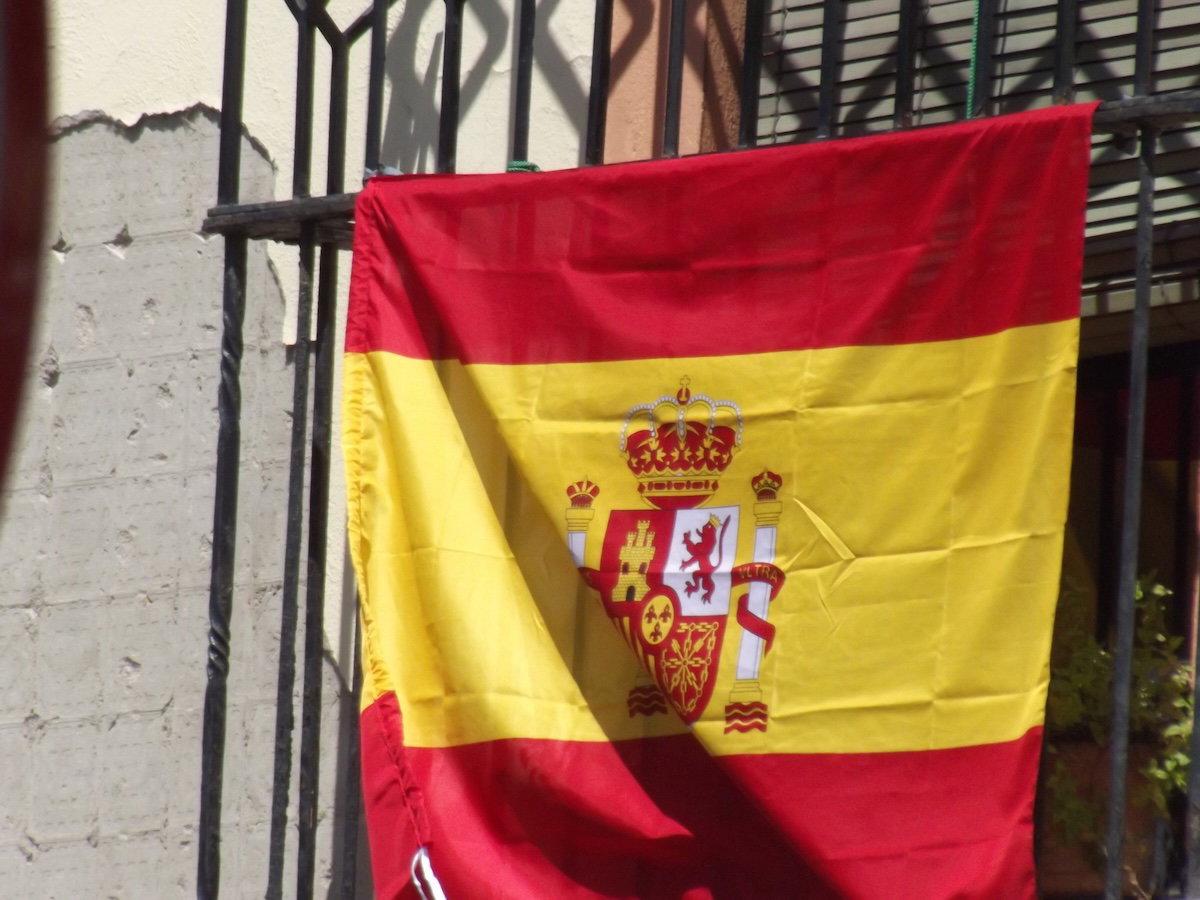
Incorrectly hanging football flags in Spain can trigger €3,000 fines.
Photo Credit: Elliott Brown / Flickr

In the midst of the World Cup, it is not an uncommon sight to see flags displayed on balconies in a show of patriotism and support for the Spanish team. However, residents and visitors may get a shock fine if they decide to hang a flag from their railings; regulations established in the Horizontal Property Law could lead to harsh fines, even reaching up to €3,000 for unsuspecting holidaymakers and locals who hang their flags incorrectly.

Not about patriotism, but rather safety: Why flags are a point of contention during the World Cup

The law in question has nothing to do with patriotism or symbolism, but rather with safety and coexistence with other locals. To be specific, the law establishes a correct and incorrect installation and distribution of national flags, in order to minimise the effect on neighbouring homes, aesthetics of the façade, and even risk to passers-by.

Holidaymakers and residents could be harshly sanctioned if a flag or element placed on a balcony:

  • Poses a risk of falling down or is poorly secured and could pose a danger to people walking on a public road.
  • Invades other people’s property by blocking windows or reducing visibility.
  • Goes against public ordinances, particularly in municipalities that restrict the placement of certain elements on balconies and railings on buildings (these restrictions often restrict temporary and festive displays).

Sanctions for non-compliance: Harsh fines for those who incorrectly hang flags and other disruptive objects

The following offences could result in fines ranging from €150 up to €3,000

  • Minor offences, including hanging visible laundry and dripping water down to neighbouring flats and streets: fines can range from €150 to €750.
  • Serious offences, including ignoring municipal requirements or repeat offences: fines can range from €751 to €1,500.
  • Cases where there is no damage reported, but the Local Police find that there is a danger to passers-by: fines can range from €150 to €3,000.
  • If an object falls and causes injury to another person, the penalty can be unlimited, and can vary depending on what the court decides, and depending on the damage caused.

The good news?

According to both the General Council of Associations of Property Administrators of Spain, as well as various legal experts, displaying a flag temporarily, in this case during the World Cup, does not constitute a legal or urban planning disturbance. Additionally, the law prohibits unauthorised changes to the exteriors of buildings, but this applies to major works including changing balconies, but typically not to hanging a flag.

This means that hanging a flag during this global event is considered a harmless, temporary display, and as long as it does not pose a risk of harming others or causing a disturbance for neighbours, holidaymakers and locals can feel free to showcase their support for the teams.

The bottom line for feverish football fans

For British expatriates looking to join in the tournament spirit, the takeaway is clear: you don’t need to stifle your patriotism, but you do need to keep it secure. By ensuring your flag is safely fastened, respectful of your neighbours’ space, and strictly temporary, you can fly your colours with no problem. After all, the only thing worse than your team being eliminated from the World Cup is facing a hefty €3,000 fine from the local town hall.

action

Spain’s fast-growing €2 bargain chain is pulling shoppers away from traditional stores

Published

on

By

Shoppers are turning to new bargain supermarket Action for 2€ finds Credit: Defotoberg / Shutterstock

The fast-growing low-cost chain Action is pulling more shoppers in Spain towards weekly bargains and products under €2, just as household costs remain stubborn. But consumer guidance shows cheap prices still need careful checking, especially on faulty goods, returns and impulse buys.

How Spain’s bargain shopping boom is reaching more everyday baskets

For many households in Spain, the appeal of a shop where thousands of products cost only a few euros is not hard to understand.

Cleaning products, storage boxes, stationery, garden items, craft materials, small gifts, home accessories and seasonal decorations can quickly push up a weekly spend. When a store promises a changing range of low-cost items, the draw is no longer just novelty. It becomes part of how people try to stretch a budget.

That is the space now being filled by Action, the Dutch low-cost chain that has expanded quickly across Spain since opening its first Spanish store in Girona in February 2022.

The company says its stores offer around 6,000 products across 14 categories and introduce 150 new items every week. More than two-thirds of its products cost less than €2.

The store promises useful everyday items at prices that feel manageable. But it also creates a familiar risk. A basket filled with small “cheap” purchases can still become an unplanned expense.

Why cheap shelves feel more tempting while prices stay stubborn

The timing of the more recent openings comes as no surprise, as household costs in Spain are becoming a live concern.

Savings on everyday items matter more than ever, and the interest in the new arrival of these stores reflects a shopping habit many people already recognise: comparing more, trading down, delaying bigger purchases and using discount stores for the things that do not feel worth paying full price for elsewhere.

How Action’s latest Madrid opening fits into its Spain-wide expansion

The latest step in that expansion is in Getafe, in the Community of Madrid, where Action has opened another store at Parque Comercial Imagina Getafe, on Calle Carpinteros, 1.

Spanish retail trade reports say the shop covers around 832 square metres, employs 18 people and opens daily from 9am to 10pm. The opening takes Action to 15 stores in the Community of Madrid and more than 100 across Spain.

Although the new shop is local to Madrid, the trend is national. Action reached its 100th Spanish store in Málaga in November 2025, less than four years after arriving in Spain. The company has also opened a distribution centre in Illescas, Toledo, designed to supply stores in Spain and Portugal.

That logistics base suggests more openings could follow, making the chain increasingly relevant beyond Madrid, Cataluña or Andalucía.

How weekly bargains can quietly encourage impulse spending

Action’s weekly rotation is part of the attraction. New products give shoppers a reason to return, browse and check what has changed.

That can be useful for planned purchases. A household that needs cleaning supplies, craft materials, storage containers or basic DIY items may find genuine savings.

The problem comes when the shop becomes a treasure hunt rather than a planned errand. Low individual prices can make extra purchases feel harmless, especially when shoppers think an item may not be available next week.

A practical approach helps. Going in with a list, setting a rough budget and asking whether the item would still be bought at a higher price can prevent small bargains turning into clutter and impulse buys.

The cheapest product is not always the best value if it breaks quickly, does not fit the intended use or was never needed in the first place.

How shoppers can make the the offers actually worth it

The growth of Action in Spain shows how strongly cheap, varied and convenient retail is landing with shoppers who want more control over daily spending.

The best use of stores like this is: cleaning basics, simple home organisation, craft supplies, stationery and seasonal goods. These can make sense when they replace more expensive purchases elsewhere.

More caution is sensible with anything where safety, durability, compatibility or children’s use matters.

As more low-cost stores open across Spain, shoppers are likely to have more choice. The real saving will come from knowing what is useful, checking what rights apply and walking past the cheap items that were never on the list.

Continue Reading

%

Ten Years After Brexit, Britons In Spain Are Still Counting The Cost Of Lost Freedom

Published

on

ten-years-after-brexit,-britons-in-spain-are-still-counting-the-cost-of-lost-freedom

Why’d you have to go and make it feel so complicated? 10 years on from Brexit. Credit: M-Production / Shutterstock

Ten years after UK voters went to the polls on June 23, 2016, British life in Spain has not disappeared. But residency documents, 90-day limits, property shifts, trade friction and family care worries now shape a relationship that once felt far simpler.

How the Brexit vote still shapes British life in Spain

When the UK voted to leave the European Union on June 23, 2016, much of the public debate centred on trade, sovereignty, immigration and Westminster politics.

For British residents in Spain, the longer story became more practical. The vote did not instantly change daily life, and Britain did not formally leave the EU until January 2020. But over the decade that followed, the meaning of being British in Spain changed.

Living, retiring, working, staying with family or caring for elderly relatives in Spain is no longer something British citizens can assume in the same way EU citizens can.

Paul Michael, 67, a British resident in Cádiz who has lived in Spain for more than 23 years, said the first noticeable shift was the need to prove a status that had once felt settled.

“Despite living legally in Spain for many years, I suddenly had to deal with changes in my status as a British resident in Spain and residency paperwork,” he told Euro Weekly News.

How freedom of movement became forms, cards and calendar counting

Before Brexit, UK citizens could move to Spain under EU freedom of movement rules. Since the end of the transition period, British citizens arriving to live in Spain are generally treated as non-EU nationals and must meet visa, residency and documentation requirements.

For those already legally resident before the cut-off, the Withdrawal Agreement protected many existing rights. But even protected residents still had to make sure they could prove their position.

Spain’s TIE, the Tarjeta de Identidad de Extranjero, or foreigner identity card, became an important document for British residents proving post-Brexit status.

Paul said this is what many people in the UK failed to understand.

“Some people underestimate the value of freedom of movement because they never used it themselves,” he said. “The right to live and work in Spain changed overnight. Many thought Brexit was just about trade arrangements and politics.”

That distinction matters, and still shapes who can live, work, retire or stay long-term in Spain.

How 90-day limits changed second homes, family visits and care

For British citizens without residency or a long-stay visa, Spain sits inside the Schengen 90-day rule. That generally limits visa-free stays in Spain and most other Schengen countries to 90 days in any 180-day period.

Maureen Smith, a British resident who moved to Spain in 1990 and lived around Sotogrande and Pueblo Nuevo for more than three decades, said the referendum result was a shock.

“Brexit was a disaster and we couldn’t believe the result,” she said.

For Smith, one of the clearest practical changes was the loss of automatic movement between the UK, Spain and the wider EU.

“The 90-day rule for villa owners was bad,” she said. “There was no freedom of movement and more hassle at airports.”

She said Brexit also affected feelings of security among some long-term residents, even those who had worked, raised families and built stable lives in Spain.

“I felt insecure even though I had a full-time job at school and a pension,” she said.

Care has become one of the most sensitive post-Brexit issues. Recent reporting has highlighted British families struggling to care for elderly relatives in Spain because UK-based relatives cannot simply stay indefinitely without residency or a visa.

Smith, who returned to the UK for family health reasons, said Spain had been “a great place to bring up children”, but that ageing could change the calculation.

“For older people, if they lose a partner, life is very different,” she said.

How the Costas changed without losing their British base

The South and Eastern coasts of the Iberian Peninsula have long been shorthand for British life in Spain, and British buyers have not disappeared. But post-Brexit, new British arrivals face a different legal path from EU citizens buying, retiring or working in Spain.

There is evidence of change, but the figures do not show a simple British retreat.

Spain’s General Council of Notaries said foreigners accounted for 18.4 per cent of free-market home purchases in Spain in the second half of 2025. British and Moroccan buyers were the two largest foreign groups, followed by Italians and Germans.

Paul said claims that British communities have faded away can be exaggerated.

“There is still a large British community here,” he said. “There are fewer new British arrivals than before Brexit because it has made moving to and working in Spain far more complicated. But there are still many large British communities.”

How tourism stayed strong while the wider relationship grew more complex

The numbers also show a split between visiting Spain and building a life there.

Spain received a record 96.8 million international tourists in 2025, according to Spain’s National Statistics Institute. British visitors remained a central part of Spain’s tourism market, with official monthly data repeatedly showing the UK among the leading source countries.

That suggests Brexit has not broken the UK-Spain travel habit. But holidays are not the same as residency.

How British residents in Spain now need to plan differently

British residents covered by the Withdrawal Agreement should keep residency documents up to date, including the TIE where applicable. Second-home owners and regular visitors need to track Schengen days carefully. Families with elderly relatives in Spain may need legal advice before assuming a UK-based son, daughter or carer can stay long-term.

For new arrivals, the old idea of trying Spain first and sorting paperwork later is far more difficult than it used to be.

For British residents in Spain, Brexit’s anniversary marks a decade in which a familiar way of life survived, but became less automatic, less flexible and much more dependent on paperwork and ever-changing rules and regulations. 

Continue Reading

%

Spain Jewellery Gift Tax

Published

on

spain-jewellery-gift-tax

High-value jewellery gifts in Spain can trigger tax questions if Hacienda treats them as donations. Credit : EgolenaHK, Shutterstock

A diamond ring from your parents, a luxury watch from your partner or gold jewellery passed down in the family can feel like a private gift. In Spain, however, Hacienda may treat valuable jewellery as a donation, which means the person receiving it may have to declare it through gift tax paperwork and could face surcharges or collection action if nothing is filed on time.

Most people do not think about Hacienda when someone gives them jewellery.

They think about the occasion, the family story, the sentimental value, or simply the fact that someone has handed them something beautiful and expensive. That is normal. A ring or watch does not feel like a taxable event when it comes from someone close.

But tax agency tend to look less at the emotion and more at the transfer of value.

If a valuable item moves from one person to another for free, Spain’s tax system may class it as a donation. And once that happens, the situation is no longer only between the giver and the recipient. It can become a tax matter.

Who has to declare the jewellery gift?

This is the part many people get wrong.

In Spain, when a donation is taxable, the person who usually has to deal with it is the person receiving the gift. Not the parent, partner or relative who gave it.

So if someone gives you a high value watch, a diamond ring or a collection of gold jewellery, the paperwork may land on you.

Jewellery is considered movable property. That means a valuable jewellery gift can fall under Spain’s Inheritance and Gift Tax, known as Impuesto sobre Sucesiones y Donaciones.

The form normally used for donations is Modelo 651, or the equivalent form used by the autonomous community handling the tax.

That does not mean every bracelet or birthday present has to be declared. The question is value. A modest gift is very different from a Rolex, a diamond ring or a jewellery collection worth several thousand euros.

The more valuable the item, the more important it is to check the rules before assuming nothing has to be done.

Why where you live in Spain matters

Gift tax is one of those areas where Spain can get confusing very quickly.

For residents, donations of movable goods such as jewellery are usually handled by the autonomous community where the person receiving the gift lives. That matters because the tax is not identical across Spain.

Madrid, Catalonia, Andalusia and other regions can apply different reductions, deadlines and procedures. So the same gift can lead to very different results depending on where the recipient is resident.

The value of the jewellery also matters. Hacienda will normally look at its market value, meaning what the item could reasonably sell for.

This is why keeping proof is useful. A receipt, a jeweller’s valuation, photos, certificates of authenticity or a simple written note showing who gave the item and when can make things easier if questions come up later.

It may feel excessive for a family gift, but it is much easier than trying to prove everything after the deadline has passed.

What happens if the gift is not declared?

The deadline can arrive faster than people expect. Under the state framework, donations are generally declared within 30 working days from the day after the gift. Some regions may apply their own practical rules, so checking locally is important.

If the tax is due and the declaration is late, surcharges can apply. If the declaration is filed but the tax is not paid, the debt can move into collection.

At that stage, Hacienda can add extra charges and eventually take enforcement action. That can include money in bank accounts, wages within legal limits, property and valuable assets. Spanish rules also allow enforcement against precious metals, fine stones, jewellery, silverware and antiques.

So yes, a jewellery gift can become a debt problem if it is ignored.

If someone cannot afford the tax immediately, ignoring the deadline is not the safest route. It is usually better to file on time and request a deferral or payment in instalments where possible.

That said, failing to declare a jewellery gift does not automatically mean prison. For a tax offence in Spain, the case would need to involve fraud and a defrauded amount above €120,000.

For most people, the real risk is more ordinary but still painful: penalties, interest, collection letters and stress.

The safest move is if someone gives you a valuable ring, watch or jewellery collection in Spain, do not treat it as invisible just because no money changed hands.

Check the rules in your autonomous community, keep proof of value and deal with it early. Because with Hacienda, an expensive gift can sometimes come with paperwork attached.

Continue Reading
Advertisement
Advertisement

Spanish Real Estate Agents

Tags

Trending

Copyright © 2017 Spanish Property & News