
canary islands migration
10,000 migrant arrivals in November: Canary Islands break 32-year rescue record

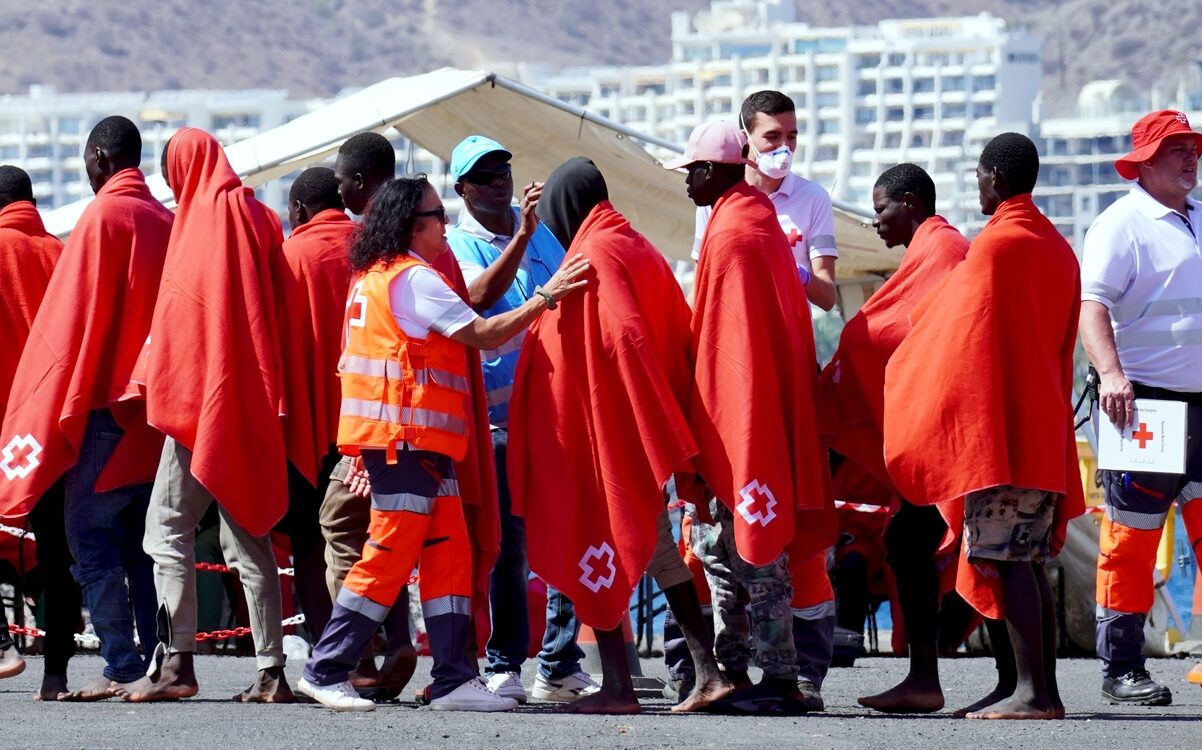
Almost 1,500 people rescued in one day as transfers bring hundreds to mainland Spain.
Spain’s Canary Islands have experienced an extraordinary escalation in migrant arrivals, with 1,488 people rescued from 14 boats in a single day, breaking a 32-year record on the Atlantic migration route.
Saturday, November 14, saw the largest number of people rescued in one day since records began for the Canary Islands route. The figure surpassed the previous record of 1,461, established on November 7, 2020.
The latest arrivals followed another exceptionally busy day on Friday, November 13, when 843 people were brought ashore in eight cayucos (wooden boats). Combined, the two days accounted for 2,331 people travelling in 22 boats.
Daily migrant arrivals reach extraordinary levels
Miles de africanos embarcan día y noche desde El Hierro a Tenerife y Gran Canaria, para después volar a la península https://t.co/OlWtYOhH0s
— Diosa Khali (@DiosaKhalinda) November 15, 2026
The latest figures show how quickly pressure has built up, particularly around the small island of El Hierro. Reported arrivals included:
- Friday, November 6: 1,090 people in ten cayucos reached El Hierro.
- Saturday, November 7: 654 people arrived in six boats.
- Sunday, November 8: Another 659 people were brought ashore in four cayucos.
- Monday, November 9: At least 334 people had been rescued during the morning, with further operations contributing to the day’s eventual total.
- Friday, November 13: 843 people arrived across the Canary Islands in eight boats.
- Saturday, November 14: A record 1,488 people were rescued in 14 boats.
The November 6–9 figures relate to El Hierro, while the November 13 to 14 totals cover the entire archipelago. They are not directly comparable daily island totals.
Of Saturday’s arrivals, 1,235 people were brought to El Hierro, 203 to Gran Canaria and 50 to Tenerife. The provisional breakdown included 108 women and 167 minors. Many of those rescued originated from Senegal, Gambia and Guinea-Conakry, with some boats reportedly having spent six days at sea before being intercepted.
How do the figures compare with previous years?
The annual statistics reveal how dramatically the Atlantic route has changed. According to the Spanish Interior Ministry, the number of people arriving in the Canary Islands by sea was:
- 2023: 39,910 people.
- 2024: 46,843 people, an increase of 17.4 per cent.
- 2025: 17,788 people, a reduction of 62 per cent.
- 2026: 13,327 people between January and October.
The 2026 January to October figure was actually 5.5 per cent lower than the 14,099 recorded during the same period in 2025. However, November has brought a dramatic change. The Canary Islands government reported 6,665 arrivals during the first nine days of the month alone, indicating a sharp late-year escalation.
Hundreds transferred to mainland Spain
The pressure on the islands has consequences far beyond the Atlantic coastline. When reception facilities become overwhelmed, the Spanish government organises transfers to mainland accommodation, with humanitarian organisations providing temporary shelter, food, healthcare and assistance.
Malaga Province is among the destinations currently receiving people transferred from the Canaries. According to reports, around 200 people are currently being accommodated at the Urban Beach Hotel in El Morche, Torrox, under the care of the Spanish Red Cross.
Most are men from Senegal and Gambia, although women and children are also among those transferred. The journey involves flights from the Canary Islands to Madrid, followed by onward transport to Malaga.
The Red Cross is assisting approximately 275 people across its accommodation facilities in Malaga Province, while CEAR is looking after another 17, with further arrivals expected.
Benahavis received 360 migrants last year
This is not the first time the Costa del Sol has been used to accommodate people transferred from the Canary Islands. In January 2025, 360 migrants arrived at Malaga Airport on two flights from Tenerife. Four buses subsequently transported them to the four-star Oh Nice Caledonia Hotel in Benahavis, where they were temporarily accommodated before being distributed to other parts of Spain.
The operation was organised and ordered by the Ministry of Inclusion, Social Security and Migration. According to the ministry, its reception system transferred 20,489 people from the Canary Islands to mainland Spain during 2025, demonstrating the scale of the redistribution programme.
Migration becomes an election issue
The latest developments come as Spain approaches its November 29 general election, with immigration and border controls featuring prominently in the political debate.
The opposition Partido Popular and Vox have both proposed tougher immigration measures, including changes to regularisation procedures and deportation policies. Their proposals differ in scope, but both parties have called for a more restrictive approach.
The record arrivals will add pressure to an already heated discussion about how Spain manages its external borders, accommodates newcomers and distributes responsibility between the islands and mainland communities.
With reception facilities under increasing pressure and hundreds of people now being transferred to provinces such as Malaga, the question of how Spain responds to the renewed Atlantic migration crisis is unlikely to disappear from the election campaign.





Struggling With Spain’s Food Prices? This Supermarket Chain Was Built To Help Families Save

Spain Hit By Yet Another Train Derailment As Madrid Railway Line Is Shut
Back in the running? Mijas considers four proposals for abandoned horse-racing complex


-

 New Developments2 weeks ago
Luxury Villas For Sale, Estepona – ProjectL1
-
Age Concern Marbella - San Pedro3 weeks ago
Halloween lunch sells out as 51 join Marbella get-together
-

 New Developments3 weeks ago
How To Get A Tourist Rental Licence In Andalusia (Spain) – Step-By-Step Guide 2025
-
Barcelona riots3 weeks ago
Looting and street violence hit Barcelona as El Corte Inglés customers are trapped
-

 %3 weeks ago
Spain Orders Replacement Of Eight Million Gas Meters: New Rules, Costs And Deadlines
-
Costa del Sol3 weeks ago
Where are they? Expat questions local police presence
-

 New Developments3 weeks ago
Inside The Most LUXURIOUS Apartment Building In Spain!
-
Gibraltar3 weeks ago
Proud to be British: HMS Queen Elizabeth opens its doors in Gibraltar