Connect with us

%

Spain Could Raise Fuel And Electricity Costs

Published

on

spain-could-raise-fuel-and-electricity-costs

Spain could end temporary VAT cuts on fuel and electricity from July, potentially raising costs for households and drivers. Credit : Tetyana_Pidkaluyk, Shutterstock

Drivers and households across Spain could soon see higher fuel and energy bills again, as temporary VAT reductions on electricity, gas, petrol and diesel are expected to end on June 30.

The tax cuts were originally introduced as part of Spain’s anti crisis measures linked to rising energy prices and international instability. But now, with pressure growing to increase public revenue and shift towards cleaner energy policies, the government is reportedly preparing to let those reductions expire.

If that happens, millions of consumers may notice the difference almost immediately at petrol stations and in household utility bills just as summer demand starts increasing.

The expected move also follows broader recommendations from the European Commission, which has been encouraging member states to gradually phase out broad tax advantages linked to fossil fuels and replace them with more targeted support.

Why Spain may end the VAT cuts on fuel and electricity

The temporary VAT reductions were initially designed to soften the impact of soaring energy prices after international conflicts pushed costs sharply higher across Europe.

At the time, governments across the EU rushed to protect consumers from rapidly increasing electricity, heating and fuel bills.

Spain became one of several countries introducing emergency tax reductions and support measures.

Now, however, the debate has shifted.

Officials and tax experts increasingly argue that broad VAT cuts mainly benefit households with higher energy consumption rather than the people struggling most with rising costs.

Gestha, the association representing technicians from Spain’s Finance Ministry, believes these generalised reductions have had a “regressive” effect.

Their argument is fairly straightforward.

Higher income households often own larger homes, consume more electricity, use more heating or air conditioning and drive more vehicles. That means they naturally benefit more from broad tax reductions applied equally to everyone.

European authorities have also been signalling discomfort with blanket VAT reductions tied to fossil fuels.

Brussels has instead been pushing governments towards more focused support measures aimed at lower income households, public transport and cleaner energy systems.

That broader strategy is becoming increasingly visible across Europe as governments try balancing rising living costs with climate goals and pressure on public finances.

What could become more expensive from July

If the reductions disappear on June 30 as expected, consumers could notice increases in several everyday expenses.

Electricity bills may rise again depending on market prices and the VAT rate applied. Gas costs could also increase, particularly for households still relying heavily on gas heating or cooking systems. At petrol stations, drivers may see higher prices for both petrol and diesel once the lower VAT treatment ends.

The increase will not necessarily be dramatic overnight, since fuel prices also depend heavily on international oil markets and refining costs. But removing temporary tax reductions would likely push prices upward at a time when many households are already watching spending carefully.

The government has not officially confirmed the final decision yet, but tax technicians from Gestha believe the changes are likely after the current anti crisis package expires.

The move would also align more closely with recommendations from the European Commission, which has repeatedly argued that long term energy policy should focus less on subsidising fossil fuel consumption and more on reducing dependency altogether.

The EU wants cleaner energy and less dependence on private cars

European institutions are increasingly steering countries towards policies aimed at reducing fossil fuel use rather than lowering taxes on it.

That includes support for electric vehicles, public transport, energy efficient housing and renewable energy systems.

The European Commission has also backed temporary incentives designed to reduce private car use, including cheaper public transport and support for electric mobility infrastructure.

Spain has already been expanding subsidies for electric vehicles, charging points and energy efficient home renovations.

At the same time, some targeted support measures are expected to remain in place for sectors heavily affected by fuel costs.

Gestha continues supporting aid measures for transport companies, farmers, fishermen and other industries directly impacted by rising energy prices.

The association also believes more direct assistance should focus on middle and lower income households rather than broad tax reductions applied universally.

Among the measures still viewed positively are support for thermal and electricity social bonuses, limits on butane and propane prices and incentives linked to self consumption solar energy.

For many households though, the immediate concern is much simpler. People want to know whether everyday bills are about to rise again. And unless the government extends the current reductions beyond June, that possibility is looking increasingly likely for the second half of the year.

%

SIPS First Foray Onto The Costa Del Sol

Published

on

sips-first-foray-onto-the-costa-del-sol

Barcelona’s SIPS has been named the World’s Best Bar by The World’s 50 Best Bars. Also ranked in the global top three every year since 2022 and impressively crowned Best Bar in Europe for three consecutive years. Now it is coming to Marbella. SIPS has announced a residency at the Bar La Plaza in the luxurious Puente Romano resort. 

A bar built by two of the industry’s most decorated names

SIPS opened in Barcelona in 2021 as the brainchild of Marc Alvarez and Simone Caporale. Caporale previously led the team at Artesian in London, where the bar claimed the World’s Best Bar title four consecutive times, a record that still stands. Alvarez, who is known throughout the industry as one of the world’s leading mixologists, has built his reputation on technical precision and an uncompromising approach to quality.

In 2023, SIPS claimed the No.1 spot at The World’s 50 Best Bars, earning both the World’s Best Bar and Best Bar in Europe titles simultaneously. It has retained the Best Bar in Europe title in 2024 and 2025, ranking No.3 globally in both years. At the 2025 ceremony held in Hong Kong, Caporale was additionally honoured with the Industry Icon Award, one of the most prestigious individual accolades in the drinks world.

La Plaza at Puente Romano is the perfect fit and just makes sense

Now Marbella gets to enjoy some of SIPS creations. Bar La Plaza sits at the centre of Puente Romano Marbella, a luxury resort that is also home to Nobu, GAIA, Leña  and Cipriani. It oozes sophistication, so this residency with its creative mixology programme sits perfectly as a collaboration. 

What will I be sipping this summer at SIPS

Bar La Plaza by SIPS will carry a menu representing the bar’s creative range. Confirmed cocktails include the Bubble Pornstar Martini, vodka, coffee reduction, passion fruit and vanilla, the Paloma Santoni Spritz, made with white tequila and Amaro Santoni and the Maple Wood Old Fashioned, maple syrup, fragrant sherry and tonka bean. All a true reflection of  SIPS approach of working with clean, identifiable flavours and avoiding unnecessary complexity.

How to book your table

Bar La Plaza is open daily from 6pm to 3am, with reservations available on (+34) 682 112 233. Given the reputation that precedes SIPS and the popularity predicted by this residency, booking early is advisable.

Continue Reading

%

Mijas II Festival Somos Uno 2026

Published

on

mijas-ii-festival-somos-uno-2026

Presentation announcement of Somos Uno 2. Credit: Ayuntamiento de Mijas

Everyone in Mijas and surrounds will soon be able to enjoy the live music, international gastronomy and traditional dances at the II Festival Somos Uno (we are one). Organised by the Asociación Cubanos Unidos, the multicultural celebration takes place on the boulevard in La Cala de Mijas from 28 to 31 May. Opening times stretch from 12pm to midnight each day to maximise enjoyment for locals and tourists. Last year’s event was a huge hit with everyone that had the whole of La Cala de Mijas dancing in the streets.

Countries participating in II Festival Somos Uno Mijas

Representatives from eleven nations will be contributing cultural and gastronomic elements to the festival. Argentina joins the Netherlands, Mexico, Cuba, Venezuela, Colombia, Uruguay, Spain, Peru, Chile and Italy in this celebration of unity. Stands will be offering traditional food, drinks and crafts from each country throughout the event duration. Participants share their heritage in a spirit of friendship and mutual understanding.

Activities planned for the II Festival Somos Uno

Live performances are scheduled to entertain crowds during afternoon and evening slots. Folk exhibitions and typical dances entertain visitors while international cuisine satisfies appetites.

Cultural integration receives encouragement through this gathering that promotes respect and exchange on the Costa del Sol. Neighbours and guests experience a space where cultures unite via music, art and tradition.

Collaboration behind the II Festival Somos Uno

Support comes from the Mijas Council plus the San Miguel brand. After the success of last year’s event, this collaboration makes the occasion one of the key multicultural appointments in the area. Local authorities are working to make sure of the success of such initiatives that bring communities closer.

Comments from Mijas councillor on Festival Somos Uno

Commitment to diversity and coexistence receives reaffirmation with the second year of the festival. Different cultures constitute one people under a shared message explained by Vía Pública councillor Melisa Ceballos. Her words stress the importance of this annual gathering for encouraging positive relations among residents from multiple backgrounds. Such events strengthen community bonds.

Continue Reading

%

Giant Solar Hole Now Facing Earth

Published

on

giant-solar-hole-now-facing-earth

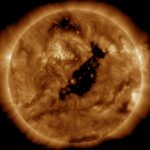
Scientists are monitoring a giant coronal hole on the Sun that could trigger geomagnetic activity and rare auroras this week. Credit sdo.gsfc.nasa.gov

Astronomers and space weather experts are closely monitoring a massive coronal hole on the Sun that is now directly facing Earth and could send strong solar winds towards the planet from May 15. Scientists say the phenomenon may lead to geomagnetic disturbances capable of affecting radio communications, GPS systems and satellites, while also increasing the chances of rare aurora displays appearing much further south than normal.

There is no danger to people on Earth, experts stress. Our planet’s magnetic field and atmosphere continue protecting us from harmful radiation linked to solar activity. But events like this are still taken seriously because modern life depends heavily on technology that can be sensitive to geomagnetic storms.

The timing has attracted particular attention because solar activity has remained unusually intense over recent months, producing spectacular northern lights in places where they are almost never seen.

Now scientists are waiting to see how strongly the incoming solar wind interacts with Earth’s magnetic field once it arrives later this week.

What exactly is the giant ‘hole’ scientists are tracking?

Despite the dramatic headlines circulating online, the Sun has not literally developed a hole.

What scientists are observing is something known as a coronal hole, a region in the Sun’s outer atmosphere where magnetic fields open up and allow charged particles to escape into space much more easily.

These areas often appear darker in solar images because they are cooler and less dense than surrounding regions.

The important part is not how they look, but where they are positioned. When a large coronal hole turns directly towards Earth, the solar wind released from it can travel straight towards our planet at extremely high speeds.

That flow of charged particles can then interact with Earth’s magnetosphere, the invisible magnetic shield surrounding the planet.

According to astronomers monitoring the event, the current coronal hole is both large and positioned in a particularly active area of the Sun, making it capable of producing stronger solar wind streams over the coming days.

Space weather specialists have therefore been following developments very closely ahead of the expected arrival of the solar wind from May 15 onwards.

What people on Earth could actually notice

For most people, the effects may end up being minimal. Scientists continue insisting there is no direct health risk to the public from this type of solar activity. But technology can sometimes react differently.

Moderate geomagnetic storms have the potential to interfere temporarily with GPS precision, radio communications and some satellite operations. Airlines, navigation systems and power operators also tend to monitor these events carefully whenever solar activity increases.

That does not mean major blackouts or widespread disruptions are expected.

In most cases, events of this scale pass with limited impact. Still, experts pay close attention because stronger geomagnetic storms have caused serious technological problems in the past.

One possible side effect attracting excitement rather than concern is the chance of seeing auroras much further south than usual.

Over the past year, northern lights became visible across parts of Europe and North America where sightings are normally extremely rare.

Photos of skies glowing pink, green and purple spread rapidly online during previous geomagnetic events, surprising many people who had never seen auroras outside Scandinavia or Iceland.

If the incoming solar wind interacts strongly enough with Earth’s magnetic field again, similar scenes could become visible in parts of Europe over the next few days.

That possibility is one reason why amateur astronomers and photographers are already keeping a close eye on forecasts.

Why solar storms worry scientists more today than in the past

Interest in space weather has grown sharply over recent years because modern societies are far more dependent on vulnerable technology than they were in the past.

Satellites, GPS navigation, aviation systems, communications networks and electricity infrastructure can all potentially be affected during major geomagnetic storms.

That concern explains why governments and space agencies invest heavily in solar monitoring systems designed to track activity on the Sun continuously.

The event scientists still talk about most is the Carrington Event of 1859, considered the strongest solar storm ever recorded.

At the time, telegraph systems across Europe and North America reportedly failed, with some operators receiving electric shocks and telegraph lines even catching fire.

Back then, the world relied far less on electrical technology than it does today.

Experts believe a solar storm on that scale now could create enormous economic disruption because modern infrastructure depends so heavily on electronic systems and satellites.

That does not mean the current event is expected to reach anything close to those levels. Scientists monitoring the coronal hole are describing it as significant, but not catastrophic.

Even so, events like this remind researchers how closely daily life on Earth remains connected to activity happening millions of kilometres away on the surface of the Sun.

The Sun is entering a particularly active period

Another reason scientists are paying attention is that the Sun is currently moving through one of the most active phases of its natural cycle.

Solar activity rises and falls over roughly 11 year periods. During more active phases, the Sun produces more sunspots, solar flares and coronal holes capable of generating geomagnetic storms.

That increase has already been noticeable throughout the past year.

Several strong solar events produced widespread auroras and raised concerns among satellite operators and communications agencies monitoring space weather conditions.

Researchers expect this active period to continue for some time, meaning similar solar events could become more frequent over the coming months.

For now, scientists are continuing to monitor the incoming solar wind closely while reassuring the public that there is no reason for alarm. But if skies suddenly light up with unusual colours later this week, many people across Europe may end up looking towards the night sky for a very different reason.

Continue Reading

Trending

Copyright © 2017 Spanish Property & News