Connect with us

%

Magaluf’s Spectacular Seafront Concert

Published

on

magaluf’s-spectacular-seafront-concert

One of the biggest free public celebrations of the summer on June 27 Credit: Facebook/CalviaNoticeboard

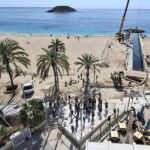
Magaluf is preparing to throw one of the biggest free public celebrations of the summer as the resort officially unveils its newly transformed seafront promenade on Saturday June 27.

Rather than a traditional ribbon-cutting ceremony, organisers have planned a full evening of entertainment on the beach, combining live orchestral music, cutting-edge technology and local food in a celebration designed to showcase a different side of one of Mallorca’s most famous destinations.

The event marks the completion of the second phase of the Gabriel Escarrer Juliá promenade renovation, a project backed by more than €6 million in investment and funded in part through European recovery funds.

Symphony orchestra takes centre stage

The headline act will be the Balearic Islands Symphony Orchestra, conducted by Pablo Mielgo, which will perform a free open-air concert directly beside the beach from 9.30pm.

Under the theme “Magaluf is Cinema”, the orchestra will perform some of the most recognisable movie soundtracks ever written. Audiences can expect music from Star Wars, Indiana Jones, Harry Potter, Jurassic Park, Superman, Schindler’s List, Titanic, James Bond and The Pink Panther, alongside other cinematic classics.

Organisers say the concert is intended to reflect Magaluf’s ongoing transformation into a destination focused on culture, family experiences and quality tourism.

300 drones to light up the bay

As darkness falls, attention will turn skyward when 300 synchronised drones launch above Magaluf Bay.

The aerial display will create giant cinema-themed images and animations over the sea, offering a modern and environmentally friendly alternative to traditional fireworks. The spectacle is expected to be one of the largest drone shows staged in Mallorca this year.

K-pop, DJs and food throughout the day

The celebrations actually begin much earlier, with activities running from 6pm.

A K-pop showcase featuring performers from Kpop Baleares will open the entertainment programme, followed by a set from DJ Alba Serrano. After the orchestra and drone display, the evening will continue with live music from Balearic group Lost in Translation, who specialise in reimagining famous movie songs.

Visitors will also be able to enjoy the second GastroFira de Magaluf, featuring restaurants, beach clubs and local businesses serving food and drinks throughout the day and evening. Participating venues include Bondy Beach, Blackbeard’s, Oceans, Kalima, Titanic and several other popular seafront establishments.

For one night, Magaluf’s famous beach will become an open-air cinema, concert hall and food festival all rolled into one. With free entry and no tickets required, organisers are expecting thousands of residents and visitors to attend

%

Why Your Weekly Shop In Spain Feels More Expensive Than Last Year

Published

on

why-your-weekly-shop-in-spain-feels-more-expensive-than-last-year

, food prices in the country have continued to rise over the past year. Photo credit: Guillem de Balanzo/Shutterstock

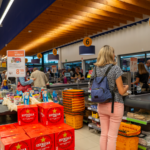
If you have noticed your supermarket bill going up even though you are buying the same things, you are not imagining it. Basic food items in Spain have risen again over the past year and it is showing most clearly in the weekly shop.

Eggs, coffee, vegetables and other everyday essentials are all more expensive than they were a year ago. None of it feels dramatic on its own, but it builds up quickly. A few cents extra on several products becomes several euros more at the till without you really changing anything.

According to Spain’s National Statistics Institute (INE), food prices in the country have continued to rise over the past year, with categories such as eggs, coffee and fresh vegetables among those recording the strongest increases in the consumer price index. That is what most people are noticing. Not one big jump, just steady increases across normal shopping baskets.

Eggs, coffee and vegetables are driving most of the increase

Eggs are one of the clearest examples of recent price rises. Coffee has followed a similar pattern, moving up again after already expensive periods in previous years. Fresh vegetables have also increased, partly because supply changes with seasons and weather conditions.

Even supermarkets own brand products, which many people rely on to keep costs down, have not stayed stable. They have moved up alongside branded items, which means switching brands does not always reduce the total anymore.

The impact is most obvious because these are not occasional purchases. They are part of almost every weekly shop. Milk, bread, fruit, pasta, oil and vegetables form the base of most households’ spending. When those go up together, it is noticeable straight away.

Why the same items now cost more without obvious changes

There is no single reason behind the increase. It comes from several pressures feeding into the final price. Production costs have risen, transport is more expensive, energy costs have been higher and supply chains have been under strain at different points. When those costs increase, supermarkets eventually pass them on. Even if the rise happens gradually, it still reaches the customer.

What makes it harder to notice in real time is that prices do not move in a straight line. Some weeks nothing changes, then suddenly a few key items jump at once.

Why your receipt keeps changing even when your shopping does not

One of the most frustrating parts is that there is no single moment where prices clearly go up. It happens in small steps. One week eggs are more expensive. A few weeks later vegetables change. Then coffee shifts again. Because it is spread out across different products, it never feels like one clear increase.

Instead, it shows up as a slightly higher total at the end of your shop. If you compare receipts from a year ago, the difference is often there, but it is made up of lots of small changes rather than one big jump. That is why many people feel like their budget is being stretched without really knowing when it started.

What a typical weekly shop looks like now

For a standard basket including milk, eggs, bread, pasta, fruit, vegetables, coffee and cooking basics, the total is usually higher than it was last year even if nothing extra is added. It is not that people are buying more. It is that the same list costs more to complete.

Even small increases across multiple items make a difference over time. A few euros extra each week adds up across a month, especially for households on fixed incomes. This is why food inflation is often felt slowly rather than suddenly.

Why prices are unlikely to drop back quickly

Food prices tend to stay high once they have risen. Even if production or transport costs ease, retail prices do not usually return to previous levels. Supermarkets operate on tight margins and adjust slowly. When costs go up, prices rise. When costs stabilise, prices tend to stay where they are.

That means households often adjust to a new normal rather than seeing prices fall back. It is one of the reasons the weekly shop feels permanently higher once it has changed.

What people actually notice at the supermarket

Most shoppers are not tracking inflation data or price charts. They notice something simpler. The same items they always buy now cost more at checkout.

Nothing about the shopping list has changed. The routine is the same. The products are the same. The only difference is the total at the end. And that is what sticks.

Continue Reading

%

Fugitive Wanted On Terrorism Charges Nabbed In Estepona

Published

on

fugitive-wanted-on-terrorism-charges-nabbed-in-estepona

Suspected Moroccan terrorist nabbed at Estepona beach bar. Credit: Turismo Estepona

Police made a dramatic arrest on the Costa del Sol after spotting a wanted man during routine duties. Officers from Estepona Local Police detained the suspect this week at the entrance to Playa del Cristo beach, right by an exclusive beach club access road. Patrol members noticed two men of North African origin entering a vehicle previously flagged to authorities. They carried out identity checks to process an administrative report on the vehicle.

International warrant leads to detention

Investigators soon discovered that one occupant faced an international search order from Belgium, together with an arrest warrant. The man had successfully evaded capture since July last year and had been in hiding in Estepona. Belgian authorities were looking for him over alleged offences connected to terrorism and crimes against individuals. Officers took him into custody immediately Malaga Hoy reports.

National Police later confirmed to reporters that the individual remained subject to a return decision, with Belgium as the requesting authority for those specific charges.

Companion questioned but released

Checks on the second man revealed prior police references possibly tied to terrorism matters. Authorities found no active warrant or judicial order against him, so they released the individual without charges.

Additional items were found in the vehicle

A search of the car uncovered documents belonging to a third party, including a Spanish national identity card and an accreditation for reduced mobility. When questioned, both occupants denied knowledge of how the papers ended up in their possession. One man said he planned to travel to Morocco and had entered Spain via Tarifa around four or five days earlier.

Ongoing enquiries continue

Officers handed the seized documents and case details to competent services for further examination. Meanwhile, the detained fugitive moved to National Police station, where they are more equipped to deal with serious criminals. Procedures now are going forward according to the Belgian arrest warrant.

This incident draws attention to continued cross-border efforts against terrorism suspects on Spain’s Costa del Sol. Local forces maintain vigilance in popular coastal areas frequented by international visitors and residents. Cooperation between Spanish and European authorities plays a key role in such operations, helping track individuals wanted abroad.

Continue Reading

%

Europe’s Cheapest And Most Expensive Capitals Revealed In New Ranking

Published

on

europe’s-cheapest-and-most-expensive-capitals-revealed-in-new-ranking

A city where wages remain strong may ultimately provide greater financial security. Photo credit: Aleksandr Medvedkov/Shutterstock

When people think about the cost of living in Europe, the conversation usually starts with one question: where is the cheapest place to live? A new analysis of 37 European capitals suggests that may be the wrong question entirely. While cities such as Sarajevo, Minsk and Chișinău rank among the cheapest capitals on the continent, the research shows that low living costs do not automatically translate into a comfortable lifestyle.

In many cases, affordability depends less on prices and more on how local incomes compare to everyday expenses. The findings presented by Tradingpedia indicate a growing divide across Europe, where some of the continent’s most expensive capitals can actually offer residents greater financial breathing room than cities with far lower prices.

Looking at living costs only tells half the story

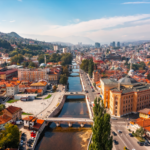
According to the study, Sarajevo is currently the cheapest capital in Europe, with average monthly living costs estimated at around €584. Minsk follows at approximately €596, while Chișinău comes in at around €626. At first glance, those figures make these cities appear highly attractive to anyone looking to lower their monthly expenses. Rent, transport and everyday purchases all tend to cost significantly less than in many Western European capitals.

However, the numbers become more complicated when salaries enter the equation. A city may be inexpensive, but if average earnings are also relatively low, residents can still find it difficult to save money or enjoy a comfortable standard of living. The amount left over after paying for essentials is often a more useful measure than prices alone.

This is why economists increasingly focus on purchasing power rather than simply comparing the cost of rent or groceries.

Europe’s most expensive capitals are not necessarily the least affordable

At the opposite end of the ranking sit Reykjavík, London and Amsterdam. These cities remain among the most expensive places to live in Europe, with housing costs playing a major role in pushing monthly budgets higher. Entertainment, dining out and everyday services also tend to cost considerably more than elsewhere on the continent.

Yet despite those higher prices, average incomes are often substantially stronger. For many residents, higher wages help offset the cost of living, making these cities more manageable than the headline figures might suggest. Living somewhere expensive does not automatically mean struggling financially if earnings rise alongside costs.

That distinction between cost and affordability is one of the most important conclusions from the research.

The capitals where residents get more for their money

The report found that some of Europe’s most affordable capitals are not among the cheapest. Cities such as Luxembourg City and Bern performed particularly well because average salaries comfortably exceed day-to-day living costs.

While residents still face high prices for housing, transport and services, they generally retain a larger proportion of their income after covering essential expenses.

For people considering relocation, this can make a significant difference. A city where wages remain strong may ultimately provide greater financial security than one where prices are low but earning opportunities are limited.

Europe is becoming divided into different affordability zones

In much of Eastern Europe, living costs remain relatively low, but salaries often lag behind. Northern and Western Europe tend to combine higher costs with stronger earnings, creating better overall purchasing power despite the higher prices.

Southern Europe sits somewhere in between. Countries such as Spain, Portugal and Italy generally offer lower living costs than some northern capitals, but wage growth has often struggled to keep pace with rising housing and household expenses. As a result, many residents find themselves spending a larger share of their income on everyday essentials than people living in wealthier parts of Europe.

What this means if you’re thinking about moving abroad

For anyone considering a move, retirement abroad or a remote-working lifestyle, the study offers a useful reminder. Choosing a destination based purely on low prices can be misleading. Rent, food and utility bills matter, but so do income opportunities, purchasing power and long-term financial stability.

The cheapest capital is not always the most affordable place to live, and some of Europe’s most expensive cities can provide a stronger quality of life than their price tags suggest. The real question is not how much things cost, but how much money remains in your pocket once you’ve paid for them. That is ultimately what determines whether a city feels affordable or not.

Continue Reading
Advertisement
Advertisement

Spanish Real Estate Agents

Tags

Trending

Copyright © 2017 Spanish Property & News