
Bad Bunny
Grupo Frontera: ‘What’s Happening In The United States Is Sad, It Hurts Us’

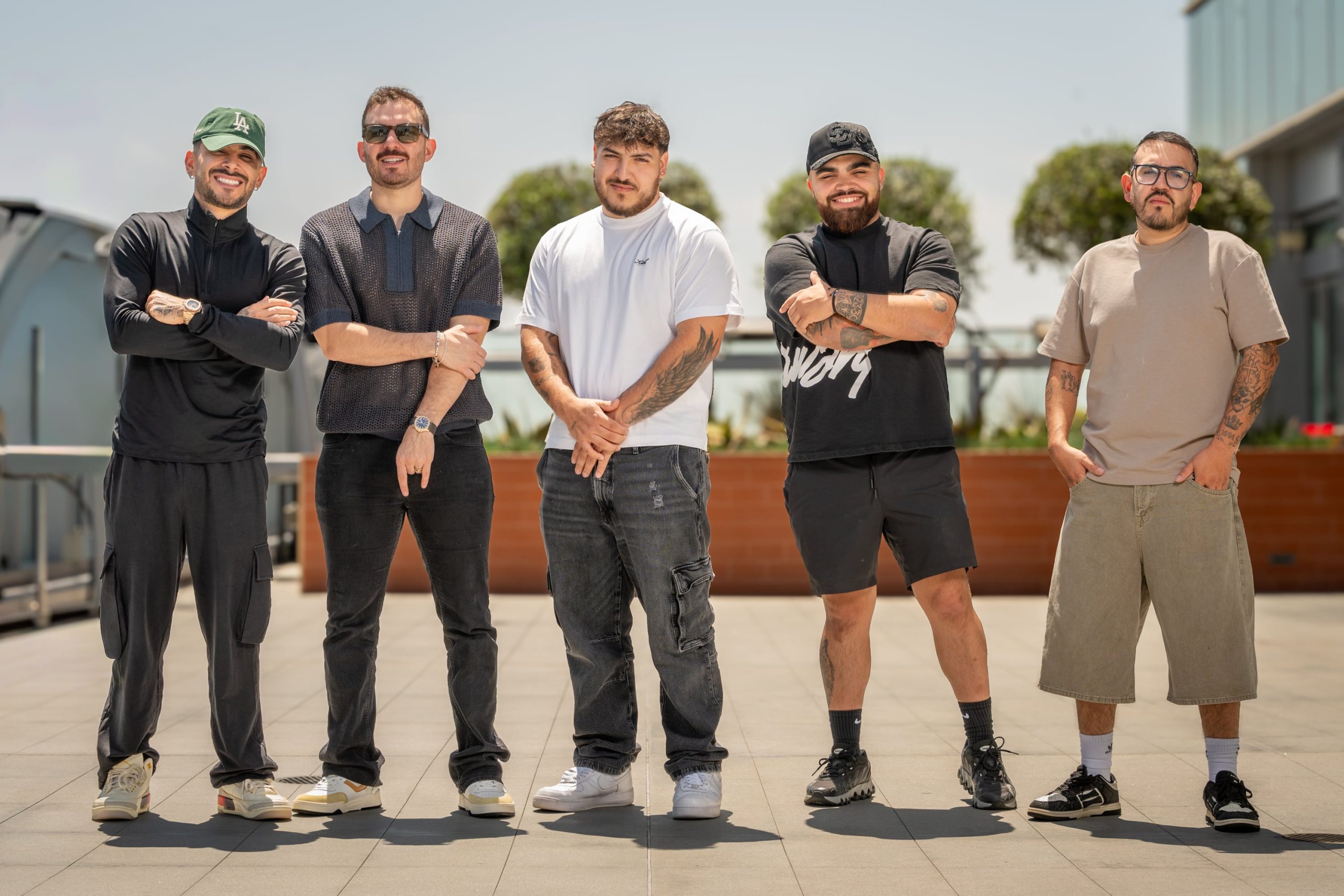
Until a few years ago, the true barometer of an artist’s or band’s popularity was recording an acoustic concert for the MTV Unplugged series. Today, that seal of approval has migrated to Tiny Desk — the short performances held behind an open desk at the U.S. National Public Radio (NPR) headquarters in Washington. Grupo Frontera reached that peculiar stage on April 24, 2025, performing five norteño ballads in 20 minutes, a set that allowed them to connect with a different audience. They rehearsed for six days to be ready for the appearance. “All the office workers see you,” recalls Alberto Acosta, the group’s guitarist.
That day, however, the most enthusiastic audience wasn’t in the newsroom — it was in NPR’s kitchen. The staff who prepare food and wash dishes couldn’t enjoy the performance because they were working. When the set ended, the six band members went back there to play El amor de su vida. It was a second Tiny Desk — improvised and intimate — that never appeared on NPR’s YouTube channel. “It was awesome,” Acosta says
This is a familiar scene for these musicians, who have become a phenomenon within regional Mexican music. At almost any restaurant they visit, whether in Mexico or the United States, the same thing tends to happen: a waiter will come over and ask them to step into the kitchen to greet the staff. “Our audience is working people — the folks out picking crops, the gardener,” says Juan Javier Cantú, the group’s accordionist. “In this industry, if you’re only in it for the money and the fame, it doesn’t work anymore, because you’re not connecting with your people,” he reflects.

A large share of their followers are workers who often go unnoticed by most people — those who labor in the back rooms of restaurants, raise buildings on construction sites, and keep gardens pristine in U.S. cities. It is also a community now living under pressure due to the tightening of immigration policies under the Donald Trump administration and the increase in raids by Immigration and Customs Enforcement (ICE).
The members of Grupo Frontera — a band formed in Texas, just a stone’s throw from the U.S.-Mexico border — say they are not immune to that reality. “We want all this fixed. Because what’s happening in our country is sad. We see it with our workers, with people close to us. It hurts us,” says Cantú.
They see the negative effects of Trump’s hard-line approach “closer than people think,” says the group’s singer, Adelaido Payo Solís III. The band’s drummer, Carlos Guerrero, agrees: “Those of us who live there [in the border city of McAllen] see it every day. It’s sad, but we’re fighting and standing strong.”
Days after releasing their new EP Con Dolor on May 28, the musicians spoke with EL PAÍS in a downtown Los Angeles skyscraper, where they were staying while taking part in World Cup-related events. They recorded a song tied to the tournament for a Spanish-language TV network.
Their time in the city was just a brief pause after a tour through Central America and Mexico. In a few days, they will head to Europe for shows in Paris, London, Zurich, Barcelona and Madrid, before wrapping up their Triste Pero Bien Cabrón tour at home in the United States. It is the most ambitious tour of their career and, for them, a sign of the global reach Mexican music has achieved — a phenomenon driven by artists such as Peso Pluma, Carín León, Natanael Cano and Fuerza Régida.

“Mexican music is at a point where it’s widely accepted in many places,” says Carlos Guerrero, the drummer. “Before, artists in this genre weren’t seen filling stadiums or arenas. The fact that our music has travelled this far — that we’re about to tour Europe — is something not everyone gets to experience. We take it with a lot of pride and a lot of respect.”
From local parties to massive concerts
Grupo Frontera’s rise has been nothing short of meteoric. In just six years, they went from playing at quinceañera parties in the Rio Grande Valley, Texas, to selling out large-scale concerts. Their breakthrough came in 2022, when their version of No se va went viral on social media.
But that was just the beginning. A year later, they made the definitive leap to stardom with UN X100TO, recorded as a duet with Puerto Rican superstar Bad Bunny. The scale of the hit is clear from the numbers beneath the video: more than 1.1 billion views on YouTube — and counting. “The collaboration with Bad Bunny helped the industry respect us more,” says Solís.
That same year, the Puerto Rican star invited them to share the stage at Coachella, one of the world’s biggest music festivals — another milestone in their career.
Despite their fame, they have remained close to McAllen, the border city where they grew up. They describe it as a place you can drive across in just 15 minutes — a far cry from the global cities they now tour. Back home, they are still surrounded by neighbors who speak Spanish and regularly cross into Mexico to shop, see doctors and enjoy the food. Rather than being a barrier, that environment shaped their artistic identity and led them to sing in their parents’ language, they say.
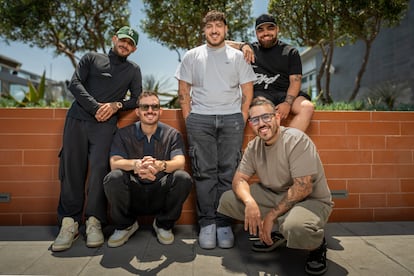
“Before, we used to say: for Mexicans, we’re not Mexican enough, and for Americans, we’re not American enough,” Solís recalls. “People would ask us: ‘How can you sing in Spanish if you don’t speak it?’ Well, that’s exactly what Selena did. She didn’t speak Spanish perfectly, but she sang in it. When we started, I kept improving my Spanish.”
The reference to Selena Quintanilla is no coincidence. In the 1990s, the so-called “Queen of Tex-Mex” paved the way from Texas for generations of artists raised between two cultures. She was one of the first figures to win over audiences on both sides of the border, at a time when much of the regional Mexican music consumed in the United States was coming from across the Rio Grande. Before her, Chalino Sánchez, from Los Angeles, had connected with migrant communities through corridos. Later came artists and groups such as Lupillo Rivera, Jenni Rivera, Intocable and Gerardo Ortiz.
Grupo Frontera’s rise coincides with a moment of uncertainty for the genre. In recent months, several artists — especially performers of narcocorridos — have seen their work visas revoked. The band members view the situation with concern, although they trust the outlook will soon shift for the better. “What happened to that famous ‘freedom of expression’?” asks percussionist Julián Peña, making air quotes with his fingers. “You’re supposed to be free to sing and talk about whatever you want in songs.”
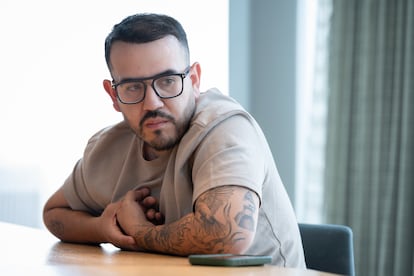
Solís believes the worst is over. “At first it did feel heavier, both because of the visas and because people were afraid to go to concerts [because of ICE operations]. But I feel like things are improving.” In times marked by the immigration debate and political tensions, these musicians believe their cumbia songs serve a purpose beyond entertainment. “They’re giving strength to the whole community,” they say.
The group’s list of collaborations is long: Shakira, Maluma, Carlos Santana, Morat, Christian Nodal… They have moved between bachata, country, R&B, reggaeton and electronic music. Their next goal is to strengthen their own artistic identity, says accordionist Juan Javier Cantú: “We want to show little by little that we’re not just featuring artists.”
Sign up for our weekly newsletter to get more English-language news coverage from EL PAÍS USA Edition














Bad Bunny
Andrew Stanton, Director Of ‘Toy Story 5’: Children Should Play At Imagining, Rather Than Have A Screen Explain The World To Them

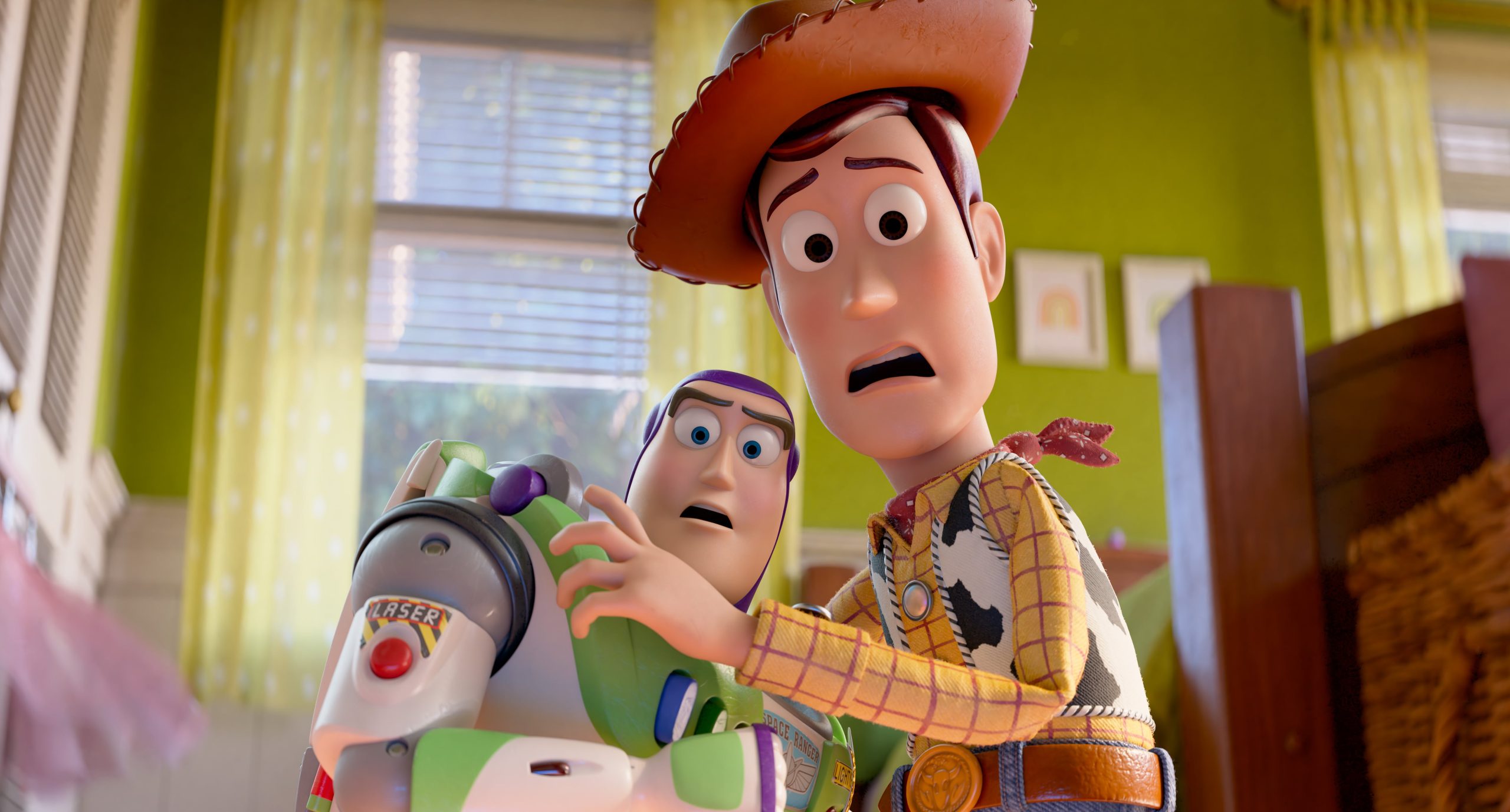
A life without imagination is not a life. Without fantasy, without creation, without daydreams or fairy tales. But how are we going to develop our imagination if we do not do so from childhood, playing with our toys, if we are instead dazzled by the bright screens of our phones? Thirty years ago in November 1995, when Toy Story premiered, that question was unthinkable. Today, after three sequels, half a dozen shorts, a handful of mini-shorts, a series and television specials, and with Toy Story 5 about to open in movie theaters, the question is unavoidable.
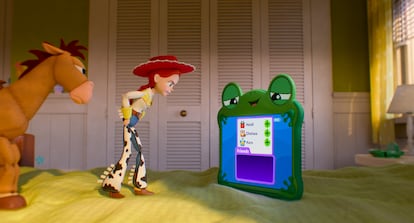
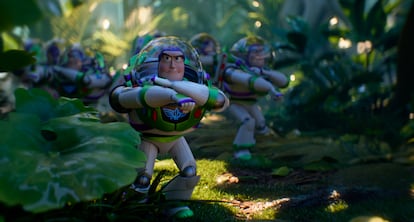
Starting on June 17, Buzz Lightyear, the cowboy Woody, his colleague Jessie, Mr. and Mrs. Potato Head, the tyrannosaur Rex and the whole gang are returning to theaters to accompany not Andy — now all grown up — but, as they have for a few years, Bonnie, who has also kept growing. This time, however, their adventures gain an addition as logical on screen as it is in children’s (and adults’) lives: technology. An arguably malevolent green tablet called Lilypad will become the new antagonist. Or maybe not entirely: ultimately it seeks the same thing as everyone else — to care for and entertain Bonnie, helping her make friends, even if its methods aren’t the best. The question is: will technology make toys disappear?
Not only has Toy Story’s background changed; its form has changed too. The franchise seeks an update for how it presents itself to audiences, and for that, it features Bad Bunny, Penélope Cruz and Bizarrap among its new voice cast. The icing on the cake is its soundtrack, which includes a song composed by superstar (and major fan of the Toy Story franchise Taylor Swift, which the artist performed live at the world premiere in Hollywood on Tuesday. She capped the appearance emotionally with a rendition of “You’ve Got a Friend in Me” alongside its composer, veteran Randy Newman, at the piano.
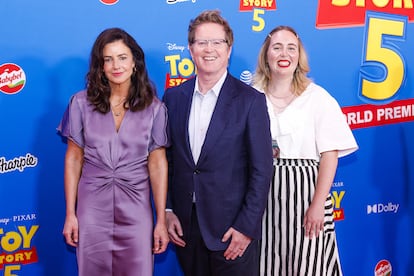
But it will be the contrasts between technology and toys that will attract attention in this fifth film. In fact, the fourth installment, released in 2019, could already have explored this… “I felt like I was worried we might be a little late to talk about it,” admits director Andrew Stanton in a conversation with EL PAÍS in Los Angeles. He has been part of the saga from the start: he was a screenwriter on previous films and now writes and, finally, directs Toy Story 5. Joining him in the conversation were his co-director and co-writer Kenna Harris, who also worked on Hoppers, Elemental and Elio; and producer Lindsey Collins, who has worked on Wall·E and Finding Dory. “But it turns out,” Stanton continues, “that we hit on something everyone is worried about.”
If previous Toy Story films had enemies — real enemies — it was because they were genuinely bad. Here, by contrast, technology is more a counterpart, a firm opponent but not a hateful villain. Lilypad and its kind are not villains per se, but they do captivate Bonnie and her friends in the same way we see technology hooking the youngest today, hindering their socialization and sometimes preventing them from thinking or managing their emotions. “They have a goal that aligns with the toys’. They care; our machines are concerned about the girl,” Stanton reflects. “They just have a very different opinion about how things should be.” In fact, the trio jokes that they realized Lily was “basically an overprotective mother who is also a personal assistant.” “She would say, ‘We’re going to make these friends, we’re going to follow these steps and we’re going to get into Harvard.’ Everything starts with good intentions, but it’s a method and a way of acting very different from how the toys want to support the child. That’s where they clash,” they say. “These battling philosophies is kind of the way we approach this. Which is very real,” Collins adds.
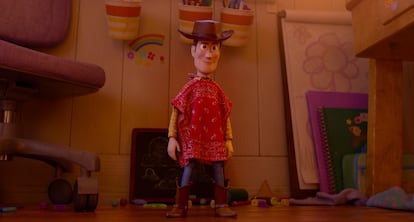
The physical, anti-technology heroine, as real as a toy can be, is Jessie (do not, under any circumstances, call her Jessica). Half a dozen Buzz Lightyears also have their own subplot, and of course Woody does too. Although in the previous installment it seemed he was saying goodbye to the toy world, the fastest cowboy in the West would never leave his friends alone on this adventure. Thirty years have passed, and they have passed for everyone. Woody is now a hippy-looking gentleman wearing a poncho, with a paunch and a thinning pate. Time passes. Changes and replacements arrive. “Jessie was kind of the perfect character to end up taking on this particular battle. And so it’s nice to see how that kind of all worked out together,” says Kenna Harris. After years of Andy, Buzz and Woody, now Bonnie, her friend Blaze, Jessie and Lilypad take the lead.
It seems the girl finally takes the reins, literally and figuratively. Why her? Everyone wants to answer. Andrew Stanton jumps in, and the three laugh at his taking the floor as the only man. “At the end of Four, when Woody gave his badge to Jessie, I knew that if there was a next movie, it had to lead with Jessie now. That was always the hope. I just didn’t know I’d be the one,” admits the two-time Oscar winner (for Wall·E and Finding Nemo), who has about 20 titles to his name and has been at Pixar for nearly 40 years, although he had never directed a Toy Story film before.
“We all connected on the fact that we felt like there was way more to explore with her and that she’s just so fun because she’s really different from Woody‚” reflects the youngest of the three, co-director McKenna Harris. “It’s not just seeing the same old sheriff in town. Yeah, she thinks totally differently from him. He’s more of the straight man and she’s like, leap before you think and fight before you talk. She’s built to be a hero. Very unhinged, very chaotic,” they laugh. “You want to see the movie just because she’s hilarious.” Indeed: Jessie dominates the most hilarious scenes, alongside old technological glories (a GPS, an old children’s digital camera), but also the most tender and nostalgic, by the tree where she was abandoned.
So, despite the invasion of screens, will there still be toys around? “Depending on what day you ask me, if I’m in a bad mood, I’ll be like, I don’t know. And then on a good day, I’d like to think they always will to some degree,” says Stanton, adding that “when I say toys, what I really worry about is imagination, that the kids are really just pretending instead of having the world all explained to them on a screen and in some pre-planned device.” Producer Collins says there is also a nostalgic tendency to rescue these old playthings, as she sees with her own children. “They talk a lot about what it was like before technology, before phones… There is this curiosity around the pre-tech era and I think that’s an interesting kind of desire that seems to be springing up.”
Her colleague Harris also supports the point, saying that technology, after all, is changeable and “has a shelf life.” “But humans are programmed to play, to be imaginative. So I have to imagine there’s always going to be this holdout of folks who need that and crave that. And that’s why toys will make it.”
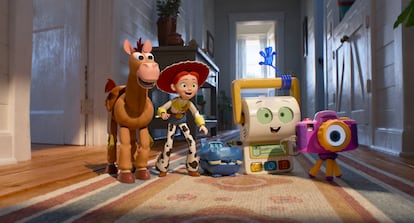
If anyone is particularly pro-toy it’s production designer Bob Pauley, who has brought to life the most famous toys of the last 30 years. A Pixar legend, he created Buzz Lightyear (he recalls that in just a couple of months they reached the definitive version), and now new characters like Smarty Pants and Lilypad, which he admits took a bit longer to develop in order to humanize the tablet. “It was a fun process because we wanted to make sure it was a character the audience could connect with,” he tells this newspaper. They wanted its face to be as expressive as possible and paid special attention to details like the eyes, for example.
“Oh toys are gonna be around forever. I believe that so much,” reflects the veteran designer, who believes there is room for everything: educational toys, developmental toys, even the simple wooden ones. “The simpler toys are active play, where you’re thinking about stories and you’re kind of creating little worlds. So I don’t think they’re going to disappear. I hope not. Oh, no.”

Francia – Irak: El Partido Del Mundial 2026 En Directo | Se Activa El Protocolo Por Tormenta Eléctrica En El Descanso Y El Encuentro Está Detenido

Prime Day 2026 En Directo: Fichamos Las Rebajas Que Merecen La Pena Contadas Minuto A Minuto

Marshal reacts after being SLAPPED by angry racer following crash
A major EU border system goes live today – What changes for travellers?
El Pentágono, Evacuado Por Una Falsa Alarma Ante La Sospecha De Un “incidente Con Materiales Peligrosos”
Mallorca launches new plan to save its beaches as coastal erosion threatens popular resorts


-
EU rules2 weeks ago
A major EU border system goes live today – What changes for travellers?
-
America2 weeks ago
El Pentágono, Evacuado Por Una Falsa Alarma Ante La Sospecha De Un “incidente Con Materiales Peligrosos”
-
Coastal erosion2 weeks ago
Mallorca launches new plan to save its beaches as coastal erosion threatens popular resorts
-
fira de ses herbes2 weeks ago
Selva herb fair returns: Mallorca’s most magical tradition blooms again
-
european airport delays1 week ago
1,225 delays at major European airports raise summer warning for Spain travellers
-

 %1 week ago
Barcelona Tests Olive Pit Asphalt That Could Transform How Cities Build Roads
-

 Uncategorized2 weeks ago
WATCH: Kim Kardashian steals F1 Monaco GP winner Antonelli
-

 Casa Real2 weeks ago
Victoria Federica De Marichalar Fue Vestida De Dior Para Ver Al Papa