Connect with us

%

A Dog Left To Die Now Finds Survivors No Human Can Reach

Published

on

a-dog-left-to-die-now-finds-survivors-no-human-can-reach

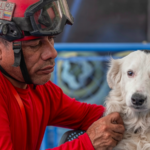
Tsunami has an extraordinary career alongside his handler, Jorge Beens. Photo credit: Tsunami.K9 on Instagram

In the middle of the desperate search for survivors following Venezuela’s devastating earthquake, one rescuer has captured hearts around the world. His name is Tsunami, a 9 year old Border collie, and before becoming one of the highly trained search dogs helping locate people buried beneath collapsed buildings, he was an abandoned animal rescued from abuse and given a second chance at life.

Today, as he searches through shattered concrete and twisted steel for signs of life, his own story has become just as extraordinary as the people he helps save.

From abandoned dog to disaster hero

Long before Tsunami became one of Venezuela’s best-known rescue dogs, survival looked very different. The Border Collie was abandoned and suffered abuse before being rescued himself. His future could easily have ended there, another forgotten animal with little hope of finding a home. Instead, he was taken in by Venezuelan rescuer Jorge Beens, who saw something beyond the frightened dog standing in front of him. He saw intelligence, determination and the potential to do something extraordinary.

That single act of compassion changed everything. Over the following years, Tsunami underwent the demanding training required of every search-and-rescue dog. He learned to work in deafening noise, ignore distractions, navigate unstable ground and remain calm in places where most animals would instinctively turn and run. Every stage of training strengthened the bond between dog and handler, building the trust needed to work together in some of the world’s most dangerous disaster zones.

A border collie covered in mange
Tsunami was found abused and abandoned. Photo credit: Tsunami.K9 on Instagram

How rescue dogs find survivors when technology can’t

When buildings collapse, time becomes the greatest enemy. Modern rescue teams rely on thermal imaging cameras, drones, listening devices and specialist equipment to search for signs of life. But even the most advanced technology has limitations. Layers of concrete, twisted steel and unstable debris can hide survivors from machines, especially when they are unable to call for help. That is where search-and-rescue dogs become invaluable.

A dog’s sense of smell is estimated to be tens of thousands of times more sensitive than our own. Even beneath tonnes of rubble, microscopic scent particles escape through tiny gaps, creating a trail that trained dogs can detect with astonishing accuracy. Working alongside their handlers, they move methodically across collapsed structures, following scent signals invisible to everyone else before alerting rescuers to the exact location where someone may still be alive.

Tsunami pushed to the limit

Searching an earthquake zone demands extraordinary endurance from both rescuers and the dogs working beside them. Every deployment means climbing unstable mountains of broken concrete, weaving through twisted steel, shattered glass and collapsed walls while aftershocks remain an ever-present danger. Thick dust hangs in the air, temperatures soar and every search requires complete concentration despite the noise of heavy machinery and rescue teams working around the clock.

Unlike humans, dogs have no understanding of the scale of destruction. They simply keep working, guided by training, instinct and trust in their handler. The physical toll is significant. Handlers must constantly monitor fatigue, dehydration and injury, ensuring the dogs do not push beyond their limits even when instinct tells them to continue.

Despite those conditions, Tsunami has continued to deliver results. During the current earthquake response in Venezuela, he has already helped rescuers locate at least 13 survivors buried beneath the rubble, giving rescue teams the chance to bring people out alive. Each alert is followed by frantic digging, silence, then either heartbreak or relief, but always effort, because Tsunami has given rescuers a reason to keep going.

#HEROE 😍 El mejor rescatista 💪 Tsunami, un valiente perro entrenado para búsqueda y rescate, se convirtió en protagonista tras los sismos en La Venezuela. El can marcó con precisión la zona donde un hombre de 60 años permanecía bajo escombros, permitiendo su rescate oportuno. pic.twitter.com/xLxKAuDKL4

— Colombia Oscura (@ColombiaOscura) June 27, 2026

Not his first disaster, but it will be his last

Tsunami had already built an extraordinary career alongside Jorge. He travelled overseas to assist international rescue teams following the devastating earthquakes in Turkey and Syria in 2023, where entire cities were reduced to rubble and every successful search meant everything to a waiting family. Closer to home, he also worked during the deadly floods and landslides in Venezuela in 2022, once again using his extraordinary sense of smell to help locate survivors. Over the course of those missions, he has been credited with saving more than 300 lives.

Tsunami will never know how many families still celebrate birthdays, hug loved ones or watch children grow up because he refused to stop searching. The abused puppy who was once given a second chance has spent a lifetime giving hundreds more to complete strangers. As he prepares to retire after Venezuela, he leaves behind a legacy measured not in medals, but in lives that continued because one rescued dog never stopped looking and one man never gave up on him.


%

Lorry Snags Power Cable On A-7 In Mijas

Published

on

lorry-snags-power-cable-on-a-7-in-mijas

A lorry became tangled in overhead power lines on the A-7 near Mijas on Tuesday, June 30 morning, leaving drivers exposed to live cables on the road and triggering tailbacks that disrupted residents and commuters for hours.

What happened on the A-7 near Calahonda

Emergency services received calls from members of the public at around 8.20am after a lorry struck overhead cables on the Marbella-bound carriageway near kilometre 1022, close to Calahonda. Officials believe the downed cable affected four vehicles in total, with drivers forced to stop suddenly close to a live wire on the carriageway.

Both the right-hand and left-hand lanes were shut at the scene, causing massive congestion stretching up to four kilometres back from the first Mijas junction. Commuters faced lengthy delays during the busy morning rush, unable to pass the danger zone safely.

Major risk to drivers and nearby residents

Live overhead cables falling onto a motorway carry an obvious electrocution risk to drivers and to anyone attempting to move stranded vehicles or assist others nearby. Residents in surrounding areas faced disruption too, with the closure cutting off a key route through Mijas during peak travel hours.

Guardia Civil officers, firefighters and Endesa technicians attended the scene to secure the area, given the danger of wires remaining energised after such a collision. Thankfully, despite the nature of the incident, no injuries have been reported among those involved.

Emergency response and clean-up

Endesa staff worked to assess and remove the damaged cabling with traffic officers managing stranded vehicles and rerouting drivers around the hazard. Authorities have not yet confirmed what caused the lorry to make contact with the lines, nor how long repairs to the damaged power infrastructure may take.

Separate lorry incident near Marbella

Elsewhere on the A-7, a lorry tyre blew out shortly before 7am near kilometre 1045, on the Cadiz-bound carriageway towards Marbella. Debris partially blocked the right-hand lane, producing a separate jam of roughly 1.5 kilometres during peak rush hour traffic, not a good morning for drivers across the Costa del Sol.

Continue Reading

%

Petrol Station In Spain Sparks Chaos After Wrong Fuel Is Mistakenly Dispensed For Hours

Published

on

petrol-station-in-spain-sparks-chaos-after-wrong-fuel-is-mistakenly-dispensed-for-hours

Fuel contamination incidents like this are rare. Photo credit: Dayow/Shutterstock

Imagine pulling into a petrol station to do something as simple as refuelling your car, then a few kilometres down the road, your engine check engine light turns on, followed by the engine failing in what was previously a perfectly functional vehicle. This is what has happened to dozens of drivers after visiting a petrol station in the Galician town of Ribadeo.

What should have been a routine stop turned into an extended fuel error that left vehicles being filled with the wrong fuel for several hours, with motorists unknowingly continuing their journeys until problems began to appear.

At a time when every litre matters and fuel prices remain a daily pressure across Spain, the incident has carried particular weight. For those affected, it is not just the mistake itself, but the disruption that followed and the frustration of something so routine turning into an avoidable problem.

A routine stop that turned into a hidden problem

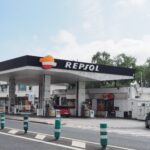
The incident took place at the Repsol El Jardín station in Ribadeo, where a fuel delivery error during tanker unloading led to diesel contaminating the petrol 95 supply tanks. For over hours four hours, the pumps labelled as petrol were dispensing fuel that was not what drivers believed they were buying.

Because the issue originated in the underground storage system rather than at the pump itself, customers and employees had no way of knowing anything was wrong at the time of refuelling. Many simply carried on with their day as normal. It was only later, when engines began to behave differently, warning lights appeared or vehicles broke down, that the scale of the issue started to become clear.

Drivers now facing disruption at a difficult time

For those affected, the problem goes beyond inconvenience. Modern engines are sensitive to fuel contamination, and even a short drive with the wrong mixture can lead to mechanical issues that require draining systems, replacing filters or carrying out full diagnostics. That means the aftermath of a few minutes at the pump can turn into days without a car, unexpected garage bills, and disruption to work and family life.

Even though the station has confirmed it will cover repair costs linked to the incident, drivers are still left dealing with the immediate reality of being without transport and the uncertainty that comes with waiting for assessments and repairs. But for many compensation does not remove the stress of breakdowns, missed commitments or the time lost trying to resolve the situation.

What happens when diesel enters a petrol system

Fuel contamination incidents like this are rare, but when they occur, the impact on vehicles can vary significantly depending on how far the car was driven before the issue was discovered. In petrol engines, diesel can interfere with combustion, leading to poor performance, engine misfires or complete failure to start.

In some cases, the fuel system must be fully flushed before the vehicle can be safely used again. In other cases, the car needs to be completely scrapped. That uncertainty is part of what makes incidents like Ribadeo so disruptive. Some drivers may escape with minimal damage, while others face more extensive mechanical work, with no immediate way of knowing which category they fall into.

Rising fuel prices make the impact harder to absorb

The frustration among the motorists is being felt but for many other reasons. Fuel prices remain a constant concern for many households in Spain, and transport is one of the few unavoidable necessary expenses in daily life. When costs are already high, any additional burden, even temporary, feels heavier.

A routine refuel is supposed to be predictable, instead, some drivers in Ribadeo are now dealing with an unexpected chain of consequences that started with what should have been a normal stop. For many, it is not just about what went wrong, but how quickly everyday stability can be disrupted by a single operational failure.

Station response and investigation

The petrol station has acknowledged the incident and confirmed that it will take responsibility for the costs associated with repairs resulting from the error. Efforts are also underway to identify affected customers and manage claims, including reviewing transaction records and CCTV where necessary. The cause has been traced to a fuel delivery issue during tanker unloading, which led to diesel entering the petrol 95 storage system and affecting multiple pumps for a period of around four hours before being detected and resolved.

A quick stop for fuel turned into a situation that has left drivers dealing with inconvenience, financial uncertainty and disruption that no one plans for when they pull into a petrol station. As the investigation continues and repairs are handled, those affected are left with a simple reminder: even the most routine parts of daily life are only ever one mistake away from becoming something far more difficult to manage.

Continue Reading

%

Councils Battle Invasion Of Asian Seaweed

Published

on

councils-battle-invasion-of-asian-seaweed

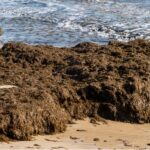
Local councils are battling a massive invasion of Asian seaweed (Rugulopteryx okamurae) that has prompted the Junta de Andalucia to declare the situation one of “force majeure and extreme necessity.”

Heavy machinery and night shifts battle beach invasion

Marbella council teams have been working intensively to clear the invasive brown seaweed from local sand. Environment councillor Diego Lopez reported that the town hall had removed roughly 10,000 tonnes of seaweed so far this year, nearly double the approximate 5,300 tonnes removed in all of 2025. Earlier in the year, a single-day operation cleared 374 tonnes from Nueva Andalucia beach alone, proving how fast the algae accumulates even outside peak summer season.

In Estepona, town hall figures show 1,100 tonnes collected at La Rada beach over five days of emergency operations, with more than 1,000 additional tonnes estimated across Buenas Noches, Guadalobon, La Cala, El Velerin and El Saladillo. The operation runs on continuous shifts (noon to midnight) using 35 cleanup workers, 7 tractors, 3 tanker trailers, a 4×4 truck, 2 backhoes, 7 seaweed-removal machines and a dump truck. Further along the coast, Malaga city cleaning teams have also reported a heavier-than-usual workload at popular beaches.

Town halls demand urgent financial support

Lopez confirmed that Marbella has already spent more than €1 million of public money on seaweed cleanup this year. He said the council has raised the issue six times in recent years, but there is still no state funding or national action plan. A motion passed in June 2026 calling on Spain’s central government to provide emergency funding and develop a coordinated national strategy. According to reports from the June 26 plenary session, the local PSOE group voted against the motion, a decision criticised by the ruling PP group.

On April 29, 2026, the Junta de Andalucia formally declared the seaweed invasion a situation of “force majeure and extreme necessity”. This legal status exempts councils from paying Spain’s €30-per-tonne landfill tax when disposing of the seaweed. The measure was welcomed by hard-hit areas such as Tarifa, which spent more than €100,000 last year transporting the algae to landfill.

The scale of the problem is regional, the Junta estimates an annual biomass of around 100,000 tonnes of fresh seaweed in the Strait of Gibraltar area alone, with the volume taken to landfill in some towns (e.g. Rota) tripling in 2024 and multiplying eightfold in 2025.

Ruined fishing nets and smelly beaches cause alarm

Rotting seaweed piles continue to cause problems for local businesses and wildlife. Thick mats of the algae alter marine habitats, reduce biodiversity and disrupt local ecosystems. Local fishermen face torn nets and rising costs from repairs, with beachfront businesses fearing lost summer trade as the weed rots quickly in the heat, producing a strong smell and attracting flies.

Continue Reading
Advertisement
Advertisement

Spanish Real Estate Agents

Tags

Trending

Copyright © 2017 Spanish Property & News