Luisa was locked up in an asylum for dreaming of cherubs. Juana was committed so her inheritance could be seized. Julia was confined for being irritable, energetic, and impulsive. Carmen was confined at her husband’s request, despite having no symptoms. The painter Leonora Carrington also ended up in a mental institution, on her father’s orders, after beginning a relationship with an older, married painter.
The diagnoses? Genital madness. Melancholic psychosis. Mental disturbance. Postpartum depression. They were all mad, deranged, hysterical, recounts Marisol Donis, a pharmacist and criminologist, in her new book, Mujeres grises sobre fondo negro (Gray Women on a Black Background). In the book, the author describes how, during the 19th and early 20th centuries, asylums were used as a tool of oppression to confine, subjugate, and silence women who did not meet the social and cultural expectations of the time.
Donis, speaking to EL PAÍS via video conference from the Spanish city of Vigo, where she lives, explains that the book originated from the exhibition Forgotten Voices, about women admitted to the Conxo psychiatric hospital in Santiago de Compostela. “There were handwritten letters from women begging to be released,” says Donis. “Letters that never reached their recipients. They were admitted without being mentally ill, simply for the first act of rebellion by a young woman. I was shocked; I didn’t think it could be so easy to admit a woman who had nothing wrong with her. But it was easy because the one in charge was the father or the husband.”
For smoking, for drinking, for being “shockingly cheerful.” For having “cynical and senseless conversations.” For being “odd” or “capricious.” For reading. Any excuse to lock them up would do, explains Donis in the book: “The initial diagnosis for all of them was hysteria. Asylums were tools of confinement and social control.” Many were healthy and perfectly sane, but they had transgressed established gender roles. And the directive was “to straighten out all women and remove them from public life,” the author reflects.
Donis illustrates the modus operandi of the time through stories with names and surnames. Very different women. Some famous, like Carrington or Emily Dickinson; but also anonymous, like the young woman whose family wanted to send her to Conxo after she led “a libertine life.” “This happened in all social classes. They went after them; neither the poor nor the rich had any escape.”
Each woman’s story is unique, but all of them converged in the same pattern. “They wanted to get rid of them,” Donis concludes.
The confinement was already terrible in itself, but the treatments the women were subjected to — some extremely violent — further broke their will. One young woman, wrongly diagnosed with schizophrenia, was given electroshock therapy, cold showers, boiling‑water vaginal douches, and was even scheduled for a lobotomy that, fortunately, was halted at the last minute, Donis recounts.
“For hysteria, mystical madness, mania, or puerperal madness, they started with bromides and warm baths. And they pumped them full of cacodylate injections, which are used to treat anemia. The point was to torment them,” says the writer. The doctor even forbade the poet Emily Dickinson, who voluntarily secluded herself in her room, from reading and thinking.
The legacy of that whole system of social oppression — the indiscriminate confinement of women — is difficult to digest. Donis argues that the labels of “mad” and “hysterical” still linger. “Now, of course, the law protects us and doesn’t allow you to be committed to a psychiatric institution without cause. But I think people’s attitudes haven’t changed that much,” she reflects. Stepping outside the norm is still punished with social criticism, she says.
But while some vestiges of the past remain, things have changed, she insists. Women, says Donis, are more empowered than ever — “they know what they want” — and she sees it as unlikely that history could repeat itself at the levels of repression and humiliation described in the book. “Much progress has been made. It’s very difficult to imagine a new tool for social control, much less one to silence them. Now, not even God can silence them.”
Sign up for our weekly newsletter to get more English-language news coverage from EL PAÍS USA Edition
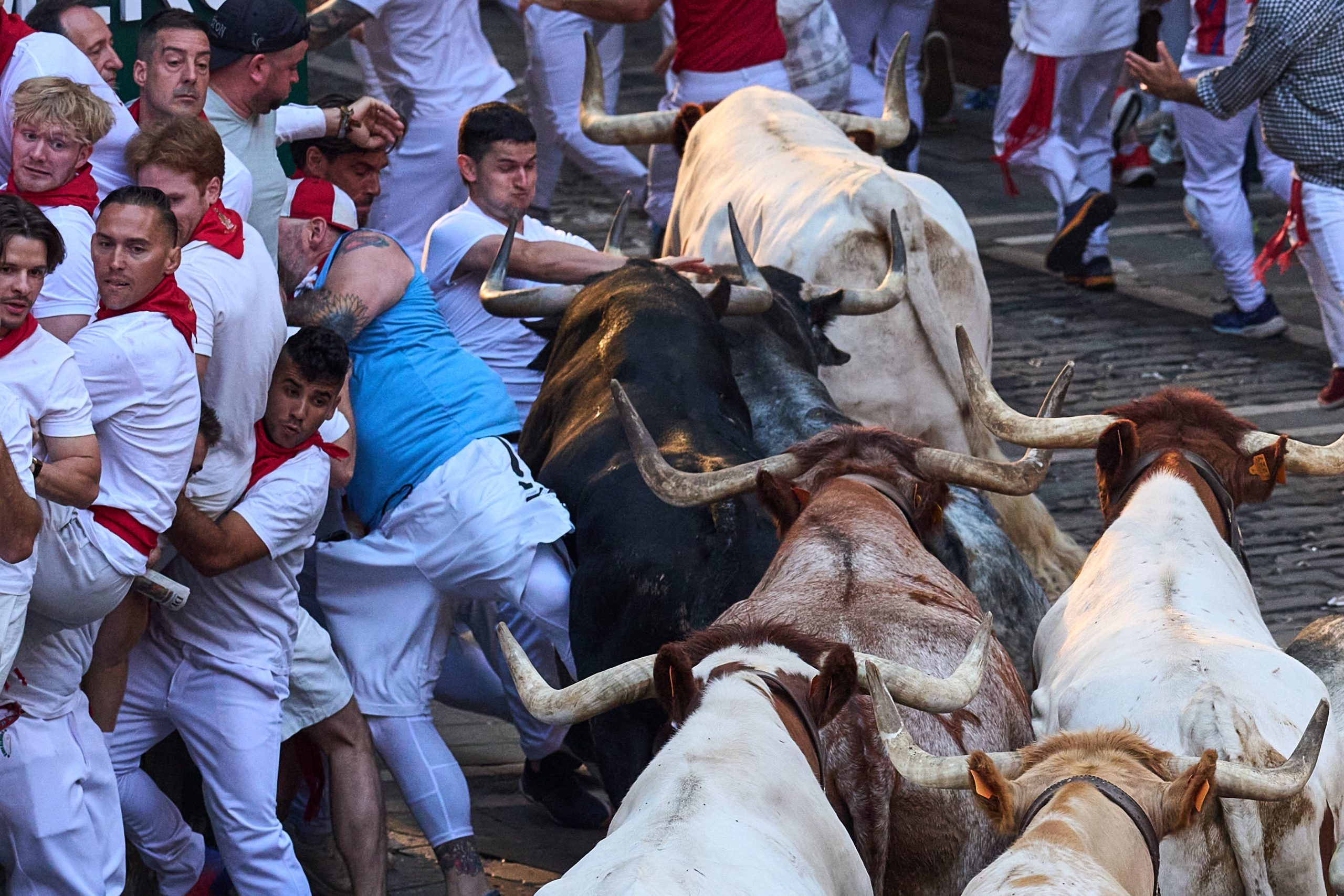
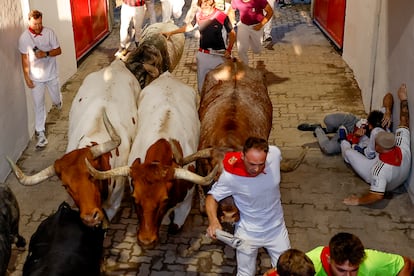
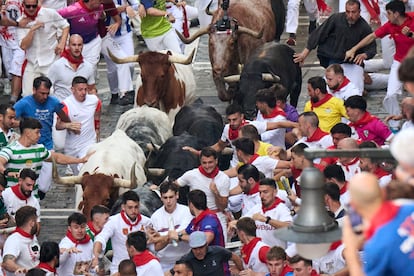
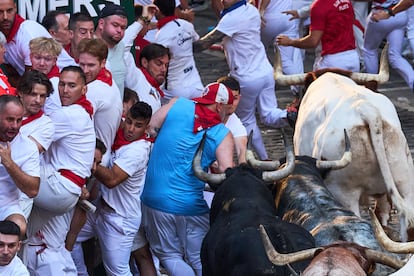
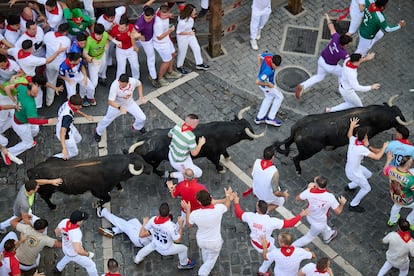
The northern city of Pamplona is into its second day of ‘encierros,’ the dangerous races that were made globally famous by the writer Ernest Hemingway and which continue to attract visitors from all over the world
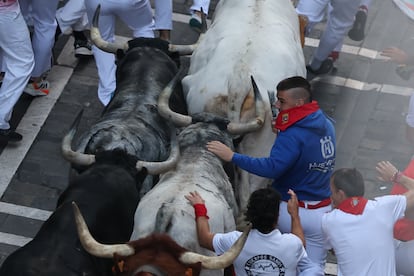
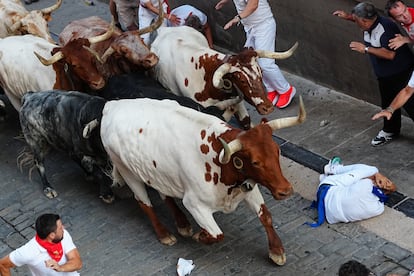
Runners try to avoid the bulls’ horns during the second morning of the ‘encierros’ at the San Fermín festival in Pamplona on Wednesday.Miguel Oses (AP Photo/Miguel Oses)Runners and bulls from the famous Cebada Gago breeders enter the bullring in Pamplona after concluding the run.Villar López (EFE)Runners, called ‘mozos’, run beside the bulls in the last stretch before reaching the bullring, where the animals will be fought in the afternoon. Pablo LasaosaRunners and bulls from the Cádiz-based breeders Cebada Gago make their way along Mercaderes and Estafeta streets. Jesús Diges (EFE)One of the bulls slips on the cobblestones and falls during the second ‘encierro.’ The stones are treated with a non-skid product ahead of the runs to make them less dangerous than in the past.Pablo LasaosaBulls from the Cebada Gago breeders, famous for their speed, reached the end of the run in 2m 26s, slightly slower than last year.Villar López (EFE)Although the Cebada Gago bulls have a reputation for being unpredictable, on this occasion the herd stuck close together and made a clean run from beginning to end.J.P. Urdiroz (EFE)Some runners touch the bulls as they make their way to the ring at the end of the run. Pablo LasaosaAlberto Núñez Feijóo, leader of Spain’s main opposition party (PP), dressed in traditional garb and watching the run from a balcony on Wednesday morning. Diego Puerta (PP)A horn grazes the back of a runner during the second ‘encierro’ of the San Fermín festival in Pamplona. Three people required medical assistance at the end of the run.Miguel Oses (AP Photo/Miguel Oses)Despite instructions to leave the animals alone, some of the runners touch them as they go by. These fighting bulls can weigh in the range of 600 kilograms (1300 lb).Pablo LasaosaIt is a tradition for the ‘mozos’ to hold a rolled-up newspaper in their hand as they run, as well as wearing white clothes and a red neckerchief. Daniel Fernández Pérez (EFE)Runners are asked to follow a set of safety rules that includes not recording with their phones as they run, wearing the right footwear, and not running under the effects of alcohol or drugs.J.P. Urdiroz (EFE)Red Cross volunteers see to a fallen runner after the second run on Wednesday morning. No major injuries were reported.Eduardo Sanz (Europa Press)A runner protects his head and belly after falling in front of the herd. The average runner in the San Fermín festival is a 28-year-old male.Miguel Oses (AP Photo/Miguel Oses)Employees prepare the fences before the second encierro of the 2026 San Fermin festival. Workers put up 2.700 wooden boards and 900 pickets.Vincent West (REUTERS)Local police officers stand in front of the runners ahead of the second encierro on Wednesday morning.Pablo Lasaosa
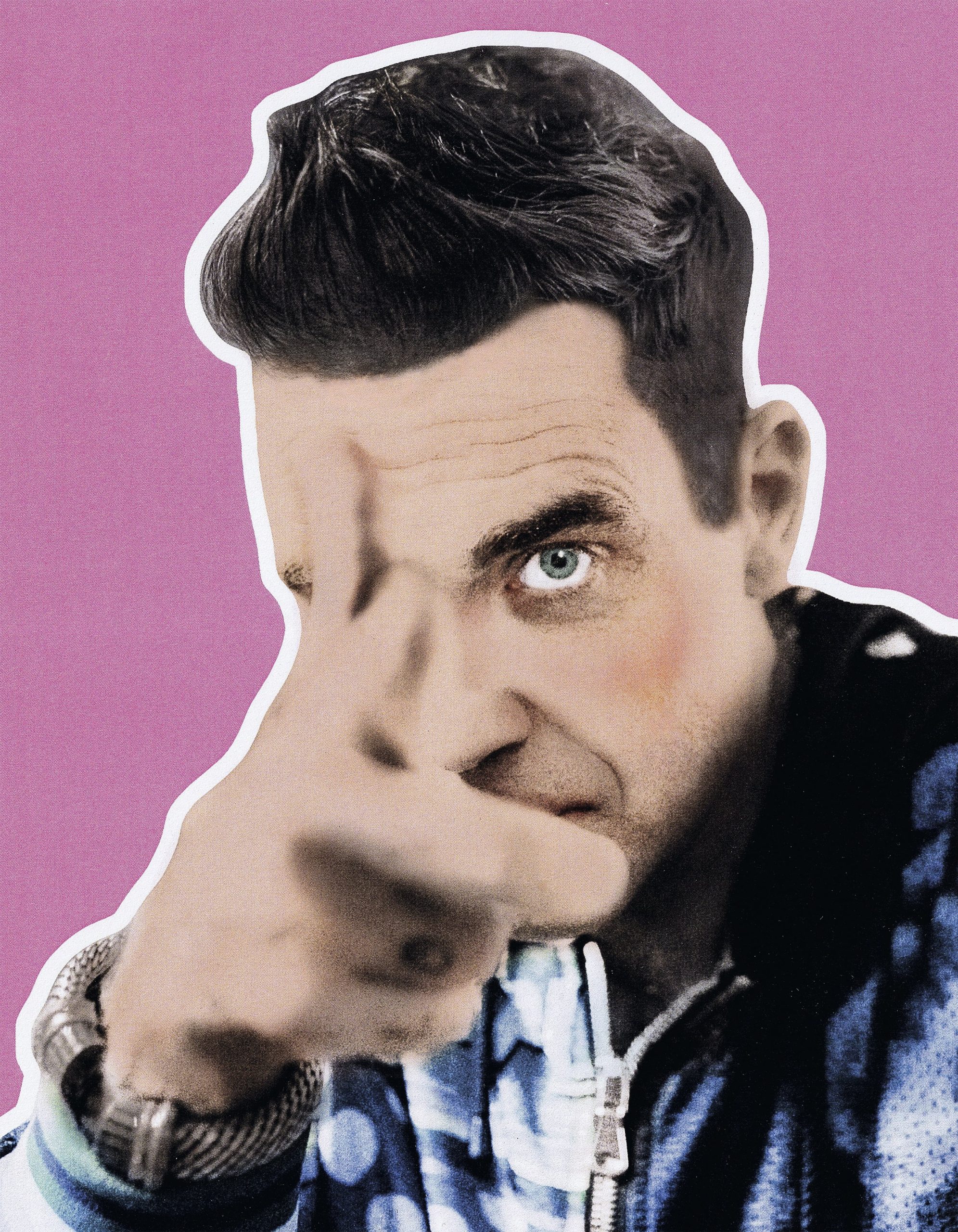
El cantante Robbie Williams ilustrado para ICON por Miguel Vides.Miguel Vides
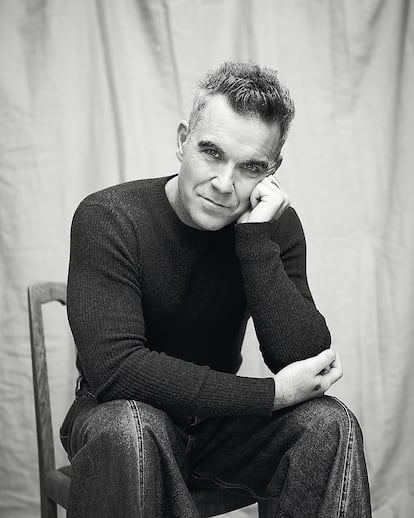
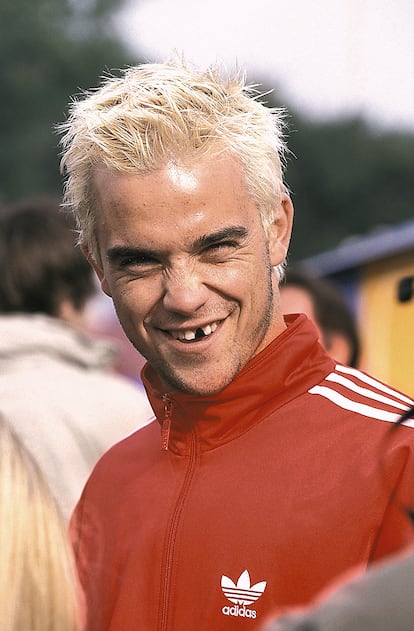
For Generation Z, Robbie Williams, 50, will always be the man who tears off his skin and muscles in the controversial video for Rock DJ, a song released three years after Angels, the single that cemented his solo career. For millennials, Williams will always be the Take That member who quit one of the most popular boy bands in history at its peak. He says he was “asked” to leave. In any case, his rock-and-roll energy and his addiction to drugs and alcohol did not sit well with a band that succeeded on sugary songs, tender looks and a choreography designed to make fans swoon.
“I was ingesting everything I could get my hands on -ecstasy, cocaine, drinking. I’m literally drinking like a bottle of vodka a night before going into rehearsals, so that’s happening every night,’ he says in the Netflix docuseries Robbie Williams, where he admits he began dating Geri Halliwell, the redhead from the Spice Girls, while he was attending Alcoholics Anonymous. “They told me not to date anyone in the first year, and rightly so. If I couldn’t look after a cactus, imagine a person,” he says in the documentary, which reached number one on Netflix in 22 countries and had 5.5 million views just one month after its premiere. Currently on the Britpop Live 2026 tour, he will perform on July 10 at the Bilbao BBK Live festival in the northern Spanish city. Does he have any surprises planned? “The surprise is that I keep showing up and emitting light. I’m a frequency and some people like to tune into it. The surprise is that I still exist on that frequency,” he says, speaking with EL PAÍS.
At the start of the trailer for his biopic, Better man, he is heard saying “I’m Robbie Williams, one of the biggest pop stars in the world.” In the same way that the musician and designer Pharrell Williams changed the rules of the genre by telling his story with Lego bricks in Piece by Piece (2024), Williams is portrayed by a computer-generated monkey. “I’m an unusual person who likes unusual things. When director Michael Gracey told me the idea, before he finished the sentence I’d already said yes,” he explains.
Is he exaggerating when he claims to be one of pop’s greats? The numbers back him up. He has sold more than 80 million albums worldwide and has 18 Brit Awards. But fame and success brought shadows. At age 20 he experienced his first depressive episode and, after more than a decade symptom-free, he admitted in early 2025 that he had started the year with a relapse. It’s no surprise that his songs, except for “the silly danceable ones,” deal with an ongoing mental struggle now also reflected in his painting. Two years ago he opened his solo art exhibition, Confessions of a Crowded Mind, at Moco Museum Barcelona after debuting it in Amsterdam.
Williams is music, art and… football. Last year the Briton premiered, together with Laura Pausini, Desire, the new official FIFA anthem. “ I wanted to create something that captures all of it – the passion, the nerves, the pride and the majesty of that feeling just before kick-off. Football and music have always meant the world to me and bringing them together on this kind of stage gives me goosebumps,” he stated after being named FIFA Music Ambassador. And if there’s one thing he’s an expert at, it’s giving his millions of fans goosebumps with his songs.
You behave as you were raised. Sometimes, if those behaviors are toxic, you learn they are and do the exact opposite. For now everything is fine. My children are kind, compassionate, sensitive and affectionate”
Did you know I spent part of my teenage years sleeping with you? Although my favorite member of Take That was Howard Donald, my mother made a mistake and bought me a pillow with your face on it. That was the universe messing around, saying: ‘It’s this one, darling: you should be in love with him!’
You like coveringLiving La Vida Loca, by Ricky Martin. Why don’t you pivot and become a Latin-inflected Williams who doestwerking? I don’t know if I’d do twerking, but I would definitely make Latin music. I have a banger on my computer called Te Quiero, but there was a copyright issue because it sounded like another song. If I manage to release it I’ll be moving my hips a lot on stage, though I don’t think I’ll be twerking. My hamstrings are too tight for that.
Releasing an album calledBritpop when that musical genre seems like a thing of the past is bold. Was it a conscious decision, a joke or a fit of nostalgia? There are two reasons. The first is very simple: I’m British and I make pop. And the other is that I do a lot of things that are a kind of quiet trolling. I wasn’t part of the britpop movement! In fact, I was excluded. This is a way to wind up the right people. And, looking at the comments, I’ve achieved my aim.
You always seem to feel the need to explain yourself. Do you feel misunderstood? I recently read a quote from Marcus Aurelius about stoicism and the freedom you get when you stop feeling the need to explain yourself. But if I had that freedom, I wouldn’t have an act. Explaining myself is part of who I am. I feel like a journalist with a single subject: myself. And I’m reporting live from inside my brain at all moments.
I do a lot of things that are a kind of quiet trolling. I wasn’t part of the britpop movement! In fact, I was excluded. This is a way to wind up the right people. And, looking at the comments, I’ve achieved my aim”
You are the artist with the most number-one albums in the U.K., but you want more. Does ambition ever end? I have experienced what it feels like to have no purpose. There were moments in my career when I decided I didn’t want to do this anymore. And it’s not good: it’s a kind of death. I love having a mission, providing for my family and looking after myself. I’m incredibly grateful to be able to be creative and tell people: “I’ve done these things and this is why I did these things. And I’d like you to enjoy them.” Everything revolves around purpose.
What is that purpose? The main thing is to provide for my family, make sure they are financially sound and that my grandchildren are too. I think the only thing you can offer as a parent is safety, and teaching them how to behave is safety too. But today it seems the only thing that really protects people is money, unfortunately. So my North Star is that, and then underneath that there’s all of the narcissistic stuff where there is need and wants and attention and to be told that I’m a good and clever boy…
Miley Cyrussaid she didn’t want to tour because it could affect her sobriety. Is that hard for you? I haven’t drunk in 25 years. That part isn’t difficult for me. The difficult part is dealing with life as it is. But now I trust myself. I don’t think that because I have a day of anxiety I’ll go out and do cocaine and relapse. I’ll simply sit with it and live with it. I know myself and trust myself more than before.
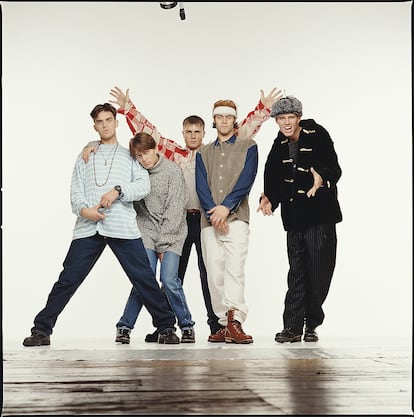
What would you have done differently from your time in Take That? I probably wouldn’t have started drinking or done drugs. But then again, I’m all of these things because I did. I don’t know, if I had a time machine, that I would change anything. I just wouldn’t be as affected by mentally ill grown ups.
At that time it was hard for someone coming from aboy band to be taken seriously. Would you say you paved the way so people like Harry Styles could run? I don’t think I changed anything for anybody. Maybe if the people that come next see how I go about things or see how I went about things and take a little bit from me, like I did with the people that came before me, I think that’s more apt. But it is very interesting how the zeitgeist changes when it comes to what’s cool. They used to tell me I was embarrassing, that I shouldn’t exist. I remember a time when the idea of Robbie Williams playing Glastonbury seemed so wrong, and how dare you? Now it feels like Harry’s allowed to be cool. And I can’t help thinking: ‘How is he allowed a free ride?’. They can criticize us for being on stage saying: “I’m a bit gay, but without sucking cocks.” I guess I’m a bit gay! You conform to me because I’m not pandering to you.
In many families in the north of England there is difficulty talking about emotions. As a father, what do you do at home to change that fear of verbalizing feelings? You behave as you were raised. Sometimes, if those behaviors are toxic, you learn they are and do the exact opposite. For now everything is fine. My children are kind, compassionate, sensitive and affectionate.
You said the nineties weren’t a bad time to be going through a rough patch. How do you think living through that in the era of social media would have affected you? I wonder that sometimes. I had the freedom to go out and do what I wanted because there were no mobile phones or social media, but I abused that freedom. On the one hand, it would have been a nightmare for different reasons but, on the other, maybe I wouldn’t have thrown pills and potions into my system so liberally in front of people.
Bad Bunny invites celebrities toLa Casita. Who would you invite? Michael Bublé, Hugh Jackman, Ryan Reynolds, Gary Barlow, Donald MacLeod… I’d love to invite Jason Orange [from Take That] but we haven’t been able to find him…
Really? That’s what you hear.
When are you going to stop entertaining us? It must be exhausting to be constantly entertaining. I don’t know. It’s a symbiotic relationship. I want them and I need them. Some people enjoy what I need and some seem to need what I have to offer. I doubt that will ever end. I just hope I’m healthy enough to carry on. I’ll tell Howard I spoke to you.
If you invite Howard to La Casita, can I go? I’ll try.
Sign up for our weekly newsletter to get more English-language news coverage from EL PAÍS USA Edition
Julie and Mark are siblings. They are traveling together across France during their college summer holiday. One night they are alone in a cabin near the beach. They decide it would be interesting and fun to make love — a new experience. Julie is on birth control pills and Mark also uses a condom, for safety. Both enjoy making love, but they decide not to do it again. They keep that night as a special secret, which makes them feel even closer to each other. How does that make you feel? Was it right for them to make love?
Psychologist Jonathan Haidt posed this scenario as part of an experiment to show that moral judgment is not always rational. Although the story had no negative consequences such as disease or emotional harm, most survey respondents judged the action to be wrong. When asked for their reasons, many could not offer logical arguments and simply expressed disgust.
Sex between siblings provokes near-universal rejection, but would it be different if Julie and Mark were cousins? Suddenly the issue becomes much less clear. Cousin relationships have been interpreted very differently across cultures and eras. In some places — such as China, South Korea or the United States — marriage between cousins is banned or even criminalized. However, in regions like the Middle East, Central Asia and North Africa, these unions are common and represent between 20% and 68% of marriages, depending on the country.
Throughout European history, such marriages were very common, especially among the elite, because they strengthened family and patrimonial alliances. It was not until the second half of the 19th century that opposition to cousin unions began to solidify, when debates emerged within the scientific and medical communities about their possible genetic risks.
Charles Darwin, for example, was one of the first to raise the issue, because it touched him personally. He married his first cousin, Emma Wedgwood, and they had 10 children, of whom only seven survived past the age of 10. In particular, the death of his daughter Annie at age 10 from tuberculosis was a devastating blow that intensified his concerns about the negative impact of reproduction between close relatives.
In an effort to better understand the phenomenon, Darwin conducted experiments with plants in his greenhouse at Down, England. He found that cross-fertilization was more beneficial for the health and abundance of plant species than self-fertilization. From these experiments he developed the concept of inbreeding depression, which explains how consanguineous unions increase the likelihood of transmitting hereditary diseases to offspring.
Today we know that the risk that children of first cousins will have serious genetic disorders is relatively low — between 4% and 6%, compared with 2% or 3% for unrelated couples. This risk is comparable to that faced by children of mothers over 34 years old. However, dangers rise significantly when consanguineous unions are repeated over several generations, as occurred in the Darwin and Wedgwood families.
It is curious that, if cousin pairings carry certain risks, they were nonetheless so widely practiced. Something similar happens in nature. Animals rarely mate with siblings, but they do not show the same aversion to cousins. A 2021 meta-analysis published in Nature Ecology & Evolution revealed that many animal species do not systematically avoid inbreeding.
A curious example is the prairie vole (Microtus ochrogaster), which shows a clear preference for pairing with close kin. In one experiment, females were given the option to interact with males of varying degrees of relatedness: fathers, brothers, cousins and unrelated males. Results showed that females spent more time with their first cousins and chose them more often for mating. Moreover, copulations between cousins were more intense, as if there were greater chemistry between them.
In many species, mate choice is influenced by the environment in which individuals are raised, since most animals avoid reproducing with those with whom they shared childhood. In the vole experiment, all females were separated from males at birth, so their choices were based solely on genetic similarities.
Rodents and other animals produce pheromones derived from genes known as the major histocompatibility complex (MHC). This highly variable group of genes produces proteins unique to each individual, creating an ‘olfactory signature’ that allows them to distinguish one another. The closer the relative, the more similar their MHC — and therefore their scent. This helps animals identify kinship degree and, in the case of the voles, to prefer their cousins.
This behavior may seem contradictory. Shouldn’t animals always avoid inbreeding? The answer is not so simple, because extreme outbreeding can also be harmful. A classic example is the Tatra chamois in Central Europe. Decades ago, to try to save a local population well adapted to the cold, specimens of a subspecies from the Sinai, in the warm Middle East, were introduced. The groups mated successfully, but the result was an ecological disaster: the hybrids inherited the reproductive clock of their southern relatives. Instead of giving birth in spring, females began birthing in February. The young, unable to withstand Europe’s harsh winter freezes, froze to death, ultimately causing the extinction of the entire population.
Genes evolve in a specific environment, enabling individuals to survive and reproduce effectively in their habitats. When populations from different environments interbreed, offspring can lose these genetic advantages, becoming less fit for either original environment. That is why nature often favors a middle ground.
This also applies to humans. A study in Iceland that analyzed data from more than 160,000 couples born between 1800 and 1965 found that third- and fourth-cousin pairs had more children than unrelated couples. Theoretical models suggest that this level of kinship offers an optimal balance between the risks of inbreeding and the benefits of genetic proximity.
Nonetheless, this article does not aim to advocate for or against cousin relationships, or any other romantic choice. In humans, partner choice cannot be reduced to the genetic viability of offspring. It is simply interesting to observe how human culture and morals often have non-arbitrary foundations. It is estimated that, over history, roughly 80% of human unions occurred between people with some degree of consanguinity. We now understand that this pattern is not exclusive to our species, but is shared with many others in the animal kingdom.
Sign up for our weekly newsletter to get more English-language news coverage from EL PAÍS USA Edition