Connect with us

Costa del Sol

Spain’s Secret Luxury Housing Market: ‘Prices Start At $1.75 Million, With Sales Reaching Up To $14 And $16 Million’

Published

on

spain’s-secret-luxury-housing-market:-‘prices-start-at-$1.75-million,-with-sales-reaching-up-to-$14-and-$16-million’

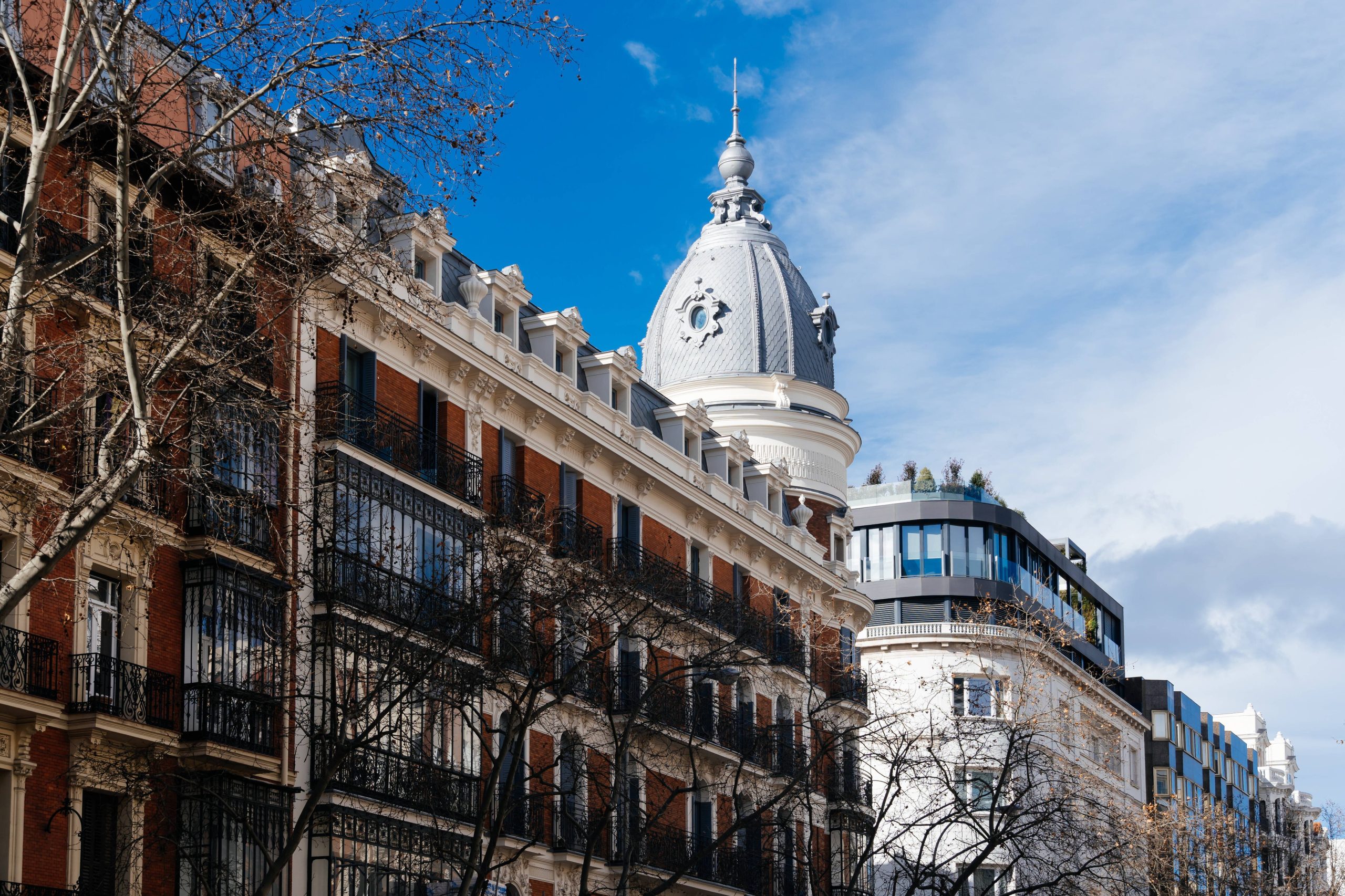
A few weeks ago in the Almagro neighborhood, in the middle of the Madrid district of Chamberí, a 5,400-square-foot home was sold for $4.6 million. Its owner was a celebrity figure, “a very well-known person in the world of culture and television,” says Manuel Garzón, director of the large accounts department at the luxury real estate agency Gilmar, without providing further details. The sale was confidential. The house was never announced on real estate platforms, and anonymity of both seller and buyer was guaranteed in the contract.

This is the real estate off-market, a restricted exchange comprised of properties that require very selective marketing. “[The seller] opted for an off-market sale directed exclusively at pre-selected buyers who had an actual capacity to buy. This allowed for a minimum of visits, avoiding the curious and protecting the privacy of the seller throughout the process,” says Garzón.

Properties sold in this manner dodge mass channels because their owners are international impresarios, executives, holding companies, professional athletes and public figures looking to avoid any media exposure. Nor do they wish to reveal the exact location of their home and much less for its images to circulate widely. “We’re talking about HNWI (high net worth individual) clients and UHNWI (ultra high net worth individuals),” says Álvaro González de La-Hoz, CEO of Spain Sotheby’s International Realty.

This way of selling, closely tied to luxury, has grown in popularity in recent years. “In our case, we estimate that between 20% and 30% of high-value transactions in 2025 closed without being published on real-estate platforms. Five years ago, off-market was a much more limited practice restricted to a certain kind of profile,” says González de La Hoz.

The phenomenon is linked to a growing demand for privacy and confidentiality. Plus, the rise of private assets, international mobility and the lack of prime products in certain locations. The other face of the coin is that in off-market real estate transactions, the number of potential buyers is reduced, and owners could miss out on receiving competitive offers. Still “in many cases, peace of mind carries as much value as the economic result of the sale itself,” says González de La-Hoz.

Paloma Pérez Bravo, CEO of the luxury firm Dils Lucas Fox, says that “the more unique the home and the higher the public profile of its owner, the more likely it is that it will be marketed privately.” At her agency, around half of all sales take place at some point away from public channels. Pérez Bravo says that this modality has always existed in the high-range market, but that it has evolved from a network of personal contacts into a professionalized structure, with filtered databases and a more rigorous control of information. A rise in international demand has also contributed to its expansion. “In countries like the United Kingdom, off market is the norm, and clients expect to have that same way of working when they buy in Spain,” she says.

What such properties have in common is an elevated price, though that is not the primary criteria for being sold in this format. “Properties are often priced beginning around $1.75 million, with sales reaching up to $14 and $16 million,” says Juan Luis Sáez, director general of The Avenue Select Real Estate, an agency specializing in the luxury and investment sectors, where 35% of operations are conducted off market. Of course, when it comes to ultra-luxe housing, from $11.5 to $23 million, private sales “are often the norm rather than the exception,” says Pérez Bravo.

Some of these homes are unique, like large seaside villas, historic farms, exceptional penthouses, entire buildings, properties with significant cultural heritage and homes owned by business leaders, well-known families and international clients. There are also holdings with works of art, collections or elements that the owner does not wish to expose, as well as the best apartments in branded residences tied to luxury hotel chains or fashion designers, which are initially presented to a select list of private clients.

The practice is most popular in cities and areas with a high concentration of luxury and super-luxury housing. Such is the case in Madrid — particularly in neighborhoods like Salamanca, Chamberí and Justicia — and in Spain’s Marbella and Costa del Sol, in addition to “areas like Milla de Oro, Sierra Blanca, Puerto Banús, La Zagaleta and Sotogrande,” says Garzón. At Gilmar, he says off market sales are growing every year, in parallel with the development of the luxury housing sector. It went from 8% of their total sales in 2025 to 10% this year, with an average home price around $5.7 million.

For off market sales, agencies work with a reduced base of pre-selected buyers. “We analyze their financial capacity, the origin of their wealth when appropriate, their actual interest in the holding, the expected purchase period and the extent to which the property meets their needs. This significantly reduces unnecessary processes, and protects the confidentiality of both parties,” says Sáez.

No photos or addresses

The key is not to hide the property — but rather to provide its information in phases. Pérez Bravo tells of the sale of a singular property in a coastal destination that she publicized among an international network of clients and holding companies. “The first phase is carried out through a blind teaser, without an exact address or any images that allow the property to be located. Only once we verify the profile, capacity and current interest of possible buyers do we grant access to the complete dossier.”

Subsequent meetings typically involve the real estate advisor, the owner, the buyer and — depending on the transaction — lawyers, tax advisors, private bankers, architects, technical experts and wealth managers. “In many cases, viewings are organized under prior confidentiality agreements and are limited to buyers whose financial capacity has already been verified,” says González de La-Hoz. In particularly sensitive transactions, the use of cell phones and photography during visits are restricted, with a log maintained of each person accessing its every document, adds Pérez Bravo.

There is no premium for operating outside traditional channels. Value continues to be determined by the property’s location, quality and uniqueness.

Sign up for our weekly newsletter to get more English-language news coverage from EL PAÍS USA Edition

%

Why Mijas Road Markings Wear Out So Quickly

Published

on

why-mijas-road-markings-wear-out-so-quickly

Drivers and walkers across Mijas Pueblo and Mijas Costa keep noticing the same thing: white lines, zebra crossings and parking bay markings fade, flake or vanish far sooner than expected. Fresh paint appears, only for tyres, weather and cleaning crews to take their toll again within months. It’s a frequent complaint among local residents. Local operational services are now rolling out a fresh round of on-street signage upgrades to keep traffic and pedestrians safer.

Work has already transformed the parking layout at El Bombo beach on Avenida de El Descubrimiento. New markings are also reorganising existing spaces, freeing up extra bays and the smooth the flow of cars heading to the sand. Similar jobs have refreshed pedestrian crossings in La Ponderosa and Polarsol, while Calahonda has gained clearer motorcycle parking, vehicle entrances and spaces reserved for people with reduced mobility. Crews will next turn their attention to areas around schools ahead of the new term, then move into important spots in Mijas Pueblo near Plaza Virgen de la Peña. A specialist contractor will soon join the in-house teams so the programme can cover more ground.

Steep slopes put constant stress on the paint

Mijas Pueblo, clinging to a steep mountainside, means that cars accelerate hard uphill and brake sharply on the way down. Those repeated horizontal forces scrape paint off the surface much faster than on flat coastal roads. Narrow lanes full of tourist buses, delivery vans and everyday traffic only speed up the grinding process.

Smooth stones and tiles refuse to hold the coating

Many streets still use polished stone, traditional cobbles or tiles instead of open-textured asphalt. Paint sits on top rather than keying into the surface. Once tyres roll over it day after day the film lifts, cracks and peels away. Rough asphalt grips better; the older materials in the pueblo simply do not.

High-pressure cleaning keeps the village white but strips the lines

Mijas takes pride in its pueblo blanco look. Regular street washing with powerful jets, degreasers and industrial cleaners is part of that effort. The same pressure that shifts dirt also blasts road paint off the ground. Clean streets come at a cost to the markings.

Southern sun and heat finish the job

Intense ultraviolet light and high summer temperatures break down the polymer binders in both standard and thermoplastic paints. The coating turns brittle, loses colour and starts to crack. Research into pavement markings shows UV exposure and heat accelerate yellowing and loss of visibility, especially on lighter-coloured lines that need to stay bright for safety.

Traffic density across the municipality adds the final pressure. Narrow lanes see a constant mix of private cars, heavy vehicles and foot traffic that grinds the surface further.

Ongoing work and bigger plans for safer streets

The current programme forms part of routine maintenance carried out with local resources and coordinated with traffic and public-way teams. A new contract for specialised signage work is due shortly, allowing faster coverage of more neighbourhoods and urbanisations. Similar safety improvements have featured in earlier municipal efforts, including earlier road-safety packages and larger infrastructure packages that tackle parking shortages and street repairs across Mijas.

Drivers can expect clearer lines around school zones first, then improved visibility in the historic centre. Pedestrians will benefit from better-marked crossings and reserved bays. While the combination of slopes, surface materials, cleaning routines, strong sun and modern paint rules means the markings will never last forever, regular repainting remains the practical answer. Residents and visitors alike should find the roads easier to navigate as the teams continue their rounds through the rest of the summer and into the school year.

Continue Reading

A-7 motorway

Wild boars race along A-7 motorway edge by Mijas nudist beach: Imminent crash fears rise

Published

on

By

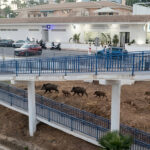
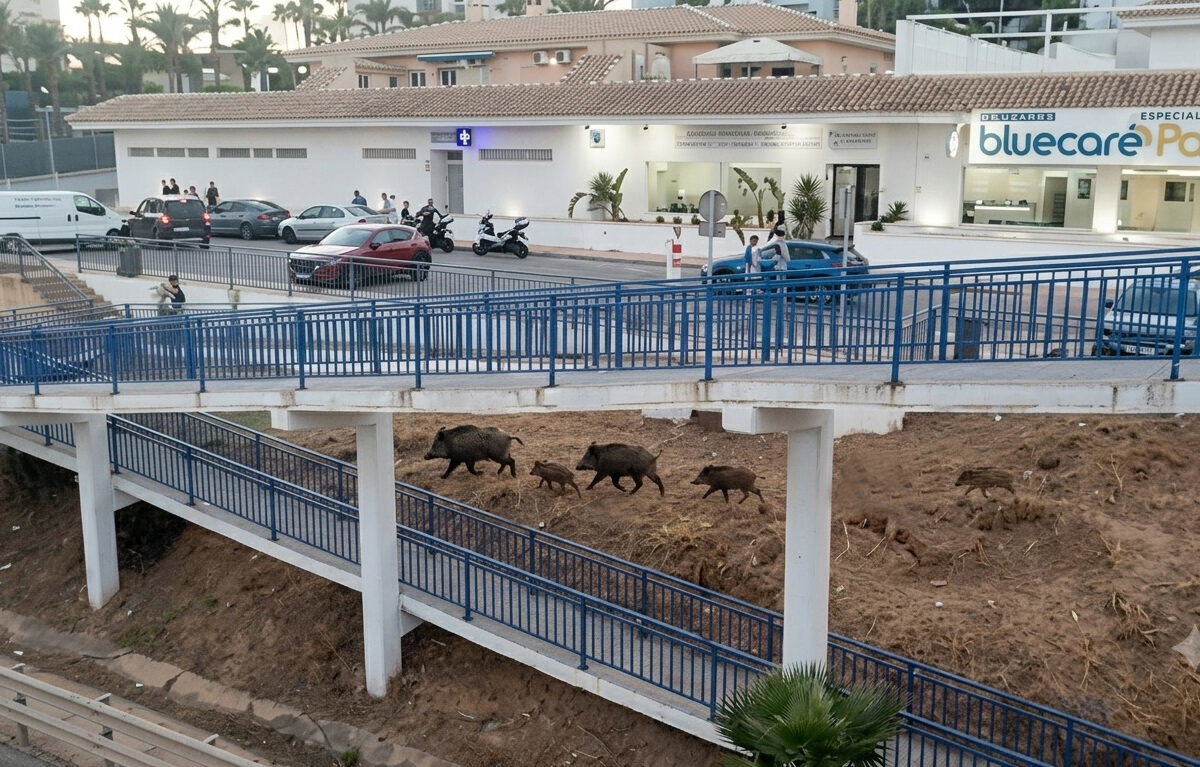
Mijas locals have filmed a group of wild boars racing along the dry verge of the A-7 motorway in Mijas Costa on Thursday 6 August 2026.

Footage taken from the pedestrian footbridge near La Vida Loca bar, opposite the Mijas nudist beach at Playa Marina, shows the animals moving freely with no protective fencing between them and the fast-moving traffic of the narrow A-7 motorway. A resident posted the clip online and tagged Mijas Town Hall, calling for barriers to go up quickly before someone gets seriously hurt.

Missing fence leaves motorway open to animals

In this stretch of Mijas Costa the A-7 sits right next to urbanisations, service roads and the Bluecare Partners veterinary hospital. Boars have been coming down from the hills for years, looking for easy food from bins, gardens and leftovers. Without a fence they can step straight onto the carriageway at any moment.

Drivers already know this section of the A-7 for its narrow, twisting layout and heavy traffic that produces almost daily bumps and smash-ups. A collision with even one heavy boar would kill the animal outright and could easily send cars or motorbikes out of control, putting dozens of road users at risk of serious injury or worse.

Leaving food and water only makes matters worse

Council rules ban putting out food or water for the animals, and police have already dished out fines of €250 to €750 when people ignore the ban. Still, some residents continue the habit. Every open rubbish bag or bowl of scraps left outside teaches the boars that the roadside is a free meal. That draws more of them away from their natural habitat and keeps the numbers climbing in a deadly spot.

Mijas Town Hall has previously tried live-capture contracts and archer programmes. Regional emergency hunting rules also allow wider control measures. Animal-welfare groups say some of those approaches can push the animals toward roads rather than keep them in the hills. Fencing a national motorway remains mainly the job of the Spanish Ministry of Transport, so local pressure needs to reach higher levels too.

Disease risk adds to the danger

A recent study of about 80 urban and suburban specimens from nearby towns found more than 90 per cent carried at least one pathogen and roughly 86 per cent tested positive for agents that can pass to people, including hepatitis E and various parasites. Full details appeared in an Euro Weekly News report on the disease findings.

Earlier reporting has already covered collisions on the same motorway, including a night-time A-7 crash involving two boars, plus repeated warnings from Mijas Council against feeding the animals.

Action needed before tragedy strikes

Drivers using the A-7 through Mijas Costa already face tight bends and dense traffic most days. One sudden group of boars crossing the tarmac could produce total carnage in seconds. Officials at local and national levels need to move faster on fencing this particular stretch and on measures that keep the animals in the hills rather than on the roadside.

Until proper barriers appear, the safest advice for anyone living or travelling through the area is simple: never leave food or water out, keep rubbish bags secured, and stay alert near the motorway edges. A serious smash involving these animals is only a matter of time unless action follows the latest video warning.

Continue Reading

%

Wild Boars Race Along A-7 Motorway Edge In Mijas

Published

on

wild-boars-race-along-a-7-motorway-edge-in-mijas

Boars attempting to cross busy A-7 motorway in Mijas. Credit: FsQ FB

Mijas locals have filmed a group of wild boars racing along the dry verge of the A-7 motorway in Mijas Costa on Thursday 6 August 2026.

Footage taken from the pedestrian footbridge near La Vida Loca bar, opposite the Mijas nudist beach at Playa Marina, shows the animals moving freely with no protective fencing between them and the fast-moving traffic of the narrow A-7 motorway. A resident posted the clip online and tagged Mijas Town Hall, calling for barriers to go up quickly before someone gets seriously hurt.

Missing fence leaves motorway open to animals

In this stretch of Mijas Costa the A-7 sits right next to urbanisations, service roads and the Bluecare Partners veterinary hospital. Boars have been coming down from the hills for years, looking for easy food from bins, gardens and leftovers. Without a fence they can step straight onto the carriageway at any moment.

Drivers already know this section of the A-7 for its narrow, twisting layout and heavy traffic that produces almost daily bumps and smash-ups. A collision with even one heavy boar would kill the animal outright and could easily send cars or motorbikes out of control, putting dozens of road users at risk of serious injury or worse.

Leaving food and water only makes matters worse

Council rules ban putting out food or water for the animals, and police have already dished out fines of €250 to €750 when people ignore the ban. Still, some residents continue the habit. Every open rubbish bag or bowl of scraps left outside teaches the boars that the roadside is a free meal. That draws more of them away from their natural habitat and keeps the numbers climbing in a deadly spot.

Mijas Town Hall has previously tried live-capture contracts and archer programmes. Regional emergency hunting rules also allow wider control measures. Animal-welfare groups say some of those approaches can push the animals toward roads rather than keep them in the hills. Fencing a national motorway remains mainly the job of the Spanish Ministry of Transport, so local pressure needs to reach higher levels too.

Disease risk adds to the danger

A recent study of about 80 urban and suburban specimens from nearby towns found more than 90 per cent carried at least one pathogen and roughly 86 per cent tested positive for agents that can pass to people, including hepatitis E and various parasites. Full details appeared in an Euro Weekly News report on the disease findings.

Earlier reporting has already covered collisions on the same motorway, including a night-time A-7 crash involving two boars, plus repeated warnings from Mijas Council against feeding the animals.

Action needed before tragedy strikes

Drivers using the A-7 through Mijas Costa already face tight bends and dense traffic most days. One sudden group of boars crossing the tarmac could produce total carnage in seconds. Officials at local and national levels need to move faster on fencing this particular stretch and on measures that keep the animals in the hills rather than on the roadside.

Until proper barriers appear, the safest advice for anyone living or travelling through the area is simple: never leave food or water out, keep rubbish bags secured, and stay alert near the motorway edges. A serious smash involving these animals is only a matter of time unless action follows the latest video warning.

Continue Reading
Advertisement
Advertisement

Spanish Real Estate Agents

Tags

Trending

Copyright © 2017 Spanish Property & News