
A-7 motorway
Wild boars race along A-7 motorway edge by Mijas nudist beach: Imminent crash fears rise

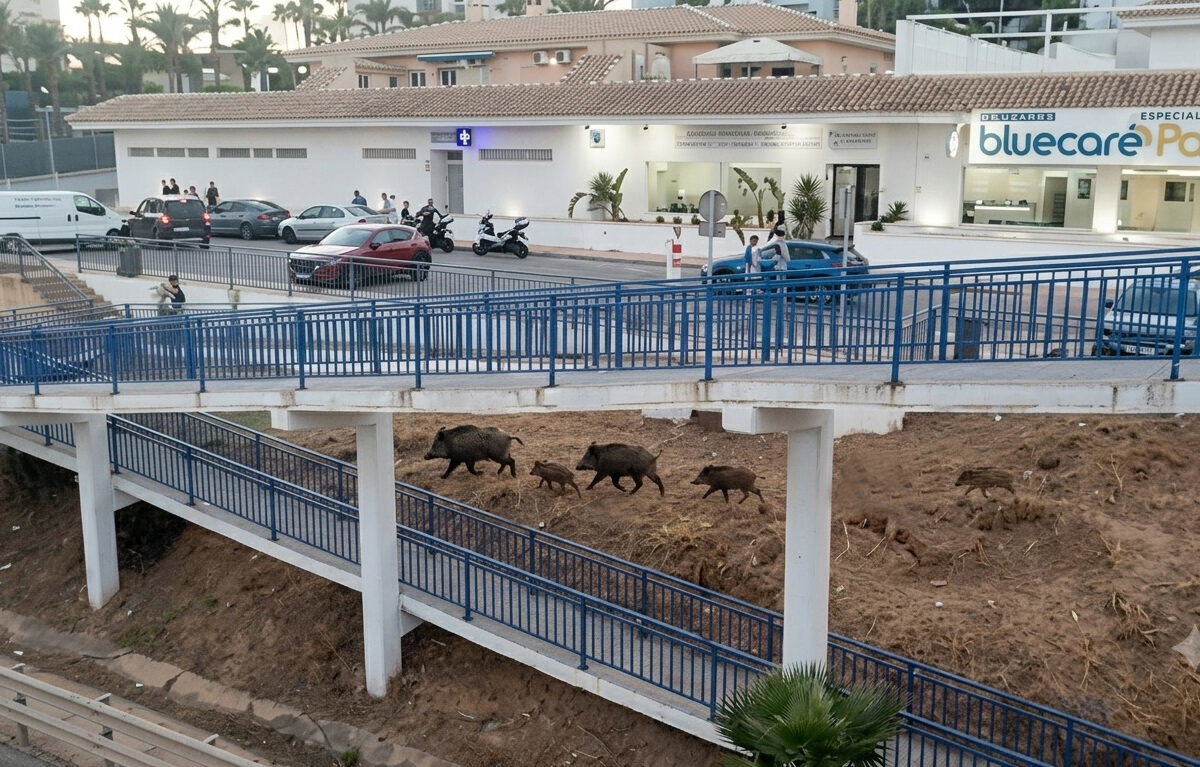
Mijas locals have filmed a group of wild boars racing along the dry verge of the A-7 motorway in Mijas Costa on Thursday 6 August 2026.
Footage taken from the pedestrian footbridge near La Vida Loca bar, opposite the Mijas nudist beach at Playa Marina, shows the animals moving freely with no protective fencing between them and the fast-moving traffic of the narrow A-7 motorway. A resident posted the clip online and tagged Mijas Town Hall, calling for barriers to go up quickly before someone gets seriously hurt.
Missing fence leaves motorway open to animals
In this stretch of Mijas Costa the A-7 sits right next to urbanisations, service roads and the Bluecare Partners veterinary hospital. Boars have been coming down from the hills for years, looking for easy food from bins, gardens and leftovers. Without a fence they can step straight onto the carriageway at any moment.
Drivers already know this section of the A-7 for its narrow, twisting layout and heavy traffic that produces almost daily bumps and smash-ups. A collision with even one heavy boar would kill the animal outright and could easily send cars or motorbikes out of control, putting dozens of road users at risk of serious injury or worse.
Leaving food and water only makes matters worse
Council rules ban putting out food or water for the animals, and police have already dished out fines of €250 to €750 when people ignore the ban. Still, some residents continue the habit. Every open rubbish bag or bowl of scraps left outside teaches the boars that the roadside is a free meal. That draws more of them away from their natural habitat and keeps the numbers climbing in a deadly spot.
Mijas Town Hall has previously tried live-capture contracts and archer programmes. Regional emergency hunting rules also allow wider control measures. Animal-welfare groups say some of those approaches can push the animals toward roads rather than keep them in the hills. Fencing a national motorway remains mainly the job of the Spanish Ministry of Transport, so local pressure needs to reach higher levels too.
Disease risk adds to the danger
A recent study of about 80 urban and suburban specimens from nearby towns found more than 90 per cent carried at least one pathogen and roughly 86 per cent tested positive for agents that can pass to people, including hepatitis E and various parasites. Full details appeared in an Euro Weekly News report on the disease findings.
Earlier reporting has already covered collisions on the same motorway, including a night-time A-7 crash involving two boars, plus repeated warnings from Mijas Council against feeding the animals.
Action needed before tragedy strikes
Drivers using the A-7 through Mijas Costa already face tight bends and dense traffic most days. One sudden group of boars crossing the tarmac could produce total carnage in seconds. Officials at local and national levels need to move faster on fencing this particular stretch and on measures that keep the animals in the hills rather than on the roadside.
Until proper barriers appear, the safest advice for anyone living or travelling through the area is simple: never leave food or water out, keep rubbish bags secured, and stay alert near the motorway edges. A serious smash involving these animals is only a matter of time unless action follows the latest video warning.









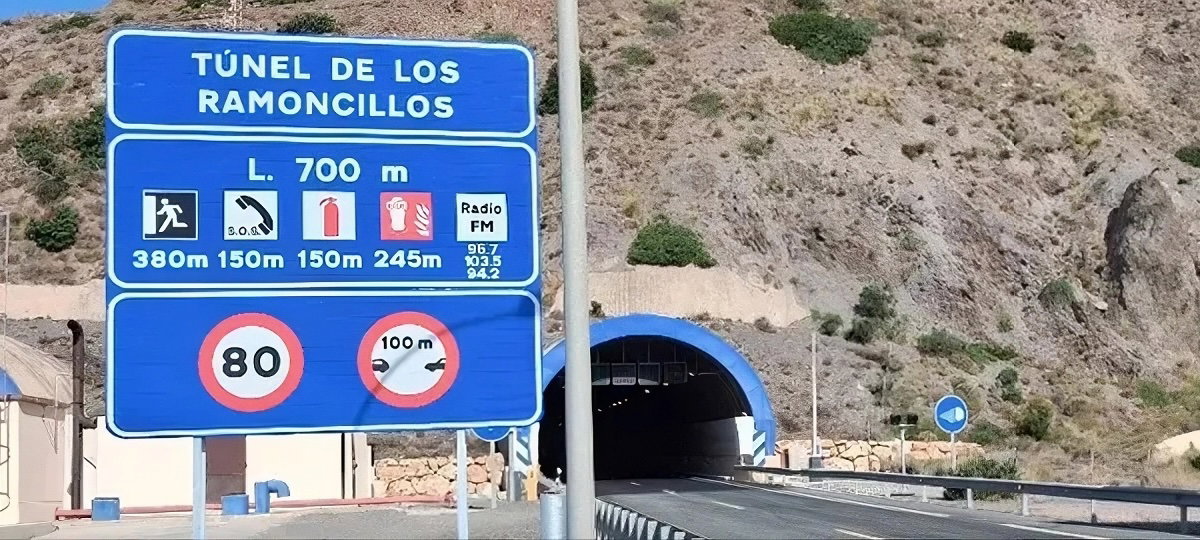
Major safety upgrades have just wrapped up on four key tunnels along the A-7 motorway on Granada’s Costa Tropical. Spain’s Ministry of Transport poured €16.26 million into the work, bringing the tunnels fully in line with current European standards after months of carefully staged works.
Tunnels brought up to scratch with modern rules
Work focused on the Los Ramoncillos, La Guapa, El Acebuchal and Madroño tunnels near Motril. Crews replaced and upgraded almost every critical system inside the tubes. Fire protection systems now include faster detection and more reliable suppression equipment. Ventilation has been completely overhauled so smoke can be cleared more quickly in an emergency. Emergency lighting, communications links, CCTV cameras and automatic incident detection all received full modernisation. A new centralised SCADA control system now lets operators monitor all four tunnels in real time, spotting problems early and managing traffic more effectively from a single control point.
Civil works improve escape routes and road surface
Other than the technical kit, teams carried out solid civil engineering improvements. New emergency galleries and escape exits were built or upgraded, giving drivers clearer and safer ways out if something goes wrong. Fresh road surfaces went down across the full length of each tunnel, reducing the risk of skids and improving ride quality. Drainage systems designed to handle hazardous liquids were improved, new hydrant networks were installed for fire crews, and electrical supplies were strengthened. Containment barriers, updated signage and clearer road markings complete the package, making the tunnels easier to drive through in both normal and emergency conditions.
Better lighting, safer visibility, and easier emergency exits
Completed works make the tunnels safer for the thousands of drivers who use this stretch of the A-7 every day between the Costa Tropical and the rest of Andalusia. Regular users already report clearer lighting, better visibility and more reliable emergency systems as they pass through the four tunnels. All the main safety elements are now fully operational, giving motorists greater confidence on one of the region’s busiest coastal routes.

Sóller’s new art night will transform the town square into an open-air gallery
Shocking pink on Cotobro beach: Rare flamingo stops traffic in Almuñecar
Guinness lost at sea 162 years ago could finally be brewed again


-

 New Developments2 weeks ago
Luxury Villas For Sale, Estepona – ProjectL1
-

 Amazon2 weeks ago
Un Tangle Teezer De Viaje: El Cepillo De Pelo Perfecto Para Tu Neceser De Vacaciones
-
Latest2 weeks ago
Spanish Wildfires Intrude On Holidaying Foreign Visitors
-
 Barcelona2 weeks ago
Cleaner Air May Be Adding Fuel To Spain’s Scorching Summer Heatwaves, Researchers Claim – But Are They Correct?
-

 New Developments2 weeks ago
Stylish 3-Bedroom Apartment With Panoramic Sea Views – Benalmádena
-
Costa Blanca North2 weeks ago
History comes alive as Marina Alta’s iconic human tower honours King Jaume I
-
Almeria2 weeks ago
Vera Triathlon returns with 300 spots and sprint and Olympic challenges
-
Travel2 weeks ago
Gatwick stinks! Water crisis shuts toilets and bars at both terminals – passengers warned to sort essentials at home before flying