Connect with us

%

‘Pervert Glasses’ Face Possible Ban In Norway As Hidden Camera Fears Grow

Published

on

‘pervert-glasses’-face-possible-ban-in-norway-as-hidden-camera-fears-grow

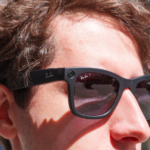
The glasses can look like ordinary eyewear, while cameras and microphones are built into the frames. Photo credit: Alexander Fedosov/shutterstock

Imagine being filmed in public without even realising it’s happening, that’s the privacy issue at the heart of Norway’s recent move against smart glasses with cameras, as the government considers tighter rules for wearable tech that can record individuals without their consent. Right now, the Norwegian government is exploring whether to ban certain features of smart glasses, especially those that can recognise people in public.

They’re also setting up an expert group to give advice on how Norway should regulate smart glasses, earbuds, and other everyday devices that come with cameras, microphones, and AI. This discussion is happening as we see more camera-equipped eyewear on the market. Products like Meta’s Ray-Ban smart glasses let users snap photos and videos while keeping their hands free, but that raises questions about privacy.

Cameras That Might Go Unnoticed

A camera on someone’s face is a lot less obvious than a traditional phone can be, that’s one of the biggest worries about this tech. They can easily pass for regular glasses, even though there are cameras and microphones hiding in the frame. Some models do have a small light that indicates when they’re recording, but critics point out that people nearby might still be in the dark about what’s actually happening.

This concern has led to some camera-equipped glasses getting the nickname “pervert glasses,” highlighting fears they could be used to secretly film strangers, especially women. Norway’s Digitalisation Minister Karianne Tung has pointed out that technology is increasingly blending AI with cameras and mics in everyday items. The main worry is stopping these devices from being used to spy on people in public.

Facial Recognition Might Get Banned

Norway isn’t outright banning smart glasses just yet, they’re considering tighter regulations, with Tung mentioning the possibility of banning facial recognition features for people in public. This is important because just owning or wearing camera-enabled glasses wouldn’t necessarily be against the law under this proposal.

The focus will be on what the tech is capable of and how it’s being used. The government plans to have the expert group look into rules for smart glasses, earbuds, and other devices that have cameras and AI. Their recommendations will help shape future regulations, which could eventually be put out for public consultation.

Smart Glasses Are More Than a Fad

This technology is evolving quickly. Modern smart glasses can mix cameras, microphones, speakers, and internet connectivity into what looks like a regular pair of glasses. Depending on the model, users can take photos, record videos, make calls, chat with AI assistants, and get info without needing to grab their phones.

That convenience complicates privacy protections, though. A smartphone pointed at someone’s face is pretty easy to recognise as a recording device. But smart glasses can be worn all day, making it possible to capture images, video, or audio while having a regular conversation or walking through public spaces. Norway’s government believes this growing trend needs to be tackled before these devices become even more popular.

Schools and Workplaces May Take the Lead

The Norwegian government is also urging organisations to figure out for themselves if smart glasses should be allowed on their premises. We might see some workplaces, public buildings, and other places putting restrictions in place before any national laws come into play.

Norway’s education minister has already suggested that schools should develop their own rules around using smart glasses. This reflects a larger challenge for businesses and organisations: existing privacy policies were likely created with phones, cameras, and computers in mind, not with wearables that can quietly record and include AI.

Norway Is Not Alone

The discussions in Norway come as worries about camera-equipped glasses are spreading globally. Privacy regulators, businesses, and venues are increasingly faced with how to handle these devices as manufacturers aim to make them part of everyday life. For example, Australia’s online safety regulator has called for smart glasses to have clear recording indicators and to automatically blur people’s faces. Some venues have even started imposing their own restrictions.

As for Norway, the next steps are still up in the air. The expert group will explore the options before the government decides if new rules are necessary. Any proposed regulations would need to go through further processes before they could become law. So the big question isn’t whether smart glasses will vanish from Norwegian streets anytime soon. Instead, it’s whether the country is ready to set limits on technology that can turn a normal-looking pair of glasses into a portable camera, and maybe even a tool for identifying the people in front of it.

%

Blue Shark Filmed At The Surface Off Almuñecar

Published

on

blue-shark-filmed-at-the-surface-off-almunecar

Blue shark off the coast of Almuñecar. Credit: wildestanimal – Shutterstock

Divers off Almuñecar have captured images of a blue shark, known locally as a tintorera, swimming near the surface in daylight. Footage from last Sunday comes from Open Water La Herradura, a dive firm that runs authorised marine wildlife trips on Granada’s Costa Tropical.

Big pelagic animals are turning up more often in these waters. This latest clip, shown on national TV station Telecinco, shows a sleek open-ocean hunter in conditions that usually keep it out of sight.

What the footage shows

Open Water La Herradura diving school recorded the animal in open water, not in a packed bathing zone. Staff say the outing was under a permit from Spain’s Ministry for Ecological Transition and the Demographic Challenge (MITECO), with professionals in charge and the usual rules applied.

Blue sharks already use the Granada coast. Crews from the same company say climate change is also bringing in other species that were once far harder to find here. Similar wildlife trips from the firm have previously put fin whales on camera off La Herradura and Torrox.

Why a daytime surface swim is unusual

Aula del Mar at the University of Granada describes the blue shark as an open-water species that can reach four metres. It has a slim body, a long pointed snout, large eyes and serrated triangular teeth in the upper jaw.

These sharks roam thousands of kilometres. Night work at 60 to 300 metres is their usual pattern, which is why a shallow daytime pass off Almuñecar caught people’s attention. Fish and molluscs make up most of the diet, so attacks on marine mammals or seabirds are not the norm.

Mediterranean blue sharks are in a worse state than the global stock. IUCN lists the species as Near Threatened worldwide and Critically Endangered in the Mediterranean, mainly because of fishing.

No reason to panic on the sand

Open Water La Herradura is clear that a tintorera in the Med does not equal danger for holidaymakers. It is part of the local sea, and this species needs protection more than it needs panic.

If one appears, stay calm, keep a sensible gap and do not touch, chase or try to “help” it. Anyone already in the water should move away slowly and leave the sea if that feels safer.

Costa Tropical has seen other large sharks this year. A shortfin mako was reported several miles off Almuñecar in April, well away from swimming areas. A wider look at where sharks turn up around Spain puts this sighting in context rather than treating it as a freak event.

Continue Reading

%

Spain Flights Disrupted As Gatwick Shuts Down Its Only Runway After Boeing 787 Aborts Take-Off

Published

on

spain-flights-disrupted-as-gatwick-shuts-down-its-only-runway-after-boeing-787-aborts-take-off

The runway shut after a Boeing 787 aborted take-off. Credit: boybehindacamera / Shutterstock

A single aircraft aborting its take-off shouldn’t be able to stop an entire airport, yet that’s what happened at Gatwick on Friday, grounding flights to Spain along with everything else.

The drama unfolded shortly after 2pm on Friday September 4, when Norse Atlantic Airways flight Z0701, a Boeing 787-9 Dreamliner bound for New York’s JFK airport, rejected its take-off roll on runway 26L at around 120 knots.

Because that runway is the only one Gatwick has, the airport declared an immediate ground stop the moment the jet came to a halt, holding every departure, including flights to Spain, until the aircraft could be cleared.

Nose gear fault forced the jet to abort at high speed 

Flight-tracking specialists reported that the Boeing’s nose gear developed a fault as the aircraft accelerated down the runway, forcing the pilots to reject the take-off before reaching flying speed. Rejecting a take-off at 120 knots, close to the point where many wide-body jets commit to leaving the ground, is a manoeuvre crews train for regularly, and no injuries were reported among the passengers or crew on board. Emergency vehicles were sent to the runway as a precaution while the aircraft sat disabled on the tarmac. 

Passengers told to travel as normal as easyJet flights were diverted

A Gatwick spokesperson said at the time: “Due to a technical issue with a departing aircraft, our runway is currently closed. Our teams are working to move the aircraft and resume operations as quickly as possible.” Passengers already booked to fly were told to head to the airport as normal and check directly with their airline for updates.

EasyJet operates more routes out of Gatwick than any other airline, including dozens of daily connections to Spain, and several of its flights were diverted to London Luton and London Stansted while the runway stayed shut. The diversions set off knock-on delays at both airports for the rest of the day. 

Runway reopened after 50 minutes and a full safety check

The stricken Boeing was towed off runway 26L and onto a remote stand at around 2.30pm, and normal flight operations resumed six minutes later. In total, the closure lasted 50 minutes.

“The aircraft was towed from the runway, which reopened shortly afterwards following a full safety inspection,” a Gatwick spokesperson confirmed, adding that safety and security was the airport’s “number one priority”. Passengers whose flights were delayed or diverted were still working through the disruption into the evening.

How a single aircraft can freeze the world’s busiest one-runway airport

Gatwick has long billed itself as the busiest single-runway airport in the world, handling more than 40 million passengers a year through one strip of tarmac. Its second runway is kept as a back-up, used only when the main one is unavailable, which means a stranded aircraft has nowhere else for traffic to go, unlike Heathrow or Manchester.

Friday’s closure was resolved quickly and without injury, though leaving a knock on effect throughout the day in the form of delays for many flights coming in and going out of the airport. 

Continue Reading

%

AEMET Names Next Tuesday As Spain’s Likely Heat Break

Published

on

aemet-names-next-tuesday-as-spain’s-likely-heat-break

Stifling days still on the street, but . . . Credit: Vitalii Biliak – Shutterstock

Spain has opened September like July again, and AEMET, the Spanish official meteorological service, says that the midsummer blast still has several days left in it. The most probable picture from the state weather service keeps the heat going through this weekend and into the start of next week, before a wider cool-down becomes more likely from Tuesday and Wednesday.

Weekend still feels like high summer

Fifteen autonomous communities in Spain have been carrying high-temperature warnings, with orange alerts covering parts of Andalucia, Aragon, Castilla y Leon, Castilla-La Mancha, Catalonia, Extremadura, Madrid, Navarra, the Basque Country and La Rioja. Provinces on that list include Cordoba, Jaen, Sevilla, Huesca, Teruel, Zaragoza, Avila, Ciudad Real, Cuenca, Toledo, Barcelona, Lleida, Tarragona, Badajoz and Caceres. Extra yellow warnings have also been out for spots in Asturias, Cantabria, Galicia, Murcia, the Valencian Community and Guipuzcoa in the Basque Country.

04/09 12:00 AVISOS HOY Y MAÑANA | España: temperaturas máximas, tormentas, lluvias y costeros. Nivel máximo de aviso: naranja.
Actualizaciones en https://t.co/BLdoSsO2Qv pic.twitter.com/qPBgw4SiLN

— AEMET (@AEMET_Esp) September 4, 2026

Afternoon peaks will be nearing 40ºC in the Ebro valley, the northeast basins and the river valleys of the southwest. A few inland pockets could brush 44ºC in the hottest hours. Nights give little breather: 24ºC or 25ºC after dark in the south-west of the country, around 22ºC in the north-east, and tropical nights above 20ºC across much of the south, the Mediterranean and those same north-east hollows. Canary Island nights may stay sticky too.

Saturday holds those 40ºC pockets. Sunday should bring a clearer dip in the western half, especially Galicia, while 39ºC to 40ºC can still hang on in the Ebro valley and the southwest river corridors. Eastern Cantabria may even move up a notch.

Dana slides in with rain for Galicia and western Cantabria

A DANA low-pressure front bringing intense rain is moving in from the southwest on the other half of the weekend. Cloud will thicken first over the western third, and isolated heavy showers or thunderstorms look most likely in Galicia and western Cantabria on Saturday. Rain chances ease on Sunday as that system drifts away. Low cloud, mist and fog banks can form on the Galicia and Asturias coasts, around Alboran and the Strait of Gibraltar.

Canary Island skies will stay a mix of medium and high cloud, with only a slim chance of isolated showers over higher ground. This is not a country-wide washout, just a messy split: baking interiors in the east and south-west, bumpier skies in the north-west.

Tuesday and Wednesday look like the turning point

AEMET’s working forecast is a step-by-step slide from the west, then a more general fall around Tuesday and Wednesday of next week. Readings after that should be closer to a normal September day. Early next week can still run too hot in the south-west and the interior of the eastern third, so nobody should bin the fans just yet.

Forecasters want people checking updates, because the exact track of September storms can shuffle both the heat and the rain. Anyone with outdoor work, a long drive or a packed terrace this weekend should treat Saturday and Sunday as summer, then watch AEMET’s warning map from Monday night. Official notes live on AEMET’s featured forecast page, and Europe-wide alerts are on Meteoalarm.

Continue Reading

Trending

Copyright © 2017 Spanish Property & News