
Donald Trump
Democrats Regain Ground With Latino Voters Ahead Of The Midterms


The Trump administration’s immigration policy and the state of the economy are prompting a shift of Latino voters back toward the Democrats. Although many remain undecided, a new poll shows that in the November midterms, Democratic congressional candidates will receive between six and 10 percentage points more of the Hispanic vote compared with Kamala Harris’s 2024 results. By contrast, Republicans would lose five points of the votes Trump won among this electorate. On November 3, all seats in the House of Representatives and one-third of the Senate are up for election, as well as 36 governorships.
That is what the poll conducted by BSP Research and Shaw & Co. for the American Business Immigration Coalition (ABIC) and American Families United (AFU) between September 4 and September 6 reveals, using a sample of 1,353 registered Latino voters in Arizona, Florida, Georgia, North Carolina, Ohio, Pennsylvania and Texas.
According to the survey, in House voting intentions the Republican Party would only hold the same level of support it received in 2024 in the state of Georgia, at 25%, although Democrats would gain three points to reach 63%. In Texas, Republicans would fall one point while Democrats would rise three. In Pennsylvania, the shift compared with the 2024 presidential election is larger: the Democratic Party would increase by 10 points to reach 60% of the Latino vote; the recovery is due to a drop experienced by the Republican Party in that state, which would lose 11 percentage points, falling from 37% to 26%.
Although favorable to Democrats, the Latino vote remains volatile, since neither political party commands overwhelming support: 39% have an unfavorable view of the Democrats in Congress, while 63% have an unfavorable view of the Republicans.
The Democrats’ recovery of part of the historic support they lost among Hispanics in the 2024 elections is driven by the community’s discontent with the state of the economy and with the president’s aggressive anti-immigration agenda.
Latino voters surprised in the last elections by contributing to Trump’s victory. Among Hispanic men, he obtained a majority over his Democratic rival for the first time.
Latinos trusted him to improve their economic situation and secure the border. The first has not been achieved, because the cost of living has soared—partly due to the war in Iran and rising fuel prices; as for the second, the border is secure, but the prevailing perception is that immigration policy has gone too far.
“Immigration is once again becoming a major issue for Latinos. And yes, we believe this is significantly harming Republicans in the current elections,” explained Matt Barreto, who oversaw the survey. “Many of them—as we’ve seen in the polls—say they have a personal connection to someone who is undocumented. They know someone [detained or deported], whether in their family or in their close community; likely even in their own church,” he added.

The poll shows that the majority of Latinos, including those who identify as Republicans, believe the Trump administration’s immigration policy—with the criminalization of migrants who had previously resided here legally, and the mass deportations—has gone too far. Sixty-three percent of Latinos in key states say treatment of immigrants is “one of my main concerns” for 2026, and 59% support creating a pathway to legal status for undocumented immigrants with family members who are U.S. citizens. Sixty-four percent of Latino Republicans, 68% of independents and 85% of Democrats say they will vote for candidates who prioritize legal status and work permits over mass deportations.
Letter to Trump
The poll’s findings were released during the launch of the Committee of 100’s Unity Campaign, through which more than 200 Hispanic leaders—among them elected officials and representatives of the business, religious, civil rights and community sectors—urge President Trump and congressional leaders to grant work permits and legal protections to long-standing undocumented immigrants.
“We may be MAGA supporters, progressives, or somewhere in between,” they wrote in a new letter to President Trump and congressional leaders. “We are all united in demanding that both Republicans and Democrats in Washington offer long-term solutions for undocumented immigrants who have been here for many years—many of whom have worked, paid taxes and contributed to our communities, families and workplaces for decades—solutions that allow them to live and work legally and without fear.”
Signatories of the letter include Democratic members of Congress such as Representative Delia Ramirez of Illinois and Representatives Sylvia Garcia and Veronica Escobar of Texas, and Republicans such as Florida state senator Ileana Garcia, founder of the group Latinas for Trump.
“Hispanic voters are fed up,” said Massey Villarreal, CEO of Precision Task Group and co-chair of the Committee of 100. “We are losing our workforce because of these deportations. Since January, we have lost 200,000 immigrant workers each month. Simply put, there is no way to sustain our economy without the long-standing immigrants who made our prosperity possible,” he said.
Leaders of several Latino and immigrant organizations, including LULAC, NALEO, UnidosUS, the National Hispanic Christian Leadership Conference and America’s Voice, joined the initiative.
Representative Sylvia Garcia criticized that the immigration issue is out of control and emphasized that the poll shows “the disconnect” with citizens, which “lies in the fact that Washington is not doing anything aimed at finding a real solution.” The congresswoman advocated passing the American Dream and Promise Act, which would open a pathway to legalize beneficiaries of DACA and TPS (Temporary Protected Status), programs that have been rescinded by the government.
Sign up for our weekly newsletter to get more English-language news coverage from EL PAÍS USA Edition










America
Trump Apuesta Por Que Las Empresas De IA Se Autorregulen Para Evitar El Descontrol De La Tecnología


BBC
Betrayal, Corruption And Cruelty: ‘I, Claudius’, The Series That Still Explains The World 50 Years Later

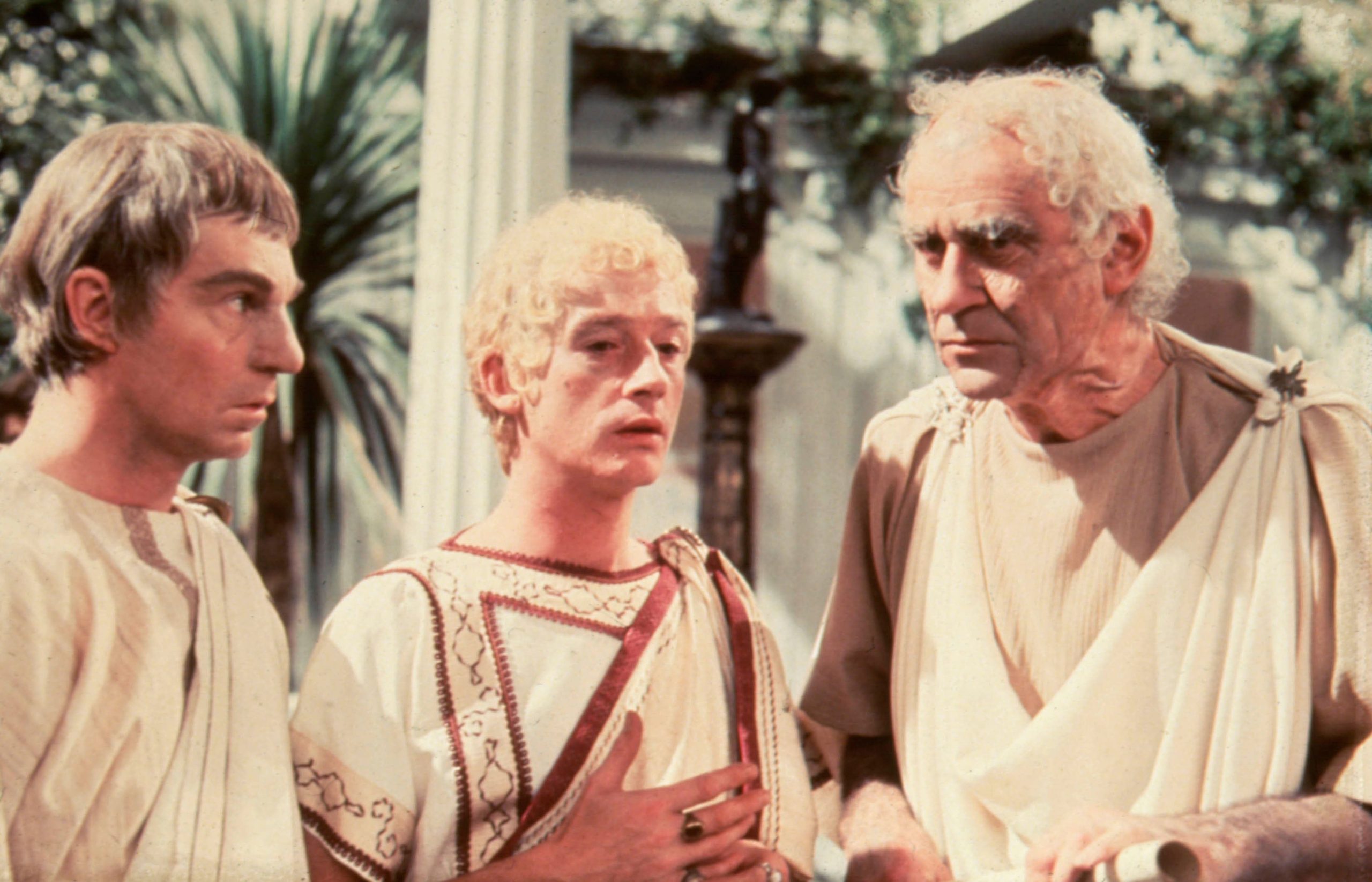
“By the way, don’t touch the figs.” Actress Siân Phillips has remarked that when she traveled the world, even decades after the premiere of I, Claudius, someone would recognize her voice and ask her to deliver the phrase delivered by her character, the Machiavellian Livia Drusilla. That scene from the series competes in collective imagination with its opening sequence, in which at the start of its 13 episodes, a serpent slithered to threatening music over a tiled mosaic face of Emperor Claudius. There it was in a nutshell: the greatness and filth of a newborn empire already corroded by corruption, the moral sickness that dominated a family, the political intrigues, the personal betrayals, the devastating effects of exercising and coveting power. The influence of I, Claudius can be seen in much more recent television projects, from Game of Thrones to Succession, but it also emerges in the current international political panorama, in the form of leaders like Donald Trump. This year, a half-century will have passed since its first broadcast, but anyone who watches an episode will confirm that it continues to be as relevant as it was back then.
The series was based on two lengthy historical novels by the British poet, writer, and academic Robert Graves: I, Claudius and Claudius the God and His Wife Messalina, which were published to enormous success between 1934 and 1935. In them, Graves told the story of the first Roman imperial dynasty, the Julio-Claudian, which succeeded Julius Caesar and ruled Rome between the years 27 BCE and 68 CE, following one of its integrants, Claudius. Or, as he is called by his family, “Cla-Cla-Claudius.” He was a man of extraordinary intelligence, but no one took him seriously due to the stutter, limp and tremor he’d had since childhood. It certainly didn’t seem as though he was destined to compete for the imperial laurels.
And yet, almost against his will, he ended up being crowned emperor after his step-grandfather Augustus, his uncle Tiberius, and his nephew Caligula. And like them, he suffered the consequences of wielding power. The novels were written in first-person, in the elegant, unadorned style characteristic of classical historians — the true calling of the Claudius depicted by Graves — like Tacitus and Suetonius. But they presented, in addition to a fragment of history, a truthful portrait of a dysfunctional family in which manipulation, betrayal, murder, and incest were commonplace.

There had already been one attempt at adapting the diptych of books in 1937, under the direction of Josef von Sternberg and with actors Charles Laughton, Flora Robson, and Merle Oberon, until Oberon was involved in a car accident that scuttled the production soon after it starting filming. The BBC took the project back up nearly four decades later. After a journey that was extended by incidents related to copyrights, it was ultimately brought to life in a format for television. Production value was respectable, but not spectacular, and the program adhered to the typical standards of the time: video-format studio filming, long takes, a theatrical style, and few technical flourishes. But the BBC did have a wonderful script by the expert Jack Pulman, and a cast that was, without a doubt, magnificent, and who for the most part hailed from the stage.
The initial idea was to divide the role of adult Claudius — who the story follows to his death at 63, a very advanced age for the era — between two actors, one of whom would portray his youthful period and the other, the emperor in old age. For the latter, the primary candidate was Charlton Heston. But ultimately, it was decided they would unite the two roles and offer them to Derek Jacobi, who was less popular, but highly sought-after in theater for his Shakespearean performances. Jacobi couldn’t see himself playing the character, and immediately rejected the offer. Even so, he was politely invited to the party to celebrate the beginning of the shoot, and after witnessing the energy at the event, he changed his mind (today, we’d say he suffered an attack of FOMO), to his own benefit and that of viewers.

“I think every actor, at some point in their career, looks for that part that they become associated with,” Jacobi said in a documentary about the production, I, Claudius: A Television Epic (2022). “Some actors have more than one, others don’t get that one. I was lucky that I got Claudius.” Jacobi based his stutter on that of the set designer’s assistant. To fake the limp, he placed a rock in his shoe for the first episodes. Later on, he didn’t need the assist.
His performance was extraordinary, but in a certain way, it was eclipsed by that of Phillips as Livia, the grandmother of Claudius and wife of Augustus, Rome’s first emperor. Both Graves and the screenwriters portrayed her as a ruthless women obsessed with ensuring the survival of her lineage and the Roman empire itself — the Republic, for which Claudius longed, seemed to her a terrible idea — and one capable of terrible acts in pursuit of that goal. Several of her misdeeds involved poison, from which she spared not even her nearest and dearest. The actress struggled to tackle such an extreme character, who risked becoming a caricature. “Is this a Jewish family comedy?,” she once asked her director Herbert Wise, to whom she had turned to try to understand Livia. The response she says she received: “Look, relish the evilness. Don’t justify, just be evil. The more evil you are, the funnier it is, and the more terrifying it is.” In the documentary, Wise concludes, “Once she got that, she was unstoppable.”

Indeed, her performance, with its flawless diction and ironclad authority, is among the few that can truly be described as blood-curdling. This is particularly evident in the final confession of her crimes to Claudius, but also in her most memorable moment from the series, which comes via a line of dialogue that would become her aforementioned trademark. When Livia’s husband, Emperor Augustus, has just died after eating some fruits she herself prepared for him, with tears in her eyes, she blurts out to his successor, her son Tiberius, a chilling “By the way, don’t touch the figs.”
The series’ sexism — which it inherited from Graves — has been noted, largely due to this portrayal of Livia, and such criticism is not unfounded. Especially considering that apparently, the historical figure on which she was based was far from being so wicked and devious. It must be said, on the other hand, that female characters of dubious moral character abound in both televised and literary versions of the story. Messalina (a scheming nymphomaniac, at a time when the latter term was still used to indicate a hyper-sexual or simply promiscuous woman), Julia the Elder (similar), Agrippina the Younger (ambitious, manipulative and incestuous), Drusilla (incestuous and superficial), and Antonia the Younger, the mother of Claudius (morally strict, but cold and contemptuous towards her son). It was a veritable showcase of misogynistic cliches. But thanks to Phillips’s performance — and a style she was later asked to replicate on several occasions, particularly in David Lynch’s Dune (1984) — audiences of the time were unable to decide between horror and fascination when it came to her imperious Livia.
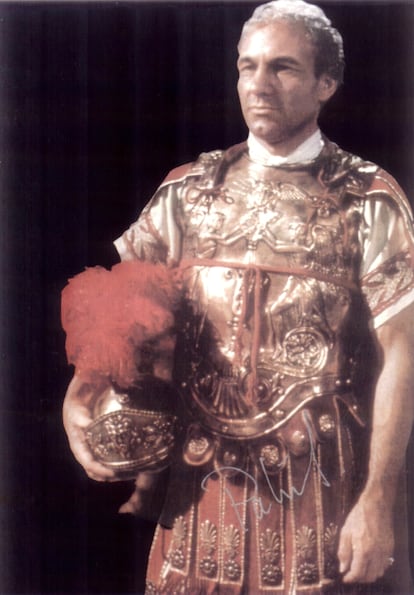
Male characters in I, Claudius presented more subtleties, in a range that went from the personification of all human kindness (Germanicus, brother of Claudius) to our greatest weaknesses (the repulsive Tiberius and Nero). Augustus (played by the fantastic Brian Blessed) was as easily manipulated as he was full of himself, a macho Sejanus (played by Patrick Stewart, who would later become famous for his role in the Star Trek franchise), and an ironic Herod Agrippa (James Faulkner). Caligula was a stand-out on the cast, with a pre-Alien John Hurt portraying the character as a sociopath capable of tearing apart his own sister and lover, Drusilla, to extract from her body the fetus they had conceived. That gory sequence was cut several times, including hours before its BBC broadcast, and later, was definitively censored for the U.S. market. The same could not be said of the other scenes of stabbings, suicides, and everyday violence in the Roman world. In any case, the above comprised — just like the rest of the series and its literary source — a seductive cocktail made of historical facts, some exaggerations, and a fair amount of speculative fiction.
When it was first shown in the fall of 1976, I, Claudius received varying reviews. Nearly everyone hailed the cast’s performance (though this was not the case for The Guardian, which infamously concluded that “There should be a society for the prevention of cruelty to actors.”) At the public’s request, it returned via reruns. In Spain, it aired in 1978 on Televisión Española, and just two years later, it was broadcast again on the same channel, before moving to regional TV stations. The public responded enthusiastically, and award ceremonies were also favorable with four BAFTAs (including Best Actor and Actress for Jacobi and Phillips) and an Emmy (for art direction). Its influence was immediately felt in a subsequent craze for “Roman” series packed with international stars, with varying budgets and artistic merit, that swept European and North American screens over the decade to come. Jesus of Nazareth (1977), Masada (1981), The Last Days of Pompeii (1984), Anno Domini (1985), and Quo Vadis? (1985) are just a few of the best-known examples.
But the shadow of the original product would reach much farther still. Esther Shapiro, the producer of the soap opera Dynasty, which was set in the world of ultra-rich 1980s oil tycoons, would admit that I, Claudius was her primary inspiration, and that her Alexis Colby character (played by the astounding Joan Collins) was modeled on Livia. Decades later, the influence of I, Claudius was kept alive by series like Game of Thrones (in which Cersei may be read as a Livia replica), House of Cards, Succession, Rome and even The Sopranos. (All differ from the original model, however, in their elevated budgets and aesthetics that are very distinct.)
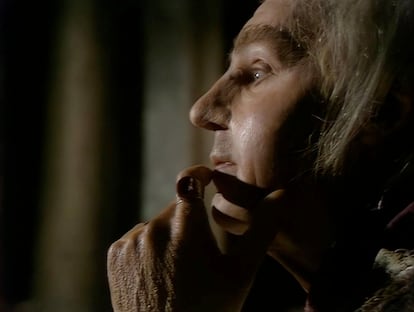
By comparison, I, Claudius may surprise first-time viewers with the theatricality of its staging, its absence of exterior shots, and certain shortcomings in its makeup and hairstyling. For example, the prosthetics worn by the elderly Claudius, which Jacobi could only remove by submerging his face in warm water, barely conceal their artificiality. But these apparent weaknesses pale in comparison to the quality of the performances and the nuanced scripts, which avoid the stiffness of historical cinema and even explore an occasional humorous tone. “My dear, you look like a Greek tragedy,” Tiberius says to a chained Agrippina. “And you look like a Roman farce,” she snaps back. As a whole, I, Claudius painted a grand fresco of the pernicious effects of power on society, the family and the individual, one that cuts across all eras and communities. Donald Trump has often been compared to the fictional Caligula, a parallel that is becoming increasingly obvious in light of current events. The current president of the United States even seems to emulate the warmongering and self-glorification of the Roman emperors — which is evident in his project to build a triumphal arch in Washington D.C., a type of monument commemorating military victories characteristic of Roman emperors, including those of the Julio-Claudian dynasty.
The series’ very lack of visual pretensions and its iconoclastic relationship to audiovisual trends are additional factors that contribute to making it a timeless, evergreen work. Beneath its prosaic appearance lies what Guillermo Altares, in a 2014 article for EL PAÍS, called “the triumph of intelligence.” Just as Claudius escaped certain death several times thanks to an unattractive physique that masked his intellectual brilliance, I, Claudius has kept its empire intact to this day. Our very own Roman empire.
Sign up for our weekly newsletter to get more English-language news coverage from EL PAÍS USA Edition

Headless Body Found Floating In Sea Off Popular Beach In Spain

Democrats Regain Ground With Latino Voters Ahead Of The Midterms

Spain’s New Flagship Housing Measures Will Go Before Parliament This Week – But The Vote Is Far From Certain

Detenido Un Hombre Por La Muerte De Una Mujer De 47 Años En El Distrito De Arganzuela De Madrid

British Actress Naomi Watts Attacks Ageism In Hollywood As She Picks Up Prestigious Donostia Award At San Sebastian Film Festival

Heartbreaking Instagram post reveals death of F1 star


-
 Arganzuela2 weeks ago
Detenido Un Hombre Por La Muerte De Una Mujer De 47 Años En El Distrito De Arganzuela De Madrid
-
 basque country1 week ago
British Actress Naomi Watts Attacks Ageism In Hollywood As She Picks Up Prestigious Donostia Award At San Sebastian Film Festival
-
 Uncategorized2 weeks ago
Heartbreaking Instagram post reveals death of F1 star
-

 Claudia Sheinbaum2 weeks ago
The Azcatitlan Codex Returns To Mexico From Europe After Nearly Two Centuries
-

 Uncategorized5 days ago
F1 Qualifying Today: Azerbaijan Grand Prix schedule, times and TV channel
-
Best airlines2 weeks ago
Spanish airline Vueling named Europe’s best low-cost carrier for 2026
-

 %2 weeks ago
Mallorca Property Overrun By Wild Goats
-
2026 wildfires2 weeks ago
Spain’s wildfire toll revealed as almost 300,000 hectares go up in flames