
BBC
Betrayal, Corruption And Cruelty: ‘I, Claudius’, The Series That Still Explains The World 50 Years Later

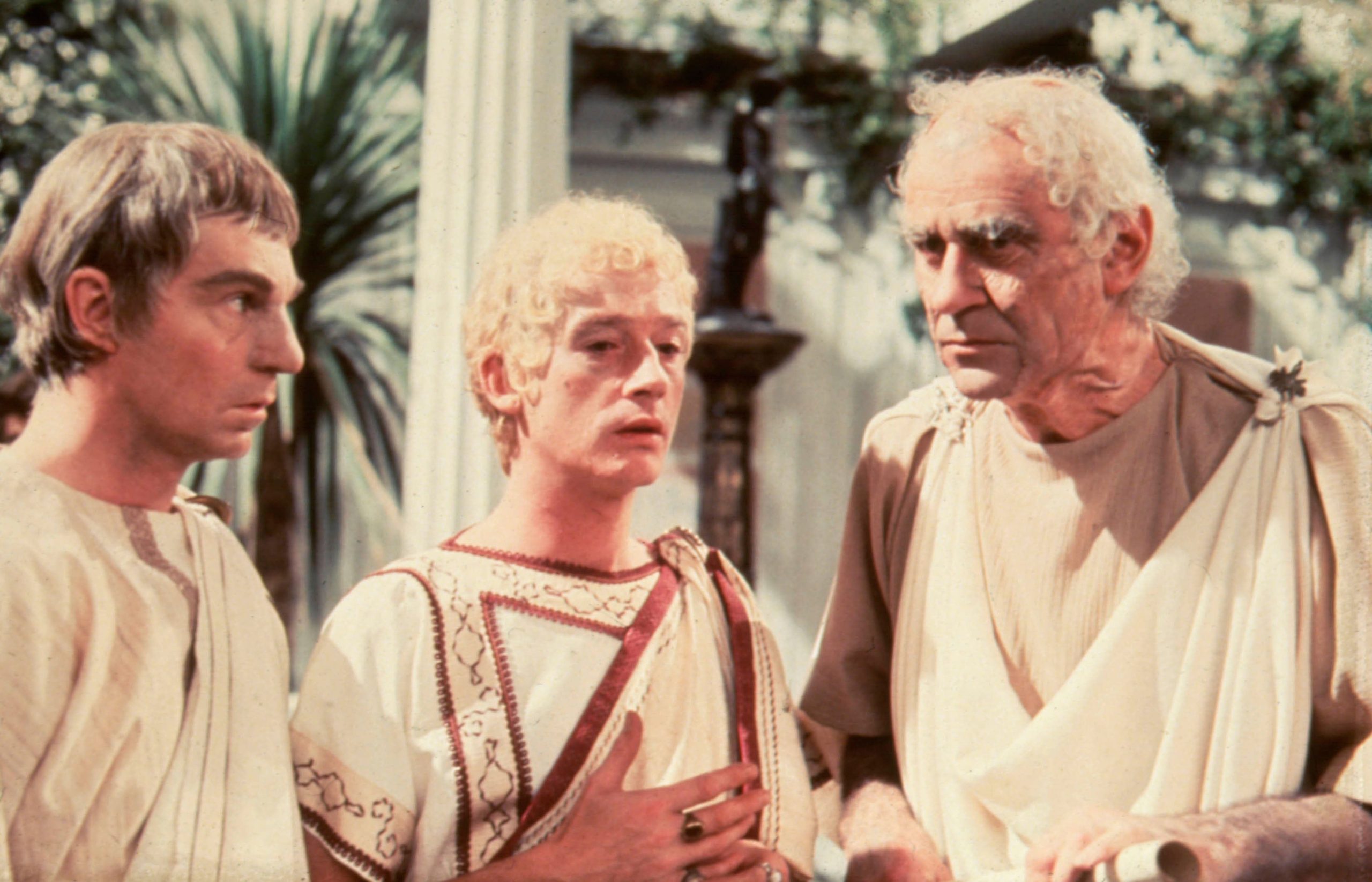
“By the way, don’t touch the figs.” Actress Siân Phillips has remarked that when she traveled the world, even decades after the premiere of I, Claudius, someone would recognize her voice and ask her to deliver the phrase delivered by her character, the Machiavellian Livia Drusilla. That scene from the series competes in collective imagination with its opening sequence, in which at the start of its 13 episodes, a serpent slithered to threatening music over a tiled mosaic face of Emperor Claudius. There it was in a nutshell: the greatness and filth of a newborn empire already corroded by corruption, the moral sickness that dominated a family, the political intrigues, the personal betrayals, the devastating effects of exercising and coveting power. The influence of I, Claudius can be seen in much more recent television projects, from Game of Thrones to Succession, but it also emerges in the current international political panorama, in the form of leaders like Donald Trump. This year, a half-century will have passed since its first broadcast, but anyone who watches an episode will confirm that it continues to be as relevant as it was back then.
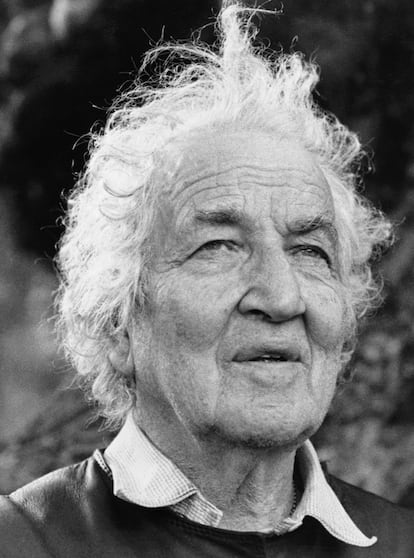
The series was based on two lengthy historical novels by the British poet, writer, and academic Robert Graves: I, Claudius and Claudius the God and His Wife Messalina, which were published to enormous success between 1934 and 1935. In them, Graves told the story of the first Roman imperial dynasty, the Julio-Claudian, which succeeded Julius Caesar and ruled Rome between the years 27 BCE and 68 CE, following one of its integrants, Claudius. Or, as he is called by his family, “Cla-Cla-Claudius.” He was a man of extraordinary intelligence, but no one took him seriously due to the stutter, limp and tremor he’d had since childhood. It certainly didn’t seem as though he was destined to compete for the imperial laurels.
And yet, almost against his will, he ended up being crowned emperor after his step-grandfather Augustus, his uncle Tiberius, and his nephew Caligula. And like them, he suffered the consequences of wielding power. The novels were written in first-person, in the elegant, unadorned style characteristic of classical historians — the true calling of the Claudius depicted by Graves — like Tacitus and Suetonius. But they presented, in addition to a fragment of history, a truthful portrait of a dysfunctional family in which manipulation, betrayal, murder, and incest were commonplace.
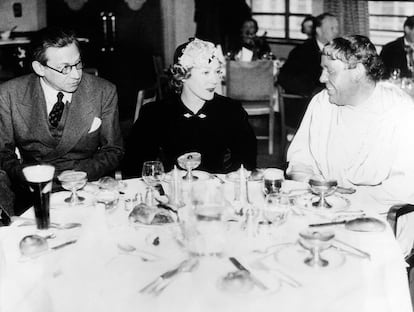
There had already been one attempt at adapting the diptych of books in 1937, under the direction of Josef von Sternberg and with actors Charles Laughton, Flora Robson, and Merle Oberon, until Oberon was involved in a car accident that scuttled the production soon after it starting filming. The BBC took the project back up nearly four decades later. After a journey that was extended by incidents related to copyrights, it was ultimately brought to life in a format for television. Production value was respectable, but not spectacular, and the program adhered to the typical standards of the time: video-format studio filming, long takes, a theatrical style, and few technical flourishes. But the BBC did have a wonderful script by the expert Jack Pulman, and a cast that was, without a doubt, magnificent, and who for the most part hailed from the stage.
The initial idea was to divide the role of adult Claudius — who the story follows to his death at 63, a very advanced age for the era — between two actors, one of whom would portray his youthful period and the other, the emperor in old age. For the latter, the primary candidate was Charlton Heston. But ultimately, it was decided they would unite the two roles and offer them to Derek Jacobi, who was less popular, but highly sought-after in theater for his Shakespearean performances. Jacobi couldn’t see himself playing the character, and immediately rejected the offer. Even so, he was politely invited to the party to celebrate the beginning of the shoot, and after witnessing the energy at the event, he changed his mind (today, we’d say he suffered an attack of FOMO), to his own benefit and that of viewers.
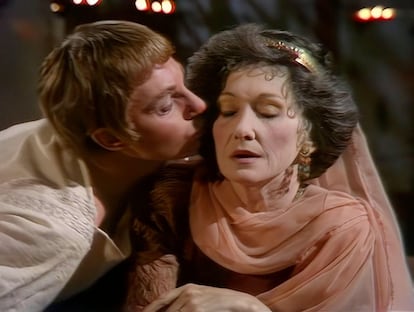
“I think every actor, at some point in their career, looks for that part that they become associated with,” Jacobi said in a documentary about the production, I, Claudius: A Television Epic (2022). “Some actors have more than one, others don’t get that one. I was lucky that I got Claudius.” Jacobi based his stutter on that of the set designer’s assistant. To fake the limp, he placed a rock in his shoe for the first episodes. Later on, he didn’t need the assist.
His performance was extraordinary, but in a certain way, it was eclipsed by that of Phillips as Livia, the grandmother of Claudius and wife of Augustus, Rome’s first emperor. Both Graves and the screenwriters portrayed her as a ruthless women obsessed with ensuring the survival of her lineage and the Roman empire itself — the Republic, for which Claudius longed, seemed to her a terrible idea — and one capable of terrible acts in pursuit of that goal. Several of her misdeeds involved poison, from which she spared not even her nearest and dearest. The actress struggled to tackle such an extreme character, who risked becoming a caricature. “Is this a Jewish family comedy?,” she once asked her director Herbert Wise, to whom she had turned to try to understand Livia. The response she says she received: “Look, relish the evilness. Don’t justify, just be evil. The more evil you are, the funnier it is, and the more terrifying it is.” In the documentary, Wise concludes, “Once she got that, she was unstoppable.”
Indeed, her performance, with its flawless diction and ironclad authority, is among the few that can truly be described as blood-curdling. This is particularly evident in the final confession of her crimes to Claudius, but also in her most memorable moment from the series, which comes via a line of dialogue that would become her aforementioned trademark. When Livia’s husband, Emperor Augustus, has just died after eating some fruits she herself prepared for him, with tears in her eyes, she blurts out to his successor, her son Tiberius, a chilling “By the way, don’t touch the figs.”
The series’ sexism — which it inherited from Graves — has been noted, largely due to this portrayal of Livia, and such criticism is not unfounded. Especially considering that apparently, the historical figure on which she was based was far from being so wicked and devious. It must be said, on the other hand, that female characters of dubious moral character abound in both televised and literary versions of the story. Messalina (a scheming nymphomaniac, at a time when the latter term was still used to indicate a hyper-sexual or simply promiscuous woman), Julia the Elder (similar), Agrippina the Younger (ambitious, manipulative and incestuous), Drusilla (incestuous and superficial), and Antonia the Younger, the mother of Claudius (morally strict, but cold and contemptuous towards her son). It was a veritable showcase of misogynistic cliches. But thanks to Phillips’s performance — and a style she was later asked to replicate on several occasions, particularly in David Lynch’s Dune (1984) — audiences of the time were unable to decide between horror and fascination when it came to her imperious Livia.
Male characters in I, Claudius presented more subtleties, in a range that went from the personification of all human kindness (Germanicus, brother of Claudius) to our greatest weaknesses (the repulsive Tiberius and Nero). Augustus (played by the fantastic Brian Blessed) was as easily manipulated as he was full of himself, a macho Sejanus (played by Patrick Stewart, who would later become famous for his role in the Star Trek franchise), and an ironic Herod Agrippa (James Faulkner). Caligula was a stand-out on the cast, with a pre-Alien John Hurt portraying the character as a sociopath capable of tearing apart his own sister and lover, Drusilla, to extract from her body the fetus they had conceived. That gory sequence was cut several times, including hours before its BBC broadcast, and later, was definitively censored for the U.S. market. The same could not be said of the other scenes of stabbings, suicides, and everyday violence in the Roman world. In any case, the above comprised — just like the rest of the series and its literary source — a seductive cocktail made of historical facts, some exaggerations, and a fair amount of speculative fiction.
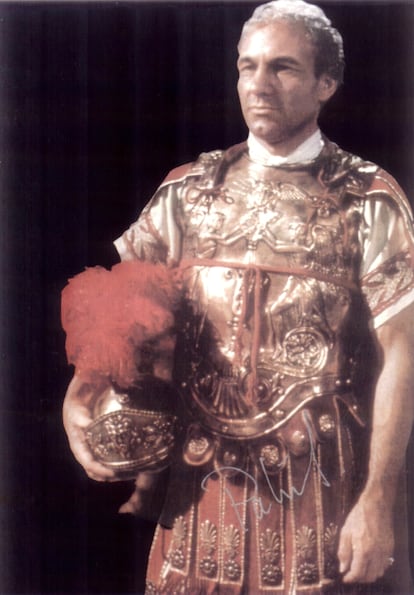
When it was first shown in the fall of 1976, I, Claudius received varying reviews. Nearly everyone hailed the cast’s performance (though this was not the case for The Guardian, which infamously concluded that “There should be a society for the prevention of cruelty to actors.”) At the public’s request, it returned via reruns. In Spain, it aired in 1978 on Televisión Española, and just two years later, it was broadcast again on the same channel, before moving to regional TV stations. The public responded enthusiastically, and award ceremonies were also favorable with four BAFTAs (including Best Actor and Actress for Jacobi and Phillips) and an Emmy (for art direction). Its influence was immediately felt in a subsequent craze for “Roman” series packed with international stars, with varying budgets and artistic merit, that swept European and North American screens over the decade to come. Jesus of Nazareth (1977), Masada (1981), The Last Days of Pompeii (1984), Anno Domini (1985), and Quo Vadis? (1985) are just a few of the best-known examples.
But the shadow of the original product would reach much farther still. Esther Shapiro, the producer of the soap opera Dynasty, which was set in the world of ultra-rich 1980s oil tycoons, would admit that I, Claudius was her primary inspiration, and that her Alexis Colby character (played by the astounding Joan Collins) was modeled on Livia. Decades later, the influence of I, Claudius was kept alive by series like Game of Thrones (in which Cersei may be read as a Livia replica), House of Cards, Succession, Rome and even The Sopranos. (All differ from the original model, however, in their elevated budgets and aesthetics that are very distinct.)
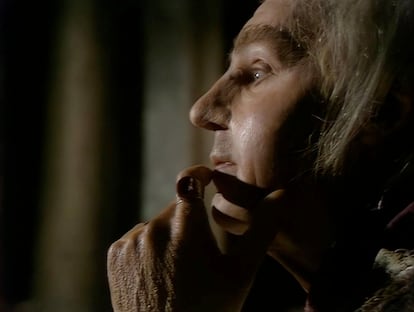
By comparison, I, Claudius may surprise first-time viewers with the theatricality of its staging, its absence of exterior shots, and certain shortcomings in its makeup and hairstyling. For example, the prosthetics worn by the elderly Claudius, which Jacobi could only remove by submerging his face in warm water, barely conceal their artificiality. But these apparent weaknesses pale in comparison to the quality of the performances and the nuanced scripts, which avoid the stiffness of historical cinema and even explore an occasional humorous tone. “My dear, you look like a Greek tragedy,” Tiberius says to a chained Agrippina. “And you look like a Roman farce,” she snaps back. As a whole, I, Claudius painted a grand fresco of the pernicious effects of power on society, the family and the individual, one that cuts across all eras and communities. Donald Trump has often been compared to the fictional Caligula, a parallel that is becoming increasingly obvious in light of current events. The current president of the United States even seems to emulate the warmongering and self-glorification of the Roman emperors — which is evident in his project to build a triumphal arch in Washington D.C., a type of monument commemorating military victories characteristic of Roman emperors, including those of the Julio-Claudian dynasty.
The series’ very lack of visual pretensions and its iconoclastic relationship to audiovisual trends are additional factors that contribute to making it a timeless, evergreen work. Beneath its prosaic appearance lies what Guillermo Altares, in a 2014 article for EL PAÍS, called “the triumph of intelligence.” Just as Claudius escaped certain death several times thanks to an unattractive physique that masked his intellectual brilliance, I, Claudius has kept its empire intact to this day. Our very own Roman empire.
Sign up for our weekly newsletter to get more English-language news coverage from EL PAÍS USA Edition







BBC
Patrick Baty, The ‘paint Detective’ Who Has Traced The Hues Of The Past For Windsor Castle And 10 Downing Street

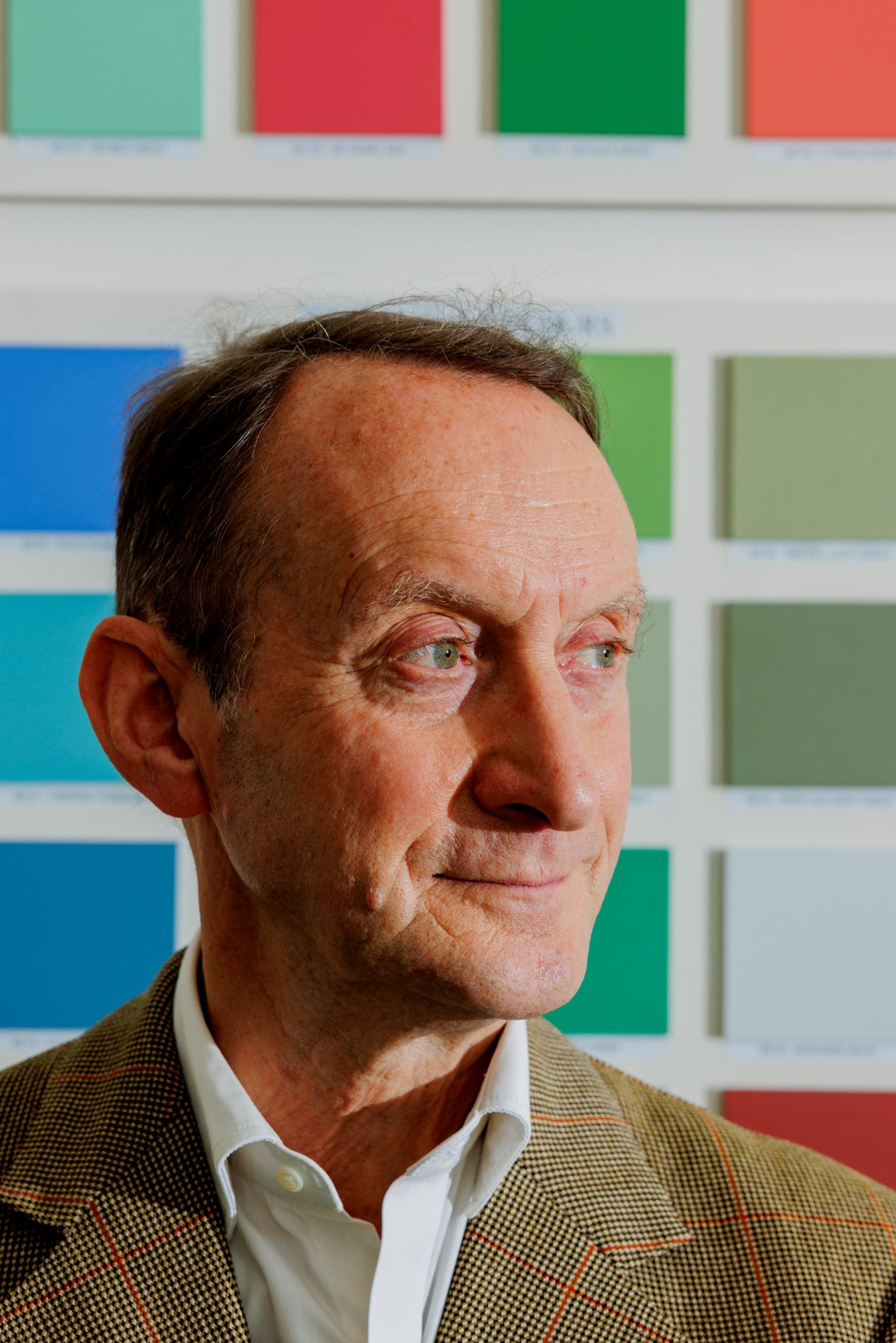
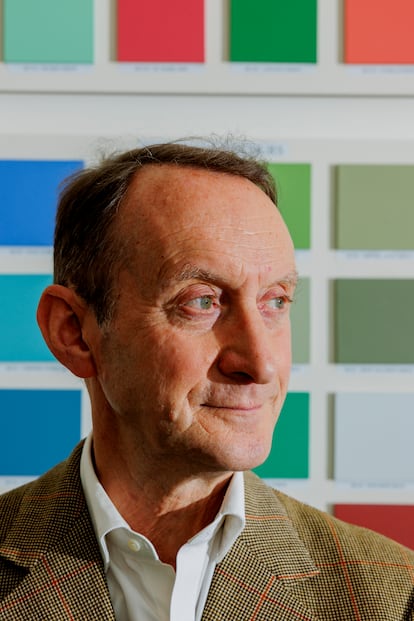
Patrick Baty, 70, thought the greatest adventure of his life would culminate in the fight against the communist insurgency in the Dhofar region of southern Oman in the 1970s. Britain’s elite Special Air Service, the feared SAS, was involved in the covert operation, and the young Baty, then a captain in the 9th/12th Royal Lancers, had already begun learning Arabic and was preparing to emulate Lawrence of Arabia.
“And then, in one of those strange turns large organizations sometimes take, they decided to send me to Northampton, two hours from London, to train and lead a group of cadets,” he tells EL PAÍS on a warm July morning as he sips his coffee in the Royal Festival Hall café on the Thames. “So I handed in my resignation. I didn’t want to steer myself toward a life of frustrations that would end with me spending my last years running a shooting range in Wales,” he says with a wry smile.
Today, in the world of interior decoration and architectural restoration, he is known as the “paint detective” or the “paint guru.” Public institutions and private owners alike seek his services to uncover the hidden past of their properties.
When he ended his army career, Baty realized that he had training from the Royal Military Academy Sandhurst and some knowledge of early 20th-century British painting, sparked by his childhood fascination with the work of his great-grandparents, Robert Bevan and Stanislawa de Karlowska. What he did not have was a university degree. That background was enough, for a time, to find work in the art galleries of London’s Bond Street, where he soon became bored stiff.
He then turned to his father, who ran a painting and wallpaper business in Chelsea, and offered to help. It was there, driven by customers’ questions and requests, that his curiosity led him into the field where he would finally achieve the fame he sought.
“Someone would come into the shop asking for the interior wall color of the Forbidden City in Beijing, or what color Robert Adam [the 18th-century architect famous for his neoclassical interior designs] would have chosen, or how to recover Sir John Soane’s masterful use of light and saturated colors,” Baty recalls.
He spent his afternoons researching treatises on color and decoration at the Royal Institute of British Architects, the National Art Library at the Victoria & Albert Museum and the British Library. His efforts culminated in an 80,000-word thesis on 18th-century decorative art at what was then the Polytechnic of East London, and in the building of a reputation as an expert in recovering long-buried colors.
Baty understood that theoretical knowledge had to be paired with forensic investigation: a scientific-detective method to unearth a building’s past before recommending the right color for a restoration.
Using a spectrophotometer, an instrument that measures in the lab the amount of light absorbed or transmitted, Baty analyzes wall samples under a microscope to find historic layers of paint. Each layer tells him a story about the building or monument.
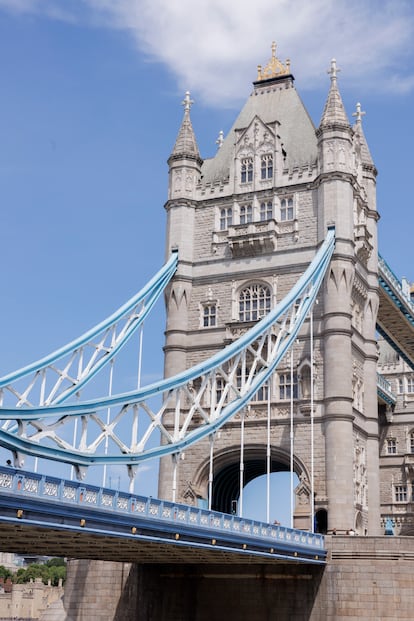
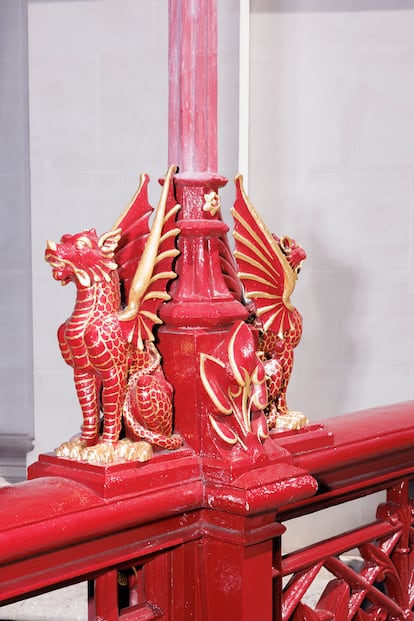
The right color is not always the original one. Among Baty’s commissions is the iconic Tower Bridge in London, with its bright blue and restrained white and red. It was painted that way in 1976 to mark the late Queen Elizabeth II’s silver jubilee. Before that, it had been light blue, grey and bronze-green. Both its color schemes and its structure changed over the decades.
“That was my recommendation to the City of London Corporation, which administers the bridge. Because if we had reverted to one of the historic colors, people would have been confused and the media would have stirred up a fuss. It was justified to keep the existing look,” explains Baty, who applies logic to something as seemingly subjective as color.
Baty is behind many restoration projects at Buckingham Palace, Windsor Castle (after the devastating 1992 fire), Hampton Court Palace, 10 Downing Street and the historic BBC Broadcasting House, as well as numerous private residences.
All of that knowledge is distilled in an exquisite, 300-plus-page art manual published by Thames & Hudson, the specialist publisher renowned for such carefully produced editions. The book is titled The Anatomy of Color.
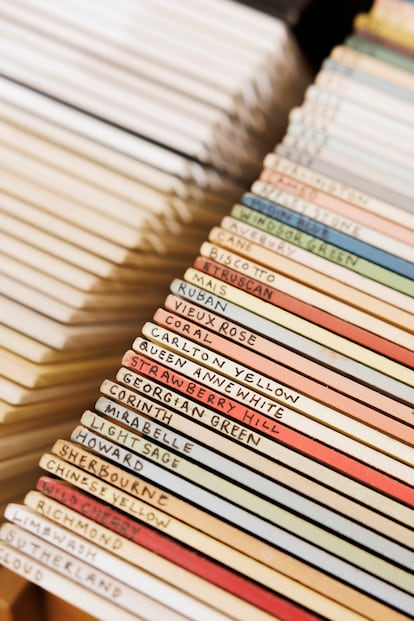
His wife, Alex, runs the business and the shop, Papers and Paints, which remains in Chelsea, where the Batys keep an immense catalog of historic hues. Thanks to that generous division of labor, Patrick was able to focus on his work as a historical and artistic consultant.
The central lobby of the Royal Festival Hall, one of the first public buildings constructed in London after World War II, is ringed by glass walls with some retaining walls. In its original scheme, a red surface sat next to a muted green, while a chocolate-brown area met a canary yellow. “A mad use of colors, until I found the hidden logic: what they call the ‘solidity of color,’ a way to provide a visual sense of strength by contrast against so much glass that, at the time, still conveyed a sense of fragility,” Baty explains.
His artistic vision embodies that blend of romanticism, Cartesian thought, and martial spirit that has produced so many British adventurers. In fact, until recently, he remained a member of the military reserves, assigned to the 21st SAS Regiment — known as the Artists’ Rifles — founded in 1859 by Edward Starling in response to fears of a new Napoleonic invasion of the island. The entire Pre-Raphaelite generation — including Dante Gabriel Rossetti and William Morris — was part of it. It attracted young painters, sculptors, musicians, and architects, as well as engineers and scientists. It eventually became one of the most prestigious military units in the United Kingdom
“Intelligent, motivated people who would go on to do extraordinary things — and whose very existence immediately drew me in,” says Baty, who recalls those experiences and that camaraderie as, curiously enough, something far more precious than his successful career as an interior restorer. “After all, paint and colors are very superficial,” he quips.
Sign up for our weekly newsletter to get more English-language news coverage from EL PAÍS USA Edition

Acampada En Sol Por La Vivienda, En Directo | Feijóo Anuncia El Rechazo Del PP A Los Decretos De Vivienda: “Que No Cuenten Conmigo Para Estafar A Nadie”
Almost 400 motorists caught in bizarre German speed camera trap

Almost 400 Motorists Caught In Bizarre German Speed Camera Trap

Detenido Un Hombre Por La Muerte De Una Mujer De 47 Años En El Distrito De Arganzuela De Madrid

British Actress Naomi Watts Attacks Ageism In Hollywood As She Picks Up Prestigious Donostia Award At San Sebastian Film Festival

Heartbreaking Instagram post reveals death of F1 star


-
 Arganzuela2 weeks ago
Detenido Un Hombre Por La Muerte De Una Mujer De 47 Años En El Distrito De Arganzuela De Madrid
-
 basque country1 week ago
British Actress Naomi Watts Attacks Ageism In Hollywood As She Picks Up Prestigious Donostia Award At San Sebastian Film Festival
-
 Uncategorized2 weeks ago
Heartbreaking Instagram post reveals death of F1 star
-
Best airlines2 weeks ago
Spanish airline Vueling named Europe’s best low-cost carrier for 2026
-

 %2 weeks ago
Mallorca Property Overrun By Wild Goats
-
2026 wildfires2 weeks ago
Spain’s wildfire toll revealed as almost 300,000 hectares go up in flames
-
 Claudia Sheinbaum2 weeks ago
The Azcatitlan Codex Returns To Mexico From Europe After Nearly Two Centuries
-

 Uncategorized5 days ago
F1 Qualifying Today: Azerbaijan Grand Prix schedule, times and TV channel