
Latest
Why You Can’t Donate Blood In Spain If You Don’t Speak Spanish


Esme Fox – esme@thelocal.es
Published: 30 Sep, 2026 CET. Updated: Wed 30 Sep 2026 13:14 CET

Add The Local as a preferred source
There’s a little-known rule in Spain that you must be able to understand and communicate in Spanish if you want to donate blood here.
Become a member or log in to continue reading
More
Comments (3)
See Also


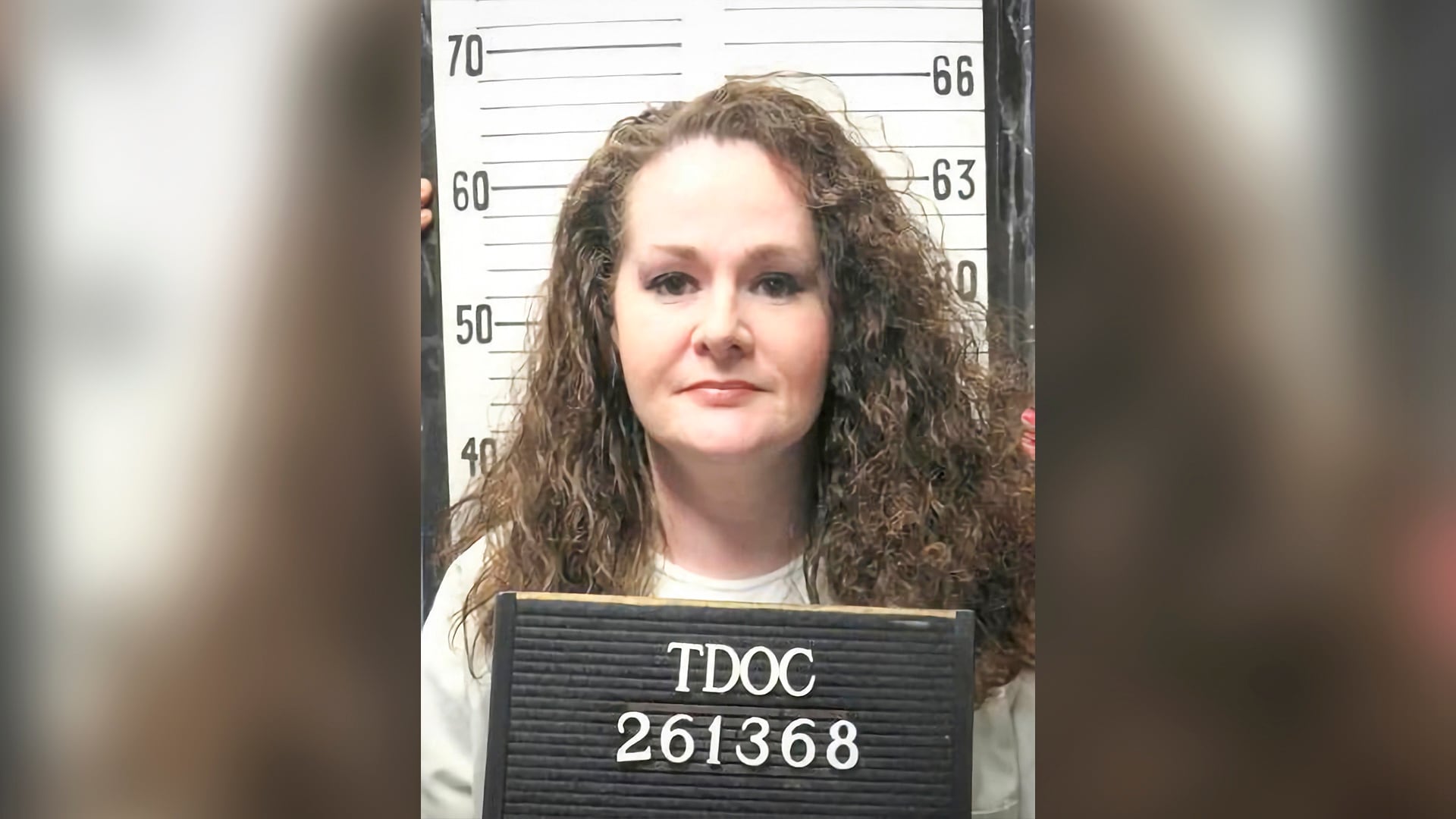
Tennessee Governor Bill Lee has halted the one remaining execution for 2026 after a woman named Christa Pike on Wednesday survived two injections of pentobarbital, a situation described as unprecedented.
The Tennessee Department of Corrections has confirmed that Pike, who was due to be executed for a 1995 murder, survived the lethal injections. She was taken to hospital, where she was receiving “life-saving measures,” according to a statement from her legal defense team cited by the BBC.
The pentobarbital injections were administered just hours after the U.S. Supreme Court authorized, without providing an explanation in its ruling, the carrying out of her death sentence in Tennessee, where she was convicted of the 1995 murder of a fellow student. The execution was scheduled for Wednesday morning but was stayed by a federal appeals court just one hour before it was due to take place. Pike is the first woman on whom an execution order has been carried out in the southeastern state in more than two centuries.
At 8:26 p.m. local time, according to witnesses, the contents of both syringes containing the lethal injection chemicals had been injected, but Pike “still has a heartbeat and is audibly snoring,” her attorneys stated in a brief filed with a federal court. They added that Pike “has not lost consciousness and still has a pulse,” and that the curtains in the execution chamber “have been lowered twice.”
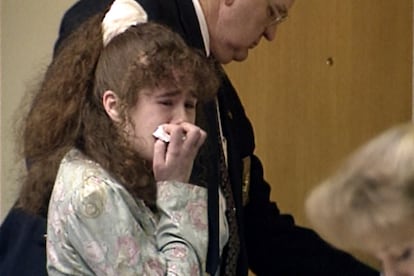
Tennessee Department of Corrections spokeswoman Dorinda Carter told reporters at the scene that she could not immediately provide information about what had happened. It is unclear what will happen next following the two failed execution attempts.
In May, a medical team spent more than an hour unsuccessfully attempting to insert an intravenous line into Tony Carruthers, an inmate at Riverbend maximum-security prison in Nashville, the capital of Tennessee, to administer a lethal dose of sedative. In that case, State Governor Bill Lee ordered the execution to be halted and later granted him a one-year stay of execution.
The Tennessee Supreme Court had rejected a request to stay the execution last week, and the U.S. Supreme Court had done the same on Tuesday. Tennessee Governor Lee, a Republican, had also denied a petition for clemency.
But with about an hour to go before the execution by lethal injection at the Riverbend facility, where witnesses had already gathered, the U.S. Court of Appeals for the Sixth Circuit — which reviews decisions by federal courts in Kentucky, Ohio, Michigan, and Tennessee — ordered a stay of the execution to consider the defense’s arguments that evidence regarding the abuse Pike suffered during childhood and adolescence had not been presented to the jury during the original trial.
Following the appeals court order, the Tennessee Attorney General’s office stated in a release picked up by a local television station in Jackson, Tennessee, that it would “continue to defend the enforcement of the legally imposed sentence” while that “technical issue” was being resolved. While the six conservative justices on the Supreme Court voted to lift the stay of execution, the three progressive justices — Sonia Sotomayor, Elena Kagan, and Ketanji Brown Jackson — voted against it. In their dissent, they argued that the decision cleared the way for the “State to execute Pike before litigation over her conviction has properly run its course in the lower courts.”

The murder of Colleen Slemmer
Pike was convicted in 1995 of murdering 19-year-old Colleen Slemmer, a fellow student at a vocational training center for young people in Knoxville, eastern Tennessee. According to the case record, Pike and two other youths, including her then-boyfriend Tadaryl Shipp, led Slemmer to a secluded spot, tortured and killed her. The boyfriend, who was 17 at the time, was sentenced to life in prison. The other person testified against both and received parole.
According to the Tennessee Supreme Court ruling, Pike told police she believed Slemmer was trying to take her boyfriend away from her and initially only wanted to fight with her, but ended up killing her instead.
The ruling says Pike had told a classmate the day before that she was going to kill Slemmer and admitted to police that she struck, kicked and cut the young woman’s throat. Slemmer tried several times to escape the attack, which lasted more than half an hour. Pike said she had hit Slemmer several times in the head with pieces of asphalt. Slemmer died from the head injuries, court documents say.
Pike’s lawyers have asked that her death sentence be replaced with life without parole, arguing she suffered sexual abuse and mental health problems during childhood and adolescence. The defense says the attorneys who represented Pike at trial failed to present evidence of the abuse she endured to the jury.
They also note that seven people, all men, who were sentenced to death in Tennessee for crimes committed at age 18 have had their sentences commuted. No one else that age has been sentenced to death in the state since Pike, 30 years ago.
The abuse allegations that appellate judges will review
According to the clemency petition, Pike was the victim of sexual violence in childhood and suffered assaults between the ages of two and five by her grandmother’s boyfriend. At 11, a neighbor raped her, and Pike reportedly told her mother, who did not believe her, according to a summary of the petition prepared by the Death Penalty Information Center (DPI). The neighbor was arrested on charges of indecent acts with a minor but was not jailed. At 17, she was raped again by a stranger, the petition says. Pike was diagnosed with bipolar disorder and post-traumatic stress disorder.

In the clemency petition, Pike’s lawyers said her mental health problems prevented her from “stopping herself.” “I was an 18-year-old with a mental illness. It took me many years to even understand the gravity of what I had done. And even longer to accept how many people I affected. I took the life of someone’s daughter, sister, friend. I am now horrified to think I was capable of such a crime,” Pike said in the petition, according to the AP.
According to the DPI, new death sentences for crimes committed by people aged 18 to 20 are rare in the U.S. justice system. In 2005, in Roper v. Simmons, the U.S. Supreme Court prohibited the death penalty for crimes committed by people under 18. Since then, only 58 death sentences have been imposed for crimes committed before age 21. Between 2020 and 2025 those sentences represented 5% of new death sentences.
Colleen ‘is not with me every day, every hour, every minute’
Slemmer’s mother, May Martínez, had opposed halting the execution and said she would travel from Jacksonville, Florida, where she lives, to witness it. She described her daughter as a happy young woman who liked skating and family games.
“[Colleen] is not with me. She is not with me every day, every hour, every minute,” the mother said in an interview this month with a local station, lamenting that attention on the case has focused on Pike and sidelined her daughter. “It’s as if Colleen never existed,” she said, adding that she hoped the execution would bring some peace to the family.
There have been 29 executions in the U.S. so far this year. On Tuesday, 77-year-old Curtis Beasley was executed in Florida for a 1995 murder — the 16th execution in Florida this year. In July, Florida executed two people on the same day, something that had not happened since 1964. In August, Oklahoma, Alabama, and Tennessee carried out executions on the same day, which had not happened since 2010.
Sign up for our weekly newsletter to get more English-language news coverage from EL PAÍS USA Edition

Conor Faulkner – conor.faulkner@thelocal.com
Published: 1 Oct, 2026 CET. Updated: Thu 1 Oct 2026 16:03 CET

Add The Local as a preferred source
Spain’s Prime Minister Pedro Sánchez has welcomed the fact that his British counterpart is attempting to recalibrate the UK’s relationship with the EU, calling Britain a “sister nation” and stressing that “Brexit was a huge loss”.
Become a member or log in to continue reading
More
Comments
Join the conversation in our comments section below. Share your own views and experience and if you have a question or suggestion for our journalists then email us at news@thelocal.es.
Please keep comments civil, constructive and on topic – and make sure to read our terms of use before getting involved.
Please log in here to leave a comment.
See Also


Tennessee Governor Halts Executions After Christa Pike Survives Two Lethal Injections
Spain’s PM Welcomes Burnham’s Openness To UK Rejoining EU

The Just-World Hypothesis And Other Mental Traps That Guide Us, But That We Can Avoid

Detenido Un Hombre Por La Muerte De Una Mujer De 47 Años En El Distrito De Arganzuela De Madrid

F1 Qualifying Today: Azerbaijan Grand Prix schedule, times and TV channel

British Actress Naomi Watts Attacks Ageism In Hollywood As She Picks Up Prestigious Donostia Award At San Sebastian Film Festival


-
 Arganzuela2 weeks ago
Detenido Un Hombre Por La Muerte De Una Mujer De 47 Años En El Distrito De Arganzuela De Madrid
-
 Uncategorized6 days ago
F1 Qualifying Today: Azerbaijan Grand Prix schedule, times and TV channel
-
 basque country2 weeks ago
British Actress Naomi Watts Attacks Ageism In Hollywood As She Picks Up Prestigious Donostia Award At San Sebastian Film Festival
-

 Uncategorized2 weeks ago
Heartbreaking Instagram post reveals death of F1 star
-

 %2 weeks ago
Mallorca Property Overrun By Wild Goats
-

 Claudia Sheinbaum2 weeks ago
The Azcatitlan Codex Returns To Mexico From Europe After Nearly Two Centuries
-
Best airlines2 weeks ago
Spanish airline Vueling named Europe’s best low-cost carrier for 2026
-
2026 wildfires2 weeks ago
Spain’s wildfire toll revealed as almost 300,000 hectares go up in flames
Join the conversation in our comments section below. Share your own views and experience and if you have a question or suggestion for our journalists then email us at news@thelocal.es.
Please keep comments civil, constructive and on topic – and make sure to read our terms of use before getting involved.
Please log in here to leave a comment.
I tried donating blood. My Spanish wasn’t the problem. The problem was that I lived in the UK during the 90s. Mad Cow Disease is a neural disorder that can take decades to activate.