
America
Trump Sale Al Rescate De Candidatos Republicanos En Apuros Con La Exención De Aranceles A Algunos Productos De Canadá






America
El Globo Terráqueo De Eisenhower: La Pieza Histórica Que Fue Dañada Por El Equipo De Pete Hegseth


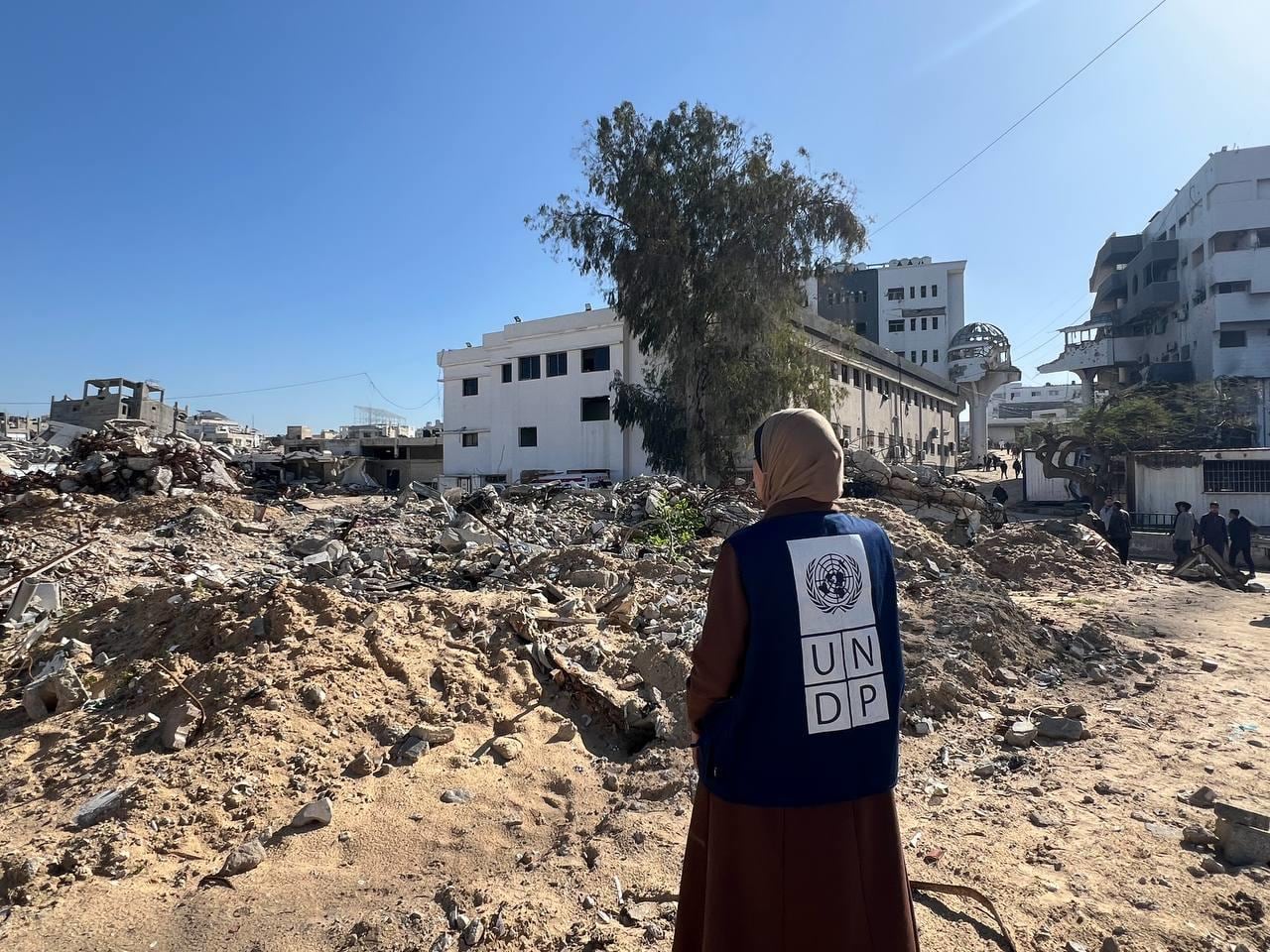
Three years after the start of the war in Gaza, thousands of families still do not know what happened to their loved ones. Some vanished beneath buildings bombed by Israel; others remain unaccounted for. The destruction of territory, the displacement of millions of people and the lack of resources to recover and identify remains make it increasingly difficult to reconstruct their stories. The longer time goes by, the greater the risk of losing the evidence that could lead to them.
According to estimates from the Palestinian National Team for Monitoring Missing Persons, more than 10,000 people are missing in the Gaza Strip, and it is believed that over 8,000 remain under the rubble. The team has individually documented more than 9,500 cases, including 4,700 women and children.
For Omar Al‑Assouli, strategic adviser to the United Nations Development Programme (UNDP) in Palestine, the experience of Colombia’s Unit for the Search for Persons Declared Missing (UBPD) provides an answer—drawn from the Colombian reality—to the question of how to launch searches for missing people without waiting for the conflict to end.
“The first time we talked about this issue it was almost impossible to start the work, because people always think you have to end the war or have a peace agreement before starting the process of searching for the missing. But contact with the UBPD gave us the key, which is that we have a humanitarian approach. That gave us a lot of motivation to start, without making the mistake of waiting for the peace process or for transitional justice,” Al‑Assouli says from Bogotá, where he is taking part in an international symposium organized by the Search Unit.
In Colombia, that unit was born out of the 2016 Peace Agreement as a humanitarian, extrajudicial entity tasked with searching for people who disappeared in the context of the armed conflict. It includes those who may still be alive and those who died, whose remains must be recovered, identified and returned to their families. Because it does not seek to determine criminal responsibility, the search can advance without relying on judicial processes.
That is precisely something that could work in Gaza, Al‑Assouli says. “People are suffering and every day counts. They do not need a process of transitional justice now, nor do they need to be waiting for one; they do not need to see the people who made their relatives disappear go to prison. What they are seeking immediately is the truth and information about them,” he says.
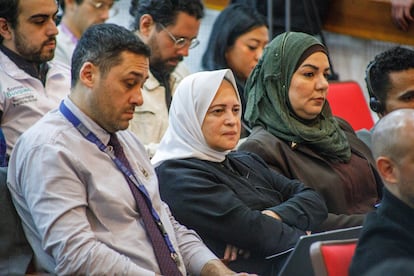
Contact with the Colombian experience has also led him to consider how to centralize all available information, as the UBPD does. He explains that families can hand the same data to different organizations and agencies, a repetition that wears on those who are searching and increases the risk that information becomes scattered. “We think it is very important to have a comprehensive information‑collection system. We can collect the data that NGOs, international organizations or the Red Cross already have,” he explains.
Another point of convergence between the Palestinian and Colombian experiences is a collective dimension to the search. In Colombia, the UBPD has built on and strengthened the work of families and searchers—mostly women, who have their own protection and accompaniment law—social organizations, specialists and professionals from different disciplines. In Gaza, Al‑Assouli says, families are part of that work, although the conditions make it harder. The challenge is for that search to have coordination, technical support and mechanisms to preserve the information.
The obstacles to finding the missing in Gaza
The challenges, however, go further. Al‑Assouli points out that a significant portion of the territory is outside the control of Palestinian authorities and that, even in places where access is possible, resources to examine bodies are lacking. Searches take place amid destruction that makes both recovering remains and reconstructing the circumstances of disappearance difficult.
“In areas under Palestinian control, search methods are very primitive. There are no, for example, large excavators,” he says. The critical scenario is compounded by a shortage of DNA tests and forensic laboratories. In some centers samples are kept and remains are registered as unidentified, awaiting conditions that would allow testing.
But while time there may sound like hope, it also worsens the shortages. Bodies that remain beneath destroyed buildings can deteriorate. Some of those recovered have been in a condition that requires expertise in forensic anthropology and other disciplines. Those technical skills are scarce on the ground.
Displacement adds another difficulty. Around two and a half million people lived in Gaza, and about two million of them have had to flee their homes. Reconstructing who lived in each building, who was there when it was destroyed and who has been missing since then is far harder given those movements. “It is another source of information that we do not have,” the expert says.
While institutions try to organize the search, some families return to places they can enter and dig with their own hands or rudimentary tools. They try to find any evidence that would let them know whether their relatives are still there and recover the bodies to bury them.
The expert describes that search as a response to uncertainty, one that the Colombian experience shows could be reduced with organization and resources, even without waiting for all conditions to be adequate.
Sign up for our weekly newsletter to get more English-language news coverage from EL PAÍS USA Edition
America
Mexican Prosecutors Locate Alfonso ‘N’, The ‘perfect Man’ On A Dating App Who Scammed Over 15 Women



Police Investigate String Of Burglaries Targeting Football Stars In Sevilla After Irish Striker Troy Parrott’s Home Is Raided

Eco Amigos Sabinillas Clean Up

Four-Cent Tax Error: Call For Fairer Fines

F1 Bahrain Grand Prix will be live and FREE on TV this weekend

How To Get A Tourist Rental Licence In Andalusia (Spain) – Step-By-Step Guide 2025
Brussels takes action against Spain over failure to update blackout plan


-
 Uncategorized4 weeks ago
F1 Bahrain Grand Prix will be live and FREE on TV this weekend
-
 New Developments4 weeks ago
How To Get A Tourist Rental Licence In Andalusia (Spain) – Step-By-Step Guide 2025
-
Blackout preparedness3 weeks ago
Brussels takes action against Spain over failure to update blackout plan
-

 New Developments3 weeks ago
Luxury Villas For Sale, Estepona – ProjectL1
-
EU3 weeks ago
EU nicotine crackdown sparks warning that ex-smokers could be driven back to cigarettes
-

 Uncategorized3 weeks ago
Lewis Hamilton F1 wish could come true as stunning plans for new track revealed
-
 Foreign demand4 weeks ago
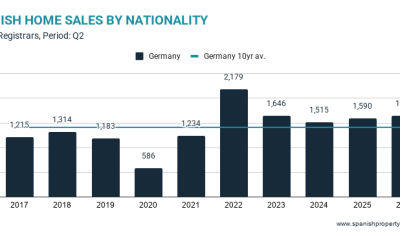
Market Snapshot: German Market In Q2 2026
-

 Housing access / crisis / affordability3 weeks ago
Radical Housing Decrees Defeated As Snap Election Talk Grows