
News
Renfe scraps seat reservations and cuts extra charges for pets and bicycles

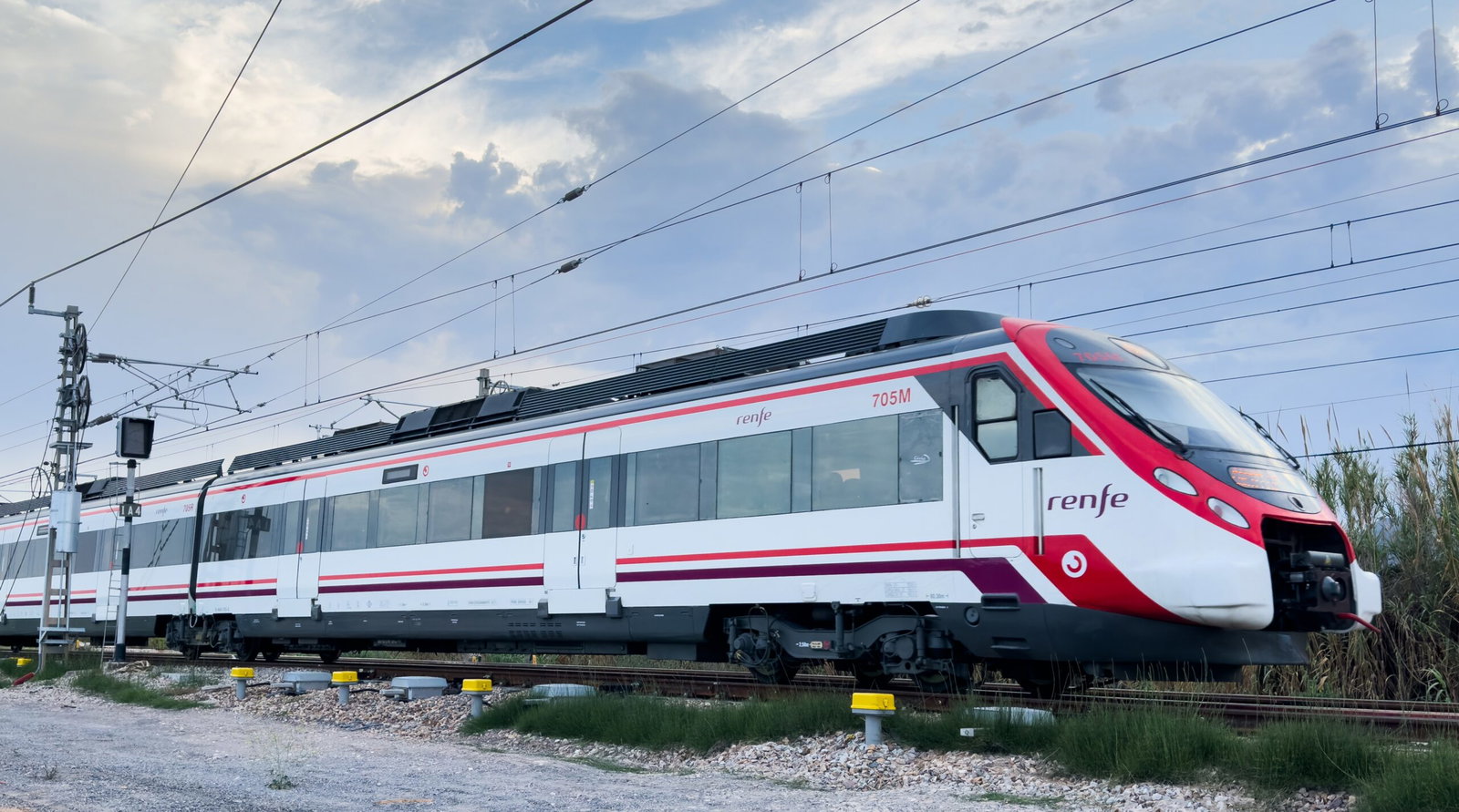
Passengers will still need a valid ticket. Photo credit: Maksim Safaniuk/Shutterstock
If you use Spain’s regional trains for work, appointments or travel, you may soon have one less thing to organise before travelling. Renfe is removing the requirement to reserve a numbered seat in advance on selected Media Distancia and Regional services from December 12 this year, allowing passengers to buy a ticket without choosing a specific seat beforehand.
The change will not cover every regional train in Spain as of yet, so passengers will need to check whether their route is included before changing their usual travel arrangements. Renfe says the new system is intended to make buying tickets and boarding simpler, particularly for people making regular journeys between towns and cities. The company says it responds to passengers’ demand for greater flexibility in everyday travel.
Which routes will lose numbered seats?
The change will apply to nine route groups across several regions. In Galicia, it covers A Coruña–Vigo Guixar, including services starting or finishing in Santiago and Vilagarcía, as well as A Coruña–Ferrol. In the east, it includes Valencia–Alicante–Murcia–Cartagena.
Extremadura services affected are Cáceres–Valencia de Alcántara, Badajoz–Villanueva de la Serena, within the Madrid–Puertollano–Badajoz service, and Mérida–Zafra, within the Madrid–Plasencia–Seville service.
The remaining routes are Burgos–Vitoria–Pamplona–Zaragoza, Valencia–Teruel–Zaragoza and Salamanca–Valladolid–Palencia. Renfe has named these specific services; the change should not be assumed to apply automatically to every train along the same broader corridors.
Passengers will still need a valid ticket. The change removes the need for an assigned seat number on the listed services; it does not make journeys free or guarantee that everyone will have a seat. Renfe has not announced changes to fares, train frequency or capacity as part of this measure. For passengers who are used to booking a particular seat, the new system will mean giving up that certainty in exchange for a simpler booking process.
Bicycles and pets will also cost less to take
The new arrangements also remove the supplement for carrying a full-size bicycle without dismantling it on the affected services. Renfe is also removing the supplement for pets weighing up to 10kg when travelling in a carrier, and for dogs weighing up to 40kg. The change for pets is already in place for T1 fares, used on services with more stops and longer journey times, and will be extended to the other relevant services in the coming weeks.
For people who regularly travel with a bicycle or animal, these changes could reduce the cost and hassle of planning a journey. However, removing a supplement does not mean every train has unlimited room for bicycles or animals. Passengers should still check the conditions for their particular service and use the designated spaces where required.
Will Renfe extend the change across Spain?
Renfe has not announced a nationwide rollout or named any additional routes that will lose numbered-seat reservations. Its statement describes the move as part of a strategy to modernise and standardise Media Distancia and Regional services, making them easier to use for everyday journeys. That leaves the possibility of further changes open, but there is no published timetable for expanding the system across the network. The nine route groups listed by Renfe are the ones confirmed for December 12, and passengers elsewhere in Spain should not assume their services will follow suit.
The new model brings these selected routes closer to local and regional rail services in other European countries, where passengers can often travel without booking a particular seat. But Renfe has not said that the December change is a trial, nor has it promised to extend it to the rest of Spain. For regular passengers on the affected lines, the difference is straightforward: they will no longer need to secure a numbered seat before travelling. For everyone else, the existing arrangements remain in place unless Renfe announces further changes.





The supermarket has also been designed to reduce its use of resources. Photo credit: aapsky/Shutterstock
If you buy bagged salad at the supermarket, you probably don’t give much thought to where it was grown or how far it travelled to reach the shelf. But one German supermarket is changing that by growing its own lettuce on the roof, with enough space to produce up to 900,000 salad mixes a year. The REWE Green Farming supermarket in Berlin’s Lankwitz district opened on 21 May 2026, combining a conventional food shop with a 2,760-square-metre rooftop farm.
The lettuce is grown above the store, harvested and packed on site, with supplies also destined for other REWE branches across the Berlin region. The project brings food production into an urban setting and gives the retailer a way to shorten the journey between growing and selling fresh produce.
Lettuce grown in just 23 days
The farm is run by Berlin-based ECF Farmsystems, which specialises in urban food production. It uses hydroponics, a method of growing plants with little or no soil. The lettuce sits on specially designed trays and receives a nutrient solution several times a day. The growing cycle takes around 23 days. After harvesting, the lettuce is taken directly downstairs for processing and packing, ready to be sold in the supermarket or sent to other branches.
The first harvest took place in August, and the salad is already being sold. The varieties include Batavia, green romaine, Lollo Rosso and dark green Easy Leaf lettuce. The greenhouse is designed to operate throughout the year, rather than depending on the growing seasons of outdoor farms. REWE expects the farm to produce up to 900,000 salad mixes annually. Its produce is distributed to around 500 supermarkets in the Berlin region, although the rooftop farm itself is located at just one store.
Could it reduce food miles?
Growing lettuce above the shop means it does not need to make the same journey as produce brought in from farms further away. REWE estimates that its rooftop operation could save around 500,000 transport kilometres a year compared with imported lettuce from southern Europe. That is the retailer’s estimate, rather than an independently verified figure. The supermarket has also been designed to reduce its use of resources. Its main structure uses timber, while around 200 solar panels contribute to its energy supply.
The building uses renewable electricity and recovers waste heat from its refrigeration equipment to help heat the premises and greenhouse. Rainwater is collected in a large underground cistern, with a capacity of 200 cubic metres, and used by the store and farm. REWE says the building requires around 50 per cent less energy than a standard supermarket.
Could other supermarkets follow?
The Berlin store is not REWE’s first experiment with growing food above a supermarket. Its first Green Farming store opened in Wiesbaden-Erbenheim in 2021, although that project uses a different approach, combining fish farming and plant cultivation. The newer Berlin site is Germany’s largest rooftop farm, according to REWE. The company says its modular store design allows rooftop space to be adapted for different uses, and it plans to build more timber-based supermarkets.
Rooftop farming will not replace traditional agriculture, and a single greenhouse cannot supply every fresh product a supermarket needs. But the Berlin project demonstrates how an otherwise unused roof can produce food for local shops, with less distance between harvesting and sale. For customers, the difference is straightforward: the lettuce in the bag may have grown just metres above the supermarket where they buy it.
The alert applies to a specific batch imported from Italy. Photo credit: lma_ss/Shutterstock
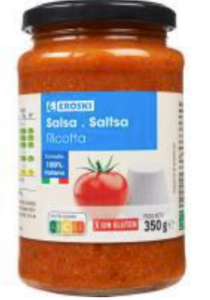
If you have recently purchased EROSKI’s ricotta sauce or have some in your kitchen cupboard, buyers are being urged check the batch number before adding it to your pasta. Spain’s food safety authorities have issued a warning over a batch of the 350g sauce after possible glass fragments were reported in the product. The alert applies to a specific batch imported from Italy, not every jar of ricotta sauce sold by EROSKI. Anyone who has bought the affected product should leave it uneaten and check the label carefully.
The Spanish Agency for Food Safety and Nutrition (AESAN) published the alert after receiving information from health authorities in Navarra. The warning was circulated through Spain’s food safety notification system so authorities in other regions could take the necessary action.
Which EROSKI sauce is affected?
The alert identifies the product as follows:
- Product: Salsa Ricotta
- Brand: EROSKI
- Batch number: LA310CRI01
- Pack size: 350g
- Packaging: Glass jar
- Country of origin: Italy
The batch number is the key detail for shoppers. The warning does not cover every product in the range, so customers should compare the code on their jar with the one listed in the alert rather than assume all ricotta sauces are affected. Authorities have not publicly explained how glass fragments may have entered the sauce, nor have they confirmed how many jars are affected or whether anyone has been injured after consuming the product.
What should customers do with the sauce?
AESAN’s advice is clear: do not consume the affected batch. Glass fragments can cause cuts or other injuries if swallowed, and they may not be easy to spot in a sauce. A jar that looks intact does not establish that its contents are safe. According to reporting by EITB, EROSKI has said customers can return the affected product to any of its shops. Anyone who finds the batch in their cupboard should keep it separate from food they intend to eat and take it back to the retailer.
The alert was issued through the Coordinated Rapid Information Exchange System, known as SCIRI. This allows food safety authorities to share information about potential risks and coordinate action across Spain’s autonomous communities. The notification enables regional authorities to check whether the affected batch has reached shops in their areas and ensure the necessary measures are taken.
Not every sauce sold as ricotta is affected
Shoppers should also avoid confusing the affected EROSKI product with other sauces carrying a similar name. EITB reported that a separate ricotta sauce manufactured by IAN, SA, was not included in the alert. That product can be identified by its barcode, 8480010310078. The warning concerns a particular product and batch, not ricotta sauce as a category. Customers should use the manufacturer, packaging details and batch information to identify the jar in question.
AESAN published its recall notice on October 22, with further reports appearing on October 23. The information available in the alert does not establish the precise source of the contamination, the number of affected units or whether the product was distributed nationwide. Anyone who has recently bought the sauce should check the label before using it. If the batch code matches LA310CRI01, do not eat the contents and return the jar to an EROSKI shop.
ElPais
Paul Banks Of Interpol: ‘Quitting Drugs And Alcohol Wasn’t That Hard. It Was Time And I Was Ready’

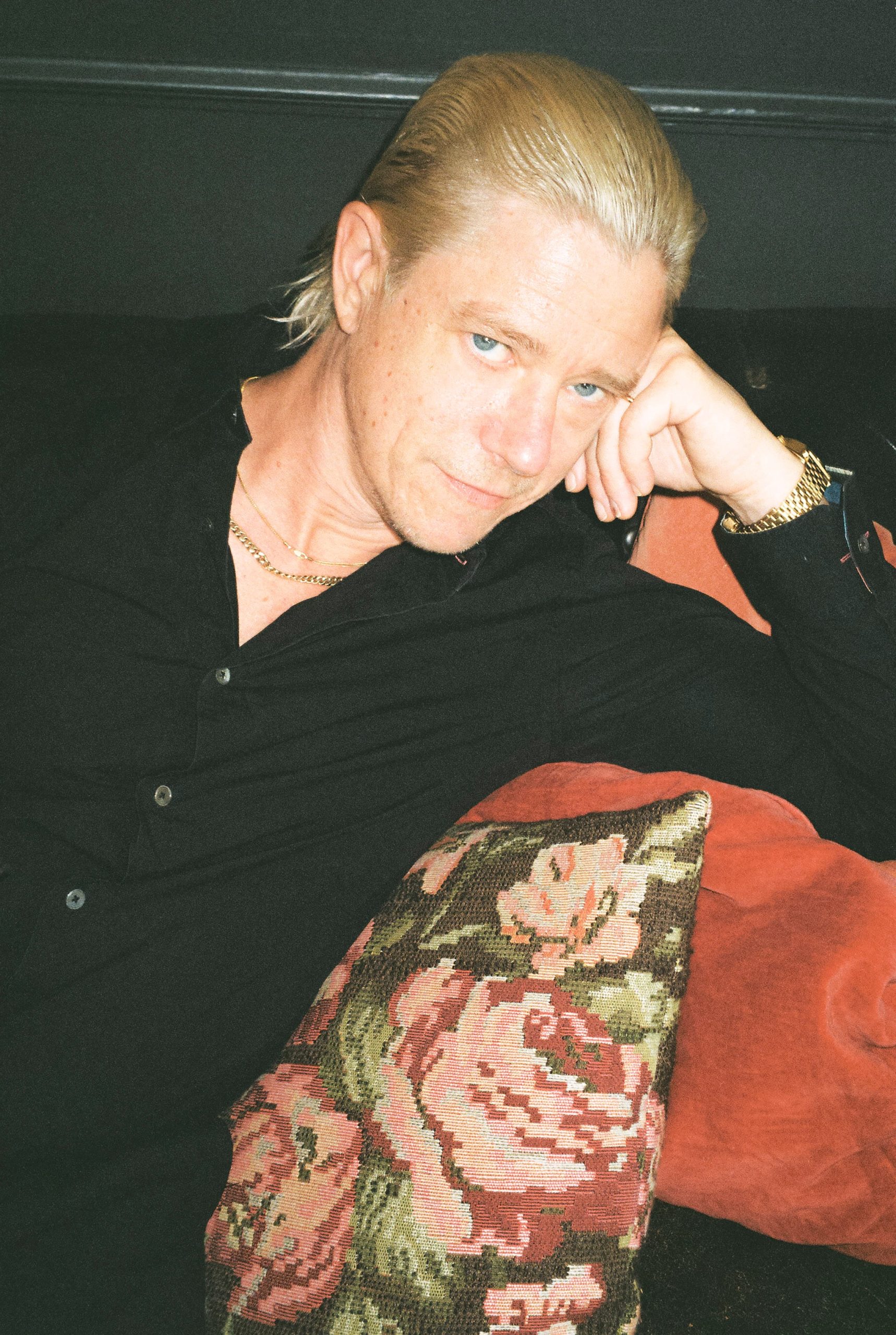
Sitting in the suite of an upmarket hotel with an iced latte in hand, Paul Banks (Essex, 48) shows few visible aftereffects of the intoxicated lifestyle that nearly sent him to the other side. The Interpol singer looks happy in middle age. His band, which shone in early-2000s New York amid the post-punk revival, is now enjoying a second youth, lifted up by a generation that once again reveres the archetype of the tormented indie figure à la Ian Curtis, with whom Banks has long been compared.
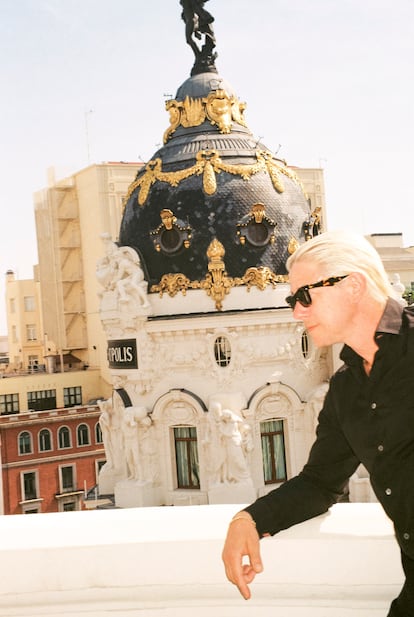
He is in Madrid to present This Mirror Weighs a Ton, the band’s eighth album. He knows the city well. He lived in the Spanish capital from the ages of 11 to 16. He still has friends and visits them every time he comes. He says he fell in love with Madrid and learned that, with time and the right attitude, he could live anywhere. “When I got here I was on a BMX and playing basketball. I left at 16, but by then we were drinking, smoking and going to clubs and stuff. The last moments of pure happiness and the first moments of adulthood were in Madrid.”
He grew up with skaters in the downtown Plaza de Colón because his father, an automotive executive, came to Madrid for a job at Volkswagen. Later the family moved to Mexico and then to New Jersey. “When you talk to people who talk about having families and moving around a lot, I think a lot of people frame it from a negative standpoint, you know, maybe the child won’t be able to develop roots or have a sense of home. The way it worked for me was sort of on the contrary: I think it allowed me to just be a citizen of the world with no notions of one thing being above another and that every place has its charms.”
Banks studied literature in New York. It was the era of rock’s rebirth, with bands such as The Strokes, Yeah Yeah Yeahs, The Rapture, and LCD Soundsystem. In 1997 he joined Daniel Kessler, Carlos Dengler and Greg Drudy to form Interpol. Five years later, with Sam Fogarino replacing Drudy, they debuted with Turn On the Bright Lights, a key album of that scene. But as Interpol grew commercially, its members began to show signs of wear. In 2010, Dengler left the group. For Banks, those years were marked by substance use. He says he quit when he realized he wouldn’t last much longer on that road. “I was open about the fact that I was getting to the point where I think I was getting close to mortal situations. And then I just went to get treatment.”
He moved to New Jersey, to a house that was far from the bars and clubs and from some of his friends, whom he didn’t see again for a long time. “If you say, okay, this table’s my life and I’m going to move the beer over there to the far side of the table, that’s not going to work if you’re trying to stop drinking. It has to be off the table. Once something is genuinely off the table, there’s not really that much left to do. It was hard; I had to go through a major chemical rebalance, and I think I went into some pretty profound depressions at the time. I couldn’t quit cigarettes for a long time after that. But the drugs and alcohol wasn’t that hard because it was time and I was just ready for it.”
Despite everything, he has fond memories of that year and a half of recovery, during which he exercised a lot and threw himself into music. “[In 2013] I did this crazy mixtape called Everybody on My Dick Like They Supposed to Be. I don’t know if you know about it; it’s only on YouTube. It was just something I did for fun. I learned to use Logic [a music-production program], and it was the first time I realized, oh, I could write with horns or trumpets or trombones. I can create any sounds I want. It was pure creativity at a time when I really needed it.”
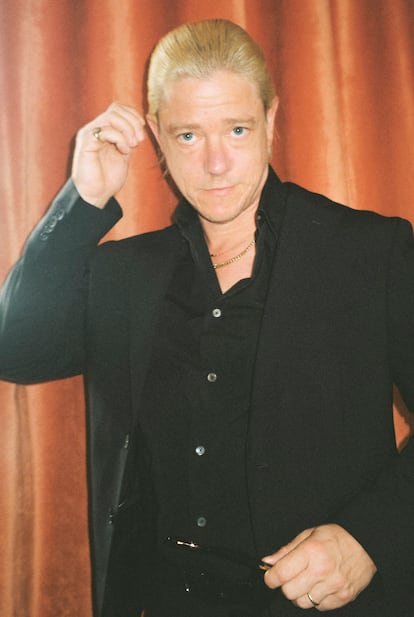
Like many artists who get used to creating under the influence, Banks needed time to discover he could do it sober. “I’ve never felt that booze or weed — and I do smoke weed still — is somehow helping the creation. You’re telling yourself that it’s this sort of ceremonial preamble to the process of creation. So you can do without them and instead sit for a few minutes and quietly tell yourself you’re going to channel your creativity and try to make something beautiful.”
He changed his lifestyle and found in surfing and boxing two activities to fill the “void of excitement” drugs had once provided. While standing on a board in the middle of the ocean he applied the same principle he used to stop drinking. “There’s not really a middle ground because anything in the middle, you can just keep leaning into panic and then just fucking slide that way. If you’re on a surfboard and you start thinking, ‘What if there’s a shark?’ It can become overwhelming. Instead you have to realize: ‘I’m not on the menu; I’m sure the universe is not upset with me for being out in the ocean on this non-polluting floating object.’ So if the universe wants a shark to get confused and come bite me, then what am I gonna fucking do about it?”
The end of the process culminated in the birth of his two children, who have changed how he works and conceives his career. “I think about what I’d want my son to think: Not so much would he like these lyrics, but would he like the effort that I’m making? Would he admire the sort of commitment to my craft? I think that becoming a father fully activated my soul. It’s not that the love you normally feel goes from a ten to an eleven. It’s something else. It’s like a room that you didn’t know was in your house, and now you discover this room, and someone turns the light on, and now there’s this extra space, and that’s how it feels emotionally.”
At the end of the interview he takes out his phone and proudly shows a photo of his children. They don’t yet know their father’s story, but one day they will. Is he worried about what they might think of him? “Do you mean because some of the themes are a bit weird, or that they’re sort of dark? I’ve thought about that. But from what I’ve heard from other artists who talk about their kids, they don’t care much who their parents are in the art world. Robert Downey Jr. will talk about his kids watching The Avengers, but they don’t care that dad is Iron Man: they like Thor. You just want to make sure that it doesn’t get in the way of any part of their life or that it doesn’t impact them negatively.”
Sign up for our weekly newsletterto get more English-language news coverage from EL PAÍS USA Edition
German supermarket grows 900,000 salads a year on its own rooftop
EROSKI issues food alert after glass fragments found in ricotta sauce
Spain targets 8,318 holiday rental listings under new 31-day rule

F1 Bahrain Grand Prix will be live and FREE on TV this weekend

How To Get A Tourist Rental Licence In Andalusia (Spain) – Step-By-Step Guide 2025
Brussels takes action against Spain over failure to update blackout plan


-
 Uncategorized3 weeks ago
F1 Bahrain Grand Prix will be live and FREE on TV this weekend
-
 New Developments3 weeks ago
How To Get A Tourist Rental Licence In Andalusia (Spain) – Step-By-Step Guide 2025
-
Blackout preparedness3 weeks ago
Brussels takes action against Spain over failure to update blackout plan
-

 New Developments3 weeks ago
Luxury Villas For Sale, Estepona – ProjectL1
-
EU3 weeks ago
EU nicotine crackdown sparks warning that ex-smokers could be driven back to cigarettes
-

 Uncategorized3 weeks ago
Lewis Hamilton F1 wish could come true as stunning plans for new track revealed
-
 Foreign demand4 weeks ago
Market Snapshot: German Market In Q2 2026
-
Latest2 weeks ago
The Changes To Spain’s IRNR Non-Resident Property Tax In 2027