Connect with us

%

Brits Among Thousands Of Málaga Passengers Who Could Claim Hundreds Of Euros After Summer Flight Delays

Published

on

brits-among-thousands-of-malaga-passengers-who-could-claim-hundreds-of-euros-after-summer-flight-delays

Passengers could claim if they arrived three hours or more late. Credit: Goodwin Mallorca / Shutterstock

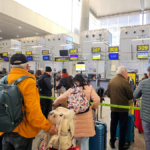
Anyone who sat through a long delay at Málaga airport this summer could still get money back, with AirHelp putting the number of eligible passengers at 42,200 between July and September. However, a late flight alone doesn’t earn a payout, and the delay that matters is three hours or more.

Why 42,200 eligible passengers doesn’t mean 42,200 payouts 

AirHelp’s figures put the number of Málaga passengers eligible for compensation after delays or cancellations between July and September at 42,200. However, it’s important to note that the claims company counts delays of just 15 minutes, and those small setbacks don’t earn a payout on their own. 

So the number who can actually claim is likely to be smaller, because what counts under the rules in Spain is how late you reached your destination rather than how long you sat waiting to take off. The line that has to be crossed is an arrival delay of three hours or more.

How much you’d get depends on the distance

Payouts are set by the length of your flight, with €250 for journeys under 1,500 kilometres, €400 for 1,500 to 3,500 kilometres and €600 for anything longer, according to Spain’s aviation safety agency (AESA).

Most flights between Málaga and the UK or northern Europe sit in the middle band, so €400 is the figure many readers could be entitled to, while a late hop to Madrid would only pay €250. It’s also per passenger, so a family of four on a €400 route could be owed €1,600.

Flights leaving the UK are covered by Britain’s own version of the rules, which pays out in pounds, so it’s worth checking which one applies to your route.

When an airline can refuse to pay

Airlines don’t have to pay if the delay was down to extraordinary circumstances (events outside their control), which AESA says can include severe weather, strikes outside the airline and air traffic restrictions. However, it’s up to the airline to prove that was the cause, so a vague excuse isn’t the end of the matter and passengers should press on if they believe they’re entitled to compensation. 

Even where there’s no payout, airlines must still provide meals and drinks during a long wait, plus a hotel if you’re stuck overnight. So if you paid for any of that yourself, you can claim the costs back as long as you’ve kept the receipts.

New EU rules won’t change this summer’s claims

The European Parliament backed an overhaul of air passenger rights in July, and compensation will still start at three hours. However, the new rules aren’t due to apply until 2027, so anything from this summer will be judged under the current ones.

How to claim, and how long you’ve got

Start with the airline. In Spain you have five years from the flight to make that first claim, and the airline has one month to reply. If you hear nothing, or the answer is no, you can complain to AESA for free within a year of that first claim. It normally has 90 days to decide, its ruling is binding on the airline and, under a 2025 law, airlines that ignore AESA’s decisions can be fined.

Claims companies like AirHelp will do the paperwork for you, although it’s worth checking what fee they charge before you sign up. So dig out your booking confirmation, check what time you actually landed and keep hold of every receipt, then send your claim to the airline.

%

Meet Rescued Horses In Coin

Published

on

meet-rescued-horses-in-coin

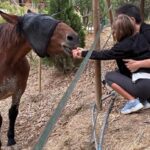
Picture a horse nuzzling your hand in search of a carrot, or a table covered in ribbons, glitter and handmade stars. Saturday, November 14 brings two wonderful reasons to visit an animal sanctuary and help animals that were once given up on.

Two events, one lovely Saturday

Todos los Caballos del Mundo or “All the Horses in the World”, is hosting a guided visit for all the family and a Christmas crafts workshop on the same morning at Ctra. de Borrajo, s/n, 29120 Alhaurin el Grande, Malaga

This guided visit runs entirely in English, from 10:30am to 12:30. You can wander the paddocks, hear the animals’ stories and meet the people who look after them with children are very welcome.

Entry is by donation: €10 for adults and €5 for children under 12, and under-threes go free. All of it goes towards the animals’ care. Please bring carrots for the horses and leave pets at home so the residents stay calm.

Limited spaces are available so you need to book at todosloscaballosdelmundo.com. Go to the “Visits” section and select 14 November.

Make your own Christmas decorations

Prefer something creative? The sanctuary’s Christmas workshop, is a morning of festive crafting surrounded by nature and animals. Organisers promise personalised ornaments and some surprises. Think stars, snowflakes, Christmas trees and reindeers. No experience is needed, only a willingness to have fun.

Tickets cost €30 per person, and is open to everyone so friends, couples and families can all join in. Everyone takes home their own handmade creations, which makes this a lovely way to get ahead on tree decorations or gifts.

Capacity is also limited for this event. To reserve, send a WhatsApp message on 660 092 092.

The sisters behind the sanctuary

Sisters Concordia and Virginia Marquez Garcia founded the charity roughly two decades ago, after moving to Malaga and finding horses abandoned and mistreated. Today it cares for hundreds of animals, including donkeys, dogs and cats, many of them rescued from neglect or illness. It is one of the country’s largest equine sanctuaries.

Can’t make it? You can still help

Anyone unable to attend has other ways to lend a hand. The sanctuary welcomes donations of food, blankets, towels and other useful items. Volunteers are always appreciated, and following and sharing @todosloscaballosdelmundo on social media helps spread the word.

Whichever event you choose, you will leave with a warm feeling, and perhaps a new four-legged friend to sponsor. For more information visit the charity website or social media channels.

Continue Reading

%

Minimum Wage Workers In Spain Could Get €65 A Month More From January

Published

on

minimum-wage-workers-in-spain-could-get-e65-a-month-more-from-january

Carers and cleaners are among the workers in line for a new minimum rate from January. Credit: PeopleImages / Shutterstock

Cleaners, carers and seasonal workers across Spain are in line for a bigger pay packet from January, with the proposed minimum for hourly home help rising by 51 cents to €10.06. It’s part of a wider minimum wage rise the government wants signed off before voters go to the polls on Sunday November 29.

Hourly home help would rise to €10.06

Cleaners, carers and nannies paid by the hour would be entitled to at least €10.06 for every hour worked from January 1, up from €9.55, under a draft government order published this week.

That’s a rise of 51 cents, or roughly €80 over a year for someone who cleans for three hours every week and around €530 for a carer who works 20 hours a week. The rate applies to domestic workers who are paid by the hour and don’t live in the household, and the draft says the €10.06 has to cover every part of their pay for the hours actually worked.

The draft also says only cash counts towards the minimum, so payment in kind, such as food or accommodation, can’t be used to make up the difference. 

Short-term staff would get at least €60.88 a day

Workers on short contracts would see a bump too. Anyone hired for up to 120 days by the same company would be entitled to at least €60.88 for each legal working day, up from €57.82 this year.

That daily rate is meant to cover the worker’s share of Sundays, public holidays and the two extra annual payments (pagas extra, normally paid in summer and at Christmas), which is why it’s higher than the plain daily rate of €42.87 that applies to the standard minimum wage. Holiday pay for these workers is regulated separately.

The main minimum wage would climb €65 a month

For everyone else on the minimum, the draft sets €1,286 gross a month over 14 payments, or €18,004 a year for a full-time job. That’s a rise of 5.3 per cent, or €65 more a month than now and €910 across the year.

A group of experts advising the Labour Ministry had recommended 4.9 per cent, which would have meant €1,281 a month, so the government’s figure is slightly higher, only by about €5 a month. The unions CCOO and UGT had asked for at least 7 per cent, which would have meant around €1,306. They’ve made their backing conditional on the decree stopping employers from absorbing existing pay supplements into the new minimum, and hadn’t yet commented on the figure.

Anyone already earning more than €18,004 a year for full-time work isn’t affected, and the minimum will have risen by almost 75 per cent since 2018, when it was €736 a month. We compared the current €17,094 a year with UK minimum pay last month, in case you missed it.

Tax is still withheld, then claimed back

Elma Saiz, Spain’s Social Security minister and government spokesperson, said the Spanish tax agency would again approve a deduction so that minimum wage earners pay no income tax (IRPF).

This year, though, employers would still withhold tax from monthly pay, and the money could only be recovered by filing the annual tax return the following year. The draft also says regional or local rules, and private contracts that use the minimum wage as a reference, will stay on this year’s figure unless the parties agree otherwise.

Approval could land in the middle of the election campaign

The draft is open to comments until Monday November 16. The Council of Ministers could then approve it on Tuesday November 17 or Tuesday November 24, with the campaign officially starting on Friday November 13 and the general election on Sunday November 29.

Last year’s rise wasn’t signed off until Wednesday February 18, and it was backdated to January 1. The new draft is written to apply from January 1. Until the decree is approved and published in the BOE (Spain’s official state gazette), the €1,286 and the new hourly and daily rates remain proposals, so the final figures are worth checking once they appear there.

Continue Reading

%

Casares World Cheese Awards Debut

Published

on

casares-world-cheese-awards-debut

A semi-matured cheese from Casares will compete at the World Cheese Awards for the first time. Queseria Crestellina on the Costa del Sol has entered its queso semicurado, a semi-cured cheese, in the international competition, which runs in Cordoba from November 12 to 15 and features close to 5,000 cheeses from around the world.

A return to competition

Crestellina has entered contests before and has received awards, but it had stayed away from them for several years. Manager Juan Ocaña told Radio Casares that the dairy had concerns about some judging systems and preferred to focus on its work at the farm.

This year’s decision to return was influenced by the event taking place in Andalucia. For the family business, it offers a chance to meet other cheesemakers, compare methods and see how its cheese is received beyond the local area.

Winning is not the priority

Ocaña made clear that a prize is not the main aim. “More than winning another prize, what we really want is to get out of our daily routine and meet other producers, and see other ways of making cheese,” he said.

Crestellina’s entry will bring a cheese made in Casares before international judges. Manager Juan Ocaña hopes taking part will also draw attention to cheesemaking in Malaga province, and to the Payoya goat, a breed closely linked to the area’s rural landscape.

How the awards work

The World Cheese Awards is popularly known in Spain as the “World Championship of Cheese”. Judges assess entries in different categories, awarding recognitions according to the quality of each cheese rather than producing a single ranking of every entry.

With thousands of products entered, the event is a demanding test for any producer. It also gives smaller dairies the opportunity to measure their work against established names from across the international cheese sector.

Keeping tradition going

Crestellina continues to welcome visitors for cheesemaking workshops, tastings and visits to its Payoya goats. Schools, families and international visitors can take part, with activities available in other languages.

Ocaña’s niece, Erika, has recently joined the business, representing a fifth generation connected to the dairy. For the family, that continuity matters as much as any competition result, particularly as small livestock farms face growing pressure.

A name to watch in Cordoba

Medals will be awarded across the competition’s categories after judging. Whether Crestellina’s semi-cured cheese receives recognition or not, its first appearance at the World Cheese Awards puts a modest Casares local producer in front of an international audience.

Continue Reading

Trending

Copyright © 2017 Spanish Property & News