
China
Kylian Mbappé sparks China backlash as three brands end sponsorship deals

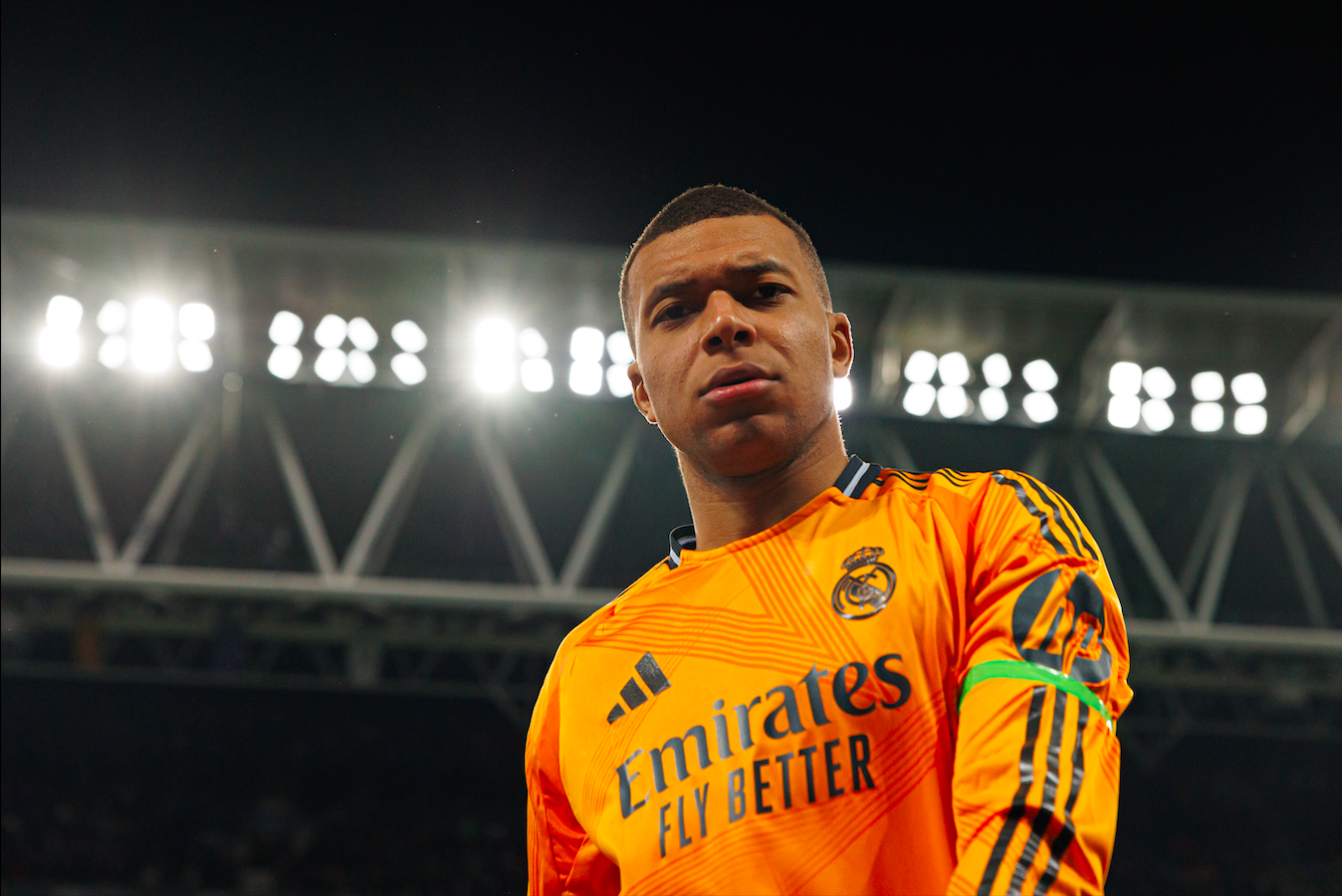
Chinese state broadcaster CCTV suspended broadcasts of LaLiga matches involving Mbappé. Photo credit: Maciej Rogowski Photo/Shutterstock
Kylian Mbappé has found himself at the centre of a diplomatic and commercial controversy after a joke involving an image of Chinese leader Mao Zedong triggered a backlash in China, prompting three companies to end their sponsorship agreements with the footballer and state broadcaster CCTV to suspend LaLiga coverage.
The Real Madrid striker apologised after the incident, acknowledging that his comment had been ill-judged and had hurt people in China and Chinese communities around the world. However, the fallout has extended beyond his personal reputation, raising questions about the commercial consequences for one of football’s most recognisable players and LaLiga’s presence in the Chinese market.
Mbappé’s China controversy puts sponsorships and LaLiga broadcasts at risk
The fallout has spread beyond the footballer himself. Chinese beverage and dairy companies have ended commercial partnerships with Kylian Mbappé, while state broadcaster CCTV has suspended Spanish league coverage following a controversy over a joke about an internet meme depicting the Real Madrid striker as Chinese leader Mao Zedong. The row began after a video circulated online showing Mbappé discussing his favourite meme featuring himself.
In the clip, he describes an image in which his face has been superimposed on a Chinese dictator, adding that he uses it with friends while playing video games. Although Mbappé did not name Mao, the image circulating online showed the French international’s face on a portrait of the former Chinese leader. Reuters reported that it had been unable to independently authenticate the video.
Three Chinese companies end sponsorship deals
The commercial consequences followed quickly, with three Chinese companies announcing that they were ending their relationships with the footballer. Dongpeng Beverage Group, which had appointed Mbappé as an ambassador for its Bushuila electrolyte drink brand in April, announced that it was terminating its cooperation with immediate effect.
Dairy producer Mengniu and cheesemaker Milkground subsequently announced similar decisions. Their statements cited opposition to words or actions that hurt the feelings of the Chinese people, without disclosing the financial value of the cancelled agreements. Mbappé had been a familiar face in Chinese advertising, with promotional material for Dongpeng appearing on bottles, buses and advertising displays in cities across the country.
The withdrawals could therefore affect more than his immediate sponsorship income. However, none of the companies has disclosed how much the agreements were worth, making it impossible to calculate the financial loss. Other brands have also reviewed their use of the footballer’s image. Chinese social media platform Xiaohongshu, known internationally as RedNote, said its partnership with Mbappé had already expired at the end of 2024 and that it was reviewing and removing related promotional material.
CCTV suspends LaLiga broadcasts
The controversy has also affected Spanish football’s visibility in China. Chinese state broadcaster CCTV suspended broadcasts of LaLiga matches and games involving Mbappé, according to reporting by Chinese outlet The Paper, which cited sources connected to the state broadcaster. Advertisements and videos featuring the player were also removed. The suspension reportedly took effect on Monday night, October 26, although no end date has been announced.
The move raises questions about the league’s commercial interests in one of its important international markets. LaLiga announced a digital distribution agreement with China Mobile Migu in August, covering all 380 league matches each season in mainland China through the 2029-30 campaign. There has been no confirmation that this separate digital agreement has been cancelled. The reported CCTV suspension should therefore not be interpreted as the end of all LaLiga coverage in China.
LaLiga responds as China voices its displeasure
LaLiga president Javier Tebas publicly expressed regret over the offence caused by Mbappé’s comments, saying the organisation was working directly with its Chinese partners and contacts to resolve the situation. The league also stressed that the remarks were made in Mbappé’s personal capacity and did not represent LaLiga’s position. Tebas said he hoped a relationship built over many years would not be damaged by a single incident.
China’s Foreign Ministry spokesperson Guo Jiakun also addressed the controversy, saying that words and actions hurting the feelings of the Chinese people would naturally meet opposition from across society. His comments came as the sponsorship cancellations and broadcast suspension were being reported.
Mao, who founded the People’s Republic of China in 1949 and ruled until his death in 1976, remains a politically sensitive figure. Although his rule included campaigns associated with mass suffering and famine, he continues to hold an important place in the country’s official historical narrative. Public mockery of him can provoke strong reactions.
Mbappé apologises as fallout continues
Mbappé has since apologised, acknowledging that his comment had been ill-judged and had hurt people in China and Chinese communities around the world. He said he respected the Chinese people and their history.
The episode leaves the immediate future of the suspended broadcasts uncertain, while the three sponsorship agreements have already been terminated. For LaLiga, the priority will be to contain the damage to its Chinese relationships without assuming that every broadcast or commercial partnership in the country has been lost.





China
John Kerry: ‘Trump’s Decision To Allow Purchases Of Russian Oil Is Counterproductive And Dangerous’


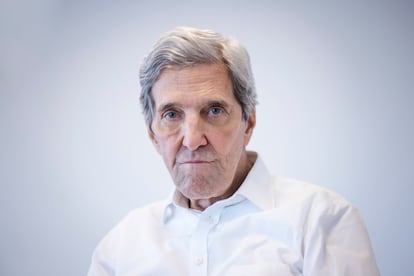
The political career of John Kerry, 82, has left a vast legacy that the Donald Trump administration is poised to squander. Among other things, Kerry was the key negotiator of the nuclear deal with Iran and the Paris Agreement. The former secretary of state and 2004 Democratic presidential candidate remains fully engaged in the energy transition through the global investment platform Galvanize. Kerry recently visited Barcelona to give a talk at Impact/Week, a conference for entrepreneurs, investors, and global leaders organized by Norrsken Barcelona, one of Europe’s largest startup hubs.
Question. Some of the biggest shifts on the global chessboard are being driven by energy: Trump’s diesel agreement with Russia and the tensions surrounding Iran. Is this proof that the energy transition is fundamentally a geopolitical issue, not just an environmental one?
Answer. Yes. It’s obvious that there are leaders in a number of countries who have said publicly that they’re not going to be dependent on the Strait of Hormuz for energy security, and there’s no economy that’s going to live in that kind of uncertainty. National security and international security challenges are now much more on the table. It is front and center.
Q. But many governments emerging across Europe today are not especially enthusiastic about the transition to renewables, and Trump is clearly not on board. Are we witnessing a backlash?
A. There is certainly a political backlash, and we shouldn’t minimize it. Decisions by governments matter. They can delay investment, create uncertainty, and make it harder to build the infrastructure we need. But I would distinguish the political debate from the reasons countries and businesses are pursuing this transition. They need affordable electricity. They want secure energy supplies. They want to compete for the industries and jobs of the future. Those interests don’t disappear when an administration changes. We also have to listen to what people are telling us. If people believe the transition means higher bills or that their community will bear the costs while somebody else gets the benefits, we have to address that. So yes, progress can be slowed, and gains can be reversed. Nothing about this is inevitable.
Q. Do you think then that the global climate agenda can survive a new era of economic nationalism?
A. It can. Economic nationalism is creating obstacles, but new technologies are making the economic case for the transition stronger. Better batteries, better turbines, and better solar panels can help overcome some of those barriers. Ultimately, business leaders have to look at their bottom line: What are their costs? What does this mean for their shareholders? What can they save by transitioning?
Q. Spain already generates more than half of its electricity from renewable sources. However, after the major blackout in April 2025, the debate over grid stability resurfaced. Do you believe that a renewables-dominated power system can operate safely without nuclear energy?
A. People are right to demand reliable electricity, but we have to be precise about what happened. The European investigation found a combination of failures involving voltage control, the way generating plants responded, and a cascade of disconnections. That is a much more specific diagnosis than saying Spain had too much renewable energy or was waiting for storage technology to be invented. The investigators also made clear that the solutions they recommend are technologically available today. Storage technology exists. Batteries are already being deployed at scale, and pumped hydropower has been operating for decades. We should keep improving those technologies, particularly for storing energy over longer periods. But storage is one part of the answer. You also need stronger transmission, connections between regions, flexible sources of power, and equipment and operating rules that keep the grid stable.
Q. What role do you see for artificial intelligence in the green transition?
A. I see enormous potential. AI can help us forecast electricity demand, operate grids more efficiently, develop new materials, and reduce the energy wasted in buildings and industry. Those are practical applications that can lower costs and accelerate progress. But we also have to account for the electricity, water, and infrastructure that AI requires. The benefits aren’t automatic. We need to measure what it actually delivers and make sure communities benefit from the investment. The growth in electricity demand creates an opportunity to modernize our infrastructure. We should use it to bring more clean power onto the grid, expand storage, and build a system that serves everyone more reliably. Ultimately, the test is whether we’re using this extraordinary capability to solve consequential problems. Can we make energy more affordable? Can we manufacture with less waste? Can we help communities prepare for extreme weather? That’s where I would focus our ambition.
Q. You have said we should move together in a multilateral system to achieve our goals, with the involvement of China. Do you think that is possible with the Trump administration?
A. No, but we have to. It’s worth talking about it, because you need to persuade people to make that happen. If people don’t engage in politics, you’re going to leave it to people who will screw it up. We’ve seen that.
Q. Do you expect any change after the midterm elections?
A. I do. If the House of Representatives becomes Democratic and the Senate does, you’re going to have a huge change.
Q. What is at stake in the midterm elections?
A. There’s a huge amount at stake: whether or not we’re going to be a country that adheres to law, enforces the law, respects the law. And whether or not we are going to act in a way that sends a good example for democracy. A lot of people are arguing against democracy, and democracy is going to have to prove its value and its capacity to deliver.
Q. Regarding the recent deal with Russia, do you think that Trump has put the short-term interests of his administration and himself ahead of the long-term interests of the U.S. and the security of its allies in Europe?
A. I wouldn’t frame it specifically that way. I think his decision to allow purchases of Russian oil despite sanctions is counterproductive and dangerous. It doesn’t honor the sacrifice of Ukrainians, and it undermines both what we ask of other countries and our support for Ukraine.
Q. You were one of the architects of the Iran nuclear deal. Looking at the current situation, do you believe there is still a diplomatic path forward, or has the conflict entered a dynamic that will be very difficult to reverse?
A. Let me be very clear: there is only a diplomatic way out. There is no possibility to resolve the question of Iran by war, and I think President Trump has already proven the inability of his strategy to be able to get what he wanted.
Sign up for our weekly newsletter to get more English-language news coverage from EL PAÍS USA Edition


Where are they? Expat questions local police presence
Mercadona faces pressure over its ready-made meals as Spain’s bars demand new rules
Spain orders replacement of eight million gas meters: New rules, costs and deadlines


-

 New Developments3 weeks ago
Luxury Villas For Sale, Estepona – ProjectL1
-
EU3 weeks ago
EU nicotine crackdown sparks warning that ex-smokers could be driven back to cigarettes
-
Blackout preparedness4 weeks ago
Brussels takes action against Spain over failure to update blackout plan
-
 Housing access / crisis / affordability4 weeks ago
Radical Housing Decrees Defeated As Snap Election Talk Grows
-

 Uncategorized4 weeks ago
Lewis Hamilton F1 wish could come true as stunning plans for new track revealed
-
British tourists arrested in Magaluf3 weeks ago
British tourists arrested after taxi driver left bloodied in Magaluf
-
Catalonia3 weeks ago
Why the rain opened a hole in front of Granollers’ courts
-

 %3 weeks ago
Spain Payslip Change Coming In January 2027