Connect with us

%

Europe Erupts In Halloween Unrest – What About Spain?

Published

on

europe-erupts-in-halloween-unrest-–-what-about-spain?

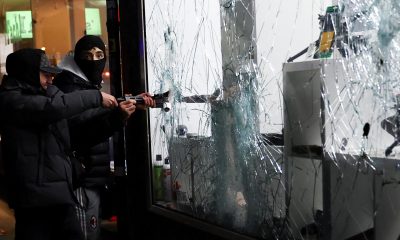
Police in Paris had to deal with petrol bombs. Credit: Viral images X

Spain has escaped the widespread Halloween looting feared by police after a major nationwide security operation, but violence broke out in France and Germany as demonstrations continued across Europe.

Spanish police identified more than 1,000 people and made at least 11 arrests during Saturday night’s operation targeting suspected organisers and participants linked to the Blocus movement.

Meanwhile, Germany experienced serious disturbances after largely peaceful youth demonstrations, with shops looted in Frankfurt and police attacked in several cities. France also saw fresh clashes following another weekend of demonstrations involving hundreds of thousands of people.

Although the countries share concerns about living costs, housing, education and public services, the protests are not all connected to one organisation or coordinated European campaign.

Spain: Police prevent widespread Halloween looting

Spain’s major Halloween security operation appears to have prevented the widespread disturbances authorities had feared following last weekend’s violence in Barcelona.

‼️⚠️ En lo que llevamos de tarde ya han detenido a más de 450 personas en Barcelona #blocus https://t.co/CFv395nvzp

— Maria 🩷 (@maariaprv) October 31, 2026

More than 1,000 people were identified and at least 11 arrested during Saturday’s nationwide operation, according to reporting published on Sunday morning by El Español. Police seized dozens of potentially dangerous objects, including knives and balaclavas, while security measures were reinforced in major cities.

Barcelona and Madrid were among the locations where police restricted access to central areas and monitored groups of young people following online calls for gatherings. The operation followed serious disturbances on October 24, when groups of young people looted businesses, smashed shop windows and clashed with police in Barcelona.

Investigators subsequently turned their attention to Blocus, a movement whose name appeared in online calls encouraging gatherings and alleged acts of vandalism.

On Friday, October 30, the Guardia Civil arrested a 20-year-old in Picanya, Valencia province, described by investigators as the alleged founder and main driving force behind Blocus in Spain.

The Spanish Interior Ministry also confirmed separate arrests in Malaga, Fuengirola, Marbella, Tenerife and Bilbao involving people suspected of promoting looting, sabotage and violence.

The Malaga arrest was particularly relevant to Costa del Sol residents. A 20-year-old was detained over alleged calls to loot businesses in Malaga city, Fuengirola and Marbella during Halloween night.

Although the police operation prevented further spread of a call to violence, and after many shops and businesses boarded up their windows, potential rioters appear to have been dissuaded from carrying out their threats. Investigations into the online networks and alleged organisers are continuing.

France: 320,000 protesters take to the streets as clashes erupt

France experienced another major day of demonstrations on Saturday, October 31, with the Interior Ministry estimating that approximately 320,000 people took part nationwide. Around 70,000 demonstrators gathered in Paris, although the overall turnout was lower than the previous two weekends.

The demonstrations began with students protesting against deteriorating school facilities, teacher shortages and education funding. They have since attracted trade unions and other groups angry about living costs, housing and public services. Most authorised marches proceeded peacefully, but tensions increased when demonstrations dispersed.

Police used tear gas and carried out charges against groups in Paris, Lyon, Toulouse and Marseille. Authorities said they had prevented more radical groups from breaking away from the main demonstrations to carry out looting and vandalism. The government had deployed approximately 70,000 police officers and gendarmes to deal with the security threat.

The demonstrations followed serious disturbances on October 17, when masked groups smashed shop windows, set vehicles alight and attacked public buildings.

Businesses have suffered substantial losses during the unrest, with the French retail sector estimating the damage from several weeks of disturbances at more than €1 billion.

Germany: Frankfurt shops looted as youth protests turn violent

Germany has experienced some of the most serious overnight disturbances, despite the majority of Saturday’s demonstrations initially passing peacefully. Thousands of young people took part in demonstrations organised under the Gen Z regelt banner, which translates roughly as ‘Gen Z takes charge’.

Rallies were held in 34 cities, including Berlin, Frankfurt and Munich, with participants demanding better education, affordable housing, improved public services and greater investment in climate protection. The campaign has also attracted opposition to plans to reintroduce compulsory military service.

However, trouble erupted in Frankfurt after the main demonstrations. Masked groups smashed shop windows and looted at least two businesses, stealing trainers and other goods. A gun shop was also attacked, prompting police intervention. Officers recovered two weapons from the premises.

🇩🇪🇩🇪🇩🇪👇🏾

Last night in Frankfurt, Germany looked like France: masked rioters smashed shop windows, looted stores (including a gun shop), set bins and barricades alight, and threw Molotov cocktails at the police… https://t.co/dNcvVpzAk1

— ‘Seeing is believing’ (@dave24144975) November 1, 2026

Police reported that officers were attacked with stones, bottles, fireworks and other projectiles. Several officers were injured.

In Cologne, disturbances included attacks on police and thrown objects, while Hamburg experienced burning barricades and further confrontations. Water cannon were deployed during the unrest. German authorities said the majority of demonstrators had behaved peacefully, with smaller groups responsible for the violence.

Netherlands: Police prepare for trouble but major violence fails to materialise

The Hague experienced an increased police presence after online calls for demonstrations and fears that Halloween could bring further looting. Like in Spain, Many businesses boarded up their windows, while officers carried out checks on groups of young people dressed in black.

However, the situation remained relatively calm during Saturday afternoon, with no major disturbances reported in the latest available coverage.

The Netherlands has been among the countries where online calls for demonstrations have circulated, but there is no evidence of widespread Halloween-related violence.

Italy: Police remain alert after earlier clashes

Italy has also experienced demonstrations and confrontations during the wider European protest movement. Cities including Milan, Turin and Bologna have seen unrest, with police monitoring further gatherings.

Protests have focused on living costs, wages, education and public services, alongside opposition to government policies. However, the latest reporting does not establish a comparable nationwide Halloween security operation or widespread Halloween-night looting in Italy.

Why are young people protesting across Europe?

Although the demonstrations are organised separately, several common grievances have emerged. Rising living costs, unaffordable housing, deteriorating education facilities and dissatisfaction with public services are among the issues bringing younger demonstrators onto the streets. In Germany, opposition to compulsory military service has also become a central issue.

Spain’s Blocus investigation is somewhat different, with police alleging that some online groups used the appearance of student demonstrations to encourage looting, sabotage and attacks on businesses. Authorities across Europe are continuing to monitor social media activity and possible further gatherings.

For now, the biggest overnight development is the contrast between Spain, where the feared widespread Halloween looting failed to materialise, and Germany and France, where further violence accompanied the demonstrations.

%

Murcia’s Best Marineras Crowned As 180 Restaurants Compete In 2026 Tapas Contest

Published

on

murcia’s-best-marineras-crowned-as-180-restaurants-compete-in-2026-tapas-contest

Murcia crowns two winners after month-long competition celebrating iconic regional tapa. Photo Credit: San Javier Town Hall

San Javier was the host of the grand finale of the 2026 edition of the Best Marinera of the Region of Murcia competition, which was held from September 18 to October 18. For one incredible month, more than 180 local bars and restaurants went head to head to create their best iteration of this iconic tapa, and the winning establishment was crowned in the lively coastal town.

More than 180 restaurants take part in the competition

The marinera is an iconic tapa from the Region of Murcia, particularly associated with the capital and with the Costa Calida hub city of Cartagena. It consists of a base of a crunchy, elongated-ring breadstick called a rosquilla, topped with a generous scoop of Russian salad made with boiled potatoes, tuna, hard-boiled eggs, carrots, peas or pickled vegetables, and mayonnaise, and crowned with a rich, salt-cured anchovy in brine. This delicious seafood snack goes hand in hand with the region’s reputation, and this 2026 edition of the competition inspired residents and visitors to go out, try new restaurants, and enjoy this delicious snack.

The jury’s assessment took into account aspects including product quality, technical execution, flavour, presentation, creativity and respect for the essence of the marinera.

Traditional and reinvented marineras take top prizes

Following the jury’s verdict and a tough competition, Con Sentido de Mari and its chef Mari Carmen Martínez Sánchez, from Cehegín, have won the award for Best Traditional Marinera 2026, while La Flota and its creators Rocío Fuentes and Antonio Fuentes, from Cartagena in La Palma, have obtained the recognition for Best Reinvented Marinera 2026. Both restaurants will receive a prize of 1,000€ each.

Special mentions celebrate Murcia’s culinary talent

The grand finale of the competition also recognised other delicious versions of the tapa through honourable mentions, awarded to La Posada del Pez in Murcia City and its chef Julián Valmayor, and the Best Mahou Reserva Pairing Award, given to Kiosco Ben Arabí, also in Murcia, and its chefs Consuelo Cánovas and Cristina Gil.

The competition brought together culinary professionals, representatives of the food industry in Murcia, and members of the hospitality sector at the Almansa Park Auditorium, celebrating the Region of Murcia’s strong culinary identity and the towns that create these outstanding tapas and meals. In particular, San Javier’s selection as the host for this event brought gastronomy and culture even closer to the town.

During the event, the mayor of San Javier, José Miguel Luengo Gallego, was appointed the Godfather of the Marinera 2026.

San Javier hosts celebration of regional gastronomy

The marinera is not only a tasty snack to try for those living in or visiting the Region of Murcia; it is a testament to the tradition, quality, and creativity that make up the landscape of Murcian gastronomy. Once more, restaurants in the Region of Murcia have showcased their prowess when it comes to keeping tradition alive, bite after tasty bite.

Continue Reading

%

Supermarket Cyberattacks Spread Across Europe

Published

on

supermarket-cyberattacks-spread-across-europe

Freezers turn to cookers across Europe. Credit: Wiliamhero – Shutterstock

Supermarkets across Europe are facing a growing cybersecurity crisis after suspected hackers remotely interfered with refrigeration systems, causing temperatures in fridges and freezers to soar and forcing retailers to throw away large quantities of food.

The latest incidents were reported in Sweden this morning, but have now spread to Belgium, Luxembourg, Ireland and Estonia, with several major supermarket chains affected. The attacks follow a similar incident in France last month, when hundreds of stores suffered refrigeration failures after their cooling systems were compromised.

The growing number of incidents has raised questions about the security of supermarket equipment connected to the Internet, particularly systems which allow refrigeration units to be monitored and controlled remotely.

Sweden supermarkets hit by overnight attacks

Sweden was among the first countries to report problems on Monday, November 2, with supermarket chains ICA and Coop confirming incidents affecting refrigeration equipment.

ICA said a limited number of its stores had experienced problems overnight, while Coop reported that six outlets had been affected.

One ICA supermarket in Sjöbo reported that its refrigerators and freezers had been remotely set to 50°C, leaving staff with spoiled stock to remove. At another ICA store in Stockholm, employees discovered that its freezers had stopped working following an overnight incident.

Sweden’s National Cybersecurity Centre is investigating several incidents involving supermarket refrigeration systems. Its director has also warned about exposed operational technology devices which need security updates and patches.

Belgium and Luxembourg report widespread disruption

Belgium has also suffered serious disruption, with several supermarket groups reporting problems. Around 40 Delhaize stores were affected by an IT incident involving their refrigeration systems, according to reports from Belgian news agencies.

Carrefour Belgium confirmed that 15 of its more than 700 stores had experienced problems, although the company described the impact as limited. Five Spar supermarkets operated by the Colruyt Group also reported attacks on their refrigeration equipment.

The disruption extended into neighbouring Luxembourg, where Delhaize stores also experienced refrigeration problems. Technicians were called out overnight to disconnect affected equipment and prevent further damage.

One Belgian refrigeration company said attackers had switched evaporators inside the cooling units into defrost mode, causing temperatures to rise.

Irish supermarkets forced to remove food

Ireland has now joined the list of affected countries after SuperValu confirmed that refrigeration equipment at 13 of its 223 stores had been affected. The supermarket chain’s parent company, Musgrave, said chilled and frozen products had been removed from sale as a precaution. Stores stayed open, with other products available to customers.

The company said the incident involved a specific model of refrigeration equipment and that its monitoring systems had alerted staff to the problem. Musgrave is working with equipment suppliers and cybersecurity specialists to investigate what happened and restore normal operations.

Estonia reports temperatures reaching 50°C

An incident was also reported in Estonia, where a supermarket refrigeration system was accessed remotely and its temperature settings raised to 50°C. Technology supplier Kitman Coldtech confirmed that one of its customers had been affected. The supermarket chain Selver subsequently confirmed that one of its outlets had experienced the problem. The incident was reportedly dealt with within minutes, limiting the damage. One suspects, it was dealt with by detaching fridges from the Internet.

France suffered an earlier attack affecting hundreds of supermarkets

The latest developments follow a much larger incident in France last month, when hackers gained access to refrigeration control systems used by hundreds of supermarkets. French authorities reported that up to 700 supermarkets were affected, with temperatures in some refrigeration units reaching 50°C.

Intermarché, Carrefour, Monoprix and other major retailers reported disruption and substantial food losses. Some stores also experienced fires linked to overheating equipment.

Investigators examined how attackers had manipulated remotely controlled refrigeration systems, interfering with temperature controls and defrost programmes. The incidents exposed weaknesses in older equipment which had not received important security updates.

Could Spanish supermarkets be next?

There have been no confirmed reports of Spanish supermarket refrigeration systems being targeted in this latest wave of incidents.

However, the developments are likely to raise concerns among retailers in Spain, where major supermarket chains also depend on electronically monitored refrigeration systems to keep fresh and frozen products at safe temperatures.

The attacks go to show how equipment designed to make supermarket operations more efficient can also create potential security weaknesses if it is not properly protected.

Spain’s National Cybersecurity Institute (INCIBE) is providing advice and assistance on digital security incidents, while the Spanish Interior Ministry’s Cybersecurity Coordination Office publishes guidance on protecting connected and industrial equipment.

Who is behind the supermarket attacks?

Despite the growing number of incidents, investigators have yet to identify those responsible. No group has publicly claimed responsibility, and authorities have not established whether all the reported incidents are connected.

The absence of obvious ransom demands has also raised questions about whether the intention is financial gain or deliberate disruption. For supermarket operators, the immediate concern is protecting refrigeration equipment and preventing further food waste.

For shoppers, the incidents raise a wider question about how vulnerable essential food supplies can become when everyday supermarket equipment is connected to the internet.

Continue Reading

%

Spanish Supermarket Launches New Mobile Shopping System To Cut Supermarket Checkout Queues

Published

on

spanish-supermarket-launches-new-mobile-shopping-system-to-cut-supermarket-checkout-queues

If you do your weekly supermarket shop, you’ll know that getting everything into the trolley is only half the job. There is still the queue, unloading all those groceries at the till waiting for them to be scanned and then packing everything up again. Alcampo is offering shoppers another way to do it, allowing them to scan their own shopping with their mobile phones as they walk around the store. The service, called AutoScan, lets customers scan each product before putting it into their trolley or basket.

Instead of waiting until they reach the checkout, they can build their shopping basket on their phone as they move through the aisles.  When they have finished, the contents can be transferred to the till without scanning every item again. AutoScan is integrated into the existing Club Alcampo app and was developed with shopreme, a company specialising in digital self-checkout technology. Customers do not need to download a separate app, but they must be Club Alcampo members.

AutoScan is being introduced across Alcampo stores

The service was first introduced in July this year, with an initial rollout covering around 40 stores in Madrid, Cataluña and Castilla-La Mancha. Alcampo plans to extend AutoScan progressively across its Spanish network before the end of 2026. 

It has not announced a confirmed date for when every branch will have the service, so customers should check whether it is available at their local supermarket. Traditional tills remain available for customers who would rather shop as they always have. AutoScan is an additional option, not a replacement for the existing checkout arrangements.

How to scan your shopping with your phone

To use AutoScan, shoppers need the Club Alcampo app on their mobile and must be inside a participating store. They can start a shopping session by scanning the code displayed in the supermarket or using the geolocation function available in the app. The phone’s camera is then used to read the barcode on each product. Shoppers scan an item before placing it in the trolley or basket, and it is added to their digital shopping list. They can continue doing this throughout the shop, rather than having to remember everything they have picked up.

Once they have finished, they select the payment option in the app. A QR code is generated, which transfers the digital basket to the checkout. There is an important detail for anyone expecting a completely phone-based payment system: AutoScan does not mean customers necessarily pay directly through the app. Payment is still completed at a checkout. 

In stores with Alcampo’s Cajamiga self-service tills, shoppers can use one of those machines. Where that facility is not available, they need to go to an assisted checkout. The difference is that the products have already been scanned during the shop. Customers do not have to unload the trolley and put every item through the checkout scanner again before paying.

Staff will still be available to help

Alcampo says employees will be on hand to explain how the service works and help customers who have difficulty using it. Store staff have received specific training to support shoppers using AutoScan and deal with problems during the process.

The range of products available through the service may vary according to the store, its format and the merchandise it stocks. That means the experience may not be identical in every branch, even where AutoScan is available. Customers who do not want to use the app can continue to shop and pay through the existing checkout facilities.

Alcampo’s move towards mobile shopping

The partnership with shopreme brings mobile scanning into Alcampo’s existing app and links the digital basket with the supermarket’s checkout systems. Shopreme says its technology is used in more than 2,000 stores across 12 countries.

For Alcampo, the service adds another digital option without requiring customers to use a separate application or a supermarket-issued scanner. The retailer expects to have AutoScan in all its Spanish stores before the end of 2026. Until then, customers will need to check whether their local branch has introduced the service before setting off with their shopping list.

Continue Reading
Advertisement
Advertisement

Spanish Real Estate Agents

Tags

Trending

Copyright © 2017 Spanish Property & News