Connect with us

%

Los Alcazares Women Launch Networking Group To Support Local Businesswomen

Published

on

los-alcazares-women-launch-networking-group-to-support-local-businesswomen

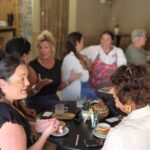
New women’s group offers businesswomen friendship, support and networking opportunities. Photo Credit: Tara Harris / Women’s Circle

A new networking group for women in Los Alcazares is actively seeking new members, in order to combat professional isolation, support members’ triumphs, and help each other navigate the lows of their careers. Founded by Tara Harris of Costara Properties, the group has already held its first meeting and has registered an incredible 30 members in its WhatsApp group, but is actively seeking more intelligent and ambitious businesswomen to join.

A new community for working women in Los Alcazares

The group, called Women’s Circle, held its first meeting on October 23 at 1:00pm at Beth’s Roast, a popular local café in Los Alcazares. During the successful first meeting, 15 businesswomen attended, and twice as many have joined the WhatsApp group, which provides updates on future meetings and further support for new or longtime working women.

“Working alone can feel very isolating,” said Harris of the new group. “Having a safe space to chat confidentially and support one another, share experiences or just have a catch up I genuinely miss.”

Building friendships beyond business networking: Supporting, understanding and learning

According to Harris, the goal of the group is not only to network, though this is something that will naturally happen. Instead, the group will build genuine connections and friendships, encourage each other, and create a community where women feel supported, understood and able to learn from each other.

“What has really struck me is the incredible diversity within the group. We bring together women of different ages, cultural backgrounds and professional experiences, representing a wide variety of businesses and industries.”

Monthly meetings and future plans for Women’s Circle

The group is beginning as a completely free and informal initiative, opting for coffee and chat meetups, but in the future, according to Harris, the group is looking to host larger gatherings with guest speakers and meeting hosts.

Women’s Circle is now holding monthly meetings on the last Friday of the month at Beth’s Roast, with an additional Saturday meeting to include women who have less flexibility in their working hours.

How to join: the beginning of something special on the Costa Calida

“I genuinely believe we’re at the beginning of something special,” said Harris about the group. “Women’s Circle is being created to help combat professional isolation, provide a supportive space to share experiences, celebrate successes and navigate the challenges of running a business together.”

Those looking to join the group can do so by getting in touch with Tara Harris via email at tara@costaraproperties.com. Whether you are new to running a business, a longtime worker, or simply looking for community and support in the beautiful town of Los Alcazares, new members will be welcome with open arms.

“And, of course, the coffee is great!” said Harris.

%

This Popular Fish Is Now Being Fed Chicken Meat: What’s Really On Your Plate?

Published

on

this-popular-fish-is-now-being-fed-chicken-meat:-what’s-really-on-your-plate?

Using animal by-products in feed also raises questions about bacteria and antibiotic resistance. Photo credit: Zenytal/Shutterstock

If you buy salmon because you think you know what goes into it, think again, there is something about the fish on sale in some European supermarkets that may surprise you. Several Norwegian salmon producers are now using ingredients made from chicken by-products in their feed, replacing part of the fishmeal and other proteins traditionally used to raise farmed salmon.

This does not mean throwing raw chicken leftovers into the water. The poultry material is processed into meal and oil before being mixed into formulated fish feed. It can include bones, liver and other parts of chickens that are not normally sold as meat cuts. Producers are turning to it because it offers a cheaper alternative at a time when traditional marine ingredients are becoming more expensive and harder to source.

Why salmon producers are changing the menu

Fishmeal and fish oil have long been important ingredients in farmed salmon diets, providing protein and essential nutrients. However, they rely on catches of wild fish, and supplies have come under pressure. Disruption to Peru’s anchovy fishery, an important source of fishmeal, has added to the problem, while the availability of other marine ingredients has also been affected. Poultry meal is reported to cost less than half as much per tonne as fishmeal, making it an attractive option for companies trying to control production costs.

Lerøy Seafood Group has introduced poultry-derived ingredients at all its offshore salmon farms in Norway. Grieg Seafood began using chicken meal and oil in July, while SalMar started testing poultry-based feed in March. Mowi has also been reported to be preparing similar changes in Norway, although its position varies between markets and operations. The companies argue that using material left over from chicken processing makes better use of existing resources and reduces reliance on wild fish caught for feed. The industry is under pressure to find alternative protein sources as demand for farmed fish continues to grow.

What exactly is being fed to the fish?

Poultry by-product meal is made by processing material left over after chicken meat production. Depending on the source, this can include bones, organs and other parts not sold for human consumption. It is treated before being used in animal feed; it is not simply discarded kitchen waste.

Norwegian research institute Nofima is investigating how chicken residues can be used in salmon feed, including how processing affects protein digestibility and biological quality. Its research project runs until September 2027 and will also examine the effects of longer-term feeding on fish health, growth and the quality of salmon at slaughter.

The nutritional value of poultry meal can vary. Nofima says digestibility has sometimes been low, with heat treatment, freshness and the type of material used all affecting the result. The research is intended to establish how the ingredients should be selected and processed to produce a consistent feed component.

Could it increase the risk of antibiotic-resistant bacteria?

Using animal by-products in feed also raises questions about bacteria and antibiotic resistance. Chicken production, like other livestock industries, can be a source of bacteria carrying resistance to antibiotics. If contaminated material entered the feed chain without effective treatment and controls, there could be a route for bacteria or resistance genes to spread.  That is a potential food-safety concern, not proof that salmon fed poultry meal will contain antibiotic-resistant bacteria. Processing requirements are designed to reduce microbiological risks, and feed ingredients are subject to safety controls.

Norway’s Institute of Marine Research detected Salmonella in one sample of feather meal during its 2025 fish-feed monitoring programme. The report nevertheless described the general microbiological quality of the samples as satisfactory. The finding does not show that salmon fillets were contaminated or that poultry meal is spreading antibiotic resistance, but it demonstrates why sourcing, processing and testing matter. Separate research into salmon and chicken processing environments has identified antibiotic-resistance genes in some processing waste streams. However, it did not demonstrate that feeding poultry by-products to salmon transfers resistant bacteria into the fish or its flesh. 

Does chicken feed affect the quality of salmon?

There is also the question of whether changing the fish’s diet affects the quality of the meat people eventually eat. A commercial-scale study published in 2025 examined 435,000 Atlantic salmon over an 11-month feeding period. Poultry by-product meal replaced 5 or 10 per cent of the crude protein from conventional sources in the test diets. Researchers found no significant differences in growth, mortality, feed conversion, gut condition or fillet quality.

There were also no differences in the colour, firmness, gaping or fatty acid composition of the salmon. The findings do not support claims that moderate amounts of poultry meal automatically make salmon less nutritious or damage the texture of its flesh. However, they do not settle every question about different feed formulas or higher levels of inclusion. Nofima’s wider research is still examining long-term effects, including smell, appearance, taste and texture. 

Shoppers may not know what their salmon has eaten

For consumers, one of the biggest concerns is transparency. Feed ingredients do not generally have to be listed on supermarket salmon packaging, meaning shoppers may not be able to tell whether the fish they buy was raised on a diet containing poultry by-products. A Nofima survey of more than 1,000 consumers in England and France found that many knew relatively little about the ingredients in farmed salmon feed. Chicken-based ingredients were viewed particularly negatively, with respondents often associating them with something unnatural or lower quality. 

The debate is likely to continue as producers look for cheaper alternatives to fishmeal. The available research does not show that salmon fed poultry meal is automatically unsafe or inferior, but questions remain about how ingredients are sourced, processed and tested, how much is used and whether shoppers should be told. For anyone buying salmon, the change raises eyebrows: should consumers have the right to know what the fish on their plate has been fed? I think so.

Continue Reading

%

One Of Germany’s Biggest Retail Chains Is Preparing A Major Expansion In Spain

Published

on

one-of-germany’s-biggest-retail-chains-is-preparing-a-major-expansion-in-spain

If you have ever gone into a shop for shampoo and come out with a notebook, a toy, something for the kitchen and a bag of sweets, you will understand the appeal of a store that sells a bit of everything. That is the idea behind Müller, the German retailer preparing to open three more shops in Spain before the end of the year.

The chain is often compared with beauty retailer Primor and discount store Action, but its offer is not limited to cosmetics or bargain household goods. Its stores bring together perfumery, toiletries, skincare, toys, stationery, homeware, food and products for pets, giving shoppers plenty of reasons to browse beyond the aisle they originally came for.

Three new stores opening before Christmas

Müller’s next opening is in Artà, in the east of Mallorca, where a new 1,400-square-metre shop is due to welcome customers on Thursday, November 5. The store will be spread across two floors and will carry the retailer’s main product ranges.

The company will then make its first move into the Community of Madrid. Its Aranjuez shop is scheduled to open on November 20 at Alerce Park, with 1,271 square metres of retail space. A second Madrid-region store will follow on December 10 at the Oasiz Madrid shopping centre in Torrejón de Ardoz. At 1,611 square metres, this will be the largest of the three new locations.

The openings mark a significant change in the retailer’s Spanish footprint. Müller currently has 19 shops in the country: 16 in Mallorca and three in the Valencian Community. Once the Artà, Aranjuez and Torrejón stores have opened, the company expects that number to rise to 22.

What shoppers will find inside Müller

For shoppers in Madrid, the arrival means a new option for buying everyday essentials alongside products that are less commonly found under one roof. The stores are expected to follow Müller’s full retail format, with categories including perfume and cosmetics, household cleaning products, stationery, toys, kitchen and home items, food, natural cosmetics and pet supplies.

The range is one of the reasons Müller is not quite the same proposition as a conventional perfumery. The company says its catalogue includes around 190,000 product references, spanning everything from beauty and personal care to toys and household goods. That does not mean every shop will stock every item, but it gives an idea of the breadth of the business.

From a hairdressing business to a European retail chain

Müller began in Germany in 1953, when founder Erwin Müller opened a hairdressing business. It later developed into a self-service drugstore retailer and expanded into other European markets. The company arrived in Spain in 1993, opening its first shop in Mallorca. It did not begin expanding onto the mainland until 2022, when it opened in the Valencian Community.

A new distribution centre supports Spanish expansion

Its growth has also been supported by investment in distribution. In July, Müller officially opened a logistics centre in Cheste, Valencia, designed to supply its Spanish shops across the mainland and the Balearic Islands. The company said the facility would help it respond more quickly and flexibly as its store network grows.

The Cheste centre covers 4,500 square metres and sits beside the A-3, linking Valencia with Madrid. It is intended to serve as the main distribution point for the Spanish network, including shops on the mainland and in Mallorca. As Müller adds stores outside its original island base, the facility gives the retailer a central point from which to organise deliveries.

Madrid is now part of that plan. The two new shops will give Müller its first presence in the region, and the company has said it is continuing to look for further locations there. It has not announced specific additional sites or dates beyond the Aranjuez and Torrejón openings.

Continue Reading

%

Spain’s AVE Trains Under Scrutiny Again As Passengers Spot Missing Speed Indicators

Published

on

spain’s-ave-trains-under-scrutiny-again-as-passengers-spot-missing-speed-indicators

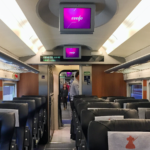
many people have been questioning the safety of Spain’s high-speed trains. Photo credit: Saejun Ahn/Shutterstock

Since the deadly railway accident near Urda, many people have been questioning the safety of Spain’s high-speed trains, while others have reconsidered whether to travel at all. Now, another detail has caught passengers’ attention: the speed indicator has disappeared from the illuminated information screens inside some AVE carriages, leaving travellers wondering why they can no longer see how fast the train is moving.

The issue was noticed by passengers travelling on the Madrid–Barcelona route, where the usual speed information was reportedly missing from the displays.

Passengers notice something missing from the screens

One regular passenger reported that the speed had not appeared during the journey. The train crew reportedly confirmed to passengers that the information was not being displayed. The screens themselves were still working. Carriage numbers, train numbers, the time and welcome messages continued to appear as normal.

It was specifically the speed reading that had disappeared. For passengers accustomed to seeing the kilometres per hour displayed during a journey, the change was noticeable, particularly at a time when railway safety is already attracting considerable attention.

Renfe responds to the missing speed indicator

Renfe said that information was being provided to passengers as usual and that it had no knowledge of the reported incident. The operator’s response does not explain why the speed reading was missing from the screens described by passengers.

Nor is it clear whether the problem affected several trains, particular carriages or individual display units. There is also no confirmation that the disappearance was linked to a technical fault with the train itself.

What does the missing display actually mean?

It is important to distinguish between the speed information shown to passengers and the equipment used by drivers to monitor and control a train. The illuminated screens inside carriages are passenger information displays. They allow travellers to see details about their journey, including the train’s speed where that information is available. They do not control the train or determine how fast it is permitted to travel.

The driver’s cab has separate equipment for monitoring speed and receiving information about operating conditions. High-speed trains also use railway signalling and protection systems designed to help drivers maintain safe speeds and respond to restrictions. This means that the disappearance of the passenger-facing speed indicator does not, by itself, show that the train’s speed-monitoring or safety equipment has stopped working.

Railway safety remains under scrutiny after Urda

The report comes just days after the deadly collision near Urda, in Toledo, where a Renfe AVE collided with a stationary Iryo train. The disaster has left 69 people dead and prompted intense scrutiny of the systems and procedures used to manage high-speed rail traffic.

Investigators are examining the failure of the LZB signalling system, which communicates information between the railway infrastructure and trains. It provides drivers with details about permitted speeds and how far they can safely travel, while also allowing the system to intervene if a train does not comply with the required conditions.

The failure of the system and the instructions given to the AVE driver before the collision are among the issues being investigated. On November 1, Renfe issued new instructions requiring drivers to stop if the LZB system fails and, following the appropriate authorisation, resume travelling at no more than 40 kilometres per hour under the specified conditions. The measures are intended to prevent a repeat of the circumstances surrounding the Urda disaster.

Passengers are still waiting for an explanation

The missing speed display is a separate issue from the signalling failure under investigation, and there is currently no evidence connecting the two. However, with public confidence in high-speed rail under pressure, even relatively small changes to what passengers see during a journey are likely to attract attention.

For those who noticed the missing indicator, the question is straightforward: why has information that was previously displayed disappeared while the other screens continue to work? Renfe has not provided a specific explanation for the reports. Until it does, passengers should not assume that the absence of the speed reading means the train’s safety systems are affected.

Continue Reading
Advertisement
Advertisement

Spanish Real Estate Agents

Tags

Trending

Copyright © 2017 Spanish Property & News