Connect with us

%

One Of Germany’s Biggest Retail Chains Is Preparing A Major Expansion In Spain

Published

on

one-of-germany’s-biggest-retail-chains-is-preparing-a-major-expansion-in-spain

If you have ever gone into a shop for shampoo and come out with a notebook, a toy, something for the kitchen and a bag of sweets, you will understand the appeal of a store that sells a bit of everything. That is the idea behind Müller, the German retailer preparing to open three more shops in Spain before the end of the year.

The chain is often compared with beauty retailer Primor and discount store Action, but its offer is not limited to cosmetics or bargain household goods. Its stores bring together perfumery, toiletries, skincare, toys, stationery, homeware, food and products for pets, giving shoppers plenty of reasons to browse beyond the aisle they originally came for.

Three new stores opening before Christmas

Müller’s next opening is in Artà, in the east of Mallorca, where a new 1,400-square-metre shop is due to welcome customers on Thursday, November 5. The store will be spread across two floors and will carry the retailer’s main product ranges.

The company will then make its first move into the Community of Madrid. Its Aranjuez shop is scheduled to open on November 20 at Alerce Park, with 1,271 square metres of retail space. A second Madrid-region store will follow on December 10 at the Oasiz Madrid shopping centre in Torrejón de Ardoz. At 1,611 square metres, this will be the largest of the three new locations.

The openings mark a significant change in the retailer’s Spanish footprint. Müller currently has 19 shops in the country: 16 in Mallorca and three in the Valencian Community. Once the Artà, Aranjuez and Torrejón stores have opened, the company expects that number to rise to 22.

What shoppers will find inside Müller

For shoppers in Madrid, the arrival means a new option for buying everyday essentials alongside products that are less commonly found under one roof. The stores are expected to follow Müller’s full retail format, with categories including perfume and cosmetics, household cleaning products, stationery, toys, kitchen and home items, food, natural cosmetics and pet supplies.

The range is one of the reasons Müller is not quite the same proposition as a conventional perfumery. The company says its catalogue includes around 190,000 product references, spanning everything from beauty and personal care to toys and household goods. That does not mean every shop will stock every item, but it gives an idea of the breadth of the business.

From a hairdressing business to a European retail chain

Müller began in Germany in 1953, when founder Erwin Müller opened a hairdressing business. It later developed into a self-service drugstore retailer and expanded into other European markets. The company arrived in Spain in 1993, opening its first shop in Mallorca. It did not begin expanding onto the mainland until 2022, when it opened in the Valencian Community.

A new distribution centre supports Spanish expansion

Its growth has also been supported by investment in distribution. In July, Müller officially opened a logistics centre in Cheste, Valencia, designed to supply its Spanish shops across the mainland and the Balearic Islands. The company said the facility would help it respond more quickly and flexibly as its store network grows.

The Cheste centre covers 4,500 square metres and sits beside the A-3, linking Valencia with Madrid. It is intended to serve as the main distribution point for the Spanish network, including shops on the mainland and in Mallorca. As Müller adds stores outside its original island base, the facility gives the retailer a central point from which to organise deliveries.

Madrid is now part of that plan. The two new shops will give Müller its first presence in the region, and the company has said it is continuing to look for further locations there. It has not announced specific additional sites or dates beyond the Aranjuez and Torrejón openings.

%

This Popular Fish Is Now Being Fed Chicken Meat: What’s Really On Your Plate?

Published

on

this-popular-fish-is-now-being-fed-chicken-meat:-what’s-really-on-your-plate?

Using animal by-products in feed also raises questions about bacteria and antibiotic resistance. Photo credit: Zenytal/Shutterstock

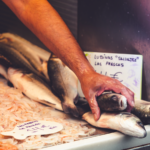
If you buy salmon because you think you know what goes into it, think again, there is something about the fish on sale in some European supermarkets that may surprise you. Several Norwegian salmon producers are now using ingredients made from chicken by-products in their feed, replacing part of the fishmeal and other proteins traditionally used to raise farmed salmon.

This does not mean throwing raw chicken leftovers into the water. The poultry material is processed into meal and oil before being mixed into formulated fish feed. It can include bones, liver and other parts of chickens that are not normally sold as meat cuts. Producers are turning to it because it offers a cheaper alternative at a time when traditional marine ingredients are becoming more expensive and harder to source.

Why salmon producers are changing the menu

Fishmeal and fish oil have long been important ingredients in farmed salmon diets, providing protein and essential nutrients. However, they rely on catches of wild fish, and supplies have come under pressure. Disruption to Peru’s anchovy fishery, an important source of fishmeal, has added to the problem, while the availability of other marine ingredients has also been affected. Poultry meal is reported to cost less than half as much per tonne as fishmeal, making it an attractive option for companies trying to control production costs.

Lerøy Seafood Group has introduced poultry-derived ingredients at all its offshore salmon farms in Norway. Grieg Seafood began using chicken meal and oil in July, while SalMar started testing poultry-based feed in March. Mowi has also been reported to be preparing similar changes in Norway, although its position varies between markets and operations. The companies argue that using material left over from chicken processing makes better use of existing resources and reduces reliance on wild fish caught for feed. The industry is under pressure to find alternative protein sources as demand for farmed fish continues to grow.

What exactly is being fed to the fish?

Poultry by-product meal is made by processing material left over after chicken meat production. Depending on the source, this can include bones, organs and other parts not sold for human consumption. It is treated before being used in animal feed; it is not simply discarded kitchen waste.

Norwegian research institute Nofima is investigating how chicken residues can be used in salmon feed, including how processing affects protein digestibility and biological quality. Its research project runs until September 2027 and will also examine the effects of longer-term feeding on fish health, growth and the quality of salmon at slaughter.

The nutritional value of poultry meal can vary. Nofima says digestibility has sometimes been low, with heat treatment, freshness and the type of material used all affecting the result. The research is intended to establish how the ingredients should be selected and processed to produce a consistent feed component.

Could it increase the risk of antibiotic-resistant bacteria?

Using animal by-products in feed also raises questions about bacteria and antibiotic resistance. Chicken production, like other livestock industries, can be a source of bacteria carrying resistance to antibiotics. If contaminated material entered the feed chain without effective treatment and controls, there could be a route for bacteria or resistance genes to spread.  That is a potential food-safety concern, not proof that salmon fed poultry meal will contain antibiotic-resistant bacteria. Processing requirements are designed to reduce microbiological risks, and feed ingredients are subject to safety controls.

Norway’s Institute of Marine Research detected Salmonella in one sample of feather meal during its 2025 fish-feed monitoring programme. The report nevertheless described the general microbiological quality of the samples as satisfactory. The finding does not show that salmon fillets were contaminated or that poultry meal is spreading antibiotic resistance, but it demonstrates why sourcing, processing and testing matter. Separate research into salmon and chicken processing environments has identified antibiotic-resistance genes in some processing waste streams. However, it did not demonstrate that feeding poultry by-products to salmon transfers resistant bacteria into the fish or its flesh. 

Does chicken feed affect the quality of salmon?

There is also the question of whether changing the fish’s diet affects the quality of the meat people eventually eat. A commercial-scale study published in 2025 examined 435,000 Atlantic salmon over an 11-month feeding period. Poultry by-product meal replaced 5 or 10 per cent of the crude protein from conventional sources in the test diets. Researchers found no significant differences in growth, mortality, feed conversion, gut condition or fillet quality.

There were also no differences in the colour, firmness, gaping or fatty acid composition of the salmon. The findings do not support claims that moderate amounts of poultry meal automatically make salmon less nutritious or damage the texture of its flesh. However, they do not settle every question about different feed formulas or higher levels of inclusion. Nofima’s wider research is still examining long-term effects, including smell, appearance, taste and texture. 

Shoppers may not know what their salmon has eaten

For consumers, one of the biggest concerns is transparency. Feed ingredients do not generally have to be listed on supermarket salmon packaging, meaning shoppers may not be able to tell whether the fish they buy was raised on a diet containing poultry by-products. A Nofima survey of more than 1,000 consumers in England and France found that many knew relatively little about the ingredients in farmed salmon feed. Chicken-based ingredients were viewed particularly negatively, with respondents often associating them with something unnatural or lower quality. 

The debate is likely to continue as producers look for cheaper alternatives to fishmeal. The available research does not show that salmon fed poultry meal is automatically unsafe or inferior, but questions remain about how ingredients are sourced, processed and tested, how much is used and whether shoppers should be told. For anyone buying salmon, the change raises eyebrows: should consumers have the right to know what the fish on their plate has been fed? I think so.

Continue Reading

%

Murcia’s Best Marineras Crowned As 180 Restaurants Compete In 2026 Tapas Contest

Published

on

murcia’s-best-marineras-crowned-as-180-restaurants-compete-in-2026-tapas-contest

Murcia crowns two winners after month-long competition celebrating iconic regional tapa. Photo Credit: San Javier Town Hall

San Javier was the host of the grand finale of the 2026 edition of the Best Marinera of the Region of Murcia competition, which was held from September 18 to October 18. For one incredible month, more than 180 local bars and restaurants went head to head to create their best iteration of this iconic tapa, and the winning establishment was crowned in the lively coastal town.

More than 180 restaurants take part in the competition

The marinera is an iconic tapa from the Region of Murcia, particularly associated with the capital and with the Costa Calida hub city of Cartagena. It consists of a base of a crunchy, elongated-ring breadstick called a rosquilla, topped with a generous scoop of Russian salad made with boiled potatoes, tuna, hard-boiled eggs, carrots, peas or pickled vegetables, and mayonnaise, and crowned with a rich, salt-cured anchovy in brine. This delicious seafood snack goes hand in hand with the region’s reputation, and this 2026 edition of the competition inspired residents and visitors to go out, try new restaurants, and enjoy this delicious snack.

The jury’s assessment took into account aspects including product quality, technical execution, flavour, presentation, creativity and respect for the essence of the marinera.

Traditional and reinvented marineras take top prizes

Following the jury’s verdict and a tough competition, Con Sentido de Mari and its chef Mari Carmen Martínez Sánchez, from Cehegín, have won the award for Best Traditional Marinera 2026, while La Flota and its creators Rocío Fuentes and Antonio Fuentes, from Cartagena in La Palma, have obtained the recognition for Best Reinvented Marinera 2026. Both restaurants will receive a prize of 1,000€ each.

Special mentions celebrate Murcia’s culinary talent

The grand finale of the competition also recognised other delicious versions of the tapa through honourable mentions, awarded to La Posada del Pez in Murcia City and its chef Julián Valmayor, and the Best Mahou Reserva Pairing Award, given to Kiosco Ben Arabí, also in Murcia, and its chefs Consuelo Cánovas and Cristina Gil.

The competition brought together culinary professionals, representatives of the food industry in Murcia, and members of the hospitality sector at the Almansa Park Auditorium, celebrating the Region of Murcia’s strong culinary identity and the towns that create these outstanding tapas and meals. In particular, San Javier’s selection as the host for this event brought gastronomy and culture even closer to the town.

During the event, the mayor of San Javier, José Miguel Luengo Gallego, was appointed the Godfather of the Marinera 2026.

San Javier hosts celebration of regional gastronomy

The marinera is not only a tasty snack to try for those living in or visiting the Region of Murcia; it is a testament to the tradition, quality, and creativity that make up the landscape of Murcian gastronomy. Once more, restaurants in the Region of Murcia have showcased their prowess when it comes to keeping tradition alive, bite after tasty bite.

Continue Reading

%

Supermarket Cyberattacks Spread Across Europe

Published

on

supermarket-cyberattacks-spread-across-europe

Freezers turn to cookers across Europe. Credit: Wiliamhero – Shutterstock

Supermarkets across Europe are facing a growing cybersecurity crisis after suspected hackers remotely interfered with refrigeration systems, causing temperatures in fridges and freezers to soar and forcing retailers to throw away large quantities of food.

The latest incidents were reported in Sweden this morning, but have now spread to Belgium, Luxembourg, Ireland and Estonia, with several major supermarket chains affected. The attacks follow a similar incident in France last month, when hundreds of stores suffered refrigeration failures after their cooling systems were compromised.

The growing number of incidents has raised questions about the security of supermarket equipment connected to the Internet, particularly systems which allow refrigeration units to be monitored and controlled remotely.

Sweden supermarkets hit by overnight attacks

Sweden was among the first countries to report problems on Monday, November 2, with supermarket chains ICA and Coop confirming incidents affecting refrigeration equipment.

ICA said a limited number of its stores had experienced problems overnight, while Coop reported that six outlets had been affected.

One ICA supermarket in Sjöbo reported that its refrigerators and freezers had been remotely set to 50°C, leaving staff with spoiled stock to remove. At another ICA store in Stockholm, employees discovered that its freezers had stopped working following an overnight incident.

Sweden’s National Cybersecurity Centre is investigating several incidents involving supermarket refrigeration systems. Its director has also warned about exposed operational technology devices which need security updates and patches.

Belgium and Luxembourg report widespread disruption

Belgium has also suffered serious disruption, with several supermarket groups reporting problems. Around 40 Delhaize stores were affected by an IT incident involving their refrigeration systems, according to reports from Belgian news agencies.

Carrefour Belgium confirmed that 15 of its more than 700 stores had experienced problems, although the company described the impact as limited. Five Spar supermarkets operated by the Colruyt Group also reported attacks on their refrigeration equipment.

The disruption extended into neighbouring Luxembourg, where Delhaize stores also experienced refrigeration problems. Technicians were called out overnight to disconnect affected equipment and prevent further damage.

One Belgian refrigeration company said attackers had switched evaporators inside the cooling units into defrost mode, causing temperatures to rise.

Irish supermarkets forced to remove food

Ireland has now joined the list of affected countries after SuperValu confirmed that refrigeration equipment at 13 of its 223 stores had been affected. The supermarket chain’s parent company, Musgrave, said chilled and frozen products had been removed from sale as a precaution. Stores stayed open, with other products available to customers.

The company said the incident involved a specific model of refrigeration equipment and that its monitoring systems had alerted staff to the problem. Musgrave is working with equipment suppliers and cybersecurity specialists to investigate what happened and restore normal operations.

Estonia reports temperatures reaching 50°C

An incident was also reported in Estonia, where a supermarket refrigeration system was accessed remotely and its temperature settings raised to 50°C. Technology supplier Kitman Coldtech confirmed that one of its customers had been affected. The supermarket chain Selver subsequently confirmed that one of its outlets had experienced the problem. The incident was reportedly dealt with within minutes, limiting the damage. One suspects, it was dealt with by detaching fridges from the Internet.

France suffered an earlier attack affecting hundreds of supermarkets

The latest developments follow a much larger incident in France last month, when hackers gained access to refrigeration control systems used by hundreds of supermarkets. French authorities reported that up to 700 supermarkets were affected, with temperatures in some refrigeration units reaching 50°C.

Intermarché, Carrefour, Monoprix and other major retailers reported disruption and substantial food losses. Some stores also experienced fires linked to overheating equipment.

Investigators examined how attackers had manipulated remotely controlled refrigeration systems, interfering with temperature controls and defrost programmes. The incidents exposed weaknesses in older equipment which had not received important security updates.

Could Spanish supermarkets be next?

There have been no confirmed reports of Spanish supermarket refrigeration systems being targeted in this latest wave of incidents.

However, the developments are likely to raise concerns among retailers in Spain, where major supermarket chains also depend on electronically monitored refrigeration systems to keep fresh and frozen products at safe temperatures.

The attacks go to show how equipment designed to make supermarket operations more efficient can also create potential security weaknesses if it is not properly protected.

Spain’s National Cybersecurity Institute (INCIBE) is providing advice and assistance on digital security incidents, while the Spanish Interior Ministry’s Cybersecurity Coordination Office publishes guidance on protecting connected and industrial equipment.

Who is behind the supermarket attacks?

Despite the growing number of incidents, investigators have yet to identify those responsible. No group has publicly claimed responsibility, and authorities have not established whether all the reported incidents are connected.

The absence of obvious ransom demands has also raised questions about whether the intention is financial gain or deliberate disruption. For supermarket operators, the immediate concern is protecting refrigeration equipment and preventing further food waste.

For shoppers, the incidents raise a wider question about how vulnerable essential food supplies can become when everyday supermarket equipment is connected to the internet.

Continue Reading

Trending

Copyright © 2017 Spanish Property & News