Connect with us

%

Spain’s AVE Trains Under Scrutiny Again As Passengers Spot Missing Speed Indicators

Published

on

spain’s-ave-trains-under-scrutiny-again-as-passengers-spot-missing-speed-indicators

many people have been questioning the safety of Spain’s high-speed trains. Photo credit: Saejun Ahn/Shutterstock

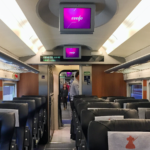
Since the deadly railway accident near Urda, many people have been questioning the safety of Spain’s high-speed trains, while others have reconsidered whether to travel at all. Now, another detail has caught passengers’ attention: the speed indicator has disappeared from the illuminated information screens inside some AVE carriages, leaving travellers wondering why they can no longer see how fast the train is moving.

The issue was noticed by passengers travelling on the Madrid–Barcelona route, where the usual speed information was reportedly missing from the displays.

Passengers notice something missing from the screens

One regular passenger reported that the speed had not appeared during the journey. The train crew reportedly confirmed to passengers that the information was not being displayed. The screens themselves were still working. Carriage numbers, train numbers, the time and welcome messages continued to appear as normal.

It was specifically the speed reading that had disappeared. For passengers accustomed to seeing the kilometres per hour displayed during a journey, the change was noticeable, particularly at a time when railway safety is already attracting considerable attention.

Renfe responds to the missing speed indicator

Renfe said that information was being provided to passengers as usual and that it had no knowledge of the reported incident. The operator’s response does not explain why the speed reading was missing from the screens described by passengers.

Nor is it clear whether the problem affected several trains, particular carriages or individual display units. There is also no confirmation that the disappearance was linked to a technical fault with the train itself.

What does the missing display actually mean?

It is important to distinguish between the speed information shown to passengers and the equipment used by drivers to monitor and control a train. The illuminated screens inside carriages are passenger information displays. They allow travellers to see details about their journey, including the train’s speed where that information is available. They do not control the train or determine how fast it is permitted to travel.

The driver’s cab has separate equipment for monitoring speed and receiving information about operating conditions. High-speed trains also use railway signalling and protection systems designed to help drivers maintain safe speeds and respond to restrictions. This means that the disappearance of the passenger-facing speed indicator does not, by itself, show that the train’s speed-monitoring or safety equipment has stopped working.

Railway safety remains under scrutiny after Urda

The report comes just days after the deadly collision near Urda, in Toledo, where a Renfe AVE collided with a stationary Iryo train. The disaster has left 69 people dead and prompted intense scrutiny of the systems and procedures used to manage high-speed rail traffic.

Investigators are examining the failure of the LZB signalling system, which communicates information between the railway infrastructure and trains. It provides drivers with details about permitted speeds and how far they can safely travel, while also allowing the system to intervene if a train does not comply with the required conditions.

The failure of the system and the instructions given to the AVE driver before the collision are among the issues being investigated. On November 1, Renfe issued new instructions requiring drivers to stop if the LZB system fails and, following the appropriate authorisation, resume travelling at no more than 40 kilometres per hour under the specified conditions. The measures are intended to prevent a repeat of the circumstances surrounding the Urda disaster.

Passengers are still waiting for an explanation

The missing speed display is a separate issue from the signalling failure under investigation, and there is currently no evidence connecting the two. However, with public confidence in high-speed rail under pressure, even relatively small changes to what passengers see during a journey are likely to attract attention.

For those who noticed the missing indicator, the question is straightforward: why has information that was previously displayed disappeared while the other screens continue to work? Renfe has not provided a specific explanation for the reports. Until it does, passengers should not assume that the absence of the speed reading means the train’s safety systems are affected.

%

Burglar In Spain Drinks Himself To Sleep In Bar Raid Gone Wrong

Published

on

burglar-in-spain-drinks-himself-to-sleep-in-bar-raid-gone-wrong

Repeated robberies leave businesses facing repair bills. Photo credit: Sonia Bonet/Shutterstock

A Bilbao bar owner could have been forgiven for expecting a nasty surprise after discovering someone had broken into the premises. Finding the alleged burglar fast asleep inside, with a half-empty bottle of orujo beside him, was probably not what he had in mind.

The bizarre incident happened in the early hours of Friday at the Río-Oja bar in Bilbao’s Casco Viejo. The suspected thief reportedly forced his way inside, helped himself to three beers and opened a bottle of orujo, because, why not? But unfortunately for him, his attempted robbery took an unexpected turn.

An attempted robbery turns into a drinking session

According to Antena 3 Noticias, the man forced open the bar’s metal shutter to gain entry. The alarm system was switched off because it was undergoing maintenance, allowing him to enter without triggering it.

Rather than making a quick getaway with valuables, he reportedly treated the premises as his own private drinking spot. He consumed a fair amount of alcohol including half a bottle of Orujo, a traditional Spanish grape pomace brandy with considerably more kick than your average cerveza.

Neighbours call the police

Noise coming from the premises alerted nearby residents, who contacted the police after suspecting someone had broken in. When officers arrived, they discovered the alleged burglar having forty winks inside the establishment. Beside him sat his Achilles heel: the bottle of orujo, with around half its contents remaining. His night ended in police custody rather than with the stolen goods he may have originally been hoping to find.

The bar had already been targeted

The incident might sound like a comedy of errors, but the Río-Oja has a much more serious problem. The bar had reportedly been targeted for the third time in 2026. During a previous break-in in August, thieves forced the shutter and escaped with €300. Two other nearby establishments were also reportedly targeted that Friday night, adding to concerns among local traders about security in Bilbao’s Casco Viejo.

Repeated robberies leave businesses facing repair bills, damaged entrances and stolen cash or equipment. Even when intruders fail to take anything, owners still have to deal with the damage and the cost of making their premises secure again.

Repeated break-ins leave bar owners worried

Local hospitality businesses have expressed concern about the number of robberies and are calling for greater security in the historic centre. For the Río-Oja’s owner, another break-in means yet more repairs and the worry of being targeted again.

The latest intruder may not have managed to steal anything, but he certainly left the bar with a story that will be difficult to forget. Most customers are eventually asked to leave when a bar closes. This one needed the police to show him the door.

Continue Reading

%

Rincon Tapas Trail Returns

Published

on

rincon-tapas-trail-returns

Sample each tapa and decide the winner. Credit: Ayto

Food lovers will have ten days to sample their way around Rincón de la Victoria when the town’s Ruta de la Tapa returns from Friday, November 13, to Sunday, November 22.

In its sixth year, the event brings together 31 bars and restaurants across La Cala del Moral, Rincon de la Victoria, Torre de Benagalbon and Benagalbon.

Each venue will prepare a tapa specially for the occasion, with every dish priced at €4 including a drink. Customers can choose a draught beer, soft drink or water. Participating premises will display a special sign.

Discover cuisine from Rincon

Organised by Rincon de la Victoria Council’s Tourism Department, the route encourages people to discover local bars and restaurants in the area.

A digital guide linked to Google Maps will help visitors find the venues and plan their route. According to the organisers, the guide has recorded 383,018 visits across the six editions.

Customers can also enter a draw for a share of the €1,000 prize fund. Visitors can collect a ‘tapaporte’ from any participating restaurant or the Municipal Tourist Office. To qualify, they must obtain stamps from four different establishments in at least two of the four local areas, vote for their favourite restaurant and submit the completed passport by November 22.

Which bar has the best tapas?

Five winners will each receive a voucher booklet worth €200. Each booklet contains four €50 vouchers, which must be used at four different participating restaurants by February 28, 2027. Completed passports can be deposited at participating venues or the Tourist Office.

€2,700 will go to the restaurants judged best. A public vote will also decide the public favourite. Full details, including the participating restaurants, their tapas and the competition rules, are available at turismoenrincon.es/ruta-de-la-tapa.

With 31 stops and a set price for food and drink, the route gives residents and visitors a chance to try local specialities without committing to a full meal.

Continue Reading

%

2 Women Hospitalised After 80-Year-Old Runs Red Light In Torrox

Published

on

2-women-hospitalised-after-80-year-old-runs-red-light-in-torrox

Ambulance in Velez-Malaga. Credit: Junta

Two women have been seriously injured after being struck by a car at a pedestrian crossing in Torrox Costa, with the driver reportedly telling police she failed to notice a red traffic light.

The accident happened shortly before 5pm on Friday, November 6, on Avenida de Andalucia, directly opposite the bus station in the coastal town. The area has previously seen a serious road accident in Torrox Costa, involving a motorcyclist and a cyclist.

The victims, aged 62 and 64, were crossing the road at a traffic-light-controlled pedestrian crossing when they were hit by the car.

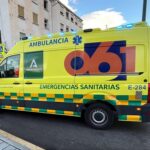
Both women suffered serious injuries and were given emergency treatment at the scene before being taken by ambulance to the Hospital Comarcal de la Axarquia in Velez-Malaga. A subsequent report on the two women’s hospitalisation on November 7 confirmed they were still in hospital.

Driver says she did not see red light

The car was being driven by an 80-year-old Belgian woman who lives in Velez-Malaga. During the initial police enquiries, the driver reportedly explained that she had been distracted and had not realised the traffic light was red when she approached the crossing.

Two ambulances, Guardia Civil traffic officers and Torrox Local Police attended the scene. Emergency teams treated the injured pedestrians before arranging their transfer to hospital.

The accident took place in a busy part of Torrox Costa, close to the bus station. No other details have yet been released about the women’s medical condition or whether any formal action has been taken against the driver.

The incident is a reminder of the importance of remaining alert behind the wheel, particularly when approaching pedestrian crossings and traffic signals. EWN has previously reported on another pedestrian crossing accident in Spain. The Spanish Traffic Authority’s road safety guidance for pedestrians also explains the rules for crossing roads safely.

Continue Reading

Trending

Copyright © 2017 Spanish Property & News