
China
Canadian Astronaut Leads A Madrid Development Project With 12,000 Luxury Homes: ‘It’s Going To Be Extraordinary’

Canadian astronaut Jeremy Hansen, who in April became the first non-American to travel to the Moon, has a new job. The 50-year-old astronaut and test pilot made history as a mission specialist on Artemis 2, which orbited the Moon for the first time in more than 50 years.
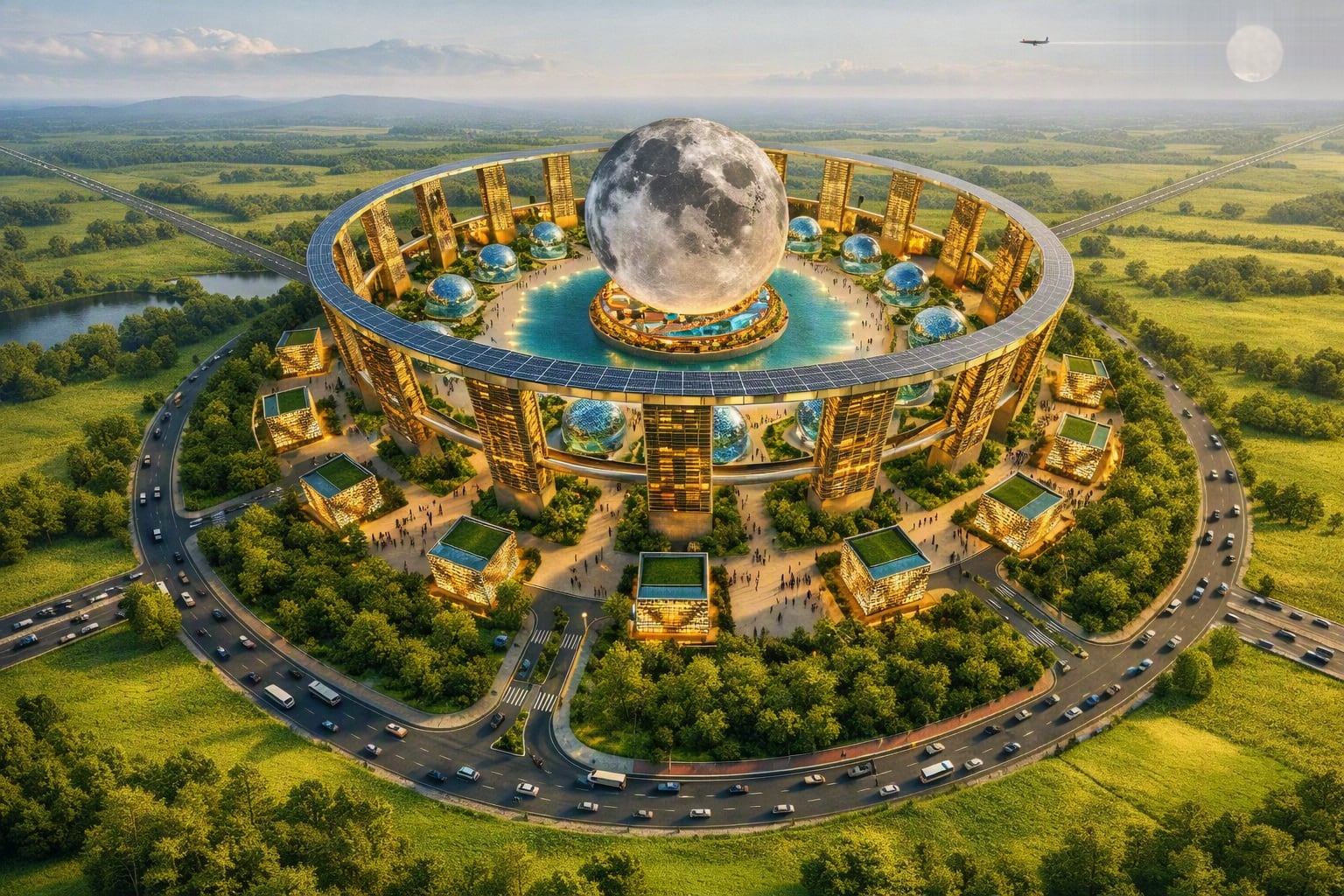
Six months later, Hansen has become an adviser and ambassador for Moon World Resorts, a Canadian company planning to build a gigantic replica of the Moon along with a vast tourism, residential, and educational complex centered around what would be the largest sphere in the world. Inside, its promoters say, visitors will find a recreation of the lunar surface complete with an explorable colony.
“This project is as ambitious as a space program; it’s going to be extraordinary,” Hansen tells EL PAÍS via video call from Ottawa, Canada.
The megaproject will give people the chance to “live, work, and play against the up-close visualization of the Moon,” Hansen says. “We’re talking about an area the size of 10 football fields, and on that surface you’ll see the sky exactly as you would if you were actually on the Moon.” The facility aims to offer “a replica as close as possible to a real Moon base,” serving both as a tourist attraction and a testing site for “future technologies,” according to the astronaut.
In September, Hansen transferred to the reserve force of the Royal Canadian Air Force after 32 years of service and also left his country’s space agency, where he had spent 17 years. He has now decided to support the Moon World Resorts project, where he will serve as an adviser, member of the advisory board, and ambassador. According to a statement from the project’s promoters, his direct responsibilities will include the lunar surface and lunar base experience; astronaut training facilities; commercial partnerships across the space, aerospace, and space tourism sectors; collaboration agreements with universities; technology-sector partnerships; and the visitor experience at all space-related touchpoints throughout the project.
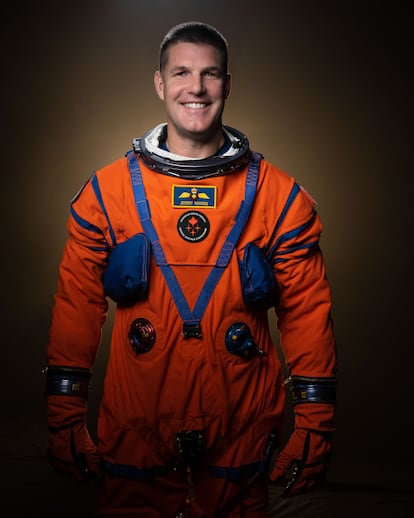
A couple of weeks ago, Canadian Prime Minister Mark Carney appointed Hansen as his new adviser on space affairs, as well as an adviser to the country’s industry minister. His mission is to strengthen Canada’s position among the world’s space powers and promote its role in the emerging lunar economy. Hansen will hold that position alongside his role as a figurehead for the Moon project, which he supports “in a personal capacity” and whose credibility and potential he strongly defends: “I think they put together a highly capable team, done a lot of real work, and developed a design that is credible from an engineering standpoint,” he says. Hansen explains that he will be paid for these services but declines to specify the amount.
The Moon World Resorts project was created by two Canada-based entrepreneurs: Sandra Matthews, its president, and Michael Henderson, its chief executive. Matthews describes the venture as “the blueprint for a smart city,” with a total construction cost of about $5 billion, encompassing some 12,000 luxury residences spread across 24 towers. The development would also include hotels, shopping centers, parks, and universities.
“You’ll be able to own a condo overlooking the Moon,” Matthews says in a video interview. Visitors would pay $500 for a 90-minute walk across the Moon. Hotel rates, she adds, would be comparable to those of any five-star establishment.
The two promoters’ goal is to finalize a design for Moon and then license it to a single client that would take charge of construction. Matthews says that client could be a major construction company or a sovereign wealth fund with sufficient capital to finance the entire project before development begins. The idea is eventually to build as many as 10 such cities around the world. “It’s similar to how J. K. Rowling licensed the rights to her books to Universal for a theme park,” Matthews explains, while stressing that Moon “is not a theme park.”
According to Matthews, Spain is a leading candidate to host one of those 10 potential locations. Madrid will also be home to the office responsible for marketing the project to prospective investors. “Madrid is the ideal location for the pre-development showcase display center, where we will have drawings, full-scale renderings and model, and a virtual tour of the project,” she says.
The Spanish capital is also under consideration as a site for the final development should an agreement be reached with an investor. Matthews adds that the company is also evaluating possible locations in Seville, Valencia, and Barcelona. For now, she acknowledges, all discussions have been exploratory, and there have been no meetings with either the central government or regional authorities to present the proposal.
What Moon World Resorts does already have is a roster of more than 50 companies from 12 countries listed as partners on its website. The list includes major firms in architecture, engineering, consulting, insurance, transportation, and even gym chains.

Matthews defends the strength of the Moon project and “its numbers.” On paper, those projections include 10 million visitors a year, 4,000 hotel rooms, and 2.2 million square meters (23.7 million square feet) of built space. The base of the lunar sphere is planned to house shops, a convention center, concert venues, and a wellness and longevity center, among other facilities.
Matthews says Moon World Resorts has already raised “millions” of dollars, though she declines to specify the amount, and hopes to secure additional funding over the next eight months to complete the design phase. The company would then grant a license for the first lunar city to the strongest candidate, who would be responsible for building it in an estimated five‑year period.
The project has taken many forms over the years. Its two founders first launched the idea in 2000, and even then the proposed design and budget were broadly similar to today’s plans. In 2002, they proposed bringing the project to Las Vegas, where their artificial Moon, measuring 271 meters (889 feet) in diameter, would have been almost twice the size of the Las Vegas Sphere. The project failed to attract an investor.
Two years later, the developers sought to build it on a series of artificial islands in the Bahamas. In 2016, attention shifted to California’s Coachella Valley. By 2022, the preferred location was Dubai, in the United Arab Emirates. Just a few days ago, the project’s backers identified Abu Dhabi, also in the UAE, as one of the most promising locations, though still without a clear investor. Madrid has now joined the list, likewise without confirmed financial backing, the promoters acknowledge.
Speaking from Ottawa, Hansen offers one final reflection on the project. “At this point, only visionaries are interested, because you really have to be one to imagine something on this scale. But in a world that needs more housing and more construction, this is a new way of building communities. And it’s possible there could be 10 of them around the world.”
Sign up for our weekly newsletter to get more English-language news coverage from EL PAÍS USA Edition









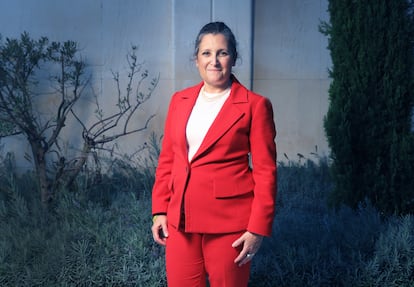
Chrystia Freeland, 58, has lived many lives in one. Born in Peace River, Alberta, she worked as a journalist at the Financial Times, where she was the outlet’s chief correspondent in Moscow, Eastern Europe, the United Kingdom and the United States. She entered Canadian politics in 2013, when she was first elected as a member of parliament for the center-left Liberal Party. Later, after Justin Trudeau’s victory in 2015, she served as minister of international trade, minister of finance, minister of foreign affairs and, finally, as deputy prime minister.
Freeland competed against Mark Carney for the nomination in last year’s Liberal Party leadership elections. And, after losing the vote to the current prime minister, she moved into academia — first at Harvard, now at Oxford. The daughter of a Ukrainian mother (she speaks the language fluently and her three children have Ukrainian names), Freeland is also one of Volodymyr Zelenskiy’s top economic advisers.
This interview took place after a conference at the Ramón Areces Foundation, in Madrid. It was the same day that her latest book was released: Unreliable Boyfriend: An Insider’s View of Dealing with a Chaotic Superpower, Plutocrats, and Other Complicated People (2026). In it, she recounts her wild years in politics, during which she became a favorite target of Donald Trump’s ire. He hurled all sorts of insults at her: “Nasty woman,” “totally toxic” and “terrible person,” among other pleasantries.
Question. How do you deal with someone like that?
Answer. I have sort of a double-barreled view. It’s important to stand up to the United States, and I think that it’s also important to be open to the possibility that America returns to the liberal democratic fold.
Q. Quite a few countries have capitulated to Trump, including several European ones.
A. Yes, I agree. And it’s a big and historic mistake. That’s why I give [Spanish Prime Minister Pedro] Sánchez and his government real credit for standing up to the United States: Spain is the European country that has taken the clearest position. The response to the tariffs and the challenges to the sovereignty of Canada and Europe have resulted in a united retaliation. If that had happened, we wouldn’t be seeing everything that has followed. The way President Trump behaves is to push you as far as he can. And, when [his] outrageous actions got results, we shouldn’t be surprised if this was then followed by even more outrageous actions.
Q. Remember that photo from last year, at his golf club in Scotland? When he posed with Ursula von der Leyen, president of the European Commission?
A. There’s a quote from [former European Commissioner] Thierry Breton in my book that I really like: “We were told humiliation was the price we had to pay for stability. But if we don’t push back now, we will get humiliation and instability.” A lot of leaders think they’re smarter and more sophisticated than Trump; that they can have a meeting with him and have a little joke and can kind of trick him. And the reality is that he’s the one who’s tricking them.
Q. It’s become a pattern.
A. It’s a very understandable mistake… and very easy to make. It seems like a mature person should swallow their pride and, for example, accept a 15% tariff. “So what?” they think. “It doesn’t seem like much… we can survive and, in exchange, we’ll have a good relationship [with the U.S.].” The problem is that, if you compromise, the next day, you’re faced with a territorial claim over Denmark. And, the day after that, you have a war in Iran, and you’re being attacked for not joining it. And then, the day after that, you have Trump siding with Putin in a war which is existential for Europe.
Q. In the book, you write: “We are living in a time of three big fights: the fight between democracy and dictatorship, the fight between people and plutocrats, and the fight between global alliances and predatory isolationism.” Are we losing all three battles?
A. I’m not sure we’re losing. But we’re not winning, either.
Q. That’s an optimistic way of looking at it.
A. I’m optimistic by nature, but I don’t think we’re totally losing. People thought Ukraine would fall in three weeks — and it’s still there. That’s a tribute to Ukraine, but also to Europe. Viktor Orbán’s defeat [in Hungary] is another example of how liberal democracy endures. And we’ll see what happens in the midterm elections [in the U.S.]. But the things I really worry about are Russia, China and the absence of a united Western alliance. Without that, among other things, it’s impossible to rein in the oligarchs. That’s why it’s so important to fight for liberal democracy in the U.S., but as long as the Americans aren’t part of that effort, we’ll fail.
Q. You’ve said that U.S. democracy is on life support.
A. That’s obvious. We’re seeing American law enforcement terrorize American people with total impunity. We’re seeing the creation of masked paramilitary forces. We’re seeing a group of people actually in government who refuse to accept the results of the 2020 election. We’re seeing blatant corruption which goes unpunished. And we’re seeing America siding openly with dictatorships and explicitly menacing the sovereignty of democratic allies. It’s appalling.
Q. The polls point to a resounding defeat for Trump on November 3. If he loses both houses of Congress, his domestic power will be limited, but he’ll still have a free hand when it comes to foreign policy. Could that be even more dangerous?
A. It could be, that’s true. But what I hope to see is increasing resistance within the United States, including within the Republican Party. There’s a good chance that will happen, because many traditional Republicans disagree with a lot of what he’s done. And they’ve gone along with it because of fear and self-interest. But if they feel that the president is no longer able to deliver at the ballot box, there’s a chance he’ll start losing significant support in his own party. And that could function as a restraint.
Q. Is Brussels’ offer for Canada to become an associate member of the European Union viable?
A. I think so, and I hope so. In my dream scenario, we would have an alliance that would include the EU, Canada, the United States and the CPTPP countries [the Comprehensive and Progressive Agreement for Trans-Pacific Partnership]. It would not be a supranational entity, like the EU but I would like to see a much closer economic and security partnership among the world’s democracies. That’s what we need.
Q. Isn’t that wishful thinking, given the current situation?
A. If you had asked people in 1940 if, 40 years later, you would have an economic and political partnership between Germany and France, a military partnership between the United States, Germany and France, as well as a military partnership between the United States and Japan, no one would have thought it was possible. The post-war period — especially in Europe — is a story of miracles: it’s astonishing how we went from the situation in 1939 to that of 1991. Anyone who imagined it would have been considered a mad fantasist, but it actually happened. It’s a mistake to put limits on our dreams.
Q. Are Trump’s policies allowing China to expand its influence and fill the power vacuum?
A. Yes, absolutely. The biggest winner from U.S. behavior is China. Russia is also a winner, but the way that Europe has united weakens Russia’s victory. America’s traditional partners are seeking a balance and, therefore, are getting closer to China. It can be dangerous, but it’s understandable. And countries that are not America’s traditional allies are also seeking a balance. That’s great for China. And the other thing that’s great for China is that there’s no moral high ground for America to claim right now.
Q. As an adviser to Zelenskiy, how do you assess the recent “energy ceasefire” announced by Trump?
A. Nothing that he puts forward is credible.
Q. He’s also demanding elections: he says that “it’s time for Ukraine to get a new president.”
A. It’s appalling, it’s absolutely appalling. The only positive thing is it will make President Zelenskiy more popular in Ukraine.
Q. How do you assess the US-Russia diesel agreement?
A. It’s a betrayal and a gift to Putin. What’s especially shocking is that it isn’t economically significant for the U.S. But it explicitly shows that Trump is siding with Putin.
Q. You’ve said that Ukraine is winning the war.
A. 100%.
Q. Why?
A. There was a widespread expectation that Russia would make territorial gains this summer and they haven’t. It’s horrifying what Russia is doing with the strikes on Ukrainian civilians, but that’s a direct result of Russia failing on the battlefield.
The Ukrainians have devised a formula that might force Russia to limit its attacks: if they hit your energy infrastructure, you hit theirs. That could serve as the basis for a limited ceasefire.
The impact of the attacks on Russian data centers is also very interesting: Russian disinformation campaigns influence us more than we realize, so perhaps the Ukrainians will help us all to have healthier democracies by taking out data centers there. It could be a gift from Ukraine to global democracy.
Sign up for our weekly newsletter to get more English-language news coverage from EL PAÍS USA Edition

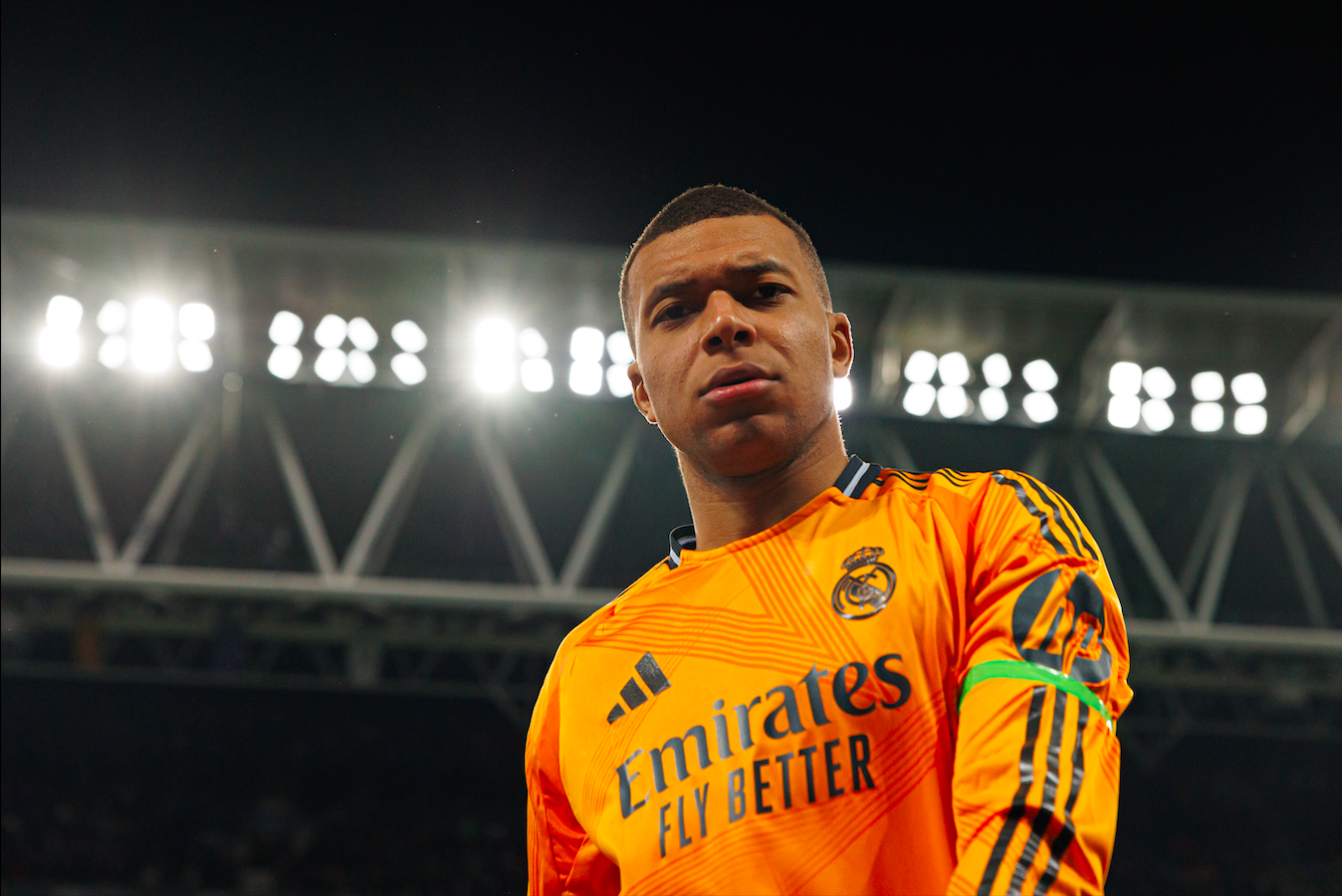
Chinese state broadcaster CCTV suspended broadcasts of LaLiga matches involving Mbappé. Photo credit: Maciej Rogowski Photo/Shutterstock
Kylian Mbappé has found himself at the centre of a diplomatic and commercial controversy after a joke involving an image of Chinese leader Mao Zedong triggered a backlash in China, prompting three companies to end their sponsorship agreements with the footballer and state broadcaster CCTV to suspend LaLiga coverage.
The Real Madrid striker apologised after the incident, acknowledging that his comment had been ill-judged and had hurt people in China and Chinese communities around the world. However, the fallout has extended beyond his personal reputation, raising questions about the commercial consequences for one of football’s most recognisable players and LaLiga’s presence in the Chinese market.
Mbappé’s China controversy puts sponsorships and LaLiga broadcasts at risk
The fallout has spread beyond the footballer himself. Chinese beverage and dairy companies have ended commercial partnerships with Kylian Mbappé, while state broadcaster CCTV has suspended Spanish league coverage following a controversy over a joke about an internet meme depicting the Real Madrid striker as Chinese leader Mao Zedong. The row began after a video circulated online showing Mbappé discussing his favourite meme featuring himself.
In the clip, he describes an image in which his face has been superimposed on a Chinese dictator, adding that he uses it with friends while playing video games. Although Mbappé did not name Mao, the image circulating online showed the French international’s face on a portrait of the former Chinese leader. Reuters reported that it had been unable to independently authenticate the video.
Three Chinese companies end sponsorship deals
The commercial consequences followed quickly, with three Chinese companies announcing that they were ending their relationships with the footballer. Dongpeng Beverage Group, which had appointed Mbappé as an ambassador for its Bushuila electrolyte drink brand in April, announced that it was terminating its cooperation with immediate effect.
Dairy producer Mengniu and cheesemaker Milkground subsequently announced similar decisions. Their statements cited opposition to words or actions that hurt the feelings of the Chinese people, without disclosing the financial value of the cancelled agreements. Mbappé had been a familiar face in Chinese advertising, with promotional material for Dongpeng appearing on bottles, buses and advertising displays in cities across the country.
The withdrawals could therefore affect more than his immediate sponsorship income. However, none of the companies has disclosed how much the agreements were worth, making it impossible to calculate the financial loss. Other brands have also reviewed their use of the footballer’s image. Chinese social media platform Xiaohongshu, known internationally as RedNote, said its partnership with Mbappé had already expired at the end of 2024 and that it was reviewing and removing related promotional material.
CCTV suspends LaLiga broadcasts
The controversy has also affected Spanish football’s visibility in China. Chinese state broadcaster CCTV suspended broadcasts of LaLiga matches and games involving Mbappé, according to reporting by Chinese outlet The Paper, which cited sources connected to the state broadcaster. Advertisements and videos featuring the player were also removed. The suspension reportedly took effect on Monday night, October 26, although no end date has been announced.
The move raises questions about the league’s commercial interests in one of its important international markets. LaLiga announced a digital distribution agreement with China Mobile Migu in August, covering all 380 league matches each season in mainland China through the 2029-30 campaign. There has been no confirmation that this separate digital agreement has been cancelled. The reported CCTV suspension should therefore not be interpreted as the end of all LaLiga coverage in China.
LaLiga responds as China voices its displeasure
LaLiga president Javier Tebas publicly expressed regret over the offence caused by Mbappé’s comments, saying the organisation was working directly with its Chinese partners and contacts to resolve the situation. The league also stressed that the remarks were made in Mbappé’s personal capacity and did not represent LaLiga’s position. Tebas said he hoped a relationship built over many years would not be damaged by a single incident.
China’s Foreign Ministry spokesperson Guo Jiakun also addressed the controversy, saying that words and actions hurting the feelings of the Chinese people would naturally meet opposition from across society. His comments came as the sponsorship cancellations and broadcast suspension were being reported.
Mao, who founded the People’s Republic of China in 1949 and ruled until his death in 1976, remains a politically sensitive figure. Although his rule included campaigns associated with mass suffering and famine, he continues to hold an important place in the country’s official historical narrative. Public mockery of him can provoke strong reactions.
Mbappé apologises as fallout continues
Mbappé has since apologised, acknowledging that his comment had been ill-judged and had hurt people in China and Chinese communities around the world. He said he respected the Chinese people and their history.
The episode leaves the immediate future of the suspended broadcasts uncertain, while the three sponsorship agreements have already been terminated. For LaLiga, the priority will be to contain the damage to its Chinese relationships without assuming that every broadcast or commercial partnership in the country has been lost.


Another Day Of Commuter Train Chaos
‘An insult to Italian culture’: Chef fired after refusing to put pineapple on pizza

‘An Insult To Italian Culture’: Chef Fired After Refusing To Put Pineapple On Pizza


-
DGT3 weeks ago
Viral video in Spain sparks fury over drivers who ‘have no idea how to drive’
-

 Arabia Saudí4 weeks ago
Un Ataque De Los Hutíes Contra El Aeropuerto De Riad Causa Al Menos 12 Muertos Y Más De 300 Heridos
-

 America4 weeks ago
Un Tirador Mata A Ocho Personas En Una Vivienda En Pensilvania
-
Costa Blanca North4 weeks ago
Jávea opens historic lighthouse to the public with a new whale-watching viewpoint
-
Automated supermarket3 weeks ago
Spain’s 24-hour shop with no tills expands to Barcelona Airport
-

 %4 weeks ago
Concrete Balcony Slabs Collapse Onto Marbella Street
-
 America4 weeks ago
Trump Llega A Un Acuerdo Con Putin Para Que Rusia Libere Miles De Barriles De Diésel En Los Mercados Mundiales
-

 Uncategorized4 weeks ago
Williams F1 driver caught up in four-car pit lane pileup