
Africa
‘Swift’ Telescope To Crash Into Earth After NASA Rescue Attempt Fails















Africa
At Least Seven Dead On Small Boat Packed With 140 Migrants On Way To The Canary Islands After ‘violence Erupts’


 The vessel was rescued early on Monday morning around 150km north-east of Lanzarote with 132 survivors and two bodies on board.
Africa
La ONU Ordena Desmantelar La Misión En El Sáhara Mientras Se Dispara El Riesgo De Escalada Bélica

Africa
‘They Should Leave Us Alone And Go Away’: Indigenous Leaders Protest Against Nature Conservation Projects That Are Forcing Them Off Their Land

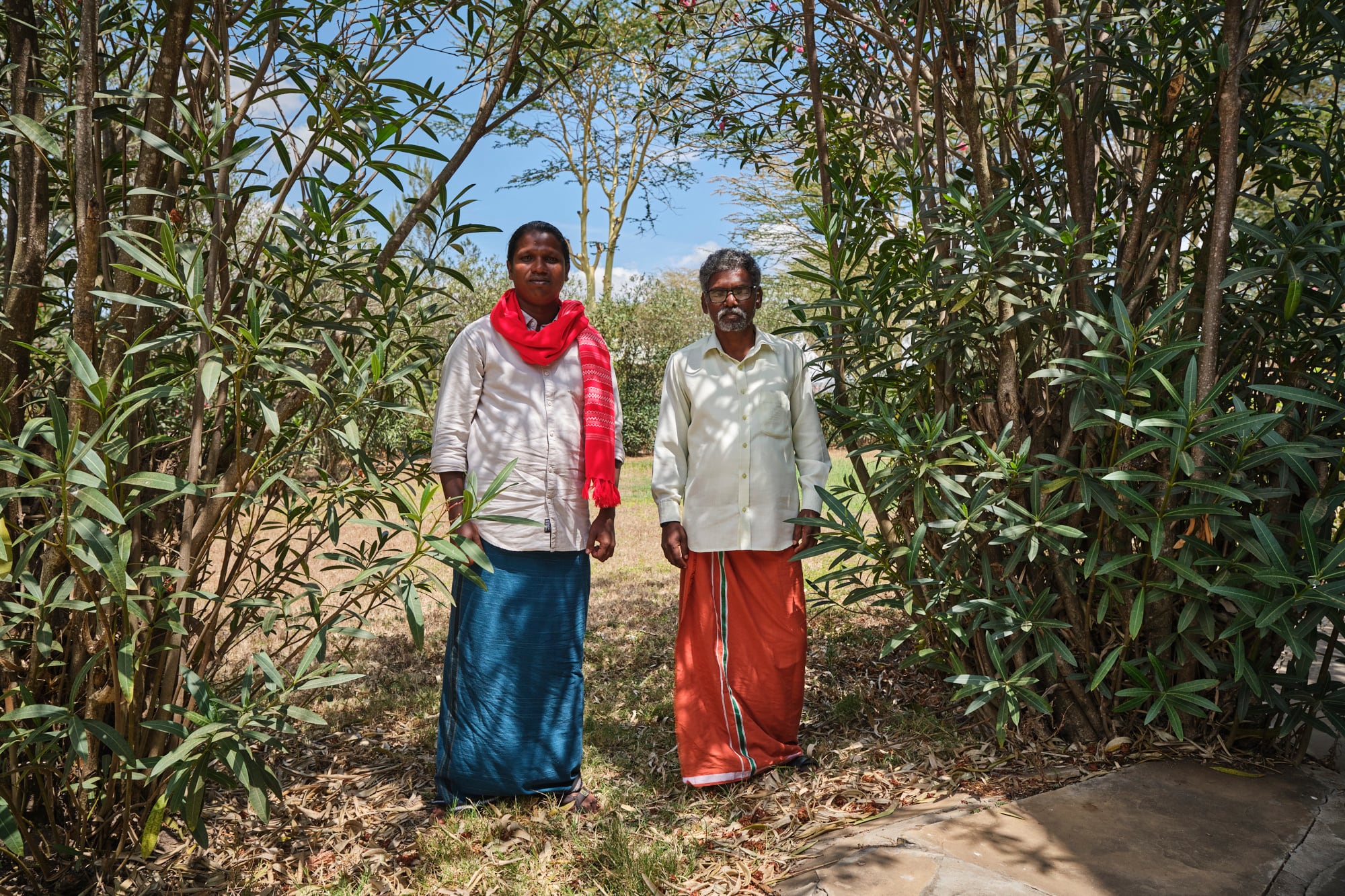
Mirihai Ngilepoi knows what it means that his cattle can’t graze in his Tanzanian village. A carbon-trading and emissions-reduction program restricts the use of his land. Across the Indian Ocean, JA Shivu has witnessed the expulsion of thousands of families. In India, to make room for a tiger reserve, they’ve been kicked off their ancestral lands.
Ngilepoi and Shivu come from two different continents. They belong to Indigenous peoples with distinct histories and cultures. But, when it comes to conservation, their concerns converge: they face the loss of their territory, restrictions on its use and decisions made from outside their communities. They share a staunch opposition to what they call “fortress conservation.” This model, they argue, transforms inhabited territories into protected areas, and ultimately imposes limits on those who have lived there for generations.
At 31, JA Shivu is one of the young leaders of the Jenu Kuruba, an Indigenous tribal group in southern India. Before she was born, her family was expelled from the forests that now form part of Nagarahole National Park, established in 1983. Between the 1970s and 1980s, during the creation of the park, more than 3,000 families were evicted from the forest. Shivu’s family ended up working on a nearby coffee plantation, where she was born and raised. “The working conditions were terrible. My people began to live in a system of slavery that was passed down from generation to generation,” Shivu recounts.
The creation of the park didn’t bring an end to the conflict. In 1999, Nagarahole was also declared a tiger reserve. According to Shivu, since the creation of the protected area, some 20,000 Jenu Kuruba tribespeople have been expelled from their lands and prevented from returning. For the Indigenous leader, the situation presents a contradiction: the park opens its doors to tourists, while closing them to the communities that historically inhabited the forest.
“They welcome tourists and turn us away. This can only mean two things: that they see the forest and the animals as sources of income, and that none of this can be categorized as conservation,” she affirms.
After decades of conflict, and faced with the harsh living conditions on the coffee plantations, in May 2025 more than 50 families decided to return. Led by Shivu, they went back to their former village – Karadikallu Attur Kolli – located within the tiger reserve. There, they built shelters and resettled on the lands from which they had been expelled four decades earlier. They did so under the protection of the Forest Rights Act of 2006. This Indian law recognizes certain rights of forest-dependent communities regarding the use and management of (and access to) forest resources.
The local forest department considers those who have returned to be “invaders,” according to Shivu. “Us, invaders? We were illegally expelled [from our land]. We have the law on our side. And [they still] call us invaders. No one should be calling this ‘conservation,’” she affirms.
Along with dozens of other Indigenous leaders, Shivu recently participated in a meeting organized by Survival International in Kenya. The event brought together representatives from Africa, Asia, North America and Latin America. “We are against the commodification of our relationships with land, air, water and every living thing, against carbon trading and offsets, REDD+ (Reducing Emissions from Deforestation and Forest Degradation), biodiversity credits and offsets, and geoengineering. We are against colonial and fortress conservation. We are against extraction dressed up as protection,” reads the joint statement from the Our Land, Our Nature meeting, held in late-September, in Nairobi.
Carbon credits
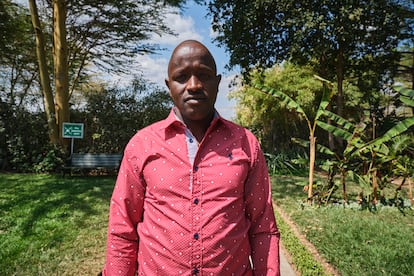
One day back in 2024, thousands of miles away from the Indian tiger reserve, SUVs belonging to Soils For The Future Tanzania rolled into the village of Eluai. Representatives of the private company, which is associated with CarbonSolve LLC and Volkswagen, met with Maasai chiefs and presented them with a proposal: the Longido and Monduli Rangeland Carbon Project (LMRCP). The project involved the transfer of 970,000 hectares of Maasai grazing land for a period of 40 years, and the imposition of a rigid 14-day rotational grazing schedule. “They came to teach us how to graze our cattle,” Mirihai Ngilepoi recounts, during one of the conference breaks.
According to the Tanzanian Indigenous leader, his predecessor signed that contract without the Free, Prior and Informed Consent (FPIC) of the community. Ngilepoi tells EL PAÍS that the company offered the village 51 million Tanzanian shillings (equivalent to $19,000, or less than the price of a Volkswagen Polo) as compensation for signing the contract. “The agreement involved selling carbon credits on community grazing land. The contract made it possible to use the land for a carbon project, which [imposed] severe restrictions: a ban on grazing, human presence and any other activity in the area,” Ngilepoi explains.
Volkswagen, on the other hand, claims to respect the “history, resilience and challenges of the Maasai people” and maintains that the project doesn’t involve the acquisition or transfer of land, but rather upholds the communities’ rights to their territories and traditional grazing practices. In a statement published in March of 2025, Volkswagen ClimatePartner and its associates, Soils For The Future Tanzania and CarbonSolve LLC, defended the project’s long-term duration as necessary for grassland restoration. They highlighted the process of Free, Prior and Informed Consent (FPIC) with respect to the communities, while claiming that the project seeks to generate economic and environmental benefits through sustainable land management and benefit-sharing mechanisms.
In July of 2025, the Maasai International Solidarity Alliance (MISA) responded to Volkswagen, calling its statement savior-like and insensitive: “To be clear, we are not arguing that Volkswagen is buying Maasai land. Village lands where Maasai grazing areas are located will remain under the ownership of the local communities. What we are concerned about is that we will effectively lose autonomy and control over decision-making on how to use the land.”
This is yet another form of environmental conservation. In the village of Eluai, the territory didn’t disappear behind a reserve fence, nor did its inhabitants have to abandon their homes. Instead, something more subtle occurred: ostensibly, the land remained theirs, but there were suddenly more conditions determining what they could actually do with it.
Despite the decision by the new village government, led by Ngilepoi, to withdraw from the agreement, the Tanzanian government continued to block their attempts to terminate it, sowing doubt about the Maasai’s actual decision-making power. However, in April of 2026, the efforts made by Ngilepoi and his community led Soils for the Future to formally accept the termination of the contract in Eluai. However, the Longido and Monduli Rangeland Carbon Project as a whole continues to operate in other villages.
The carbon market, which reached a value of almost $800 billion in 2025, has transformed something that previously had no direct price (carbon stored in ecosystems) into a new economic resource. For proponents of this, carbon offset projects can help finance conservation, improve rangeland management and provide income for communities. For its critics, problems arise when putting a price on carbon means determining – for decades – which uses are compatible with a project and which are not.
During the press conference held by Survival International in Nairobi this past September, when carbon credits were mentioned, Tanzanian lawyer and human rights activist Joseph Oleshangay received a standing ovation after raising his voice. He said: “You want an alternative that works? I’ll give it to you: go away, disappear, leave us alone.”
Translated by Avik Jain Chatlani.
Sign up for our weekly newsletter to get more English-language news coverage from EL PAÍS USA Edition
.
Another rail scare in Spain as three runaway wagons crash into Renfe train
Local women invited to join friendly Sunday netball sessions in Alhaurin el Grande
Village pride: Six Axarquia pueblos compete for 2027 title of best village


-
DGT2 weeks ago
Viral video in Spain sparks fury over drivers who ‘have no idea how to drive’
-

 Arabia Saudí3 weeks ago
Un Ataque De Los Hutíes Contra El Aeropuerto De Riad Causa Al Menos 12 Muertos Y Más De 300 Heridos
-

 %4 weeks ago
Spain Payslip Change Coming In January 2027
-

 America3 weeks ago
Un Tirador Mata A Ocho Personas En Una Vivienda En Pensilvania
-
 House prices4 weeks ago
Spanish House Prices Rise 9pc But Market Growth Stalls In H1 2026
-
Costa Blanca North4 weeks ago
Jávea opens historic lighthouse to the public with a new whale-watching viewpoint
-

 Uncategorized3 weeks ago
Williams F1 driver caught up in four-car pit lane pileup
-

 America4 weeks ago
Trump Llega A Un Acuerdo Con Putin Para Que Rusia Libere Miles De Barriles De Diésel En Los Mercados Mundiales