
ElPais
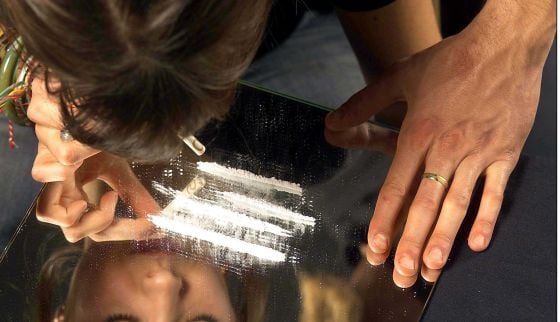
When Cocaine Destroys More Than The Nasal Septum: From The Palate To The Skull Base


ElPais
Michel Houellebecq, Novelist: ‘It’s Exhausting Being Called A Fascist Writer, But You Eventually Resign Yourself To It’

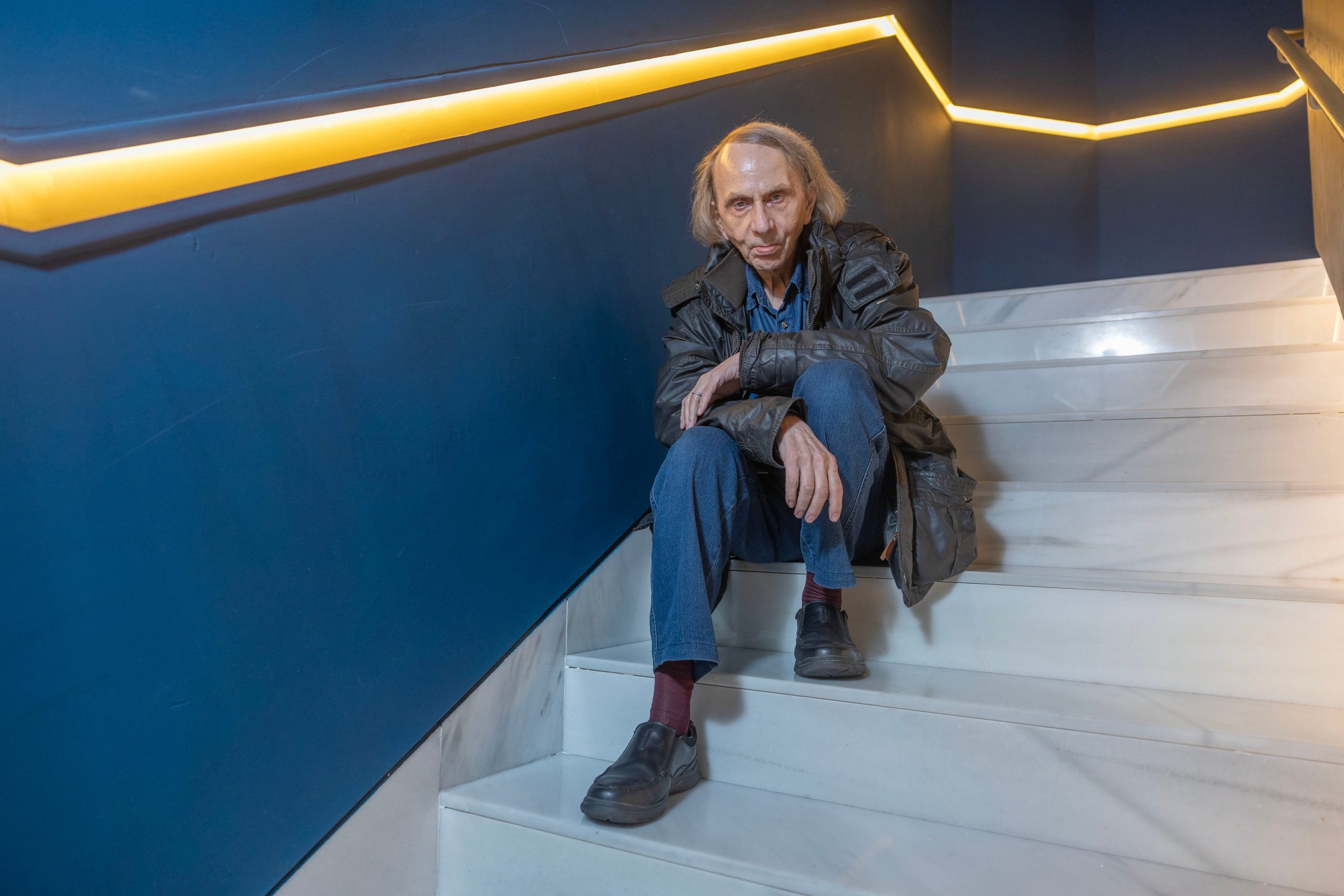
Reading Michel Houellebecq is no easy feat. And interviewing him is even harder.
The 70-year-old’s soft, cavernous voice and serious, downcast demeanor are accompanied by a barrage of barbs aimed at almost everything that moves — his trademark. His conceptual darkness is distilled — with masterful literary skill — into pages brimming with loneliness, bitterness, bland sex, raw antifeminism and anti-Muslim sentiment.
Born on the French island of Réunion, Houellebecq’s anarchic bent — as seen in novels like Submission (2015), Platform (2002), The Elementary Particles (2000) and Annihilation (2024) — is encapsulated in the verses of Combat toujours perdant (“Fighting a Losing Battle”), his latest poetry collection. Published this past March, it is not available in English.
In this conversation with EL PAÍS, which took place on the occasion of the Ja! International Festival of Literature and Humor, in Bilbao, Spain, he shares some of his controversial professions of faith.
Question. Since we’re at a “festival of literature and humor,” I wanted to ask you about that — about humor. To what extent do you consider it useful as a literary tool? It’s present in your books, even if it’s often cruel.
Answer. Yes, humor can be cruel. It can be very cruel. But the truth is, I’m still wondering what humor is. I’m not really sure. And I’m also not so convinced that there’s a lot of it in my books.
Q. There are bursts of it, even if it’s pure sarcasm…
A. There’s irony. And I don’t think that’s the same thing. I think humor is irony directed against yourself: self-criticism, self-parody, mockery… What I do, on a literary level, is something else, something more aggressive. It’s always directed against something, against someone. Not necessarily against specific people, but against ways of acting, speaking, being, against ridiculous things. And I don’t know if that’s exactly humor.
Q. Are you present in your books? Or, conversely, do you use characters as a shield so that you can hide behind them?
A. Being present in the work is what you must strive for in literature… but not all writers achieve it. Being present means expressing yourself without a filter, without playing a role, without pretending.
Q. How do you keep telling new stories? Hasn’t everything already been narrated, written, painted, composed?
A. No. There are new phenomena that justify continuing to write, continuing to tell stories. [There are] things that didn’t exist before, but they do today.
Q. What are some of those new things that interest you as literary material?
A. It’s not a matter of interest or disinterest: they’re just there. They come to you. I don’t know; computers didn’t exist before, and they’ve been a new reality for a long time. In Balzac’s time, there were no telephones.
Q. In your books, you’ve often reflected on the frenetic — and sometimes disturbing — pace of technological evolution. Nowadays, we hardly talk about anything other than artificial intelligence. Does it interest you as a literary theme?
A. My problem with AI is that I don’t understand it. I know nothing about it, how it works or how it’s made, so I find it difficult to talk about my relationship with it. I don’t even know what it is. And that bugs me.
Q. Is it possible that, behind your seemingly dark, chaotic and disorderly literature, there’s an orderly, methodical and precise way of thinking and writing?
A. You surprise me with this “chaotic” comment.
Q. Why?
A. I don’t know exactly what you see as chaotic in my stories.
Q. The anguish, the instability and the loneliness of certain characters, the madness of certain situations…
A. Hmm…
Q. Excuse me for saying so, but sometimes your reader — even if they’re captivated by the story — feels the need for it to end. And that’s meant as a compliment…
A. Hmm… that’s interesting, I’ve never thought of it that way. Hmm…
Q. Do you think the best literary style is the one that doesn’t yet exist? Or, at least, the one that isn’t obvious?
A. Sure, you can set that as a goal: to write in such a way that the style isn’t apparent. Yes, that’s happened to me as a writer; I’ve almost always set that as my objective. But it’s not systematic and definitely not obsessive. For example, sometimes, when I’m proofreading a book, I see a repetition and decide to leave it as is, instead of removing it. A repetition is something that’s visible. If you aim to be a transparent writer, then it’s better to remove the repetition. I usually leave them in, intentionally. It’s a stylistic choice.
Q. Let’s change the subject. Two years ago, a report in this newspaper included you on a list of “far-right French writers.” Are you tired of being called a fascist? Or are you actually a fascist?
A. It’s quite exhausting being called a fascist writer, but eventually you resign yourself to it (laughs).
Q. You’ve written and spoken about the loss of certain values that you associate with Western culture. And you’ve systematically attacked political correctness. You’ve also criticized extreme feminist positions and spoken out against radical Islam. Does that make someone a fascist? Are you a fascist?
A. Well, I don’t think so. But when I was young, they called anyone a fascist. Look, fascism has existed [for a long time]. And it’s had very specific and recognizable ingredients and characteristics: the cult of personality, a taste for war, intolerance toward the political enemy… and now, it’s used for pretty much everything, to insult anyone. And the same thing has happened with the concept of the “far right.” It’s inevitable.
I think that, in France, it is deeply linked to the rise of the National Rally [Marine Le Pen’s party, which is the favorite in the polls for the upcoming presidential elections]. But I don’t think Marine Le Pen inherited her father’s obsessions.
Q. You wouldn’t describe Marine Le Pen as far right?
A. I think they’re nationalists, conservatives, maybe very conservative. But they’re not fascists or far right.
Q. How do you envision a French Republic presided over by Marine Le Pen, if she wins the elections next year?
A. I don’t think it would be very different from what Giorgia Meloni is doing in Italy. But at the European level, we’re facing a pretty widespread movement: that of ultraconservative nationalists. As a knock-on effect, the left is becoming more aggressive by the day, and out of fear, it ends up branding almost everyone as “far right.”
Q. Well, you’ve also spoken about “leftist scum.” That doesn’t seem like a very fair label and certainly not a moderate one.
A. It seems to me that the level of leftism has dropped considerably compared to the past. When I was young, everyone on the left had read or was reading Marx. I don’t think they do today. And I’m not sure they would be capable of it. Marx is complex.
Q. The street riots that were traditional in France — the yellow vest protests, the student movement, and so on — have now reached Spanish cities like Bilbao and Barcelona, with hundreds of hooded minors looting shops and assaulting people. What do you think is happening?
A. The truth is, regarding Spain, I don’t know. I have no information… but I read an interview with Elon Musk where he said that there’s a danger of civil war… in England! Who knows why in England! And, I suspect, this guy must be well-informed…
Sign up for our weekly newsletter to get more English-language news coverage from EL PAÍS USA Edition
castilla y leon
A Small Town In Spain Battles Again Construction Of A Macro Data Center: ‘It’s A Way Of Kicking Us Out’

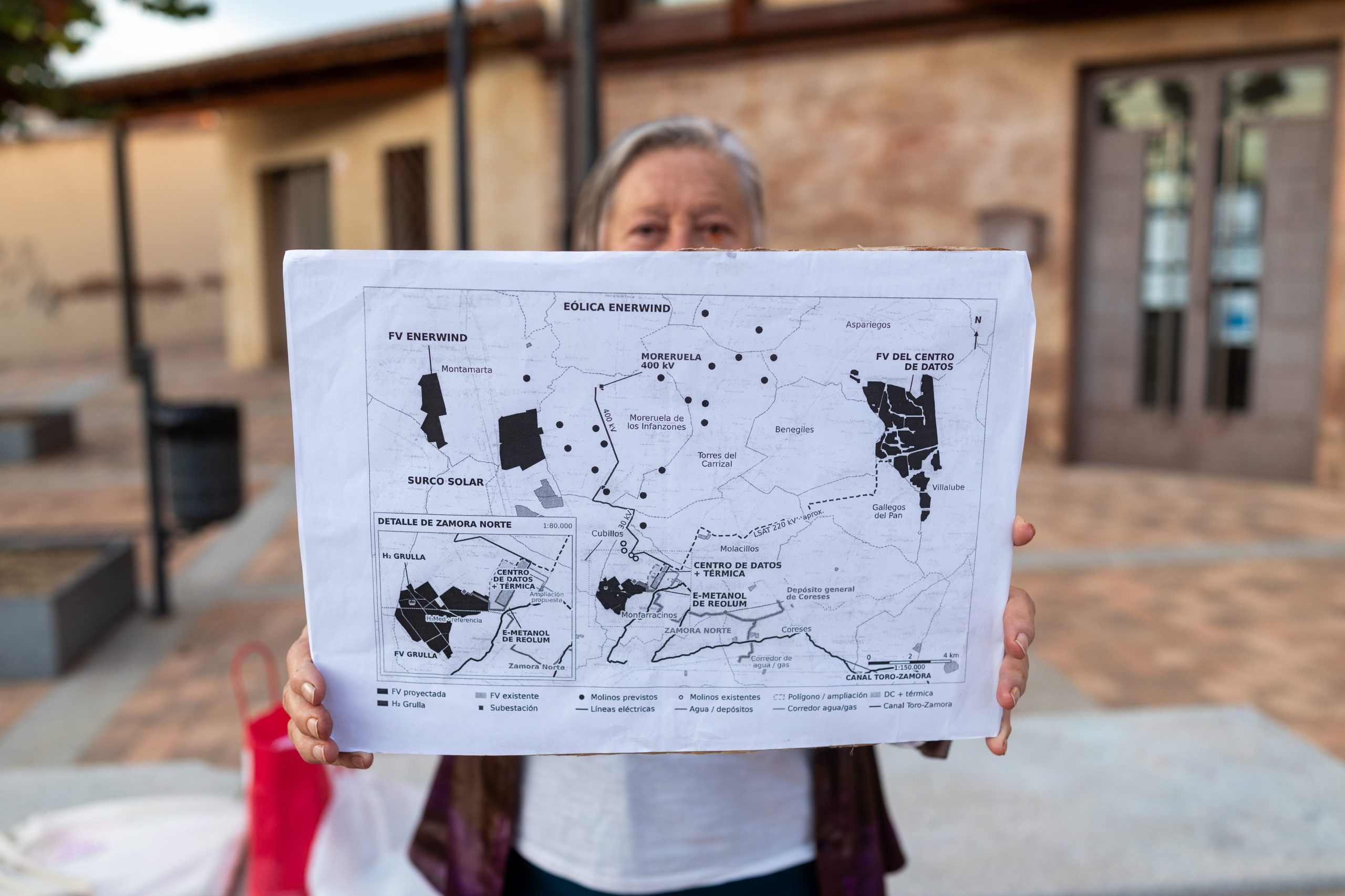
A huge expanse of countryside in Spain is about to be covered with a macro-data center for AI purposes. The center is being constructed close to the small town of Monfarracinos, just over 10 kilometers (six miles) from the provincial capital, Zamora. It is a place of socio-economic and demographic decline. The land has traditionally been used for arable and livestock farming. The main crop is wheat while herds of cattle graze by the Valderaduey River, near the River Duero.
But now the area has been earmarked for a data center that will produce high levels of noise and heat. Although it will also create local jobs, critics say that the benefits of the project, rubber-stamped by the regional government of Castile and León, do not offset the drawbacks. A neighborhood group is accusing the conservative mayor of Monfarracinos of a lack of transparency with farmers “scared” of losing land and the pollution of the environment.
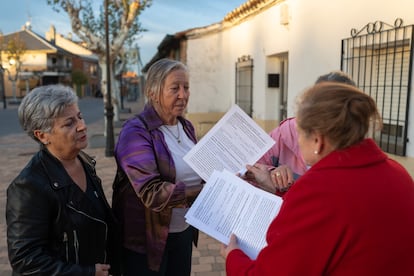
The organization’s members distribute pamphlets with information on the project to passers-by, some of whom have moved into the new residential projects swelling the population of Monfarracinos, turning it into a commuter zone for the city of Zamora. Group spokesperson Pilar Sánchez says that “the town council has negotiated behind everyone’s back. When the project was announced in August and we asked for information, there was no response; the mayor has pulled the wool over our eyes.”
Sánchez condemns the lack of transparency, arguing that if it were such a positive initiative, there would be no need to sneak about. The farmers, she says, “are scared” by the lack of clarity and the potential harm to their livelihoods in terms of pollution, lack of water or loss of pasture. The platform replicates others that have emerged in the United States protesting against the installation of noisy and polluting data centers in rural areas.
The companies involved in putting up the center are subsidiaries of the energy companies Edison/EDF and FRV, and the project estimates 426 jobs will be created, without specifying the areas or characteristics of employment. Instead, it claims the center will benefit the region’s economy as “it boosts sectors such as construction, telecommunications and renewable energies.” A document detailing the center’s construction cites a tax contribution, without specifying what that would amount to.
Manuel García, a researcher at the Spanish National Research Council (CSIC), breaks down the impact in terms of probable increases in temperature, noise and energy consumption: 2,255 gigawatts per hour all year, amounting to 330% of the current electricity consumption of the province of Zamora and up to 18% of the whole of the Castile and León region.
The center will cover 33 hectares of land, with five buildings fueled by 978 hectares of solar panels in a solar park 14 kilometers (nine miles) away, which will cover 18% of the municipality of Aspariegos and 19% of Villalube. Natural gas will also be involved while a green hydrogen plant is planned. The project also requires a thermal power plant powered by natural gas, a consumption equivalent to that of 300,000 homes over the course of a year in a province with 165,000 inhabitants. With an expected life span of 25 years, the center will emit as much carbon dioxide annually as 2% of Spain’s total and 10% emitted by the region of Castile and León alone. “This is, without a doubt, the most serious damage associated with this data center,” observes García.
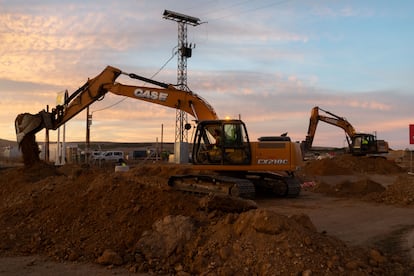
García also talks about the noise: “It would mean an increase of 280% in the vicinity during the day and 900% at night, equivalent to an old refrigerator or a large fan,” he says. The nearest Monfarracinos homes would suffer “an increase of 12% during the day and 48% at night, adding little noise over what may already exist” although anything built closer to the macro-center would receive higher levels. The greatest impact would be to “ecosystems and nearby work and residential spaces.”
García flags up the impact of heat due to the energy consumed, although the environmental report does not include thermal studies, which is “incomprehensible” to him. García cites the University of Cambridge’s reports of increases of between 2ºC and 9ºC (35.6ºF and 48.2ºF); the University of Arizona calculates between 0.9ºC and 2.2ºC (33.6ºF and 36ºF). García believes the increases would be greater in Monfarracinos because these analyses are based on smaller centers without thermal power plants.
Regarding the demand for water, García considers that it would be “relatively low in relation to other industrial consumption,” although Monfarracinos already suffers from frequent bouts of drought. García cites the dean of the Official College of Industrial Engineers of Zamora, José Luis Hernández, who says: “We cannot oppose everything.” García points out the need for industries, especially in unpopulated areas, but suggests thinking “collectively about what type of development is desirable and if a project of this type is compatible.”
The mayor of Monfarracinos, Manuel Martín who belongs to Spain’s conservative People’s Party (PP), has not responded to EL PAÍS for comment. In previous statements, he slammed criticism of the center for “going against progress” but stressed that he was flexible: his town, he said, “will not support any project that goes against the well-being and health of locals.” The regional government, comprised of a coalition of the PP and the far-right Vox party, has declared it a regional project while the socialist authorities of the city of Zamora have asked for that label to be removed.
The reason given by the mayor of Zamora, Francisco Guarido from the United Left, is that the center is “an oversized model that could have been proposed on a much smaller scale.” He rejects the project and accuses the regional government of “confusing the commercial interest of a private developer with the general interest of citizens.” The socialist party in the region has urged authorities to guarantee “transparency, public participation and compliance with the regulations.” Regional government spokespersons have declined to comment until the so-called period of allegations is closed.
But the locals are up in arms. “It is not going to favor the area, it is very destructive,” says Sánchez, who questions any potential positive impact on employment because these centers “only hire people during construction, the companies bring their own teams, and then the centers are maintained from afar.” The neighborhood association has organized informative meetings: on November 5 they will meet in Torres del Carrizal. “It’s a way of kicking us out,” Sánchez says. “Some people have been paid for land far more than it is worth and they will use the money to buy two apartments and rent them out.” Meanwhile, “working farmers are not on board.”
Sign up for our weekly newsletter to get more English-language news coverage from EL PAÍS USA Edition
Álvaro Uribe Mateos
Juan Manuel Santos, Former President Of Colombia: A Man Of Peace In Times Of War

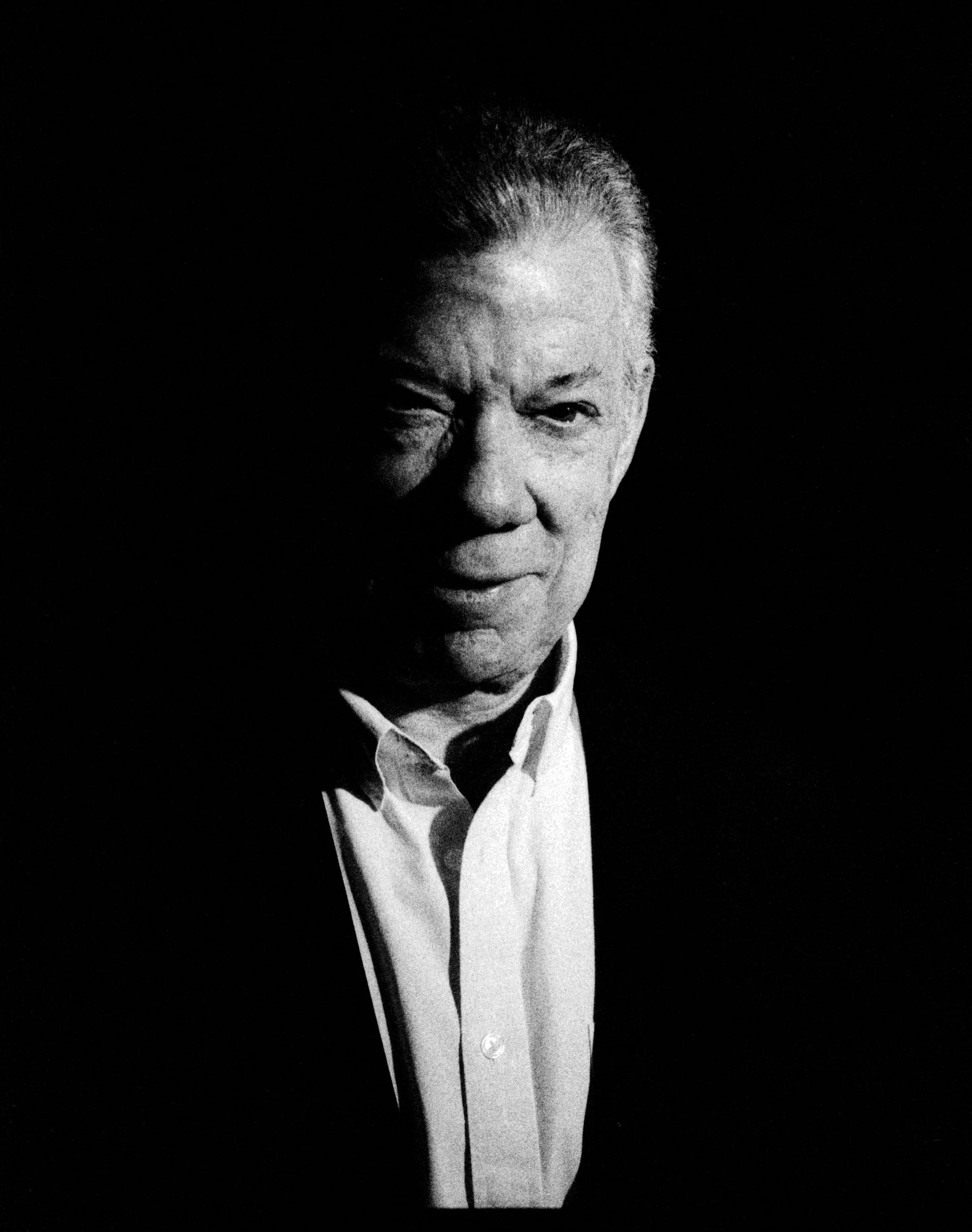
Never before had humanity been so close to its destruction. It was January 2025: the hands of the clock stood at 89 seconds to midnight.
Juan Manuel Santos was looking at the Doomsday Clock in Washington, D.C. The former Colombian president — who governed between 2010 and 2018 – had been invited by the Bulletin of the Atomic Scientists to participate in the annual session of this unsettling assessment of the dangers threatening the planet.
For almost 80 years, the clock has offered a symbolic calculation, warning us how close we are to total annihilation. The closer the hands get to midnight, the less time remains until the end of the world.
The Doomsday Clock, created in 1947, has been adjusted in response to wars, tensions between world powers, the proliferation of nuclear weapons and, more recently, climate change and new technologies. Not without criticism for spreading alarmism, the clock is a metaphor for fear, but also for humanity’s capacity to avert its own destruction.
In January 2026, a year after Santos’ visit, the clock moved four seconds closer to midnight: it’s now 85 seconds away.
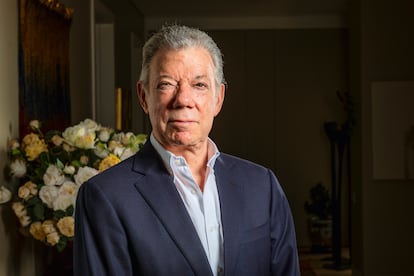
Juan Manuel Santos is 75 years old. And he has a strong belief that seems to have survived the disappointments of the last decade: all conflicts have a solution.
This isn’t a naive statement, given that it comes from someone who spent a good part of his life involved in war. As minister of defense for three years (2006-2009) during the administration of president Álvaro Uribe (2002-2010) — his current nemesis — Santos led some of the most decisive operations against the Revolutionary Armed Forces of Colombia (FARC). As president of Colombia, he negotiated with the men he had fought against: those he had once wanted to kill and who had wanted to kill him, too.
After leaving office, he has dedicated much of his time to defending that peace agreement with FARC, which has been questioned since its signing in 2016. It’s still awaiting full implementation, after neither the administrations of Iván Duque (2018-2022) nor Gustavo Petro (2022-2026) showed any real interest in doing so.
Today, the kind of politics that has been consolidated — one that uses brute force as the primary instrument of power — has changed the landscape that once made the Colombian peace agreement possible. Santos notes how, during the Cold War, Ronald Reagan and Mikhail Gorbachev were able to sit down and negotiate agreements to reduce the nuclear threat. Today, however, to expect such a willingness seems entirely unrealistic.
Santos believes that the problem isn’t a lack of solutions, but rather the absence of leaders willing to find them: “A true leader is someone who thinks long-term, someone who makes decisions — even if they’re unpopular — knowing that they’re the right decisions for the long run. It takes perseverance, as well as a certain amount of courage, to go against the grain. I went to war so that I could make peace.”
·
On November 24, it will be 10 years since Santos and Rodrigo Londoño — alias Timochenko, the top leader of the insurgency — signed the peace agreement for the second time. The first agreement (signed on September 26) was shattered at the polls just days later, after citizens rejected it in a referendum. Santos has always considered that holding the referendum was a mistake.
In December 2016, the Colombian president received the Nobel Peace Prize in Oslo for getting the FARC — Latin America’s oldest guerrilla group — to lay down their arms and sign a peace treaty, which ended the FARC’s conflict with the state after more than 50 years of war.
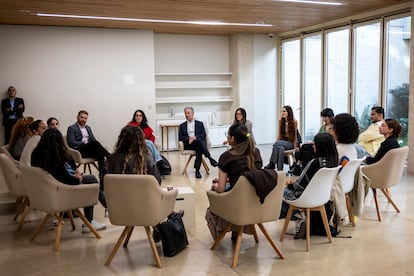
To mark that 10th anniversary, Santos received EL PAÍS four times between April and September of this year. The conversations — each lasting about an hour and a half — took place in his office at the Compaz Foundation, which he created after leaving the presidency. Today, he also chairs The Elders, the organization founded by Nelson Mandela that brings together former international leaders.
Politicians and other figures from Colombian public life come and go from his office before and after the interviews. Santos retains his eagerness to talk and sets few limits on the topics of conversation. He only becomes more reserved when the conversation delves too deeply into the day-to-day politics of his country.
His manner of speaking hasn’t changed much since his presidency, nor has his inclination to explain each of his decisions in detail. What has changed is the world he speaks about. Ten years ago, Colombia occupied a central place on the international agenda; it was a beacon of hope, and Santos was on the verge of becoming one of the central figures in its history. However, today — with his legacy inextricably linked to that agreement — he reflects on a decade in which the conditions that made peace possible seem increasingly difficult to replicate. The man who brought an end to one of the longest wars in the Americas now speaks of a world that seems to have regained its taste for conflict.
— Do you think the Colombian peace agreement would be possible in today’s world?
— In the last 15 years, the only peace negotiation that the U.N. has been involved in is the Colombian agreement. This is the issue on which the UN Security Council has unanimously adopted the most positive resolutions. Today, that would be impossible.
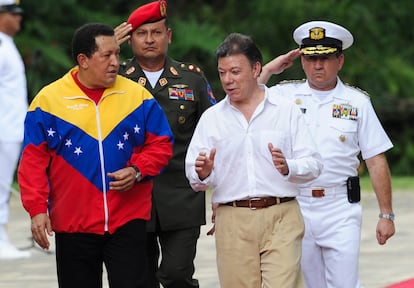
The negotiations required major international support. The United States, Cuba, Venezuela and other powers — each with very different interests — ended up backing the same objective. One of the most delicate moves was securing Hugo Chávez’s cooperation. As defense minister, Santos had been locked in a bitter feud with the then Venezuelan president, who maintained close ties to the FARC and provided safe haven to its leaders on Venezuelan soil. It was precisely for that reason that Santos concluded Chávez was indispensable to achieving peace. The challenge was to turn someone who had been part of the problem into part of the solution.
“Chávez and I needed each other. He was absolutely fundamental and he was also someone I had really fought with. So, I had to build a bridge,” he recalls.
The reconciliation began in 2010, at Quinta de San Pedro Alejandrino, a hacienda in the Colombian port city of Santa Marta. That’s where the two presidents mended their strained relations. Juan Manuel Santos then began asking Chávez to use his close ties with the guerrillas to facilitate dialogue.
“He didn’t contradict me. In fact, he used [his connections]. Almost implicitly, he was telling me: ‘Yes, I have very good contacts with them, I can help.’ And he did help.” Thus, Venezuelan cooperation became an important element of the secret talks that preceded the negotiations in Havana, Cuba. The former enemy had ended up becoming an ally in achieving the most important objective of the Santos presidency.
·
Santos wasn’t always a man of peace. Or, rather, for a long time, he didn’t understand that peace required renouncing the use of force. As minister of defense, he transformed Colombia’s intelligence services, modified his country’s military strategy, and strengthened cooperation with the United States and the United Kingdom. His objective went beyond weakening the guerrillas: he was convinced that the use of force would lead the FARC commanders to realize that their survival and future depended more on an agreement, rather than on continuing the war. “We had to get through to them, and we began to do so.”
Today, he recalls that the first commander to fall after that change in strategy was Tomás Medina Caracas (alias Negro Acacio), who controlled drug and arms trafficking in eastern Colombia. Many others followed, like Raúl Reyes, who was killed during a Colombian military operation on Ecuadorian territory.
When Santos was president — “I was elected because I had been the minister of defense,” he acknowledges — Jorge Briceño Suárez (alias Mono Joyjoy) and Alfonso Cano (the top guerrilla leader at the time) were killed just as the peace process was beginning. That was one of the most decisive actions taken by Santos. According to his interpretation of events, the war allowed for a shift in the balance of power, making negotiation an attractive option for the state’s enemies: “The person who hit the FARC the hardest in its entire history — and the commanders themselves say so — was me, both as minister of defense and as president.”
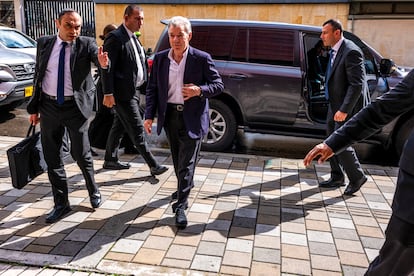
In reality, however, the story is more unsettling than a string of military successes. Colombia’s security policy has long been riddled with serious human rights violations, especially during Uribe’s presidency. For instance, there was the so-called “false positives” scandal — the murders of civilians, who were presented as guerrillas killed in combat.
Santos, who was serving as minister of defense when the scandal broke, apologized. And he has always distanced himself from those events, which still haunt Uribe. He insists that he spearheaded a doctrinal shift to strengthen respect for human rights and rebuild trust with communities. And he maintains that he learned something that ultimately proved to be essential: legitimacy can be just as important as military superiority.
The first two interviews with EL PAÍS for this report took place before Abelardo de la Espriella won the presidential elections back in June. The third took place the day after his electoral victory. And, finally, the last was conducted after De la Espriella had been sworn in as the new president of Colombia.
A few days before that fourth conversation, De la Espriella celebrated a military operation. It concluded with him posing alongside the bodies of the criminals, which were wrapped in sheets on the ground.
— What did you think when you saw the sitting president walking around and displaying corpses?
— It saddened me greatly because the way we won the war — in the sense of bringing the FARC to the negotiating table — was precisely by doing the opposite: respecting the dignity of the guerrillas. The legitimacy of a state and its military forces is their greatest asset. If you lose that legitimacy, you lose respect. You can’t do what your enemies do. The state must be above that. I think that it’s very sad and counterproductive.”
Santos then recalls the operation launched against Alfonso Cano, which took place shortly after the peace process began: “I gave instructions to the brigade commander in charge of the operation: ‘Try to capture him, not kill him.’ I even thought that the impact of Cano’s capture — like that of Abimael Guzmán [the Shining Path leader, now deceased, who was arrested and imprisoned in Peru back in 1992] — could be very positive for peace. I knew it would be very difficult to capture him and that he wouldn’t give up. And what happened, happened. But it’s not true what they say, that he was murdered in cold blood. He was hiding; it was nighttime. He ran out and a soldier shouted [at him to identify himself], but he didn’t respond, so he was killed.”
·
Santos has never hidden the fact that his approach to politics is highly calculated. “I love poker,” he admits with a smile, referring to one of the most frequent criticisms leveled against him: his willingness to take political gambles. “I like to take risks, but risks to win, not risks to lose,” he clarifies, when he recalls why he made the decision that ultimately defined not only his presidency, but also his entire career.
Peace was the riskiest gamble of his time in politics. And it wasn’t an improvisation or a sudden conversion. “I had this idea of peace in my head,” he says, with a gesture suggesting it had been a long time coming. For decades, he had built up experiences that led him to believe that Colombia could never reach its full potential while trapped in a war.
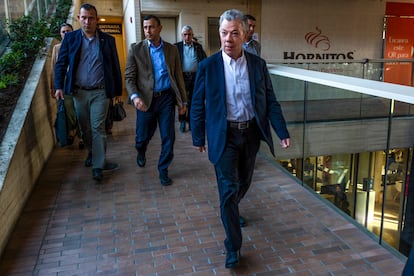
Long before becoming president, Santos had understood that goodwill alone wasn’t enough to achieve peace. It was necessary to learn how to negotiate. His approach to the country’s internal conflict was driven by both intellectual curiosity and an obsession with methodology. Years earlier, he had been a student of Roger Fisher, a Harvard professor and one of the world’s leading experts in conflict resolution. Santos consulted Fisher when he became interested in the reconciliation experiences of other countries. And it was his former professor who put him in touch with Adam Kahane, a Canadian expert who had participated in dialogue initiatives during the South African transition from apartheid to democracy in the early 1990s.
Santos invited him to Colombia in 1996. Kahane — who was also working on other international conflicts at the time — accepted, but on one condition: that Santos bring together people from truly opposing sides. The former president began calling guerrilla leaders, representatives of paramilitary groups, members of the government, opposition figures, business leaders and rural organizations. A dialogue, as well as scenario planning, emerged from that effort. The initiative — known as Destino Colombia (“Destination Colombia”) — sought something that seemed impossible in a country riddled with violence: that, together, the protagonists of the conflict could imagine a different future. The negotiation of an agreement still wasn’t in the works, but the parties were at least learning to listen to one another. They recognized that there could be another destiny besides war.
Santos has also learned from other peace and reconciliation processes. He especially remembers a conversation with Nelson Mandela in South Africa. He was impressed to see how victims and perpetrators met in public forums to discuss the crimes of apartheid. Mandela explained the meaning of that exercise and warned Santos that Colombia could never truly take off until it resolved its armed conflict.
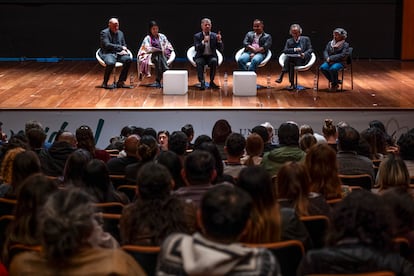
That conversation marked him deeply. Decades later, Santos still invokes Mandela to defend a seemingly simple idea: negotiation requires recognizing the adversary, listening to their concerns and accepting that no one has a monopoly on the truth. But his interest didn’t stop at the moral teachings of great leaders. When the time came to negotiate with the FARC, he also turned to William Ury, a disciple of Fisher and another of Harvard’s leading figures in negotiation theory. And he surrounded himself with specialists who had participated in the peace processes in Northern Ireland (Jonathan Powell), the Middle East (Shlomo Ben Ami) and Central America (Joaquín Villalobos), among others.
The Colombian peace process had something of a laboratory feel to it: a combination of military experience, political intuition and negotiation techniques, honed over decades. “They were my advisers — not the team’s advisers. They were immensely helpful in difficult times. Everything they told me made sense and was very useful,” Santos recalls. He frequently met with them to discuss how the talks were going: “They were a dream team.”
At one point, when he was still hesitant about the risks he was willing to take, former Israeli minister Shlomo Ben-Ami posed the following question to him: “I know you’re facing this dilemma, but consider this: Stand in front of your grave, look back, and ask yourself this question: ‘If I take the risk of making peace and succeed… how many lives will I have saved?’ If you do not [take the risk], will you go to your grave with a clear conscience?”
Santos concludes: “That argument was very powerful in finally convincing me to do what I had to do.”
·
On September 24, 2015, Santos and Rodrigo Londoño met face to face for the first time. In public, Cuba’s Raúl Castro took each of their hands and clasped them together for a handshake. When they met, Santos admits, there was a special connection. He recounts that, during the meeting, he was calm: “I’m very level-headed. I wasn’t nervous, and I wanted to put him at ease.”
The FARC leader confessed that he was sick, that he had dengue fever. “That meeting impressed me a lot, because I saw that he was willing and sincere. We talked about the difficulties that he was going to have with his own people and I, with mine.” The then-president told him: “Listen, you and I have been trying to kill each other for 35 years. Now, let’s commit to getting in the same boat, rowing in the same direction and not stopping until we reach our destination.”
When asked if he thinks that this is what has happened, Santos replies: “Yes, I have to admit that he’s kept rowing. From back then — when I met him — all the way until now, he’s grown as a human being, I admire him even more.”
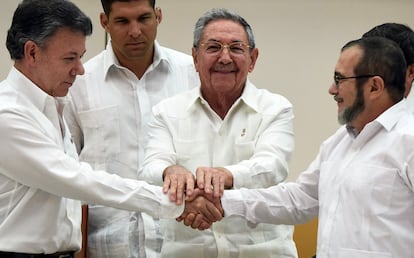
The Final Agreement, signed in 2016, ended the conflict with the FARC. Thousands of combatants laid down their weapons and began their reintegration into civilian life. However, the signing didn’t end all the violence in the country, nor did it resolve the problems that had fueled the conflict.
Santos distinguishes between the end of the war and the violence that still permeates many parts of Colombia today. For the former president, the current violence is caused by gangs vying for territory. The state has left gaps in security by failing to fulfill the security and rural development commitments outlined in the agreement.
— Was this the peace you envisioned?
— With the FARC, yes. As for the country, no. 2017 and 2018 were the most peaceful years we’ve experienced in 100 years, but that peace was reversed. That vacuum [left by the demobilized guerrillas] was left to chance. And criminal gangs began to fill it. The violence in Colombia today is similar to what the entire continent is experiencing. I never imagined this would happen, but it has occurred precisely because of the non-implementation of the agreement. There’s still time if we manage to gain control of the territory. The state must be present. Implementing the peace agreement is the best security policy for this government — not [Trump’s] Shield of the Americas.”
·
Santos speaks of moderation as if it’s a political cause that needs rescuing. “I’m not willing to fuel divisions or aggression under any circumstances; I believe that makes democracy unviable. I believe in finding the best of both the left and the right and putting it to work.”
— Being a moderate now is somewhat like being a rebel…
— The decline of democracies around the world is due to the loss of that moderation. If that’s being a rebel, then I’m a rebel.
This statement aptly expresses his diagnosis of an era in which, according to him, confrontation offers greater electoral benefits than negotiation. “The effect of social media in fueling aggressive language has solidified the notion that, politically, we’re more polarized than before. The more hateful the speech, the more traction it gets.”
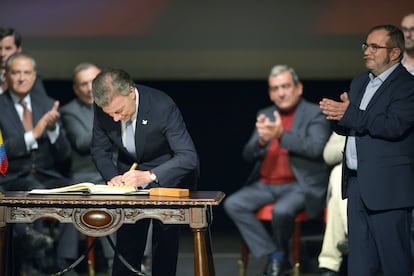
Throughout his life, Santos has been a tough, competitive politician, convinced of his decisions. He hasn’t always shied away from confrontation. And although he acknowledges his mistakes, he shows great reluctance to question his presidency.
— Did you ever think you were making a mistake?
— Many times. You never have the absolute truth. Constant doubt is necessary to fuel perseverance. It helps you stay on track.
·
Santos frequently recalls that, when he began exploring negotiations with the FARC, he encountered opposition even among close associates. Some warned him that it could destroy his career and hand his enemies a political victory.
The outcome wasn’t what some had imagined, either. The signing of the agreement didn’t produce immediate reconciliation, nor did it end the disputes or transform his adversaries into allies. The peace agreement, however, did alter Colombian political life. The former president believes that one of its less-appreciated effects was helping to remove the stigma that had been carried by segments of the left for decades, as they were frequently associated with the armed insurgency. “The stigma attached to the left was lifted, and it gradually established itself as a legitimate movement, back when it was said that leftist movements were the political arms of the FARC,” the former president notes.
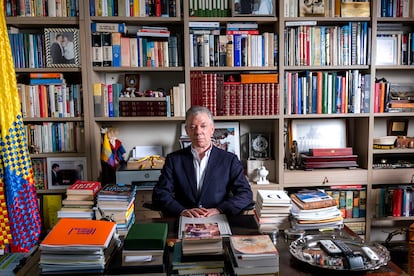
Santos now observes this process through a global lens. The cooperation between the United States, Cuba and Venezuela that helped forge the agreement seems difficult to replicate in a fragmented world. Multilateral institutions face new tensions. And, once again, the foreign policy of the major powers is marked by strategic competition.
The former president reflects on some of the current global conflicts. Regarding the possibility of the war between Russia and Ukraine coming to an end, he refers to the Colombian experience: “Every negotiated [end to a] conflict has to consider where the line is drawn between justice and peace. There can be no peace if Russia keeps everything it wants, nor if Ukraine refuses to compromise. There always has to be a sacrifice on both sides.”
For Santos, in a world where “force prevails over law” — specifically regarding the case of Venezuela and the transition after the January 3 operation that led to Nicolás Maduro’s arrest — he argues that “a true democracy cannot be imposed from the outside; otherwise, it won’t be a lasting democracy.”
For decades, the Colombian war seemed impossible to end. Many tried to negotiate and failed. Santos could also have failed. He lost the referendum, won the Nobel Peace Prize, signed the peace agreement and spent the following years defending it. His victory was incomplete and the consequences of the agreement are still being debated. But thousands of former combatants laid down their arms. A seemingly endless war came to an end. And, 10 years later, Santos is still rowing that imaginary boat with Timochenko. He knows the journey was much longer than expected, that some abandoned their commitment, and that others never wanted to get on board in the first place.
The Doomsday Clock keeps ticking. Juan Manuel Santos watches its hands with the concern of someone who knows the consequences of violence, and the conviction of someone who once succeeded in bringing it to an end. “I believe in the law of the pendulum; I believe people will realize that what’s happening, in the long run, could be fatal. It’s simply a matter of sitting down and talking.”
Sign up for our weekly newsletter to get more English-language news coverage from EL PAÍS USA Edition.

Ozone Hole Bigger Than North America Hits A 10-Year High: What NASA Says Happens Next

Catral Celebrates November

Sánchez Llama A Una Votación Masiva El 29-N: “La Mejor Receta Contra La Involución Se Llama Movilización”


-

 Arabia Saudí4 weeks ago
Un Ataque De Los Hutíes Contra El Aeropuerto De Riad Causa Al Menos 12 Muertos Y Más De 300 Heridos
-
DGT3 weeks ago
Viral video in Spain sparks fury over drivers who ‘have no idea how to drive’
-
 America4 weeks ago
Un Tirador Mata A Ocho Personas En Una Vivienda En Pensilvania
-
Automated supermarket3 weeks ago
Spain’s 24-hour shop with no tills expands to Barcelona Airport
-

 Uncategorized4 weeks ago
Williams F1 driver caught up in four-car pit lane pileup
-
News from Spain4 weeks ago
Spain police warn parents over WhatsApp scam that uses their children’s real accounts
-
News4 weeks ago
Hundreds evacuated as huge fire erupts on Spain high-speed train route
-
Keeping cats and dogs outside3 weeks ago
Spain’s pet owners face fines of up to €200,000 for animal welfare offences