
Latest
Spain Puts The Squeeze On Olive Oil Producers To Avoid Glut


AFP – news@thelocal.es
Published: 7 Nov, 2026 CET. Updated: Sat 7 Nov 2026 08:46 CET

Add The Local as a preferred source
Spain has ordered olive oil producers to withdraw 12 percent of their output from the market and store it till September 2027 to prevent a bumper harvest from driving down prices.
Become a member or log in to continue reading
More
Comments
See Also

ElPais
Michel Houellebecq, Novelist: ‘It’s Exhausting Being Called A Fascist Writer, But You Eventually Resign Yourself To It’

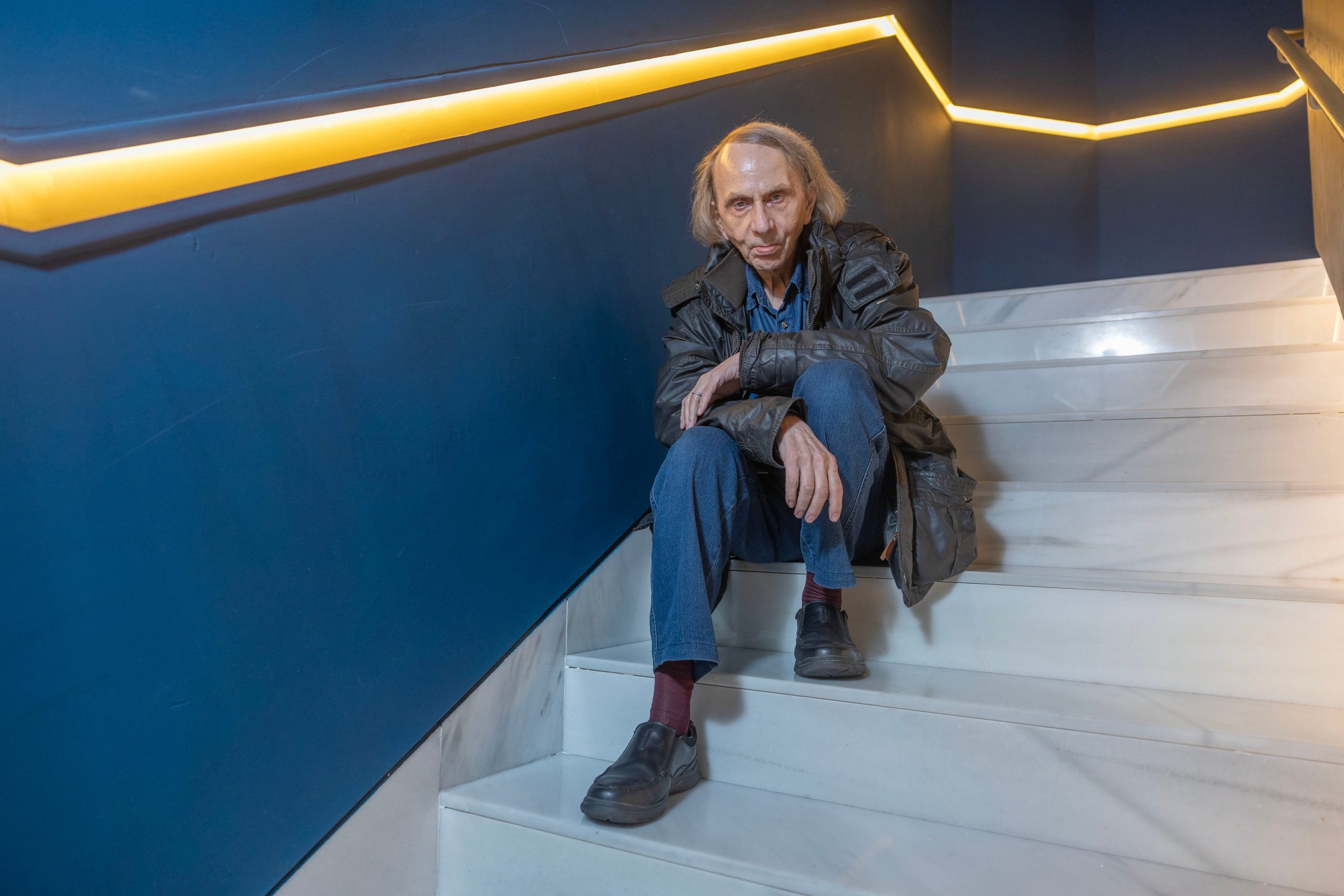
Reading Michel Houellebecq is no easy feat. And interviewing him is even harder.
The 70-year-old’s soft, cavernous voice and serious, downcast demeanor are accompanied by a barrage of barbs aimed at almost everything that moves — his trademark. His conceptual darkness is distilled — with masterful literary skill — into pages brimming with loneliness, bitterness, bland sex, raw antifeminism and anti-Muslim sentiment.
Born on the French island of Réunion, Houellebecq’s anarchic bent — as seen in novels like Submission (2015), Platform (2002), The Elementary Particles (2000) and Annihilation (2024) — is encapsulated in the verses of Combat toujours perdant (“Fighting a Losing Battle”), his latest poetry collection. Published this past March, it is not available in English.
In this conversation with EL PAÍS, which took place on the occasion of the Ja! International Festival of Literature and Humor, in Bilbao, Spain, he shares some of his controversial professions of faith.
Question. Since we’re at a “festival of literature and humor,” I wanted to ask you about that — about humor. To what extent do you consider it useful as a literary tool? It’s present in your books, even if it’s often cruel.
Answer. Yes, humor can be cruel. It can be very cruel. But the truth is, I’m still wondering what humor is. I’m not really sure. And I’m also not so convinced that there’s a lot of it in my books.
Q. There are bursts of it, even if it’s pure sarcasm…
A. There’s irony. And I don’t think that’s the same thing. I think humor is irony directed against yourself: self-criticism, self-parody, mockery… What I do, on a literary level, is something else, something more aggressive. It’s always directed against something, against someone. Not necessarily against specific people, but against ways of acting, speaking, being, against ridiculous things. And I don’t know if that’s exactly humor.
Q. Are you present in your books? Or, conversely, do you use characters as a shield so that you can hide behind them?
A. Being present in the work is what you must strive for in literature… but not all writers achieve it. Being present means expressing yourself without a filter, without playing a role, without pretending.
Q. How do you keep telling new stories? Hasn’t everything already been narrated, written, painted, composed?
A. No. There are new phenomena that justify continuing to write, continuing to tell stories. [There are] things that didn’t exist before, but they do today.
Q. What are some of those new things that interest you as literary material?
A. It’s not a matter of interest or disinterest: they’re just there. They come to you. I don’t know; computers didn’t exist before, and they’ve been a new reality for a long time. In Balzac’s time, there were no telephones.
Q. In your books, you’ve often reflected on the frenetic — and sometimes disturbing — pace of technological evolution. Nowadays, we hardly talk about anything other than artificial intelligence. Does it interest you as a literary theme?
A. My problem with AI is that I don’t understand it. I know nothing about it, how it works or how it’s made, so I find it difficult to talk about my relationship with it. I don’t even know what it is. And that bugs me.
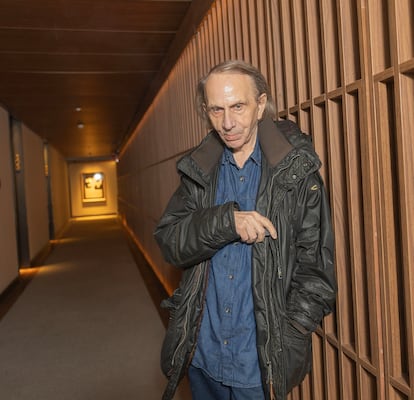
Q. Is it possible that, behind your seemingly dark, chaotic and disorderly literature, there’s an orderly, methodical and precise way of thinking and writing?
A. You surprise me with this “chaotic” comment.
Q. Why?
A. I don’t know exactly what you see as chaotic in my stories.
Q. The anguish, the instability and the loneliness of certain characters, the madness of certain situations…
A. Hmm…
Q. Excuse me for saying so, but sometimes your reader — even if they’re captivated by the story — feels the need for it to end. And that’s meant as a compliment…
A. Hmm… that’s interesting, I’ve never thought of it that way. Hmm…
Q. Do you think the best literary style is the one that doesn’t yet exist? Or, at least, the one that isn’t obvious?
A. Sure, you can set that as a goal: to write in such a way that the style isn’t apparent. Yes, that’s happened to me as a writer; I’ve almost always set that as my objective. But it’s not systematic and definitely not obsessive. For example, sometimes, when I’m proofreading a book, I see a repetition and decide to leave it as is, instead of removing it. A repetition is something that’s visible. If you aim to be a transparent writer, then it’s better to remove the repetition. I usually leave them in, intentionally. It’s a stylistic choice.
Q. Let’s change the subject. Two years ago, a report in this newspaper included you on a list of “far-right French writers.” Are you tired of being called a fascist? Or are you actually a fascist?
A. It’s quite exhausting being called a fascist writer, but eventually you resign yourself to it (laughs).
Q. You’ve written and spoken about the loss of certain values that you associate with Western culture. And you’ve systematically attacked political correctness. You’ve also criticized extreme feminist positions and spoken out against radical Islam. Does that make someone a fascist? Are you a fascist?
A. Well, I don’t think so. But when I was young, they called anyone a fascist. Look, fascism has existed [for a long time]. And it’s had very specific and recognizable ingredients and characteristics: the cult of personality, a taste for war, intolerance toward the political enemy… and now, it’s used for pretty much everything, to insult anyone. And the same thing has happened with the concept of the “far right.” It’s inevitable.
I think that, in France, it is deeply linked to the rise of the National Rally [Marine Le Pen’s party, which is the favorite in the polls for the upcoming presidential elections]. But I don’t think Marine Le Pen inherited her father’s obsessions.
Q. You wouldn’t describe Marine Le Pen as far right?
A. I think they’re nationalists, conservatives, maybe very conservative. But they’re not fascists or far right.
Q. How do you envision a French Republic presided over by Marine Le Pen, if she wins the elections next year?
A. I don’t think it would be very different from what Giorgia Meloni is doing in Italy. But at the European level, we’re facing a pretty widespread movement: that of ultraconservative nationalists. As a knock-on effect, the left is becoming more aggressive by the day, and out of fear, it ends up branding almost everyone as “far right.”
Q. Well, you’ve also spoken about “leftist scum.” That doesn’t seem like a very fair label and certainly not a moderate one.
A. It seems to me that the level of leftism has dropped considerably compared to the past. When I was young, everyone on the left had read or was reading Marx. I don’t think they do today. And I’m not sure they would be capable of it. Marx is complex.
Q. The street riots that were traditional in France — the yellow vest protests, the student movement, and so on — have now reached Spanish cities like Bilbao and Barcelona, with hundreds of hooded minors looting shops and assaulting people. What do you think is happening?
A. The truth is, regarding Spain, I don’t know. I have no information… but I read an interview with Elon Musk where he said that there’s a danger of civil war… in England! Who knows why in England! And, I suspect, this guy must be well-informed…
Sign up for our weekly newsletter to get more English-language news coverage from EL PAÍS USA Edition


Spain Puts The Squeeze On Olive Oil Producers To Avoid Glut

Michel Houellebecq, Novelist: ‘It’s Exhausting Being Called A Fascist Writer, But You Eventually Resign Yourself To It’

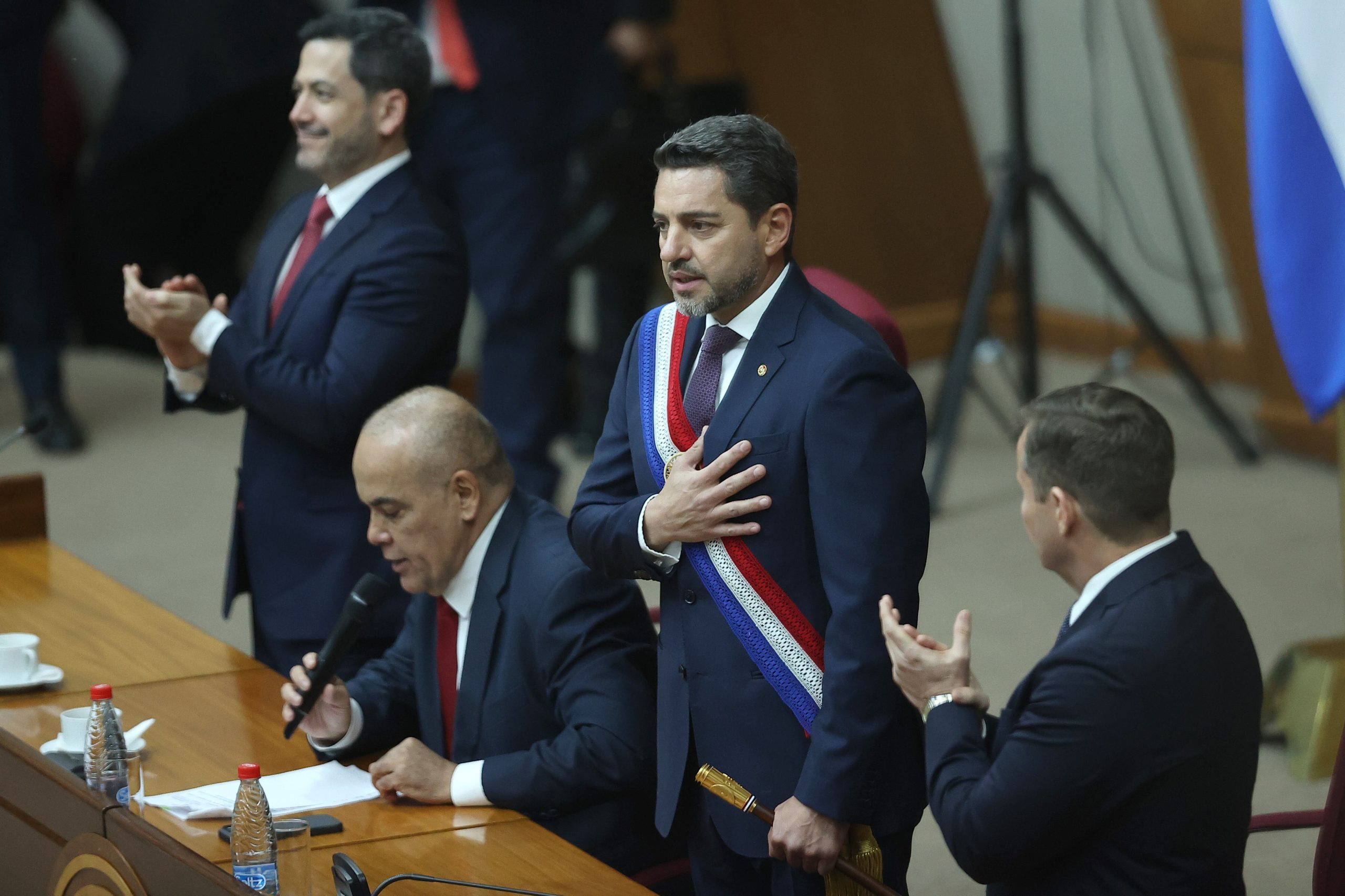
El Presidente De Paraguay, Santiago Peña, Destituido Y Detenido Por Presunta Corrupción


-
DGT3 weeks ago
Viral video in Spain sparks fury over drivers who ‘have no idea how to drive’
-

 Arabia Saudí4 weeks ago
Un Ataque De Los Hutíes Contra El Aeropuerto De Riad Causa Al Menos 12 Muertos Y Más De 300 Heridos
-

 America4 weeks ago
Un Tirador Mata A Ocho Personas En Una Vivienda En Pensilvania
-

 Uncategorized4 weeks ago
Williams F1 driver caught up in four-car pit lane pileup
-
Automated supermarket3 weeks ago
Spain’s 24-hour shop with no tills expands to Barcelona Airport
-
News from Spain4 weeks ago
Spain police warn parents over WhatsApp scam that uses their children’s real accounts
-
News4 weeks ago
Hundreds evacuated as huge fire erupts on Spain high-speed train route
-
Keeping cats and dogs outside3 weeks ago
Spain’s pet owners face fines of up to €200,000 for animal welfare offences
Join the conversation in our comments section below. Share your own views and experience and if you have a question or suggestion for our journalists then email us at news@thelocal.es.
Please keep comments civil, constructive and on topic – and make sure to read our terms of use before getting involved.
Please log in here to leave a comment.