
ElPais
Nvidia Reinstates Jensen Huang As CEO







America
What’s Next For Cuba’s Political Future: An Attack By Trump Before Year’s End Or A Democratic Shift?

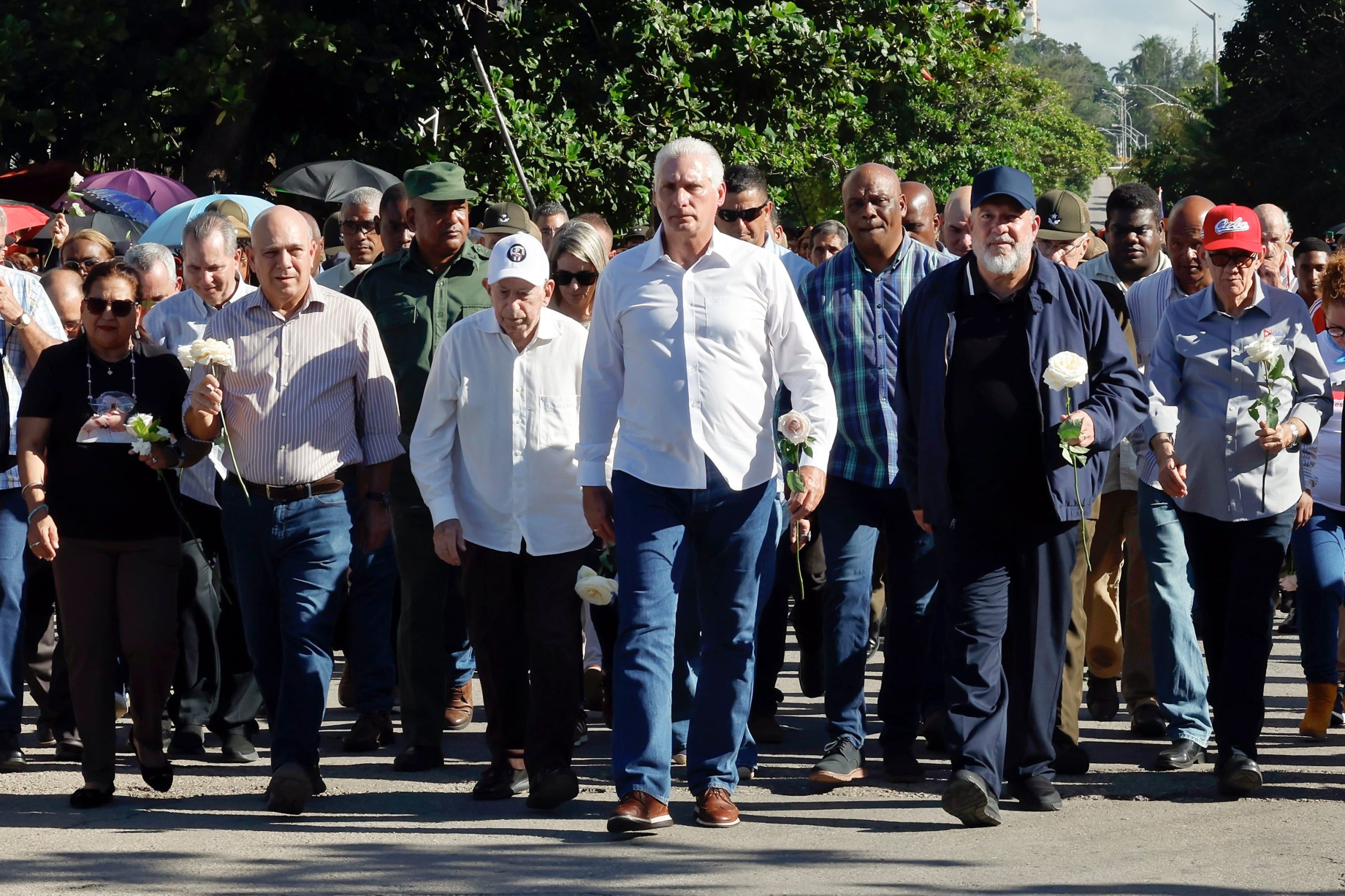
It’s been nearly 10 months since U.S. President Donald Trump first announced that Cuba would be next. It was shortly after his administration had taken out Nicolás Maduro in Venezuela, and before walking into an unpredictable war with Iran. Since then, the president has decreed an oil blockade, slapped sanctions on dozens of businesses and Cuban leaders, and practically every month he issues new reminders that Cuba is a “failed state” that’s about to fall.
Yet the Castro regime is still standing, and the questions being asked in Washington D.C. and Miami, as well as on the island itself, are: will Trump accelerate an attack on Cuba before the end of the year? Or will his rhetoric against Havana lose even more steam when the Democrats take control of Congress in January?
Analysts interviewed by this newspaper agree that neither scenario is likely.
“I never believed that a military intervention was an option. Much less now that Trump is tired [of the issue],” says Francisco O. Mora, a professor of politics and international relations at Florida International University (FIU). William M. LeoGrande, a professor and dean emeritus of the School of Public Affairs at American University, adds that “Congress does not have a lot of control over sanctions by Trump on Cuba.”
For a long time, quite a few Cubans believed in the possibility that the United States would handle Cuba the way it did Venezuela. The fear of a military intervention was mixed with people’s desire to end a life marked by blackouts, food shortages and an economic outlook made worse by growing pressure from the U.S. administration. “If you get on a bus, the first thing you hear is: ‘If only Trump would come, it doesn’t matter what happens,” said Juan Luis Bravo, a resident of Guantánamo, in the east of the island, in a conversation with EL PAÍS in May of this year.
Since then, however, Cubans — who have not seen any improvements in their country through action by their own government — have lost faith in changes coming from the United States. The Trump administration has not secured concessions from the government of Miguel Díaz-Canel during negotiations, and Havana appears to be playing with time.
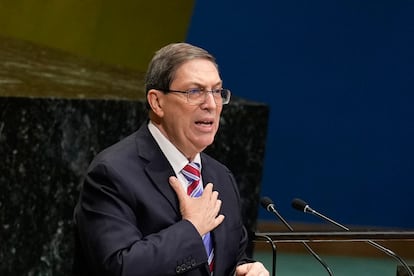
In an interview with The New York Times in late October, Foreign Minister Bruno Rodríguez Parrilla admitted that his government’s strategy was to simply endure. “For as long as it takes. U.S. policy toward Cuba will change. It has to. It’s inevitable,” he said.
Trump and State Secretary Marco Rubio have been pressuring the Cuban government like perhaps no other U.S. administration before. They have closed off all outside aid, made Cuba much more dependent on imports from the U.S., sent military ships to take up positions near the Cuban coast, sat down with members of the Castro family, and even made a public call for collaboration with the CIA to recruit spies that might help accelerate a change in the system. “Seize this opportunity to create the change you desire,” said Rubio.
But so far there has not been a “friendly takeover” of the island, the way Trump put it, and it looks like nothing is going to change before the end of the year. At a rally in Florida ahead of the midterms, this is what he said to his loyal Cuban-American voters: “Don’t worry, we’ll take care of Cuba on our way back from Iran.”
But the midterms, which changed the electoral map in the U.S., left several signs: according to surveys, Cubans in Miami are a lot more concerned about the cost of life and about immigration issues than about securing a regime change in Cuba; all three Cuban-American congressmembers from South Florida (Mario Díaz-Balart, María Elvira Salazar and Carlos Giménez) won by very small margins in territories where they had always enjoyed wide latitude; the war in Iran was without a doubt one of the reasons for voter discontent. And so the White House should think twice about walking into another conflict, this time with a small island just 90 miles from Miami.
Although the most recent survey on Cuba by Florida International University shows that 73 % of Cuban-Americans support military action to remove the government of Díaz-Canel, analysts do not believe that this is going to happen. LeoGrande doubts this is a viable option, much less after the “disaster in Iran.”
“This has proven that you cannot trigger a regime change with an aerial war,” he says. “Besides, with U.S. forces occupied with Iran and no end in sight, and a general political rejection of war, any military action would have a high political cost.”
This expert in U.S. foreign policy insists that Cuba is a very different case from Venezuela: there is no person on the island “whose kidnapping, as happened with Maduro, could provoke a 180-degree turn in the political orientation of the Cuban regime.” That is to say, there is no Cuban equivalent of Delcy Rodríguez, the interim president of Venezuela.
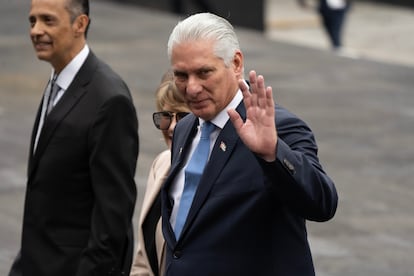
What is being asked now is whether Cuba, and particularly its people, will have to endure two more years of tough policies, or whether the new Democrat-led U.S. Congress might be able to relieve the agenda of sanctions and strangulation implemented by Rubio and Trump.
An uncertain political future
For now, the hangover from the midterms has not ended the battery of sanctions against Havana. Two days after the vote, the State Department sanctioned businesses and individuals with ties to the Cuban elite who, according to a statement by Rubio, were part of a maritime transportation network bringing in crude oil from China. “The Trump administration will not stand idly by while the Cuban regime channels the island’s resources to its military elite,” he said.
Historically, Democratic administrations have applied less pressure on the Cuban regime. Under Barack Obama, both countries announced a thaw in diplomatic relations in 2014. In recent months, several Democratic congressmembers have also spoken up against the White House’s policies.
Pramila Jayapal, the representative for DC’s 7th Congressional District, met in May with Díaz-Canel in Cuba and said that the oil blockade is causing incalculable suffering to the Cuban people. And Illinois congresswoman Delia Ramírez has led an initiative with 31 other members of Congress to demand that the Trump administration rule out any military action against Cuba.
Will these Democratic voices carry enough weight to scale back the sanctions and end the tough policies?
The scholar Mora thinks that Congress could hold several hearings “to try to better understand what the goals of the administration in Cuba are.” However, he does not think that Congress has a lot of influence in terms of changing policies. “The Constitution gives the president a lot of leeway to act on national security-related foreign affairs,” he notes.

Meanwhile, Professor LeoGrande insists that the International Emergency Economic Powers Act (IEEPA) grants the president a lot of authority to impose the secondary sanctions that Trump has used against Cuba.”
“Any legislation aimed at limiting sanctions that the new Congress might approve would be vetoed by Trump,” he says. “Besides, Cuba will not occupy a very prominent spot on the Democrats’ legislative agenda in the coming two years. They will focus on domestic economic issues and on corruption probes.”
There is, however, another scenario that for now remains speculative but not entirely dismissible to these analysts: the possibility that Marco Rubio, himself a Cuban-American, might run for president in 2028. In that case, says Mora, he would have to quit his role as secretary of state “more or less in the summer of next year, in order to start the campaign, which is a long and complicated process.”
Without Rubio for the remainder of the term, says this analyst, things could be different with another state secretary who might not show the same level of interest and attention that Rubio has been showing for Cuba, says Mora. “That could be a calculation by the [Cuban] regime to gain more time. They want to see how to outlive this administration. If they are waiting for January, with the change of Congress, they could be making a mistake. If they are waiting for the summer and Rubio’s potential departure, they might be onto something. Nobody is going to prioritize Cuba the way he is doing.”
Sign up for our weekly newsletter to get more English-language news coverage from EL PAÍS USA Edition
America
Mikie Sherrill, Governor Of New Jersey: ‘Democrats Have To Move Fast And Show Wins Right Away’

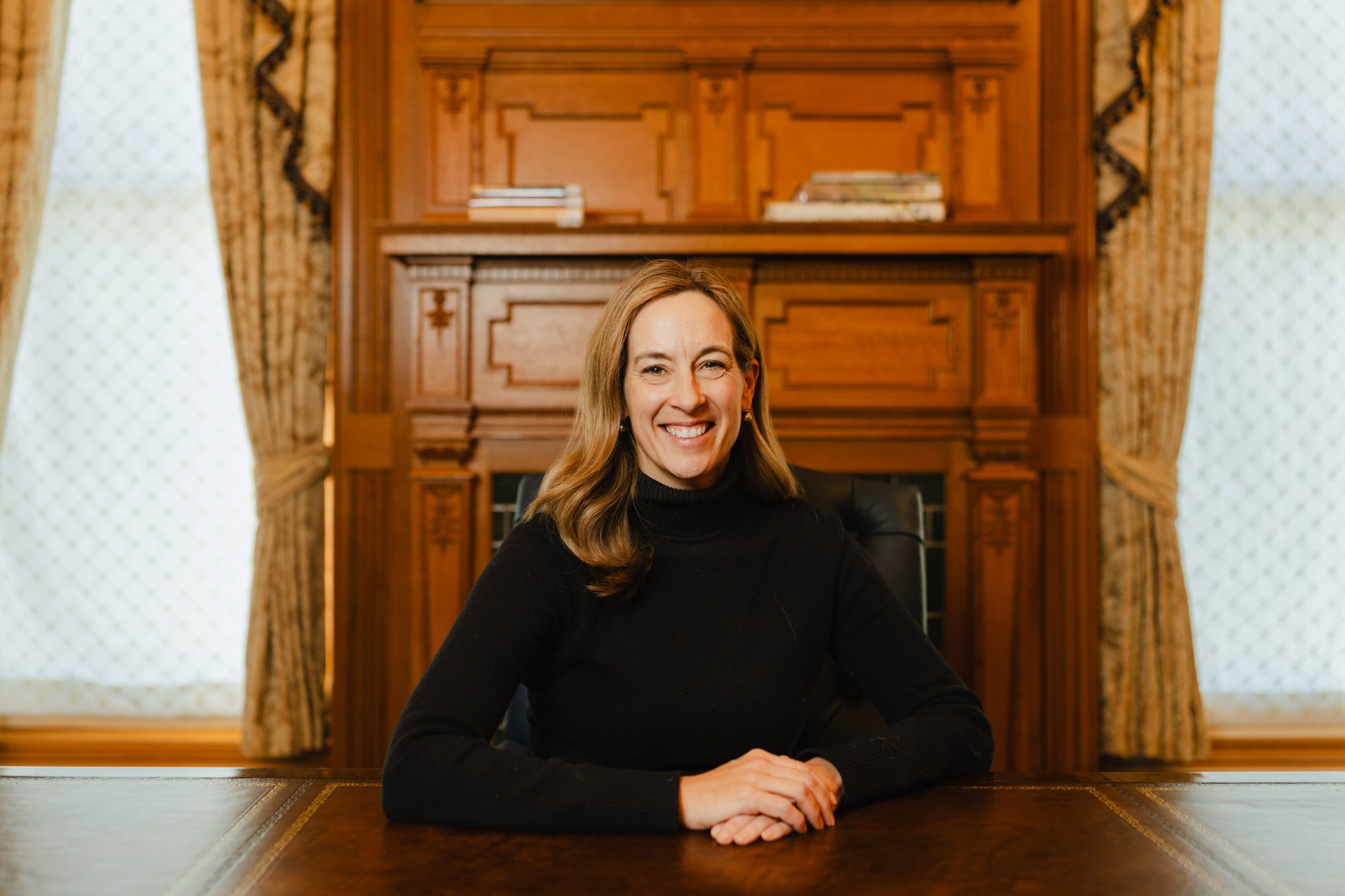
Mikie Sherrill has a firm conviction about the state of the Democratic Party. “We are in our strongest position in decades because we are all united,” she says without hesitation, following the resounding Democratic victory in the November 3 midterm elections.
However, the New Jersey governor warns that the biggest “challenge” facing her party when it takes control of Congress in January will be the need to act decisively and quickly. “You have to move fast and show wins right away because people are cynical, they’re struggling, and they want to see effective government. And as soon as you start to deliver that, they can start to breathe again because they think, ‘Okay, help is coming.’”
Two weeks have passed since the Democrats swept the midterm elections when Sherrill, 54, welcomes EL PAÍS for an interview at the New Jersey State House, the third-oldest state capitol in the United States. Sherrill arrived in its opulent coral-colored hallways last January as the second woman to serve as governor of the country’s most densely populated state (with 9.5 million residents) and the first Democratic woman to hold the office.
Sherrill considers herself a product of the Trump era. She is part of what she describes as “a new generation” of Democratic leaders shaping the party’s direction at a time when the rulebook of politics has been torn up. And the party’s North Star, she says, must be the working class.
Focusing on the cost of living has proven to be a winning strategy for Democrats, as the midterm elections made clear. Voters repeatedly cited Trump’s handling of the economy as their main concern when casting their ballots. It was a message Trump himself successfully exploited in 2024, even though he subsequently failed to deliver on his promises and, in fact, made matters worse with the war in Iran and his tariffs.
Now Democrats are reaping the rewards of those broken promises. Their campaigns drew inspiration and lessons from the victories last year of figures such as Sherrill in New Jersey, Zohran Mamdani in New York City, and Abigail Spanberger in Virginia. All won on platforms centered on affordability, which went on to become the party’s “model,” according to the governor.
“A lot of people would say affordability is a boring campaign, and that you need to run on fascism or democratic institutions or standing up to Trump… And those are all incredibly important things, but it’s not boring to people when they can’t afford their rent and you’re running on trying to fix that for them. It’s not boring when they cannot afford their utility costs and a corrupt president is making billions,” Sherrill argues.
But her own experience as governor over the past nearly 12 months has led her to reiterate a message she delivers not so much as advice but rather as a warning: “Moving quickly to deliver for people is key if you want to hold the public trust.” Democrats must stop the “bleeding” caused by Trump and address the affordability crisis and put an end to corruption within his administration, she says.
A veteran with an acute sense of urgency
Sherrill has said that her sense of urgency stems from her time in the military. Inspired by her grandfather, a World War II veteran, the governor knew from an early age that she wanted to be a pilot. She enrolled at the United States Naval Academy and graduated from flight school in the first class of women qualified to take part in combat operations. She subsequently served as a pilot in Europe and the Middle East. After nine years in the military, she went on to study law and became a federal prosecutor before running for Congress.
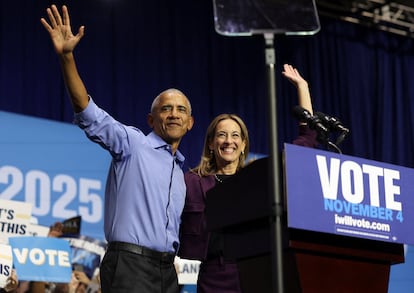
Her political career began during Trump’s first presidency, when she was elected in 2018 to represent New Jersey’s 11th Congressional District in the U.S. House of Representatives in Washington. That year, Democrats wrested control of Congress from Trump’s Republican Party, just as they did this November. Sherrill herself played a role in this year’s victory: she helped flip two congressional seats in New Jersey from Republican to Democratic hands and also campaigned for the now Democratic governors-elect of Texas, Gina Hinojosa, and Ohio, Amy Acton.
Now, as she considers the task facing Democrats as they regain power during the final two years of Trump’s presidency, she says she often draws on what she learned in the military about effective leadership, believing that the political class in this country has been “really, really poor” in that regard.
“Leadership is enunciating a vision. And you can take a disparate group of people and get them committed to that vision because it’s compelling and they trust you that you can get it done. That’s the military. And we recruit from all over the nation. We have people from every different background, and we all come together because we believe in the country. And so that’s what leadership in the Democratic Party is going to look like” after the midterms, she says.
When discussing the future of her party, the governor shows little interest in engaging in the debate over its different factions and divisions. “To me, there’s not one face that says, this is who the Democratic Party looks like. How could one person embody all that it means to be an American?” she asks.
“I hear all this stuff about how we have different ideas, and so it’s going to be ungovernable. I just don’t understand how you think you can govern America with just one person. It’s why we chose not to have a king,” she adds, fully aware that Trump considers himself one.
Sherrill, who belongs to the moderate and pragmatic wing of her party, brushes aside the question of whether the Democratic establishment will be able to coexist with the democratic socialists, who won a record number of seats and positions across the country in these elections. She considers that debate “artificial” and too far removed from people’s everyday concerns. “I can’t tell you the last time someone came to me and said, ‘Mikie, I’m worried about the moderates,’ or ‘I’m worried about the DSA candidates.’ Everybody comes up to me and says, ‘Mikie, I’m worried about affordability. I’m worried about Donald Trump,’” she insists.
Her own record shows that she shares some ideas with both the moderate wing of the party and its more progressive faction. One example is her position on immigration. Sherrill has been highly critical of the White House’s crackdown on immigrants. And although she has not gone so far as to call for abolishing Immigration and Customs Enforcement (ICE), as more progressive figures such as Mamdani have done, she has taken several steps to limit the immigration agency’s activities in New Jersey.
New Jersey was, for example, among the first states to ban immigration agents from covering their faces during their brutal enforcement operations. In response, the Trump administration sued the governor. The legal battle is ongoing. Sherrill has also called for the closure of the first detention center opened during Trump’s second presidency, Delaney Hall, located in Newark. The former prison, which was converted into a detention facility, has come under heavy criticism over its inhumane conditions. Last summer, hundreds of detainees launched a hunger strike that lasted a month. At least three people have died after being held at Delaney Hall.
“I don’t believe in private detention facilities. Delaney Hall should be shut down,” Sherrill says firmly.
A roadmap for 2028
The governor believes that the work she is doing in New Jersey should serve as a roadmap not only for Democrats in Congress over the next two years, but also for the party as it looks ahead to the 2028 presidential election. The Democratic nominee will face Trump’s successor since the president will be unable to run again. In that election, Sherrill says she would like to see a candidate much like herself.
Would she herself consider running in 2028? “I’m very happy being governor of New Jersey,” she replies with a laugh. “What I really want to see in 2028 is leadership that looks a lot like what we’ve done in New Jersey, meaning taking action right away.”
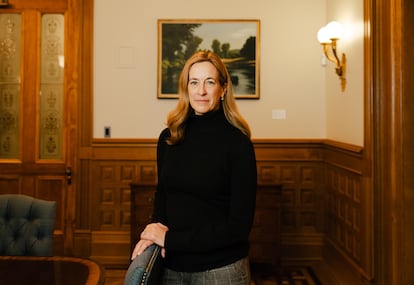
On paper, Sherrill has many of the qualities that make her an attractive candidate for the job: she is a military veteran, a former prosecutor, and a former member of Congress. However, her name does not appear on lists of potential presidential contenders, although she has said she has received calls from people asking whether she would be willing to run.
For now, she prefers to highlight her accomplishments as governor, including signing legislation to curb algorithmic rent pricing; signing a package of laws restricting state and local authorities’ cooperation with the federal government’s anti-immigration crackdown; and taking the Trump administration to court and winning a lawsuit to secure federal funding for the construction of a new rail tunnel connecting New Jersey and New York.
“You have to be fighting for the people you serve. That looks like getting in court really quickly. Not waiting, not trying to cut a deal; just when Trump’s acting illegally, take him to court. Don’t try to negotiate with him. Why are you negotiating for money, for example, for the Gateway Tunnel, when he is legally obligated to turn it over? There’s no negotiation there. There’s court, and he loses, and you keep moving. Having that kind of leadership is really important,” she says.
For the governor, this is the new formula for doing politics. “People are not okay with government inefficiency right now. They’ve seen how quickly Trump could move, and he moves really quickly at breaking things. So if you are going to be great at serving people, you need to move really quickly in rebuilding new things.”
Sign up for our weekly newsletter to get more English-language news coverage from EL PAÍS USA Edition
Albert Adrià
Ferran Adrià: ‘Spain Is The Country That Communicates The Worst In The World. Our Cuisine Didn’t Even Have A Name’

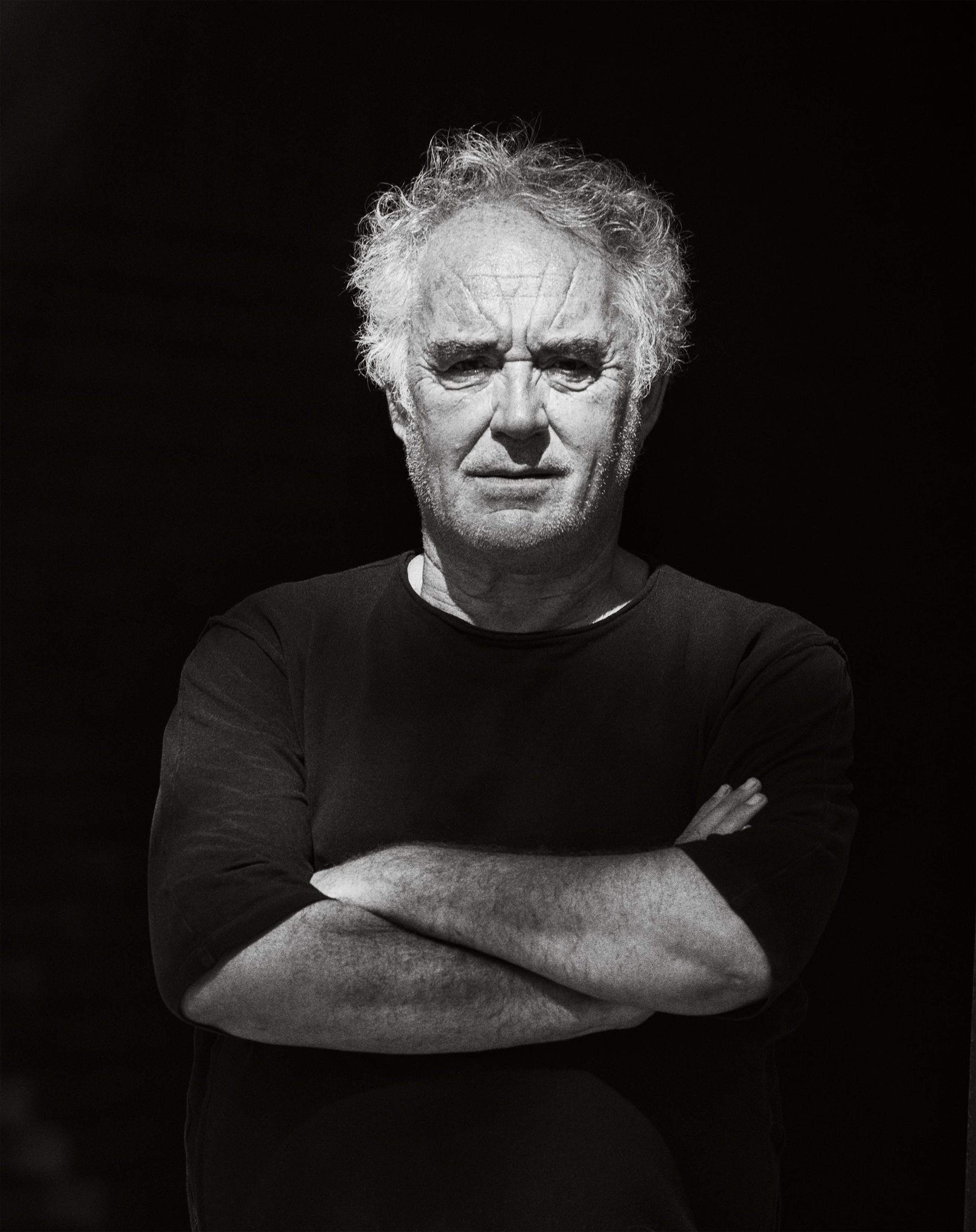
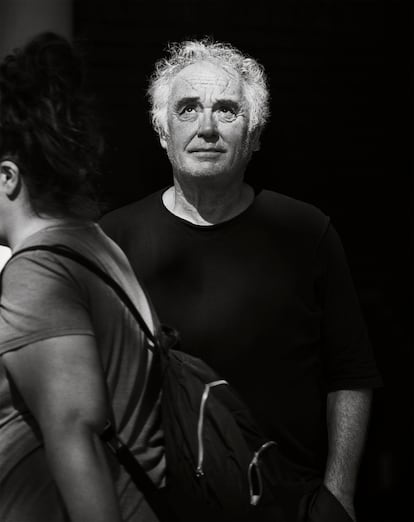
How does someone know they have achieved immortality? In the past it was obvious: a cheese, a high school, or a stretch of ring road would be named after you. It is a sign of the times that, now, lasting presence necessarily passes through screens. Sometimes it happens the Julio Iglesias way: you multiply online like a meme. Other times Netflix sets its sights on you, decides your life belongs in the canon and devotes a series to you. It happened to Elizabeth II and to Michael Jordan. It happened to Luis Miguel and Anne Boleyn. And it has just happened to Ferran Adrià, the 64-year-old chef who became a global sensation in the early 2000s with his “deconstructed cuisine.” This fall, Netflix is streaming the story of his rise to fame in Gènesi (Genesis), a co-production with the Catalan-language public streaming service 3Cat. This latest feat by Adriá can perhaps only be compared to getting a table at El Bulli in those years — 2004, 2005 — when demand was “two million people,” and there were spots for only seven thousand.
Adrià, who receives EL PAÍS at his Barcelona offices, cannot complain that life has been stingy with the accolades. The laurels are piling up: Chef of the Decade. Five-time best restaurant in the world for El Bulli. Six honorary doctorates, soon to be seven. And three Michelin stars from 1997 until El Bulli closed in 2011. These days he has just been awarded — like the artist Joan Miró or the musician Pau Casals before him — the Gold Medal of the regional government of Catalonia, the Generalitat. He has racked up 550 distinctions in all, and Adrià’s team keeps track of them with the same obsessive precision with which, in earlier times, the great chef spherified an olive.
It is a weighty tally for someone who says he “never worked” in order to earn those prizes, a phrase that might read like false modesty until you look at some facts. For example, Adrià held no other celebrations at El Bulli besides the restaurant’s farewell party. Or, more tellingly: when he says the Netflix series “could have a market of five billion people,” his excitement seems driven less by self-satisfied vanity than by Gènesi’s potential for “relaunching the techno-emotional movement” in cooking.
The proof that Adrià is not lying is that his enthusiasm only turns into excitement when he talks about something that might seem very minor to the general public but is very important to him: this November a “two-hour and 15-minute documentary,” still untitled, about El Bulli will also premiere. Sometimes a few subtle gestures are the best measure of meaning: Vía Véneto, the old-school restaurant in Barcelona’s uptown area, has added Adriá’s dish “Gaudí red mullet” to its menu. It almost reads like a tribute in which the past pays tribute to the future.
In the mid-1990s, that same red mullet dish was meant to illustrate the cover of El Bulli. El sabor del Mediterráneo (The taste of the Mediterranean), a book that has also gone from revolutionary to classic, if we judge it by the crude yardstick — €500 ($550) for starters — of its resale price. In those years the legend of El Bulli was beginning to be built. And here is an irony: Ferran Adrià, who was capable of putting philosophical concepts into motion in his kitchen — recall the concept of deconstruction? — has never posed as an intellectual chef. He has always been saved by a certain down-to-earth quality about him: even today, after so much glory, he is a man who smokes but takes care to move the smoke away, who does not check his phone even if Bill Gates is sending him a message. With that duly noted, it should be underscored that the six episodes of Gènesi recreate everything that made the Adrià era at El Bulli, to give it a pompous name, an adventure of the mind.
When Adrià joined in 1984 as a station chef, he was a young man with a very short résumé: he had washed dishes in Castelldefels, worked in field kitchens and banquets during his military service, and had never set foot in a cooking school. “The better the master you have,” he would later say, “the harder it is to innovate.” In any case, the owner of the Playafels hotel had made him memorize El Practicón, a 19th-century Spanish cookbook, as one learns the ABCs. And Jean-Paul Vinay, El Bulli’s chef in the early eighties, believed he was ready to receive the then-recent — and now canonical — treatises of the nouvelle cuisine. The impact was tremendous: those Bocuse and Guérard books blew the mind of the twenty-something Ferran. From then on, not only did he plan to push nouvelle cuisine to its extremes, he also made sure to record it in print. Today the Adrià factory has published “more than sixty” volumes, including the monument titled Catálogo General de El Bulli. But he needed no more than that first book, El sabor del Mediterráneo, to get the first big push for his career. It happened like this: in 1996 Joël Robuchon left his restaurant, stepped down from the podium and declared, to the astonishment of his French compatriots, that his successor as number one was Ferran Adrià.
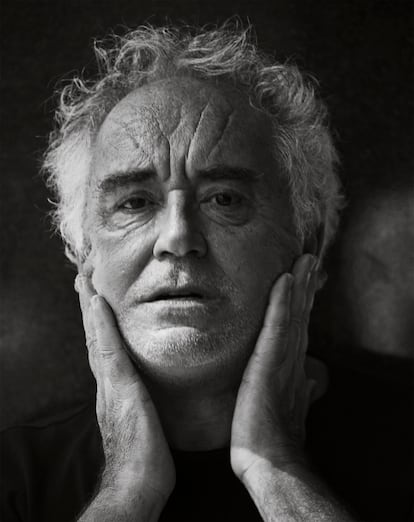
If that boost was the most important one of his career, it was largely because it was the most scandalous. We must remember, as Adrià himself does, not only that Robuchon “was God in the kitchen,” but that France had had a “400-year monopoly” on haute cuisine. Shall we speak of the first Spanish triumph over the French since 1812? Not quite: “In the end, the French half-adopted me.” Maybe, in fact, they reacted the way Robuchon did on his first visit to El Bulli, well staged in the series: the French pharaoh showed up looking tense and skeptical, aware he was in a country on the periphery of academic gastronomy, but long before he saw the desserts he was already cheering Adrià. Everything else came in time. A feature in The New York Times magazine in August 2003 defined Spain — with a close-up of the chef — as “the new France”: the next day Adrià woke up to seven hundred interview requests. Then there was his selection as one of Time magazine’s 100 most influential people in 2004: “That was important,” he reflects, “because it meant stepping out of the kitchen.”
Books like Au revoir to all that, from 2009, hint at the spiritual crisis of French culinary culture after Adrià burst onto the scene: that southern wind from Spain crossing the Pyrenees and sweeping everything away. Today, in a form of reconciliation, the Catalan chef says that France remains first. And at El Bulli, where he had begun by cooking hare civet, he would finish with another caress to the famed French chef and writer Auguste Escoffier: the restaurant’s last recipe —number 1846— in July 2011 was a version of Peach Melba. There is the respect not just for French tradition but for classical forms. At the same time, Adrià is aware that “after we got together” — him and other top Spanish chefs like Juan Mari Arzak, Pedro Subijana and later the Roca siblings — the French “began to get scared.” “We empowered ourselves first,” he emphasizes, “and then we empowered the United States, Denmark, everyone else.” The old French monopoly was shattered: world cuisine became a league in which “now there are 20 countries.” So besides France, what about the rest? “Italy and Spain are neck and neck,” Adrià says. “Then there’s Japan. That said, in ten years everything will be China.” After the assertion, the question: “Did you know they have churros in China?”
Adrià seems incompatible with nostalgia, although he recalls a time when Spanish chefs “were just ten or twelve, not three hundred like now” and they would all meet on the conference circuit and stay up until four in the morning finding inspiration between gin and tonics. There was a feeling of community that is lacking in so many other fields. But Spain, he concludes, “is the country that communicates the worst in the world,” and while northern Europe came up with New Nordic Cuisine, “we didn’t even have a name” for what they were doing. He now sees some hope in the national government’s International Plan for Spanish Gastronomy. He notes with satisfaction that when a foreign head of state visits, a top chef is called in to give them a good meal. And he points to where the future should go, in his view: promote the casa de comidas, which is “the Spanish bistro.”
The chef does not deceive himself: you have to sell — selling is what it’s all about. “The series was paid for by the Generalitat [Catalan regional government],” he says, “to sell Catalonia and, consequently, to sell Spain.” Viewers will have few doubts: Gènesi is not, and does not want to be, about the hidden side of Ferran Adrià, nor the truth about Ferran Adrià, nor a critical reassessment of his legacy. The series is upfront about its goals: by minute two we already see Robert De Niro kneeling before the chef in the kitchen of El Bulli, while a figure explains that the actor is paying tribute to the “best chef in the world.”
The striking thing is that, once the incense clears, the whole thing still works. “I have watched the series, I’m not exaggerating, forty times. What I had to make sure of was that the cooking was a ten, and the cooking is a ten. I don’t believe any culinary series or film that I’ve watched. But I believe this one.” Pending critics’ verdicts, one truth is obvious: with a touch of mature modernity, each dish is identical to its corresponding page in the Catálogo General de El Bulli. Still, if identity is the issue, the surprise should be sought less in the cooking than in the cook: Miquel Fernández delivers such an exact portrayal of Ferran Adrià that from now on it will be hard to think of Ferran Adrià without picturing Miquel Fernández. The actor shines above all in those passages when the young Adrià is still called Nando and speaks that mix of Castilian Spanish and Catalan that has accompanied him to this day. Isabel, Adrià’s wife, has sometimes believed her husband was speaking to her when in fact it was Miquel on the TV.
It is very possible that Ferran Adrià has had more glasses of Dom Pérignon than most humans get in a lifetime. But he has also had to eat his share of bitter bread. There is no series without its drama and Gènesi could not ignore that. We are of course talking about Adrià’s relationship with Santi Santamaría, who was “my best friend in the kitchen” and whom time turned into his nemesis. The reasons seem clear: Santamaría, a terroir-oriented cook, was skeptical of Adrià’s high-lab, molecular cuisine. But perhaps things are not so clear, since Santamaría was also one of El Bulli’s habitués and defended Adrià when it wasn’t cost-free to do so. The series avoids black-and-white portrayals and avoids kicking a chef who can no longer defend himself (Santamaría died in 2011). The matter, as Adrià recounts, is treated “with the utmost affection” in the series. And, as happened between 2008 and 2009, when the hostilities splashed tabasco across Spain’s gastronomic conversation — even José Luis Rodriguez Zapatero, the Spanish prime minister at the time, intervened — Adrià is seen suffering: suffering to keep his vow of silence, to stay true to the many years that he has applied the motto “you will not hear me speak ill of anyone” in the profession. Least of all, someone he once loved and admired. Adrià still regrets not reconciling in life. Perhaps for that reason, just a few months ago, he took part in a tribute to Santamaría to ask “that a wound that does not exist not be reopened.”
The series also moves viewers to tears with another emotional point: those brutal years when Juli Soler, co-owner of el Bulli, struggled with Alzheimer’s before dying in 2015. Rita and Panxo, his children, continue working with Adrià, following a clear rule: if there is a Bulli, there has to be a Soler. “Ferran, do you still remember Juli?” “I remember Juli every day.”
Perhaps from having heard it so often, Adrià has something of an aversion to the word genius: “I only knew I was good,” he replies, “when others told me so.” After so many years dressing in white as a chef, Ferran Adrià closed the restaurant and began to wear black. It is tempting to follow a code shared with other disruptors of their worlds: Steve Jobs, Giorgio Armani. He, simply, says he is not vain. He has “twenty projects” on the go: his could be the desk of a consultant or an architect. An encyclopedia of wine, “the best in the world.” The Madrid Culinary Campus (MACC), which will continue his Sapiens method and preserve the lion’s share of his legacy. And, of course, elBulli1846, his museum in Cala Montjoi.
He does not miss “the pressure of immediacy” of the kitchen, which his brother Albert Adrià still feels at the helm of the Barcelona restaurant Enigma and many other ventures. Nor are there excessive regrets: yes, he could have delayed the closure of El Bulli by three or four years; yes, he could have charged €5,000 ($5,500) per cover in later years, but by 2011 he had already fulfilled his program of taking cooking to what he then believed to be his “physical and mental limit.”
Today he continues to defend the legacy of his life’s work. He does so emphatically: “The relationship with Japan, the long narrow menu, opening a single service… we even changed the physical dimension of kitchens. All that comes from El Bulli. In twenty years we did 80% of the world’s innovation!” There are metrics, he says, to prove it. In the end, he is glad he maintained a certain obsession — “obsession” is a recurring word in the series — by which he would rather close than change. There were moments in the 1990s, he recalls, when El Bulli may have already been famous but no one went to El Bulli. On those nights of empty tables, he was put to the test. Later, he didn’t even need to open abroad: “PepsiCo paid me what 10 restaurants in Singapore would.”
Adrià continues to travel to browse and to eat, helped by five or six secret Instagram accounts to spy on what’s cooking. Of haute cuisine, he says, “I no longer enjoy it so much: it has to give you something new.” At home he makes carbonade flamande, boeuf bourguignon and oxtail Córdoba style. He believes that, as with paella, fewer broths, fewer extracts, fewer juices should be used: “If a young person wanted to help purify that traditional recipe book, I would support them.” He continues experimenting because, as the saying goes, a leopard can’t change its spots. And, inevitably, he keeps surprising people: “Château d’Yquem [a wine that retails in the hundreds of euros] should be drunk with anchovies.” He had saved the bombshell for last.
Sign up for our weekly newsletter to get more English-language news coverage from EL PAÍS USA Edition

Nvidia Reinstates Jensen Huang As CEO

Nvidia Recupera A Jensen Huang Como Consejero Delegado

What’s Next For Cuba’s Political Future: An Attack By Trump Before Year’s End Or A Democratic Shift?


-

 New Developments3 weeks ago
Luxury Villas For Sale, Estepona – ProjectL1
-

 New Developments2 weeks ago
The San Roque Club – Townhouses For Sale
-

 New Developments4 weeks ago
How To Get A Tourist Rental Licence In Andalusia (Spain) – Step-By-Step Guide 2025
-
Age Concern Marbella - San Pedro4 weeks ago
Halloween lunch sells out as 51 join Marbella get-together
-

 %4 weeks ago
Spain Orders Replacement Of Eight Million Gas Meters: New Rules, Costs And Deadlines
-
countryside3 weeks ago
Rural revival: Five Almeria villages make moving inland easier and more enticing
-
costa blanca live music3 weeks ago
Beatles tribute: The Liverpool Band returns to Orihuela Costa
-

 New Developments3 weeks ago
Stylish 3-Bedroom Apartment With Panoramic Sea Views – Benalmádena