
ElPais
A Livestreamed Murder: The Killing Of A Narco Influencer In Mexico














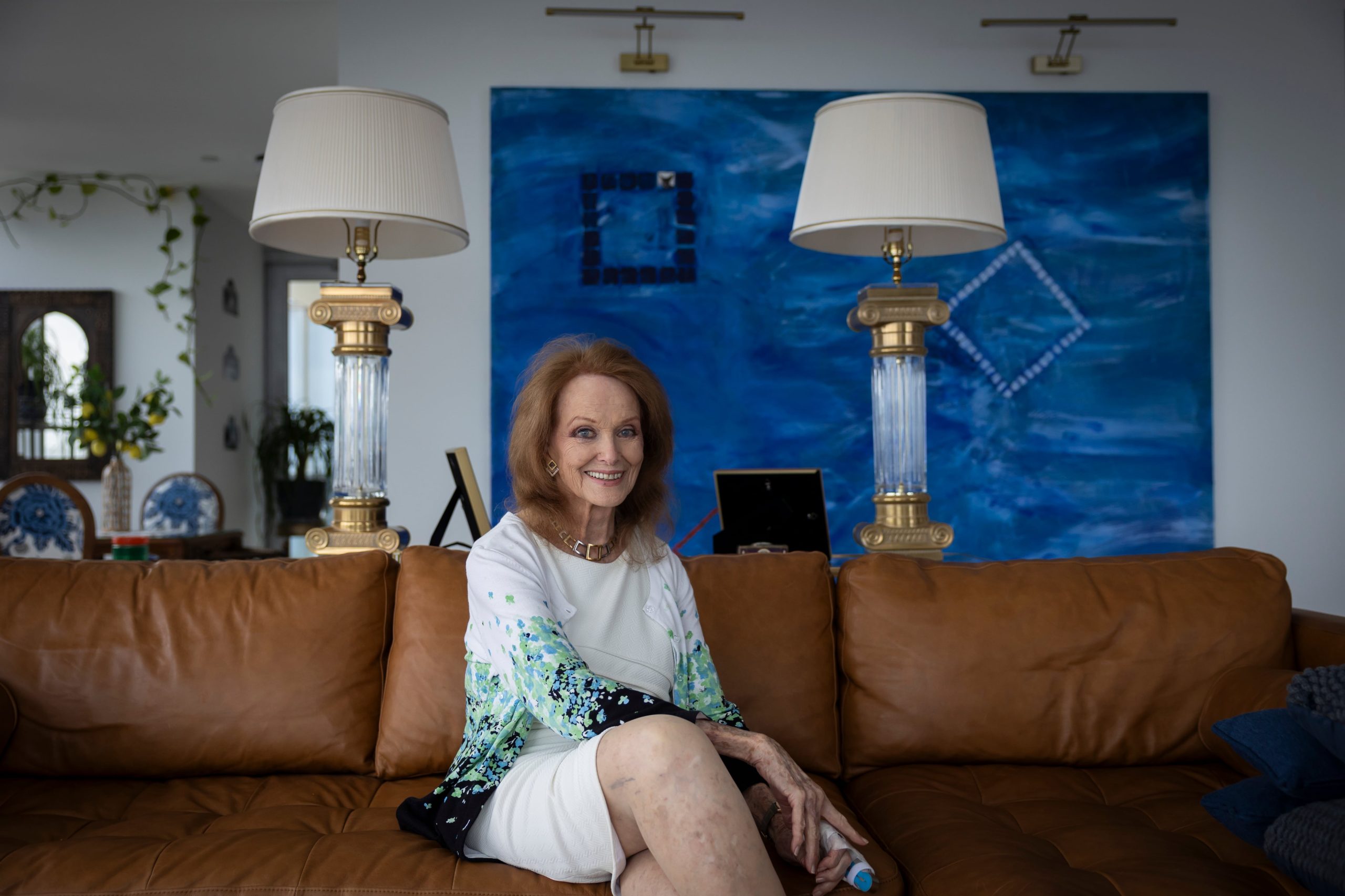
For Christiane Magnani de Alemán, the first French woman to be crowned Miss Universe in 1953, the impossible does not exist. At 90 years old, the former beauty queen has published a self-titled autobiography in which she travels a life marked by war, fame, cinema, family and Mexican politics.
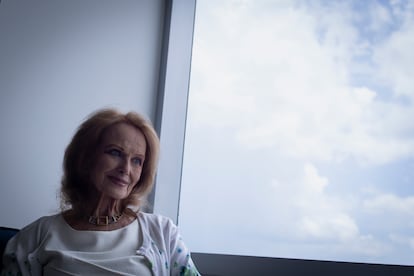
Sitting in the living room of her apartment in Brickell, Miami, with the Bay of Biscayne behind her, Magnani wears a white dress with a patterned cardigan and matte gold neck scarf. She speaks with both studied solemnity and contagious emotion, and laughs at herself easily.
“I write because it is my story. It was a life of so many moments that I have a lot more to tell,” she says in an interview with EL PAÍS.
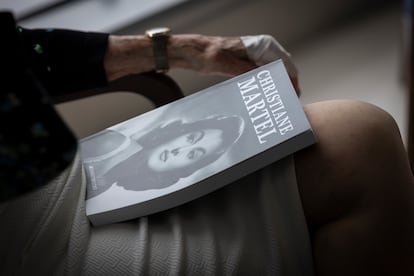
She began to dream up the book in 1998 during a stay in San Miguel de Allende, but for years doubted that she would be capable of writing it because she had no literary experience, and left school at an early age.
Magnani identifies as a member of the “lost generation”, though she was three years old when the Second World War began, and still remembers hugging her parents and sister before a small window as they watched bombs being dropped. Once, German soldiers occupied their home and the family had to sleep in the granary.
Her father spent around nine months in a concentration camp. Before he was detained, thinking that he might not return, he put his businesses in the name of his brother-in-law, who declined to return them when he eventually did come back. “I had to work ever since I was little. They couldn’t pay me, but they gave me milk, they gave me butter. I was happy to have something to bring home,” Magnani remembers.
Her book traverses the many eras of her life, accompanied by anecdotes and photos of places and people. The family escaped the darkness of war when they moved to Agressais, the town that now represents the warmth of home and security to Magnani. In Loudun and Poitiers, she spent years working, having had to leave school behind. In Châtellerault, when she was 16 years old, she returned to school, and happily crossed the city on bicycle each day.
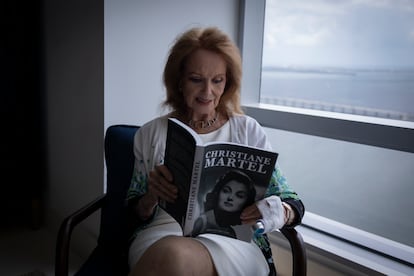
It was in Châtellerault that, almost by accident, she signed up for the local beauty contest that would change her life. She was in attendance to merely watch the show. But one of the judges saw her in the crowd, asked her to participate — and she won. Then she won regional competitions. Preparing for Miss France, she realized she couldn’t compete under the name Christiane Magnani, because she had already competed under it for the “most beautiful Italian in France” event. She caught sight of a bottle of Martell cognac, and decided then and there that she’d enter as Christiane Martel.
“I told my father, ‘I need a very short name that is easy to remember.’ Then I asked, ‘Hey, what do you think about Christiane Martel? It’s really easy, everyone drinks cognac, they won’t forget it,” she says laughing. “And I think it worked, because to this day, people remember me.”
At 17 years old, she traveled to the United States to compete in the Miss Universe pageant in Long Beach, California. She didn’t speak any English, and had never boarded an airplane before. She remembers that the competition, then in its second year, was based solely on its entrants’ natural beauty and personality.
She won the crown, and signed a contract at Universal, opening the door to a film career. She had to take singing and acting classes, and went to shoots in Hollywood and Mexico, where she met businessman Miguel Alemán Velasco, whom she would wed and have four children with. She has now spent most of her life with him.
“I said, ‘If one day we get married, I want our children to have their father. I don’t want you to have to go off to do politics every once in a while. If I get married, I will leave behind everything artistic, movies, everything — I’ll let it go completely. But what I would ask of you is if you want to get into politics, that it be when our kids are no longer young, when they reach a certain age, like 10, 12 years old, when they can better understand,” she says.
Decades later, Magnani accompanied her partner in his return to politics as governor of Veracruz between 1998 and 2004. A large part of the book is dedicated to her work as a president of the state system for integral family development (DIF, in its Mexican acronym), and how she carried out projects in rural communities, including the building of five student centers with dormitories, dining halls and medical facilities.
“The centers were equipped with internet, communications, they had a doctor, dormitories, food, everything. When gave them a name in Nahuatl, Telpochcalli, which means “our children,” she remembers. “We loved being able to do so many things.”
She also sold a photo book to raise funds for a hospital’s pediatric wing, learned short speeches in Nahuatl and promoted reproductive education.
Her goal was to offer “a dignified life, what any community deserves,” she says.
These days, she spends a large part of her life with her grandchildren and great-grandchildren, who will soon number 17. She gets confused when she tries to count them all, she says as she shares a photo of the youngest on her phone.
Through the ups and downs, she’s tried to stay balanced, and has never felt special for having lived surrounded by presidents and actors, nor for having to work to bring milk home to her family.
“I don’t differentiate — only if there are good people, or not good people. I think that has really helped me, because I have always been at the same level. I don’t think I’m better because I have a lot of things, or that I’m lesser-than. I feel good where I am. When there was war and I had to work, well, I worked. There were many very different moments in life, up, down, but we always knew how to balance ourselves out, never be too much this or too much that,” she says with a smile.
She now lives in Miami because she was having respiration issues in Mexico City, and to be closer to her family in Florida. She says that she is unsettled by the news of the advance of AI and robots that would have seemed like science fiction until very recently.
She still gets fan mail from Russia, the Phillippines, Germany and other countries, and she responds to it all, she says. “They remember me, they want photos, and they tell me about their lives. It gives me a lot of pleasure,” she says.
Sign up for our weekly newsletter to get more English-language news coverage from EL PAÍS USA Edition

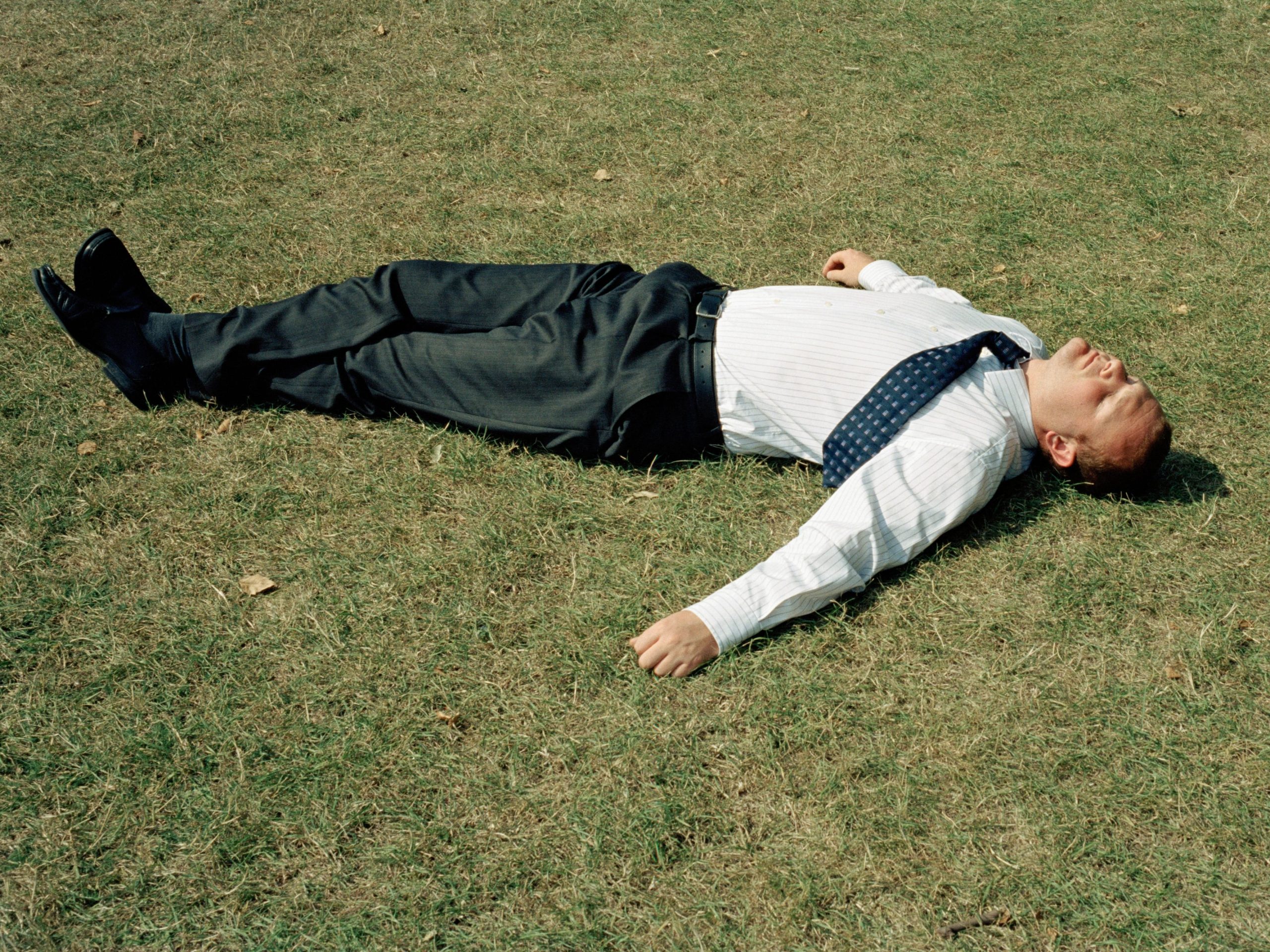
Each season, style magazines publish guides on how to dress for summer in the office and survive the commute, or how not to freeze when the air conditioning is on full blast. For instance, a year ago EL PAÍS journalist Amaia Odriozola advised readers to keep a knitted cardigan in a drawer and also noted that if so many office-set television shows like Mad Men or House of Cards repeat gags about women freezing at work and managers turning the air up to maximum, it’s because “that connects with an almost universal situation in corporate life for women: while it’s scorching outside, the workplace feels like the Arctic.”
Among men, when the heat arrives, the debate about whether wearing shorts to work is acceptable resurfaces, and the answer, like that to so many other big questions, is: it depends. It depends on what others around them are doing and on their individual boldness, because mimicry remains one of the main mechanisms for surviving at work, despite managerial rhetoric encouraging risk-taking.
In any case, whether wearing a cardigan, bermuda shorts, or the usual stifling suit, not everyone hates going to the office in July and August, not even when advertising relentlessly reminds you it’s summer and everything seems to push you toward the beaches. In fact, if summer is still a huge collective ritual, part of that seasonal exceptionality spills into many offices (and workshops, newsrooms, and other workplaces) and helps make these the months some salaried employees prefer to be at work. The concrete reasons are multiple: rhythms change and deadlines are extended; bosses disappear because they’re on vacation and fewer meetings are scheduled; split shifts turn into the much more reasonable summer schedule, which frees up the afternoon; traffic drops and, additionally, some fun customs crop up, boosting camaraderie.
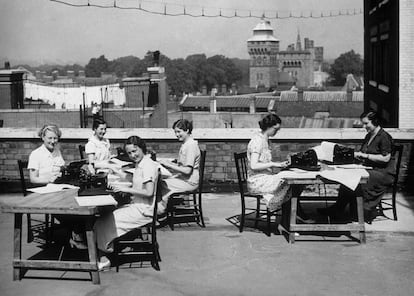
It is a growing phenomenon. A recent study published by economists David César Heymann and Eduard Alcobé indicates that the decline in seasonality of tourism spending in recent years is due, among other factors, to greater labor flexibility after the pandemic: “By increasing the possibility of choosing vacation dates with fewer restrictions, the age groups most active in the workforce can take advantage of more competitive prices, less crowding and, in general, a more comfortable tourist experience. Likewise, low birth rates reduce dependence on school calendars and, therefore, could make travel easier during less traditional periods.” If more employees take vacations in the low season, summer euphoria also spreads to offices. How is that change in atmosphere experienced?
Curious customs
According to Herman Melville’s story, Bartleby — the quintessential rebellious office worker — began his one-man revolt during the summer. Perhaps to avoid reaching the point of that famous scribe, journalist Gonzalo Aguirre explains that, in his work, he has always followed an important rule: “Find out which days my boss takes vacation so I don’t have to work when he’s around.” “The boss’s absence, combined with that general laid-back atmosphere where everything seems to be running at half speed, turns summer days at work into little vacations in and of themselves. Yes, you have to get up early, you have to work just as hard, and tasks must get done, but with the offices only half-full, the fact that many other companies you have to deal with are also running at half-speed or are closed altogether, and the fact that it’s hot, all of this creates an atmosphere of relaxation in the office,” he notes.
María Torralba, who works from Madrid for a multinational company, describes a similar situation, although she notes that, since her workflow depends on foreign offices, her workload doesn’t change much: “In Spain, seasonal patterns are generally respected — or at least everyone thinks along the same lines — but when you work with other markets, there’s nothing unusual about working in the summer. Maybe from now on, when the Germans and the French start feeling the heat, things will change.” The young woman explains that, even so, there’s a certain vibe in the air: “You run into a lot of people who are already burned out and need a break. But there are also fewer people in the office, and it’s much easier to build stronger connections or have slightly deeper conversations. That’s really nice: the conversations get better, and some pretty interesting opportunities arise. With the relaxed summer vibe, it’s easier to talk about different ways of approaching everyday life, and you notice that summer fosters certain dreams and hopes. It’s a time for intimacy, for going out to eat, or for sharing a little more.”
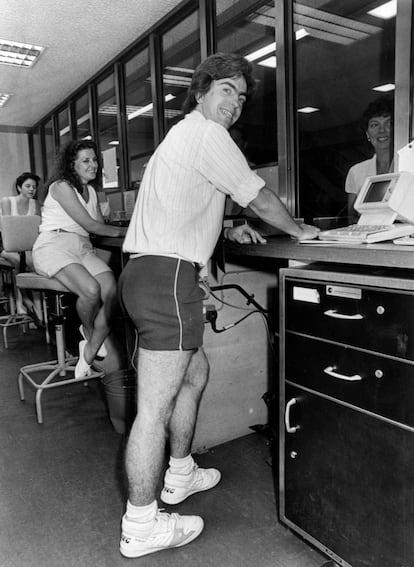
In some places, that relaxed atmosphere gives rise to unusual customs — and, once again, unusual attire: “I have a tradition with my colleagues on the editorial staff: every day, one of us brings a snack to eat mid-morning, since the intensive workday drags on and some of us don’t get home until 4 p.m. for lunch. Many dare to come in shorts — unthinkable the rest of the year — even if the temperatures allow it. You see flip-flops, and you see bags with a bikini strap hanging out or a towel or sunscreen peeking out because they’re heading straight from the office to the pool. At 3 p.m., the same colleague always plays a Georgie Dann song on his computer to remind us it’s time to head out,” Aguirre says.
But it’s not all Hawaiian shirts or beach-bar tunes by the desks. Mar Cabra, CEO of The Self Investigation, a consultancy specializing in mental health and work, says she personally finds it hard to work in summer and thinks talking about “summer euphoria” in these contexts is excessive. “I don’t feel productive when lots of people around me are enjoying themselves, when many are on vacation or social media is full of people sharing beach photos while I’m in Madrid […] That said, what I’ve found works for me is using summer as a period for reflection. In terms of work with The Self Investigation, the foundation I lead where we help companies work more healthily, summer is a slow period, so we’ve turned it into a time for reflection,” something she recommends to any professional.
Why not keep it up in September?
In The Book of Disquiet, Bernardo Soares, an accountant and heteronym of the poet Fernando Pessoa, reflects on his daydreams during “the summer tedium of the utterly quiet office.” Soares likes to watch summer storms arrive while he continues working slowly, though he then sinks into “feelings of desolation without space and the shipwreck of the whole soul” linked both to his work routine and his predisposition to melancholy. But it’s not only poets who feel negative toward repetitive or overly demanding jobs. In his essay Bullshit Jobs, anthropologist David Graeber argues that many contemporary jobs involve performing dozens of useless tasks (or tasks that exist only to justify the position itself) that also overload those who perform them.
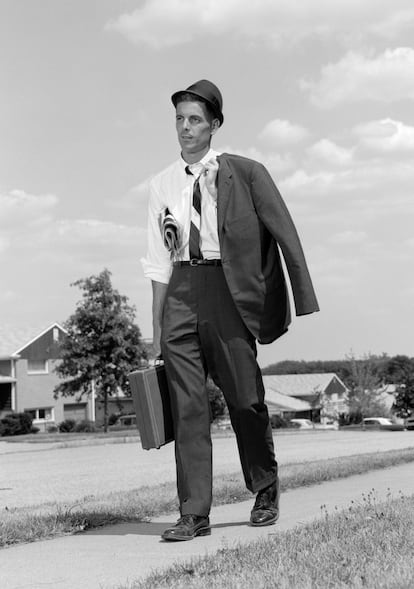
“Most work environments suffer from excessive workloads and we see this throughout the year, but especially during the periods before vacations, both summer and Christmas,” Cabra explains. “I believe conducting regular workload assessments is one of the main improvements that could be made in all organizations, especially during peak work periods, which tend to be the ones I’ve mentioned. An organization should know, without fail, when its peak work moments are.” Thanks to this approach, summer becomes an opportunity to reconsider everything that doesn’t work in an organization, and to look at other ways of working.
In fact, in her essay, Cabra lists the principal ills of the contemporary office: meetingitis, urgentitis and interruptionitis. These common problems are precisely the ones that tend to disappear during summer, as Torralba has observed: “Because there are fewer people, meetings decline, making it clear that we continue to work well without all that micromanagement, that is, without all those control strategies imposed on us the rest of the year. Without any of that the company doesn’t collapse, so it’s proven that such meticulous control isn’t necessary. It turns out that when you have a bit more leeway in managing your own deadlines and projects, without so much paternalism, the result in the end is the same or better.”
In this way, summer allows us to test ways of organizing work that could be applied throughout the rest of the year and not just be a brief exception: “In our team as well — where there are about six of us — we’re much more flexible in the summer. For example, some people have decided to work remotely only in the mornings so they can spend the afternoons with their families in Cádiz. Remote work becomes more widespread in the summer, and if things go well… Why aren’t we more open to remote work throughout the year? Well, unfortunately, in Spain it still has many detractors, whose arguments aren’t backed by any evidence at all. So the big question for me is why, as soon as September rolls around, it seems like the world is a different place,” wonders Torralba.
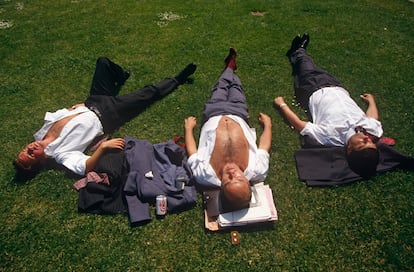
That’s what Aguirre has observed as well: the festive atmosphere in his newsroom not only doesn’t reduce productivity, but actually increases it: “Someone might read this and think: That office is a total mess — doesn’t anyone work there? But they’d be surprised to learn that yes, we get the work done; we work in a relaxed manner, wearing light clothing, and knowing that there will be food and, later, the pool. We work happily — if those two terms can even go together — or at least close to happiness. And we’re very productive that way. Big business leaders should think about it: maybe creating a sort of eternal summer in the office would give productivity a boost,” he concludes.
Sign up for our weekly newsletter to get more English-language news coverage from EL PAÍS USA Edition
Donald Trump
‘Nobody Should Be Forced To Return To Haiti’: UN Expert Warns The Island Is Unfit To Receive Deportees

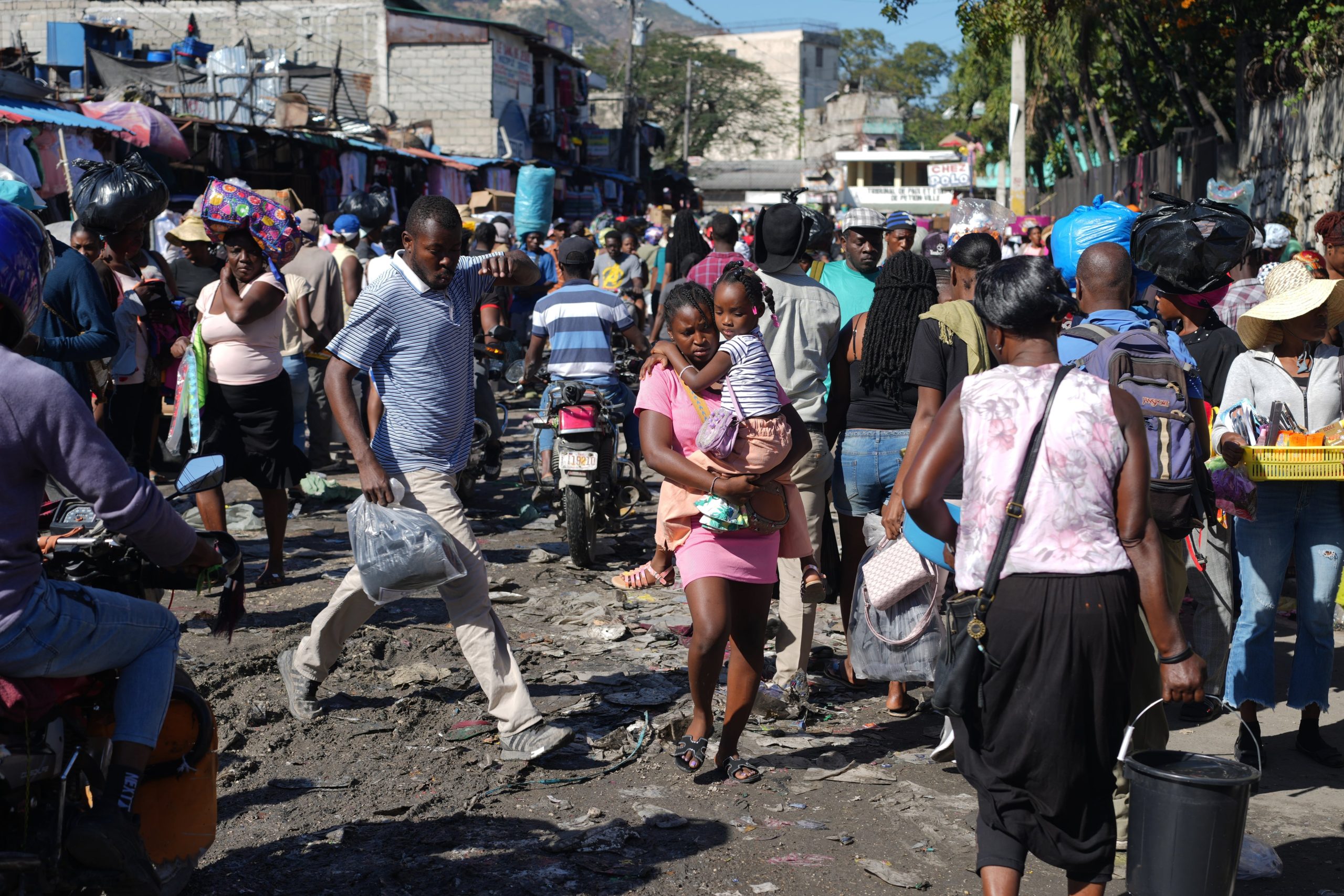
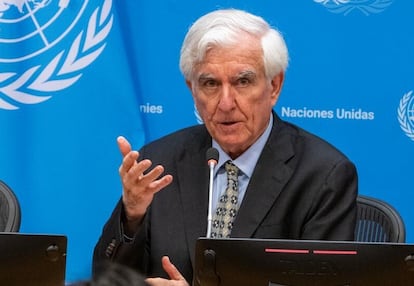
Not even United Nations envoys, with their escorts and armored vehicles, can land in Port-au-Prince and move safely around Haiti, a country dominated by gangs since the assassination of President Jovenel Moïse in 2021. When he travels to the island, the UN High Commissioner for Human Rights’ designated expert on Haiti, William O’Neill, lands in Cap-Haïtien and then travels by helicopter. “I cannot go to most of the capital,” he says.
Gangs control almost all of Port-au-Prince and much of the country. The violence from their clashes has displaced more than 1.5 million people, deepening the humanitarian crisis that Haiti was already facing. Families survive on remittances sent by relatives abroad: billions of dollars that pay rent, healthcare, schools, funerals, taxes for a weakened state and the fees demanded by the gangs.
And now the United States, the Dominican Republic and other countries that host most of the diaspora have set out to deport them to an island that is not able to receive them.
“Nobody should be deported or forced to return to Haiti,” O’Neill tells EL PAÍS in an interview from New York. “The human rights situation is catastrophic and there is no way any forced repatriation at this moment could be safe, dignified and durable. Therefore, they should not do it. It violates international law and, morally, it is terrible to send people back into this situation,” adds the lawyer and human rights expert who is documenting the escalation of the humanitarian and security crisis in the country.
The past few months have been particularly violent, O’Neill says. Some of the groups that make up the Viv Ansanm gang alliance, which dominates Port-au-Prince, are fighting over key checkpoints on the roads. And north of the capital, Grand Grif and Kokorat San Ras have been expanding their territory toward the center of the country.
Haitians in the diaspora have nowhere to return to. “They arrive in Cap-Haïtien and the Haitian government gives them the equivalent of about $60 or $70, in gourdes, and says, ‘Good luck.’ Where are they supposed to go? If they come from gang-controlled areas, there is no way to return safely. And if they get past that, they go back to a neighborhood that has been burned and where everything is destroyed. There are no jobs, no opportunities, very little schooling, no medical care. Many Haitian families in Haiti were surviving on money sent back by Haitians working legally under TPS. And that money is already starting to dry up,” O’Neill describes.
Temporary Protected Status (TPS) protected roughly 350,000 Haitian immigrants in the United States from deportation. The first designation was approved after the devastating January 2010 earthquake and subsequent administrations renewed it until Donald Trump entered the White House and moved to end it.
TPS for Haitian nationals expired at midnight on July 27, and on August 5 a court took the legal step that confirmed its termination. With the status gone, beneficiaries also lost their work permits and many began to be laid off before the deadline dates arrived. Employers are already feeling the absence of this workforce in cities such as Miami, New York and Philadelphia, especially in healthcare, hospitality and agriculture.
The worst place to be a child
Organizations that support Haitian communities in the United States estimate that more than 50,000 U.S. children with dual nationality have at least one parent or guardian who is a beneficiary of such programs and therefore at risk of deportation. The removal of protections forces families to face impossible choices: separate the family, risk detention and deportation, or return to the island together.
On every occasion in recent months when he has addressed the situation of children, the UN expert has said that Haiti is one of the worst places in the world to be a child.
“In eight years there has not been a single full school year for any Haitian child, not even in areas where gangs are not as powerful or do not have control, due to disruptions in the economy, prices, fees, displacement and stress on society. Teachers are not paid, they are at risk and some have been killed,” the lawyer says.
Although the exact number of gang members in Haiti is unknown, UNICEF and the United Nations estimate that roughly half are children under 17. Many of them do not even know their exact age and lack birth certificates.
“In gang-controlled areas children have very limited access to school, and they are also exposed to incredible levels of violence. They see it, they hear it and sometimes they are victims of it, or their relatives or close friends are,” O’Neill says. And both in those territories and in areas without armed clashes, girls, adolescents and women are exposed to sexual exploitation and abuse.
The displacement camps do not offer safety either: they are makeshift shelters set up in public parks and vacant lots, tents and cardboard-and-wood shacks where hundreds of people live without food, water or basic services. “Haitians barely have enough to live on or to eat. How can they be expected to take on more mouths to feed in places that are already so overcrowded?”
Sign up for our weekly newsletter to get more English-language news coverage from EL PAÍS USA Edition

A Livestreamed Murder: The Killing Of A Narco Influencer In Mexico

Rojales Cracks Down On Illegal Dumping

Should Horse Carriage Rides Be Banned?
First EasyJet passenger from UK refused entry to Gibraltar after new treaty
History comes alive as Marina Alta’s iconic human tower honours King Jaume I
How one music festival is putting Los Alcázares and Murcian talent on Spain’s map


-
easyJet1 week ago
First EasyJet passenger from UK refused entry to Gibraltar after new treaty
-
Costa Blanca North2 weeks ago
History comes alive as Marina Alta’s iconic human tower honours King Jaume I
-
Costa Calida2 weeks ago
How one music festival is putting Los Alcázares and Murcian talent on Spain’s map
-

 America2 weeks ago
US Recalls Over 19 Million Eggs Due To Salmonella Outbreak That Has Caused Illness In Nearly 100 People
-
Almeria2 weeks ago
Vera Triathlon returns with 300 spots and sprint and Olympic challenges
-

 New Developments1 week ago
Inside The Most LUXURIOUS Apartment Building In Spain!
-
Latest2 weeks ago
Thousands Of Migrants Swim From Morocco To Spain’s Ceuta Territory
-
Latest1 week ago
Trump And Far Right Seize On Spanish Migration Crisis