
ElPais
Six Deported Clients, A Pink Private Jet And A Mansion In Mexico: The Alleged Fraud That Made The ‘Miracle Lawyer’ Wealthy


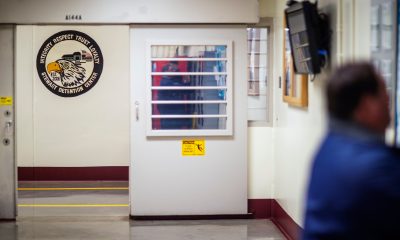
While Carlos Navarro Ceja was enduring confinement in a cold immigration detention center, social media circulated a very different image of his case. In a video, his legal defender, Alexandra Lozano, who called herself “La abogada de los milagros” (The Miracle Lawyer), appeared smiling alongside him and his wife, showing what she claimed were both their permanent resident cards. In fact, it was a work permit that was later revoked by authorities. Navarro Ceja never obtained a green card, and Immigration and Customs Enforcement (ICE) agents detained him in December 2025. After four grueling months in custody, in April 2026 he decided to accept deportation and returned to his native Michoacán, ending 33 years of life in the United States.
Navarro Ceja and his wife, María Guadalupe Fernández Raya, gave Lozano the $47,500 they had saved for years, hoping to regularize their immigration status. Their plan was to seek protection under the Violence Against Women Act (VAWA), a provision that protects certain victims of abuse and allows them to apply for immigration benefits. They said they had compelling evidence to win the case. Instead, they ended up caught in what appears to be one of the biggest alleged immigration fraud scandals in decades.
After facing multiple allegations of legal malpractice, Lozano surrendered her license to practice to the Washington State Bar and shut the doors of several law offices, leaving nearly 54,000 immigration cases in limbo. At least six of her clients, including Navarro Ceja, were deported to Mexico, and many others ended up on ICE’s blacklist. It is alleged that several VAWA petitions that her office submitted contained false or exaggerated statements that did not withstand scrutiny in immigration courts, resulting in many clients facing removal orders.

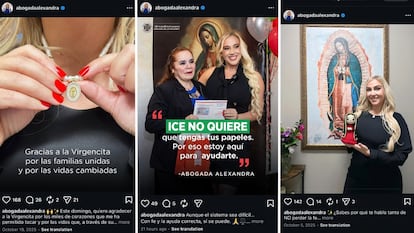
Two class-action lawsuits filed in a federal court in Seattle contend that Lozano amassed a fortune in a few years through an alleged fraudulent scheme, driven by an aggressive marketing strategy on Facebook and TikTok that projected an almost divine image of her services. With her trademark blonde hair and Spanish marked by a slight accent, she often recorded videos in front of a painting of Our Lady of Guadalupe (a venerated figure in Mexico, where the Shrine of the Virgin of Guadalupe is the most visited Catholic pilgrimage destination in the world) or wore dresses whose designs evoked the Sacred Heart of Jesus. “Thanks to the Virgencita, for families reunited and for lives changed,” one of her ads said. Today, however, about 35 Mexicans claim in the lawsuits that they were victims of someone who falsely promised to pull them out of the shadows.
Illicit enrichment, organized crime, legal malpractice and breach of contract are among the alleged offenses cited in the complaints against Lozano. “Based on average fees charged (up to $25,000 per case) and the number of current clients, Lozano has received payments or promises of payment exceeding $400 million,” one of the suits states. “Lozano’s firm described itself as ‘a pioneering law practice that revolutionized immigration law,’” the document adds, noting that, nevertheless, that purportedly “pioneering,” “innovative and novel” approach was fraudulent and illegal.
Lozano’s suspect fortune
In an interview with Super Lawyers magazine in July 2021, Lozano said her firm had about 100 employees. Five years later the business had grown rapidly: the staff topped 750 workers handling cases from offices in Seattle, Chicago, Houston, Los Angeles and San Antonio, and also had personnel in Mexico, Colombia, Nicaragua and the Philippines. All of those offices closed after she lost her license.
Her success was fueled by an intense social media presence and word of mouth within the immigrant community, a combination that drove up client numbers and, with them, revenues. According to the class-action suits, she represented more than 80,000 people, mostly undocumented Mexican immigrants, who paid between $10,000 and $25,000 per case.
With part of those earnings, Lozano bought herself a Bombardier Challenger 300 private jet, valued at about $25 million, which she ordered painted pink and which she used for business and leisure trips. “It’s very rare for an attorney to own a private jet. What she did is utterly outrageous,” said Vicente Barraza, who legally represents 34 alleged victims in one of the suits, in an interview with EL PAÍS. “This is the worst immigration fraud case I’ve encountered. It has been a real catastrophe for the Hispanic community in this country.”
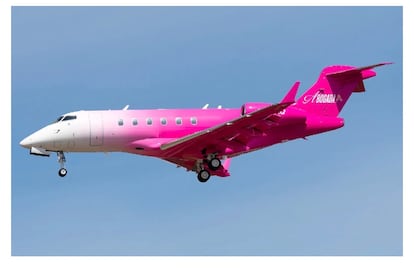
The pink jet was just one of the extravagant whims that Lozano is alleged to have indulged in. The lawsuits claim her main gamble was building what they describe as a “multimillion-dollar portfolio of domestic real estate.” Her assets reportedly included two luxury condos in Seattle and Chicago valued at more than $4 million, as well as two properties in Mexico. The most expensive one was a mansion in Bosques de las Lomas, one of the most upscale neighborhoods in Mexico City.
Court documents say that estate was acquired through a network of companies. Among them was Sueño Cumplido, which allegedly handled the transfer of the private jet; Five Star Legacy Trust, which bought the Seattle and Chicago condos; and 5 Branches Holding Company, accused of managing various international assets of Lozano, including Quetzal International Services and other entities registered in Colombia.
Lozano had other investments, such as Amiga Lawyers and Ally Lozano, companies dedicated to training lawyers in her business strategies. Between 2019 and 2021 those firms reportedly billed more than $1.7 million teaching courses on methods developed by the attorney herself.
Despite the firm’s growth, much of the work fell to staff with knowledge of immigration law but without licenses to practice law. Files indicate the firm presented them to clients as “licensed” to create the impression they were authorized attorneys.
The firm also relied on lawyers based in Mexico and Colombia to review files and communicate with migrants, making them believe they were in the United States and able to practice here.
“There are no words to explain the impact this attorney’s actions will have,” Barraza said. “She expedited the deportations of many people she was supposed to defend.”
The strategic use of the Virgin of Guadalupe
In one of the promotional videos that still circulate on social media, Lozano explained the presence of a large painting of the Virgin of Guadalupe at the entrance to her Seattle office. Many clients, she said, came to the firm to leave roses and flowers while staff lit candles “to give thanks for all the good outcomes and also to ask for help in the cases.”
That image influenced the decision of the couple Erika Mejía Sánchez and Juan Manuel Villanueva Vega, parents of five U.S. citizens. The pair said they trusted the firm “in part because of Lozano’s use of the Virgin of Guadalupe in her marketing materials and the connotations associated with the Virgin.”
They paid more than $32,000 hoping to obtain some immigration relief. Before turning to Lozano, several lawyers had advised them not to file any petitions because of their multiple irregular entries into the country. They feared a judge would deny their request and that the case would attract ICE’s attention. But Lozano offered them a different path, almost a miracle: she assured them they would receive a work permit in just six months and permanent residency within a year.
The strategy relied on a lie that Lozano deemed compassionate: filing a VAWA petition based on false accusations of abuse by their own daughter. The file included a psychological evaluation prepared with misleading information by two companies linked to Lozano: En Solidaridad and Salud Total.
Villanueva Vega’s application for permanent residency, as with other clients of the firm, was denied by immigration authorities. Now this Mexican national faces the outcome he sought to avoid: a deportation process.
Sign up for our weekly newsletter to get more English-language news coverage from EL PAÍS USA Edition









Abelardo de la Espriella
A Strained Colombia Ushers In A New Political Era With Abelardo De La Espriella

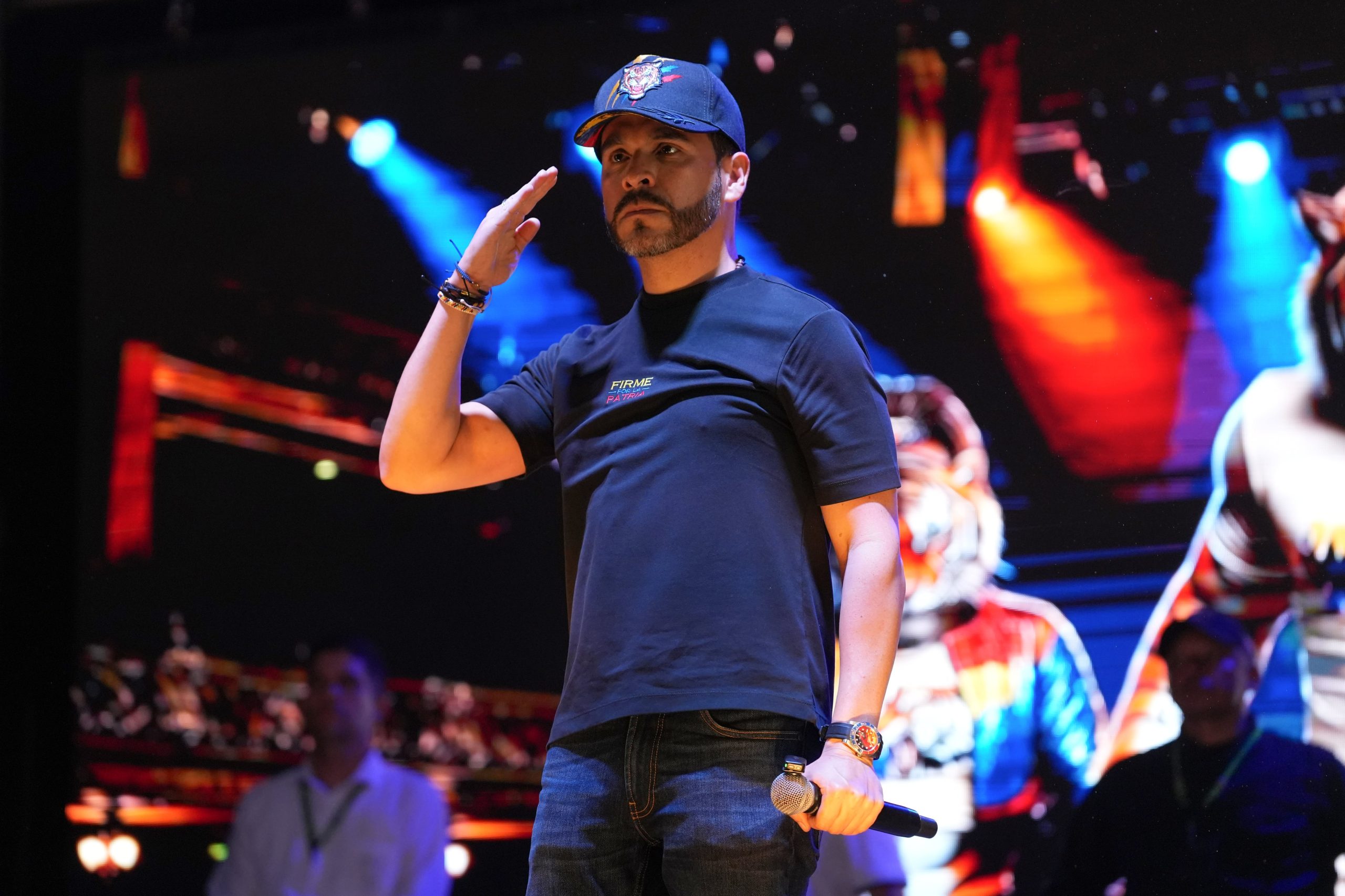
Every four years, August 7 is a very particular day in Colombia: the public holiday commemorating the battle that sealed the independence forces’ victory over the royalists in the wars of independence is also the moment when a new head of state takes office in a country with a long presidential tradition. In 2026 it is also the day the left hands over a power that eluded it for decades, and the day a president takes office with no prior political career — but with a promise to change Colombian politics: Abelardo de la Espriella, the theatrics-loving criminal lawyer who surprised voters in the first round of voting May and won again in the June runoff.
The incoming president is a fierce critic of outgoing Gustavo Petro, yet shares one of Petro’s most notable traits: an emphasis on symbolism. Four years ago, Petro reluctantly stood by the man who on that day relinquished the post, the right-winger Iván Duque; this time De la Espriella did not invite several ex-presidents, when in the past they had all been invited to the ceremony. De la Espriella also decided, in a break with precedent, to move the inauguration outside Bogotá and tried to hold it at a military garrison — a plan that Petro blocked by forbidding the armed forces and police from lending their facilities.
The outgoing president and members of his party in Congress, for their part, announced they would not attend the event; they have said De la Espriella is not a legitimate president, either alleging an election fraud that Petro insists on without evidence, or citing the new president’s dual Colombian/U.S. citizenship — which is lawful in Colombia but is strongly questioned by the left.
This is therefore not only a change of regime and political orientation — a pendulum swing that four years ago moved from right to left — but a much deeper polarization, with an incoming president who has talked about judicially pursuing the outgoing one. It is at once proof of the breadth Colombian democracy has achieved — able in a span of four years to bring to power both a former guerrilla and a right-wing outsider — and a test of how resilient its checks and balances are against the rancor that divides the two leaders.
That level of confrontation also tests one of Colombia’s regional trademarks: a tradition of institutional moderation and 70 years of peaceful transfers of power, without coups, expropriations or hyperinflation. The question this transition raises is whether that tradition can withstand sectarianism, baseless fraud allegations and the frontal clash between the outgoing and incoming executives, or whether today’s strain is only an early symptom of something deeper. That rancor goes beyond a mere shift in political trends — significant in itself when the incoming government combines elements of the far right, such as a foreign minister who embraces theories from the MAGA movement, or a housing minister who has been active as a Christian pastor, with elements more typical of the traditional right personified by former president Duque.
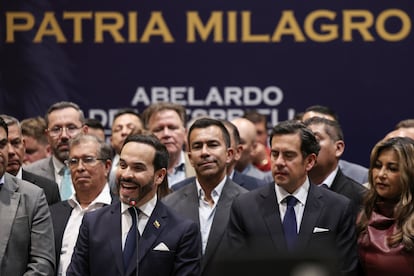
The acrimony is partly explained by the fact that De la Espriella is an unusual president for Colombia. His predecessors had been congressmen, ministers or presidential hopefuls for years; they were long-known figures in politics who had negotiated with, fought or even allied with their rivals. He, by contrast, at 47 was known for taking high-profile media cases and for having advised paramilitaries during their peace negotiations with the Álvaro Uribe government more than 20 years ago. But he had no electoral experience or history in public office, his background was private business, from criminal law to a rum brand.
That is why, when he burst on the political scene, it created a disruption, and why his campaign strategy — centered on political marketing more than ideology, though consistently marked by sharp criticism of the leftist government — proved effective. An amateur singer, Abelardo, as he is known, gained attention through a very contemporary digital strategy quite different from that of other candidates who, to varying degrees, had one foot in the internet world but lacked a fully developed digital persona like De la Espriella’s.
While other right-wing candidates grouped together and debated a mechanism to choose one of them, and the left organized around continuing Petro’s project, De la Espriella focused on specific sectors: retired military personnel, highly religious people and small business owners. That is how he won an electorate that in the past had supported candidates backed by former conservative president Álvaro Uribe. From there came the coalition that took him to the presidency — a coalition as varied as the team that will accompany him in power from today: activists, career politicians, business association figures, former congressmembers from established right-wing parties such as Cambio Radical and the Centro Democrático, and evangelical political leaders. What Colombia will learn starting today is De la Espriella’s character as a political leader and public administrator.
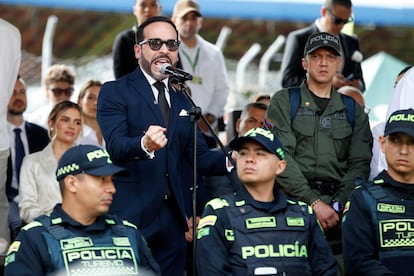
In all his roles the lawyer will face complex challenges, such as deteriorating security across large parts of the country, where illegal economies — drug trafficking, illegal mining and extortion — have fueled the growth of various armed groups that often fight each other violently to protect their revenues and exercise criminal governance that supplants the state in its most basic functions.
Faced with that situation — which revives traumas in a country that for decades endured a complex armed conflict — De la Espriella has responded with simple, high-impact formulas he will need to implement: building mega-prisons, refusing to negotiate with any armed group, and calling for the state to reassert its authority in the strongest terms. Experts say those approaches clash with a more complex reality, in which the opponents are not armies like the one the now-defunct FARC guerrilla tried to build at the end of the 20th and start of the 21st century, but groups that often subcontract or franchise illegal profits across multiple locations. They are more illegal corporate structures than guerrillas in the classical sense. The lack of a clearly known strategy to confront them underscores the open questions. Other problems, such as the large fiscal deficit left by the Petro government and the humanitarian crisis in the health sector, will also require rapid responses — a cocktail of challenges that would be demanding for any experienced leader.
To those challenges, De la Espriella adds an atypical one in recent Colombian politics: managing the opposition of an ex-president who has shown no sign of wanting to lower the rhetoric, who leaves office with relatively high popularity — around 40% — and who has made a career as an opponent more than as a government administrator. Petro departs the presidency accusing his opponent of electoral fraud, making De la Espriella’s start unusual for the country: it has not happened since the last century that an outgoing leader became, from day one of his successor, the most visible and belligerent head of the opposition.
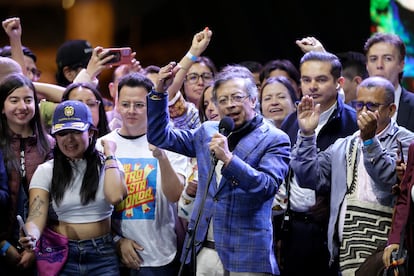
Aware of all this, and conscious that his background could work against him, the incoming president has delegated much of the public leadership to his vice-presidential running mate, former commerce and finance minister José Manuel Restrepo. He is an economist respected in academic circles who has served as rector of three universities in Bogotá and Medellín and has a business background. He has begun to offer a degree of reassurance to business sectors and to more traditional, less antiestablishment conservatives than those directly represented by De la Espriella, and he can help lead a team and attract figures for key government posts. Although some nerve-center positions remain unresolved, such as the head of the National Planning Department or the presidency of Ecopetrol, the cabinet members that have already been named makes it clear that De la Espriella seeks a mix between a disruptive, attention-grabbing activist and a more boring but gravitas-laden technocrat.
It is a combination that also partly combines his own representation of the Caribbean — the region he originally comes from and which has not had a president in more than a century — with the more austere Andean interior that Restrepo embodies. Regional balance has been central to his pre-inauguration promises. De la Espriella has said he will seek to reduce the size of the state by 40%, cut taxes, and within his first three months capture or kill five significant leaders of different illegal groups. He has also said he will make Barranquilla — the main city of the Caribbean region and the location of his law firm’s headquarters — an alternate capital of Colombia, and that other major cities such as Medellín and Cali will also host government offices. That is a clear, symbolic way to reject what his close friend, partner and campaign strategist Carlos Suárez has long called “bogocentrism,” alluding to Bogotá.
De la Espriella has also announced that he will spend much of his time in the regions, listening to mayors and local residents, while Restrepo handles administration in Bogotá and makes the customary international visits. This is not only a vision of how to run the country but a political strategy: it has already earned him good relations with mayors and governors. Those centers of political power, distant from Petro, are key to building a national right-wing force that De la Espriella has begun to forge with the founding of his own party: Defenders of the Homeland.
How far will that party fly on its own? To what extent does De la Espriella represent the new right that already has prominent exponents in the Americas such as Javier Milei in Argentina, Nayib Bukele in El Salvador and Donald Trump in the United States? That remains to be seen. Colombia has a strong, diverse and powerful private sector; armed forces proud of maintaining their distance from politics and of not having staged a coup in more than 70 years; and regions with significant autonomous power. For now De la Espriella offers more promises and question marks than a clear path in any direction. What happens in the coming days will help determine whether he ultimately takes the course of a traditional right with new forms, or whether behind his revamped digital image lies a new era for the country.
Sign up for our weekly newsletter to get more English-language news coverage from EL PAÍS USA Edition

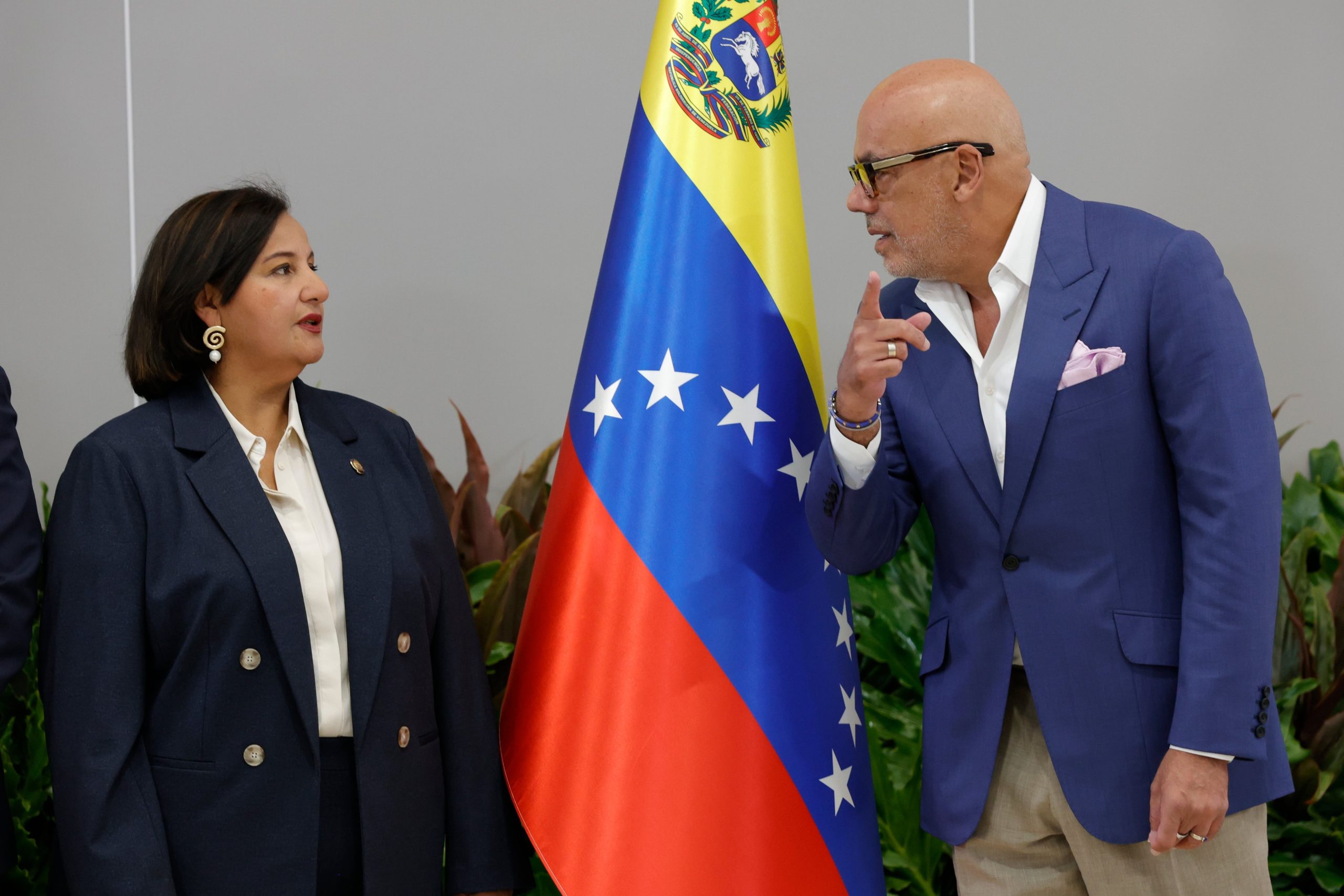
Talks between Delcy Rodríguez’s government and the opposition began Thursday behind closed doors with a meeting in Caracas between the president of the National Assembly, Jorge Rodríguez, and Dinorah Figuera, the opposition figure that Washington has chosen to lead the negotiations. Delegations from both sides met at the La Carlota Convention Center, where the United Socialist Party of Venezuela (PSUV) holds its press briefings, and posed unsmiling for the official photo. The press was not allowed access to the meeting. Later, in an identical statement published by both parties, they said their teams would remain in continuous working sessions until August 12, when they will decide whether to continue the talks.
“The parties subscribe to the principles of respect for national sovereignty, negotiation in good faith and the search for benefits for Venezuela,” states the document published by Jorge Rodríguez on social media. It adds: “A political, peaceful, democratic and constitutional solution; mutual recognition and respect between the parties; political equality and equal treatment at the table; verifiable fulfillment of commitments; protection of human rights and the political rights of all forces.”
The first meeting received the blessing of the United States. While the teams were together, the State Department issued a statement saying “these direct talks present a unique opportunity.” Washington has designed this dialogue and imposed Dinorah Figuera on the opposition to carry out the negotiations. On Thursday it said it remains “committed to supporting this Venezuelan-led process, which plays a key role in the President’s three-phase plan to bring about stabilization, economic recovery and political reconciliation, and a peaceful transition.” The statement urged Venezuelans to back the effort.
The opposition delegation included Marco Aurelio Quiñones, Desiree Barboza, Ramón López, Jorge Millán and Juan Miguel Matheus, leaders of Voluntad Popular and Primero Justicia and, together with Figuera, members of the 2015 National Assembly, the institution that the United States recognized during Donald Trump’s first administration as democratically elected after the opposition won its first electoral victory over Chavismo with a qualified majority, leading Juan Guaidó to set up an interim administration. On the Chavista side, representatives included the minister of University Education, Ana María San Juan, along with the lawmakers Jorge Arreaza, América Pérez, Génesis Garvett and Pedro Infante.
“Today we opened the process that will chart the course toward democracies and the reinstitutionalization of Venezuela between the deputies of the 2015 Assembly and representatives of the interim government,” Figuera wrote on her social media after the meeting. “We are working firmly for the democracy and freedom of Venezuelans.” Jorge Rodríguez also posted photos of the meeting with a shorter message: “The national dialogue begins with former deputies of the 2015 National Assembly.”
The gathering was designed in Marco Rubio’s office and has raised expectations that it could finally find a way out of the country’s political crisis. Within the opposition spectrum, however, the initiative has been seen as a negotiation between the Rodríguez family and Washington.
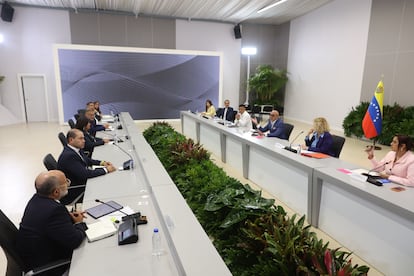
The topics up for discussion were announced on August 1, when the sides held a phone call. Assistance for those affected by the earthquakes, strengthening democracy and guarantees of political and civil rights are the three points on the agenda. Within those limits, it is understood that there will be a renewal of the electoral and judicial authorities, that bans on political parties will be lifted and that a calendar will be set for presidential, regional and parliamentary elections — the opposition’s main demand — in addition to the release of all political prisoners.
The meeting was convened after news emerged of the death under house arrest of Venezuelan-Uruguayan citizen José Breijo, 71, who had been imprisoned for two years for taking a photo and who this year was granted house arrest on humanitarian health grounds.
This new dialogue has met resistance. In particular, opposition sectors question the legitimacy of the representation. Longtime opposition leader María Corina Machado has been sidelined by a decision of the United States and to the satisfaction of Chavismo, which has readily accepted Figuera as a valid interlocutor. Machado has acknowledged she was not consulted about this initiative — which has been gestating since April — but said she will not be an obstacle to achieving its objectives. From the chavista side, Diosdado Cabello, the third pillar holding power since January 3, dismissed the process and said that “every day there are dialogues in this country.”
Sign up for our weekly newsletter to get more English-language news coverage from EL PAÍS USA Edition

La Posesión De Abelardo De La Espriella Como Presidente De Colombia, En Vivo | “Ha Comenzado La Recuperación Del Orden, La Autoridad Y La Libertad”: El Primer Discurso Del Jefe De Estado
Sóller’s new art night will transform the town square into an open-air gallery
Shocking pink on Cotobro beach: Rare flamingo stops traffic in Almuñecar


-

 New Developments2 weeks ago
Luxury Villas For Sale, Estepona – ProjectL1
-

 Amazon2 weeks ago
Un Tangle Teezer De Viaje: El Cepillo De Pelo Perfecto Para Tu Neceser De Vacaciones
-
Latest2 weeks ago
Spanish Wildfires Intrude On Holidaying Foreign Visitors
-

 Barcelona2 weeks ago
Cleaner Air May Be Adding Fuel To Spain’s Scorching Summer Heatwaves, Researchers Claim – But Are They Correct?
-

 New Developments2 weeks ago
Stylish 3-Bedroom Apartment With Panoramic Sea Views – Benalmádena
-
Costa Blanca North2 weeks ago
History comes alive as Marina Alta’s iconic human tower honours King Jaume I
-
Almeria2 weeks ago
Vera Triathlon returns with 300 spots and sprint and Olympic challenges
-
Travel2 weeks ago
Gatwick stinks! Water crisis shuts toilets and bars at both terminals – passengers warned to sort essentials at home before flying