
Amazon
Amy Odell, Anna Wintour Biographer: ‘Her Driving Force Is Amassing Power, Consolidating Her Power’

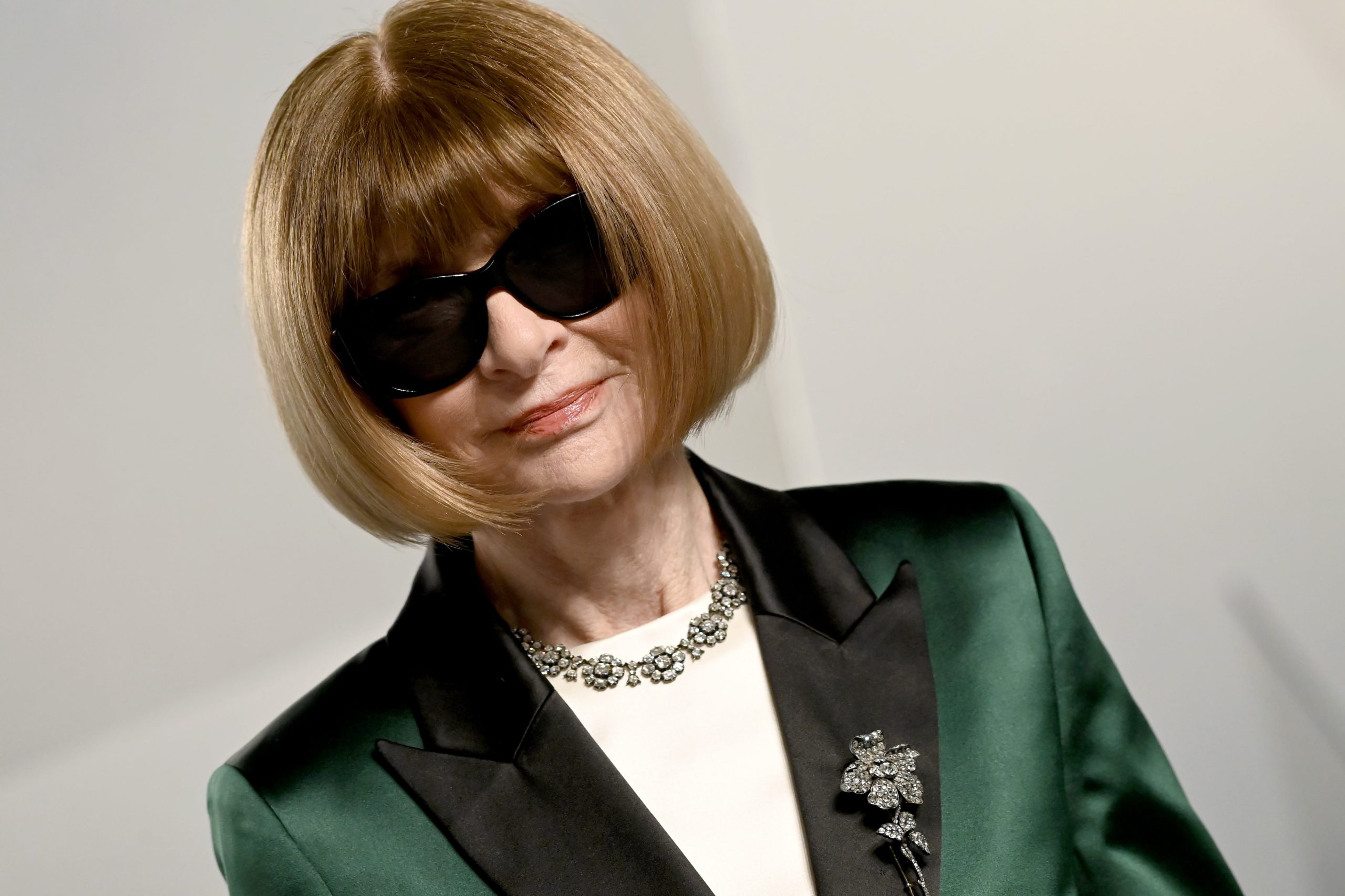
The day after Donald Trump’s victory in the 2016 election, legendary and feared editor-in-chief of Vogue Anna Wintour arrived early to work, as always, and called an emergency meeting. While addressing her team, something unprecedented took place: she broke down in tears. The episode opens Anna: The Biography, a new release from journalist Amy Odell that focuses on the powerful editor who for decades has decided what’s hot and what’s not.
That anecdote heralds the book’s mission statement. Based on more than 250 interviews, it sets out to humanize the sphinx, to reveal the person hiding behind that iconic bob and the most recognizable sunglasses in fashion. The pages of Anna are sprinkled with a wealth of juicy details: how, during her time at New York Magazine, she was known for throwing pennies in the trash, and for infuriating her bosses by featuring a $9,000 goatskin trunk in the publication. That after the 9-11 attacks, she returned to work immediately. How, on one occasion, she asked for the neck fat in a baby’s photograph to be retouched. That she banned garlic, onions, and chives from the dinner menu at the exquisite Met Gala because they give people bad breath. Beyond industry gossip, the book looks to explain the origin of Wintour’s influence, while highlighting the leadership of a woman who has unapologetically exercised power, despite the double standards by which she has been judged. EL PAÍS interviewed Odell from New York.

Question. At the beginning of the book, you mention that many of the 250 people you interviewed found it quite difficult to explain why Wintour is so powerful and what exactly her power consists of. I would love for you to elaborate on your own conclusion.
Answer. I think that the key lies in the fact that her influence truly transcends the limits of the industry. Her tentacles reach into infinitely different areas. I was reflecting on that, thanks to the premiere of The Devil Wears Prada 2, and recalled the interviews I did with the movie’s director, who also did the sequel, as well as with its screenwriter, who also participated in the second installment. They filmed the Met Gala scene in the American Museum of Natural History, because it was the only place in the city where Anna had no influence. In any other place, people were afraid of offending her. And even though she couldn’t have cared less about the movie, that episode serves as an excellent metaphor for her influence.
She has had a decisive voice in technology, fashion, entertainment, and sport, and it goes without saying, in the publishing world and media industry. I asked André Leon Talley to describe her power, and he told me that her ability consists of making someone say “yes” when what they really want to say is “no.” That is influence. He offered me an example related to Karl Lagerfeld; the exact situation had to do with a Met Gala, the year that the theme was dedicated to Chanel. Lagerfeld had been doubtful about participating; he was no fan of the combination of clothing and museums. Still, she managed to convince him to accept. In fact, there are some very colorful stories out there about how he had to keep his strict diet a secret during the event.
Q. What drives her? What is the motivation behind that driving force?
A. Power. Amassing power, consolidating her power. If you look at Vogue, it’s more of a brand than a magazine. She has delegated the editorial side of the magazine. That way, she can dedicate herself to Vogue World, she can organize the Met Gala. She can attend Haute Couture Week. That’s how she spends her time.
Q. Let’s take a step back. After years of speculation, Vogue finally announced at the end of last year that the magazine would have a new editor, Chloe Malle. What do you think led Wintour to step aside?
A. It’s merely a way to consolidate her power. She doesn’t have to deal with the magazine anymore. Directing a website is actually a truly arduous job: you have to manage the YouTube channel, Instagram, TikTok, Facebook, create videos for each platform, promote your links everywhere to redirect traffic to your site, generate revenue through affiliations and advertising, keep up with the daily news cycle, optimize for SEO, produce original reporting, and carry out exclusive photoshoots… It’s a huge amount of work, but with much fewer resources. So Anna, in a certain way, has washed her hands of all of that. And now, we see her sitting in the front row alongside Gavin Newsom and Baz Luhrmann, at the Vogue World Los Angeles event.

Q. Do you think she just can’t cope with the magazine anymore, that she doesn’t care, or that it has simply become too difficult for her?
A. I think she doesn’t feel it’s worth investing her time in it. Anna believes, and one has to laud her for it, that giving back is important. She believes in charitable work. She thinks that Vogue should give back to society, and she has had a great philanthropic career: not just supporting people with mental health conditions, but also in the area of adolescent mental health and the fight against AIDS. That is a subject that really matters to her. She wants to be remembered for her philanthropy.
Q. I was surprised to discover that in your book, some of the canonical aspects that today we take for granted in magazines were invented by Wintour. For example, putting celebrities on the cover. What other things did she establish that eventually became the norm?
A. I don’t know if she invented it, but I think she proved that it was the future. It seems to me that what Wintour is really good at is contextualizing fashion within the world of culture. If you look at old issues of Vogue, from the 1960s and 1970s, you’ll see a lot less of that. They focus more on fantasy. They sent a photographer and a model with a trunk full of clothes to Hawaii for weeks. And it was like, “Come back with something spectacular.” And sometimes, they came back with truly extraordinary material.
With Anna, that dynamic changed. She said, “Madonna is interesting right now, she’s a controversial figure. Let’s put her on Vogue. Let’s change the perception of who Madonna is and what Vogue represents by putting her in the magazine.” One of Anna’s first big hits as an editor took place when she worked at New York Magazine. There, she did an editorial report that was inspired by art. She contacted the New York designers of the moment, the coolest ones, and got several artists to create works inspired by their collections. And then they shot the results together. That was what led her to be hired at Vogue.
And she repeated that formula when she became the head of the magazine. I think that’s a perfect example of how to contextualize fashion. It is not just a catalogue, nor is it only about showing the garments we see in the front row of a runway show. It’s about the place that fashion occupies in culture, and about how culture and fashion converge.
Q. You mention Madonna in your book. You describe how a man sat next to Wintour on an airplane and told her, “Madonna will never appear in Vogue.” And Wintour thought, “Well, now I’m going to feature her.”

A. Now she’s doing the same thing with Lauren Sánchez [the wife of Jeff Bezos]. I don’t think many people believe that Sánchez is Vogue’s style.
Q. If you had to choose three emblematic or defining moments from her time as Vogue editor that were similar to the Madonna episode, what would they be? In terms of editorial and cover decisions.
A. I think that her first cover is historic, it’s a slice of fashion history [it was the first time the magazine featured jeans on the cover, signaling that Vogue was looking to become a more accessible product]. The Madonna cover is important. The Ivana Trump cover is too. At the same time, I think her great mistake, probably the biggest of all, was that puff piece on Asma al-Assad [wife of Syrian dictator Bashar al-Assad]. A lot of people have forgotten that one. There are people who warned her, “Hey look, I don’t know if this is a good idea.” And she didn’t pay any attention. I think that her leadership style gives good results the vast majority of the time, but this case in particular is an example of when it doesn’t work.
Q. We often focus on Wintour’s career in the fashion world, but your book also highlights her general business insight. Do you think she would have had as much success in a different industry, like finance or politics, or do you consider her power inextricably linked to luxury and fashion?
A. It’s hard to say. She’s always been very smart, she’s always been very well connected. That being said, her career began at the end of the 1960s and the beginning of the 1970s, and I don’t know how many industries were open to women truly reaching great success during that time. That is the only reason why I question how to respond. It’s true that she loves fashion. She knows that world inside and out, better than anyone; she has a true passion for it. That being said, observing her today and seeing what she’s become, there’s no doubt she could head Net-a-Porter or a non-profit; she could direct the LACMA [Los Angeles County Museum of Art].
Q. Your biography covers decades of massive change in fashion and consumer behavior. What did Wintour understand from the beginning about staying relevant that others perhaps did not?
A. She always talks about looking to the future, of not getting left behind. I think that there are examples of how that philosophy has done wonders for her. Examples in which she acted on it, and examples in which she did not. I find it interesting to see how the people blame her for how Condé Nast was left behind when it came to the internet. I don’t think that was her fault — she was the one who, back in 1998 or 1999, asked designers to post their catwalks online. They didn’t want to, because they were worried about knock-offs and piracy. And she wrote them a letter begging them, “Please, do it.” And they did it, because she asked them to. And that was how she managed to turn a “no” into a “yes.”
Q. In fact, she is one of the first old-guard editors of the time who survived the total collapse of print publication. Why did she manage to hold on as all her contemporaries left or were fired?
A. She knew how to manage and avoid obstacles, especially because she was creating revenue. And it’s true that she has the power to call advertisers and tell them, “Buy an ad.” Plus, she wanted to be there. She may be the last to abandon ship.
Q. The film The Devil Wears Prada has turned Wintour into the incarnation of a certain kind of tyrant boss who imposes a toxic work environment. What did you discover from speaking with her assistants?
A. A large part of what the movie shows, judging from my research, seems very close to reality. She’s not rude; in fact, she assigns great importance to manners. And yet, there are people whose names she never bothered to learn. In fact, she didn’t remember Lauren Weisberger, the author of The Devil Wears Prada.
Q. I loved the end of the chapter where Wintour, after reading the book, says something like, “As much as I try, I’m incapable of remembering that person.” Where do the myth and story depart from reality?
A. [When you’re Wintour’s assistant], you’re always available, always on alert. She sends you emails at any hour, and you have a duty to respond. When she gets to the office, just like in the movie, she comes in talking endlessly. It’s like a stream of consciousness, an uninterrupted list of things she needs them to do. The assistants are ready to start taking notes the second she arrives. That coldness, that icy distance, and that cutting sharpness… Meryl [Streep] has said that she based the character on Clint Eastwood, but a large part of it turns out to be very true to life. People felt like they were forced to wear high heels.
Q. You allude to coldness, but in the book you suggest — and it seems to me to be a very good point — that gender influences the way we perceive her.
A. As a woman who has worked and read countless studies on the differences between men and women in the work environment, I think that women are expected to adopt a more affectionate, maternal attitude. One factor that has helped her career enormously is the fact that in the world of fashion, there is an abundance of highly creative minds, but they’re not always very adept at business meetings. And she has both sides: she’s a businesswoman, but also a creator.
Q. Was there any specific anecdote or moment in your process of documentation that humanized her in a way you didn’t expect?
A. Imagining her as a grandmother. I asked her friend Anne McNally about it. She remembered an occasion in which they were babysitting one of her grandchildren together. And I asked her, “Did she change diapers?” And Anne said, “If she had to, she did it.”
Q. I think she is likely still judged differently than her male counterparts, don’t you?
A. Oh, without a doubt. Just look at Steve Jobs and his behavior… did you read Walter Isaacson’s biography? He screamed and shouted at people in the office, but the central premise of the book is that he was a genius. No one would have written The Devil Wears Prada about Steve Jobs. I think it’s fair to say that, because she’s a woman and her field of innovation is fashion, a traditionally feminine industry, she’s not taken as seriously.
Jeff Bezos has been the head of Amazon for less time than she has led Vogue. Her staying power is truly extraordinary. She isn’t given the credit she deserves for that. I know it’s a complicated subject, and that not everything she has done has been incredible or popular. What is happening right now with Bezos is, for example, extremely controversial.
Sign up for our weekly newsletter to get more English-language news coverage from EL PAÍS USA Edition







Amazon
The Immense Power Of The New Plutocracy: How Billionaires Like Musk, Bezos And Zuckerberg Shape Our Lives And Our Democracies

On May 5, 1789, King Louis XVI of France inaugurated the Estates-General. The institution convened that year to address the problem of rampant inflation and the bankruptcy of the monarchy, which was deeply indebted due to a lack of revenue. Neither the nobility nor the clergy paid taxes. Not because they were short of money. Their reason for exemption was simpler and more absurd: it was their privilege.
The privilege was closely linked to the discontent of 98% of French citizens who suffered from food shortages and rising prices and who were neither members of the nobility nor the clergy — the so-called Third Estate. This discontent stemmed not only from the injustice of taxes that disproportionately burdened those with the fewest resources, but also from the political power imbalance that these privileges revealed.
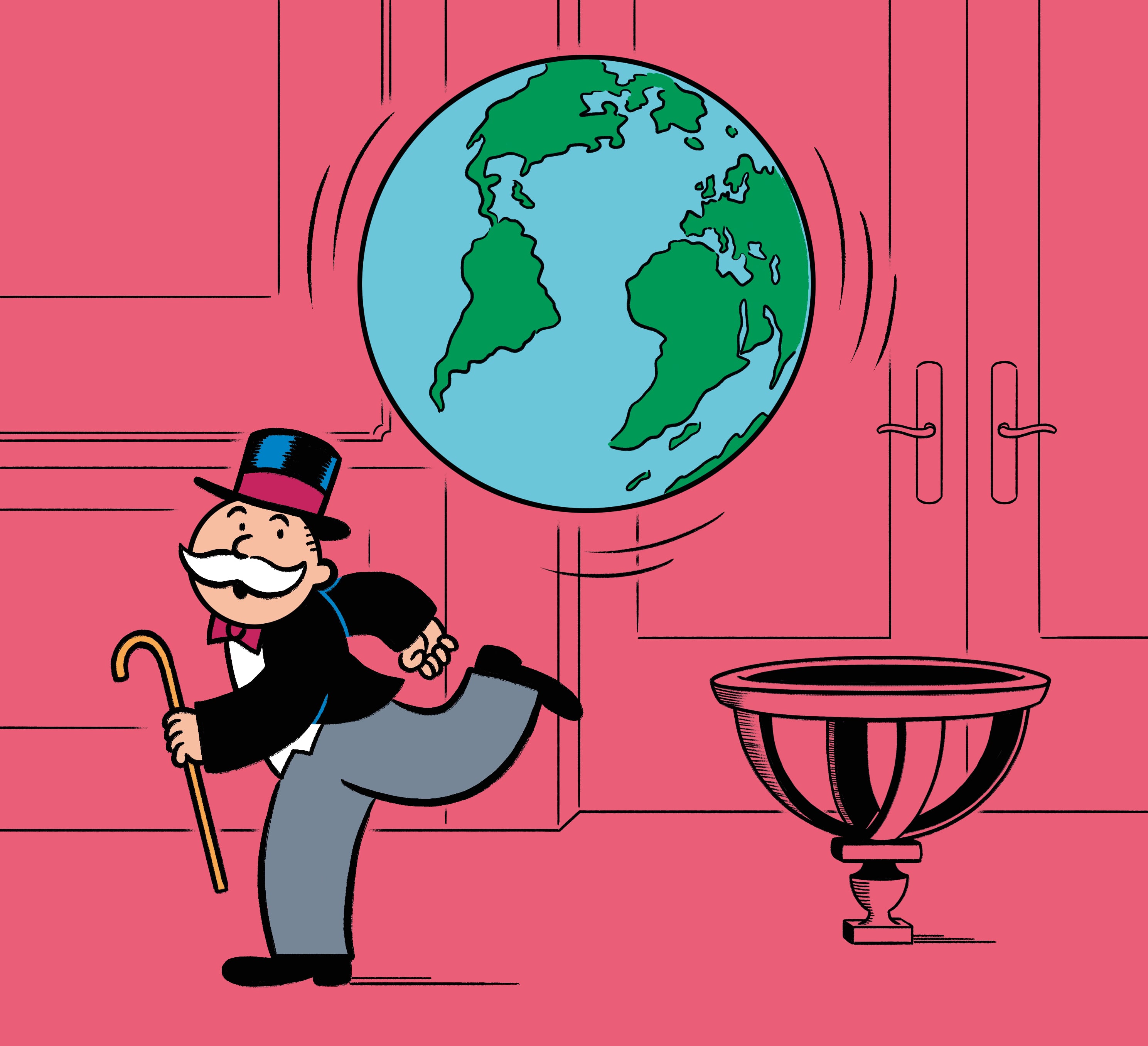
More recently, on June 8, 2021, ProPublica published an investigation into the taxes of U.S. billionaires. After accessing their tax records, they found in several annual returns of Jeff Bezos, Elon Musk, George Soros, and Warren Buffett that they had managed to pay absolutely no income tax without committing a single irregularity. They were the most notorious cases, but the average income tax rate paid by the 25 richest people in the country between 2014 and 2018 was also disconcerting: 15.8%. “That’s lower than the rate a single worker making $45,000 a year might pay,” ProPublica wrote. Although the difference is not as pronounced in Europe, the same rule applies in Belgium, Spain, Italy, France, and the Netherlands: the effective taxes paid by the wealthiest 1% are always lower than those of the average taxpayer.
Seen from today’s perspective, the privileges enjoyed by the pre-revolutionary Church and nobility seem almost trivial. Wasn’t it supposed that privileges reserved for certain social classes had ended centuries ago, precisely because of the progress achieved after the French Revolution? As Max Lawson, who leads Oxfam’s research on inequality, says, billionaires have minimized taxes and other regulations that limit their profits by using a series of tools that transform economic power into political power. Among the classic levers for achieving this are campaign and party funding, the threat of taking the money elsewhere, traditional lobbying, and the appropriation of public discourse through investments in media, social networks, and the hegemony of artificial intelligence.

While middle-class parents in parts of the Western world find it increasingly difficult for their children to match their standard of living, the world’s billionaires have acquired new superpowers to manipulate politics. Some examples? The power to decide a country’s military fate by granting or denying access to its satellites (Musk’s Starlink is one such example); the power to contribute to or not the spread of disinformation that threatens democratic coexistence (the cases of Facebook and X, for instance); or the power to revolutionize the world of work and communication with AI, while many countries struggle to pass even minimal regulation.
That their voices are heard more than everyone else’s wouldn’t be so problematic if their interests were aligned. But the short-term incentives of billionaires, whose wealth derives from capital gains, don’t usually coincide with those of the majority of the population, whose income depends on wages. Greater regulation of financial markets, for example, protects society from cyclical crises, but reduces billionaires’ opportunities to inflate their fortunes. There are also conflicting interests on sensitive issues such as the future of public healthcare and education.
According to economist Branko Milanovic, breaking the link between economic and political power is difficult because those who wield it know how essential that influence is to maintaining their position. “But a savvy plutocrat would do the same thing capitalists did after World War II: faced with the possibility of communism, they accepted many of the demands for equality in order to preserve their power,” he explains. “If the major plutocrats don’t curb their appetites, and their ambition becomes too obvious, the backlash against them could end up undermining the very pillars on which they stand,” he warns.
“There is likely no historical precedent for the wealth inequality that exists today, and indeed, there is no precedent for the level of global wealth,” Milanovic continues. In his opinion, two of the reasons why billionaires seem to continue accumulating wealth without qualms have to do with the “lack of recent precedents in which their power was challenged,” and with the visibility afforded by social media. “Before, the names of billionaires weren’t widely known; now they’re in the news every day, everyone recognizes them. I don’t know if that also makes it harder for them to curb their appetites.”
Throughout 2025, the fortunes of the world’s billionaires grew at three times the annual rate they had recorded on average over the previous five years. “Actions of the Trump presidency, including the championing of deregulation and undermining agreements to increase corporate taxation, have benefitted the richest,” according to an Oxfam report published in January.
Billionaires’ investments are further evidence of the transmission belt that transforms economic power into political power. In the 2024 U.S. elections, just 100 families contributed one $1 of every $6 spent by candidates, parties, and committees. They invested $2.6 billion that year, more than double the $1 billion they had invested during the 2020 elections, and 160 times what they invested before the U.S. Supreme Court eliminated limits on campaign financing in 2010. Something similar is happening with public discourse: more than half of the world’s leading media outlets are owned by billionaires, according to Oxfam’s calculations; eight of the 10 largest AI companies are run by billionaires, as are nine of the 10 largest social media platforms.
In December 2024, the journal of the National Academy of Sciences published research by Eli G. Rau and Susan Stokes on the pernicious effects of inequality: the likelihood of democratic backsliding was seven times greater in the most unequal countries, they concluded. According to Rebecca Gowland, who works in the U.K. as a spokesperson for Patriotic Millionaires (an organization of millionaires aware of the problem of inequality that campaigns for governments to raise their taxes), this backsliding ultimately delegitimizes the entire system.
“The problem is not only that billionaires are designing policies that affect us all to their own benefit, but that they are doing so in plain sight, and that also makes us lose faith in democracy,” she says. Billionaires themselves admit this in anonymous surveys. “In the last survey we conducted in January in the G-20 countries, we asked them if they believed that extreme wealth was used to buy political influence, and almost 80% responded that it was and that it shouldn’t be,” she explains.
According to the latest Oxfam data, the world’s 12 richest people collectively possess more wealth than over four billion people. The growth of billionaires’ fortunes is not solely due to the fact that taxes have little impact on their wealth. According to Francisco Ferreira, head of inequality studies at the London School of Economics, they have also benefited greatly from the weakening of regulations protecting free competition. He argues that the steel industry, or even the oil industry, faced far more competition than today’s tech giants, “which can operate with much larger margins and generate extraordinary profits.”
Antitrust laws
“We can have democracy in this country, or we can have great wealth concentrated in the hands of a few, but we can’t have both,” said U.S. Supreme Court Justice Louis Brandeis (1916–1939), a key figure in the fight against monopolies. His jurisprudence and the laws enacted at the beginning of the last century helped contain monopolistic tendencies until the 1980s, when a reinterpretation of antitrust law narrowed its scope to cases involving price increases or reduced output. This laid the groundwork for the creation of giants like Amazon, Meta, and Google, which charged their users little or nothing in exchange for market power that has allowed them to dictate the rules and neutralize their rivals.
Former U.S. president Joe Biden tried to revive the spirit of Brandeis by appointing Lina Khan to fight monopolies at the Federal Trade Commission, but Trump dismissed her as soon as he took office. “It’s not possible to reverse a trend toward concentration in just four years,” says Ferreira. “If Khan’s regulatory strategies had been maintained for 20 years, it would have made a difference; but mergers and acquisitions don’t happen every year.”
Although regulations aren’t perfect, the defense of free competition and campaign financing are better regulated in the European Union, says Belgian philosopher and economist Ingrid Robeyns, author of a book on the idea of limiting wealth — placing a cap on the maximum amount of wealth a person can accumulate. “In the media sector, for example, in Europe we have a whole series of agencies that must authorize companies’ growth operations, while in the United States we see how the Ellison family [owners of Oracle and now also Paramount] is acquiring all the major players; their latest purchase was CNN,” says Robeyns.
Harmful effects
Besides jeopardizing the functioning and legitimacy of the democratic system, the accumulation of wealth by billionaires has detrimental effects on the economy. If that wealth were more equitably distributed, it could boost economic activity and employment through increased consumption. Nor does the global excess of savings generated by this concentration of wealth help —what former Federal Reserve chairman Ben Bernanke called the “global saving glut.” In search of returns, all that accumulated liquidity scans for new investment havens in sectors such as education, healthcare, and housing — basic rights that have gradually drifted further out of reach as they have been absorbed into market logic.
So much for the bad news. The good news is that this isn’t the first time humanity has experienced this drift toward the concentration of power, and we can learn from past solutions. As Guido Alfani, professor of economic history at Bocconi University, says, the ancient Greeks already warned us of the incompatibility between democracy and the concentration of wealth. “Aristotle wrote that in a context of great inequality, the super-rich would be like gods among men,” Alfani says. “The Republic of Venice is a clear example,” he explains. “In the 15th century, humanists said it was the perfect model for a stable republic because its structure prevented the wealthiest from gaining political control, and yet, by the beginning of the 17th century, the rich could buy a seat on the Great Council of Venice, and all their descendants could be part of the ruling family.” According to Alfani, the plutocratic drift usually coincides with the moment when elites perceive a worsening of the conditions that enabled their enrichment.
But perhaps the most useful historical parallel is also the closest: the so-called Gilded Age in the United States, spanning the last three decades of the 19th century. These were the years of the railroad and rapid industrialization, with the rise of gigantic fortunes like those of the Rockefellers, the Vanderbilts, the Carnegies, and the Morgans. “The Civil War had ended, and citizens were unprepared for what was coming,” explains Richard White, professor of economic history at Stanford. “They came from slavery, where plantation owners were also the wealthiest, and they expected to enter a world of small producers competing with one another: they failed to see the industrialization and the world of impoverished wage earners that was coming because none of that had existed before in the country.”
Just as Trump announced $500 billion in joint investments for AI a year ago, Gilded Age governments aided those early entrepreneurs with subsidies and tariffs, arguing that industrialization would be good for the entire country. “But who benefited from that industrialization?” White asks. “When you look at things like wages, life expectancy, and health, in that era, what you find is a decline for the vast majority of Americans,” he says. “Conditions deteriorated so much that there began to be all sorts of signs of an impending class war in the country, with protests in the streets and an overwhelming majority against monopolies, regardless of their political affiliation.”
“[US President William] McKinley was assassinated in 1901 by a socialist, and even conservative publications were saying that something had to be done to address the problem of monopoly power and the concentration of wealth,” explains Ray Madoff, a professor at Boston University School of Law. Madoff recalls how the tax system then shifted from tariffs to the introduction of a tax system that would lay the foundation for the current one.
The progressive income tax was introduced in 1913, followed by the wealth tax in 1917. These levies achieved an unprecedented redistribution of wealth and reduction of inequality for most of the 20th century. This period, in White’s words, coincides with “the most prosperous era in U.S. history.”
Although the structure of the two taxes remains the same today, Madoff says, they have been “secretly eroded” for the benefit of the wealthiest individuals over the past 40 years. He describes various techniques, such as personal trusts and foundations, used to circumvent wealth and inheritance taxes, among other tools. “What they do rests on the following principle: banks need to lend money, because that’s their business, and billionaires have a gigantic amount of wealth to secure those loans, so they live in debt, refinancing that debt over and over again,” Madoff explains.
The solution is technically simple, says Madoff. Ensure that wealth is taxed as soon as there is a transfer of ownership, regardless of who receives it, whether through sale, donation, or inheritance, with no exemptions other than those decided by a democratic majority. “Of course, there’s a desire to help children, especially now that inheritance has become the only way to help them maintain a middle-class lifestyle, but that can be solved by leaving the first million or two million dollars untaxed; whatever society decides democratically,” explains the professor. “But that has nothing to do with justifying the descendants of Zuckerberg or Musk not paying inheritance tax.”
According to analyses by French economist Gabriel Zucman, preventing billionaires from keeping the privilege of paying less tax than workers would simply require ensuring that fortunes above €100 million ($117 million) pay a minimum annual tax of 2%, regardless of the mechanisms used to reclassify or recategorize wealth
In Spain, researchers Olga Cantó and Francisco García-Rodríguez from the University of Alcalá de Henares concluded in a recent study that reforming the wealth tax to align it with proposals by economist Thomas Piketty — or with the existing wealth tax in Norway — would have exceptional revenue-raising power. It would be enough to fund a universal child benefit of more than €2,000 ($2,340) per child, achieving a 5% improvement in the Gini inequality index.
Another solution is to impose especially heavy taxes on activities that convert economic power into political power. This is what Branko Milanovic suggests for any billionaire who wants to finance political campaigns or get involved in media, social networks, and other attempts to shape public opinion. “I don’t know if it will sound a bit far-fetched, but it seems to me that the taxes on these activities should be confiscatory, so that if they want to own media outlets or contribute to political parties, they should pay 2% of their wealth in taxes, for example,” he concludes.
Sign up for our weekly newsletter to get more English-language news coverage from EL PAÍS USA Edition

Amazon
Cocina Sin Grasas Y Con Todo El Sabor: Los Beneficios De Usar Una Vaporera De Bambú Para Tus Verduras Y Pescados


La cocina asiática cada vez cobra más presencia en Occidente, y no es solo por lo exóticos y sabrosos que resultan sus platos, sino que, además, en una amplia mayoría están cocinados al vapor. Esto hace que, además de ricos, sean mucho más sanos y rápidos de preparar. Si alguna vez te has planteado empezar a cocinar más al vapor y dejar los guisos y las frituras a un lado, seguramente cambiar las sartenes y ollas tradicionales por una cesta de vapor típica de la cocina oriental será una gran forma de comer más sano y cocinar más rápido sin renunciar al sabor.
Esta vaporera de bambú es un utensilio clásico de la cocina asiática para cocinar de forma rápida y sencilla. Con una valoración media de 4,6 sobre 5 estrellas, este utensilio de cocina cada vez se va haciendo más hueco en los hogares españoles.

Cocina más sano y ensucia mucho menos
Muchas de las personas que se han decantado por empezar a utilizar este tipo de cestas para cocinar lo hacen, en gran medida, porque evitan tener que añadir aceites adicionales. Y esto ayuda enormemente a mantener una dieta más saludable sin renunciar al sabor, por ejemplo, de verduras o pescado fresco. Además, su funcionamiento es bastante sencillo y apenas ensucia, por lo que, si no te gusta cocinar mucho, será todo un descubrimiento para ti.
Muy fácil de usar
Para usarlo, tan solo tienes que seguir unos sencillos pasos:
- Colocas la cesta sobre una olla con agua hirviendo, sin que entre en contacto con el agua.
- Añades los alimentos.
- Dejas que el vapor haga el resto.
Además, es especialmente útil si te gusta hacer platos laboriosos y estás haciendo muchas cosas a la vez en la cocina, ya que basta con echarle un vistazo de vez en cuando para ver cuándo alcanza el punto de cocción que buscas para tu elaboración.

Tamaño práctico y material muy ligero
Con sus 25 cm de diámetro, esta vaporera entra dentro de lo estándar, lo que la hace compatible con la mayoría de ollas o woks que podemos tener por casa. No es una vaporera grande ni pensada para cocinar en grandes cantidades, pero es perfecta para cocinar para ti solo o para cenar con tu pareja o un par de amigos. Por otro lado, el bambú tiene muchas ventajas, ya que es un material muy ligero (la vaporera pesa alrededor de 480 gramos) y, además, durante el cocinado absorbe parte de la humedad, lo que hace que los alimentos no queden demasiado emblandecidos durante la cocción.

[Recuerda que si eres usuario de Amazon Prime, todas las compras tienen gastos de envío gratuitos. Amazon ofrece un período de prueba gratuito y sin compromiso durante 30 días.]
*Todos los precios de compra incluidos en este artículo están actualizados a 23 de abril de 2026.
Puedes seguir a EL PAÍS ESCAPARATE en Instagram, o suscribirte aquí a nuestra Newsletter.

Spanish Foods May Worsen Allergies

ITV Prices Rise Sharply Across Spain

E

Dinero En Efectivo Guardado En Casa Y La Devolución De Los Gastos Del PSOE: La Expareja De Koldo Protagoniza La Cuarta Jornada Por El ‘caso Mascarillas’

Mercedes F1 star Kimi Antonelli feeling the pressure after Italian heartbreak
DGT launches week-long speed crackdown on Spanish roads


-
 Caso Koldo4 weeks ago
Dinero En Efectivo Guardado En Casa Y La Devolución De Los Gastos Del PSOE: La Expareja De Koldo Protagoniza La Cuarta Jornada Por El ‘caso Mascarillas’
-
 Uncategorized4 weeks ago
Mercedes F1 star Kimi Antonelli feeling the pressure after Italian heartbreak
-
DGT4 weeks ago
DGT launches week-long speed crackdown on Spanish roads
-

 New Developments3 weeks ago
How To Get A Tourist Rental Licence In Andalusia (Spain) – Step-By-Step Guide 2025
-

 Uncategorized3 weeks ago
Max Verstappen Nurburgring LIVE: NLS5 Schedule, start times and free live streams
-

 Andalucia4 weeks ago
La Policía Detiene A Un Hombre En Córdoba Por El Asesinato De Su Pareja
-

 Elecciones4 weeks ago
Péter Magyar, El Hombre Que Admiraba A Orbán Y Acabó Con él
-

 Uncategorized3 weeks ago
Lando Norris unleashes F1 2026 criticism after Nurburgring test