Connect with us

ElPais

Andrew Left, The Short Seller Who Shook Wall Street

Published

on

andrew-left,-the-short-seller-who-shook-wall-street

The feared short-seller Andrew Left, 55, did everything he could to irritate the judge during the proceedings that concluded on June 1. She told him to be quiet twice and ordered some of his remarks struck from the record. Left also showed up late on the day of the verdict. In the end, he had to listen as the jury found him guilty of market manipulation for secretly trading against his own reports. The circus backfired. The defeat was as painful for Left — dubbed the “Bounty Hunter of Wall Street” — as it was for the entire short-selling community, which now faces a stark warning.

He could face up to 25 years in prison, and Left has already said he will appeal. He does not see himself as a cheat, but as a martyr. “I was actually criminally convicted on manipulating Nvidia Facebook and Tesla for telling the truth and making a profit. I am a bit speechless,” he said in a text exchange with journalist Aaron Ross Sorkin.

Calling him an investor hardly does him justice. Left has something of a journalist, an agitator, even a performer about him. His trade — former trade — was investigating companies. When he concluded that a firm was overvalued or involved in wrongdoing, he would publish a report and set a target price at which he expected the stock to fall. He did this through a blog called Citron Research. His conclusions were based on his own analysis and a network of informants. According to a Wall Street Journal study of 111 of his reports, the stocks he targeted fell by an average of 42% over the following year. In other words, he was often right.

Shorting a company you’ve researched is legal. The problem was that Left would announce a price target and then close his position within minutes, long before the stock approached that level. To make matters worse, he coordinated these trades with hedge funds that knew in advance what he was about to do and paid him a share of the profits. Beyond Left himself, the case raises a larger question: what trades must an investor disclose, and how long must they hold a position after making their views public?

He is married with four children and is believed to live in Boca Raton, Florida. At the height of his success, he lived in Beverly Hills, Los Angeles. He made millions through his trades. Profiles describe him as charismatic and not particularly accommodating. When it suits him, he frames his work as a moral crusade; when it doesn’t, he admits it is simply a way to make money. After tanking a company’s stock, he once summed it up to The New York Times: “Some guys know this stuff better than me. But I know how to put it in [expletive] tweets.”

His flamboyant style bears little resemblance to the serious, religious boy who grew up in a working-class Jewish family on the outskirts of Detroit. As a child, he moved to Coral Springs, Florida. He led his high school’s Jewish youth group, was on the debate team, and once wanted to become a rabbi. Nothing suggested that in his early twenties, he would end up working at a firm that made cold calls to sell questionable investments. He left that company after nine months — long enough to be included in the sanctions imposed on the firm, which required him to attend an ethics course.

Becoming the enemy

That murky experience led him into short selling at age 24. He flipped the script: instead of hyping stocks to sell high, he bet on the decline of shares inflated by others. In 2001, he founded StockLemon.com, later rebranded as Citron Research in 2007. His masterstroke as a short seller came in 2015. Left published a report targeting the Canadian pharmaceutical company Valeant, which he labeled the “pharmaceutical Enron,” referencing one of the largest accounting scandals in history. The stock plunged as much as 39% in a single day and, within five months, had lost 90% of its value from its peak. The CEO, Michael Pearson, resigned.

Earlier, in 2012, he bet against the Chinese real estate giant Evergrande, accusing it of insolvency and fraudulent accounting. He was right — but a decade too early. In 2016, he was convicted of misconduct, banned from trading for five years, and fined. When Evergrande finally collapsed in 2021, Left responded bitterly: “I am not vindicated, because I’m still banned.”

The GameStop saga in 2021 marked a turning point in his career. The struggling video game retailer was heavily shorted by investors, including Left. But a coordinated group of Reddit users began buying shares en masse, driving up the price to punish hedge funds betting against it. Left publicly dismissed GameStop as absurd. The Reddit community retaliated with an intense campaign of personal harassment. Ten days later, Left released a video announcing that Citron would stop publishing short reports after 20 years. “When we started Citron, it was to be against the establishment. We’ve actually become the establishment,” he said.

In July 2024, both federal prosecutors and the SEC moved against him. The Department of Justice charged him with orchestrating a stock fraud scheme, while the SEC accused him of defrauding his own followers. Left turned himself in in Los Angeles, pleaded not guilty, and was released on bail, with his passport confiscated and his movements restricted to California and Florida. The trial took place nearly two years later and lasted three weeks. He was found guilty.

Left may be the last of a declining breed. Short selling, despite its bad reputation, serves a necessary function: it helps expose inflated accounts and companies that promise more than they deliver. If getting a price forecast wrong can lead to prison, many honest analysts may choose to stay silent. The problem is that, for defending that cause, Left was the worst imaginable martyr.

Sign up for our weekly newsletter to get more English-language news coverage from EL PAÍS USA Edition

Continue Reading
Click to comment

Leave a Reply

Your email address will not be published.

Adolf Hitler

Naturism In Germany, A Long Tradition Fighting To Survive

Published

on

naturism-in-germany,-a-long-tradition-fighting-to-survive

With the arrival of warmer weather, it’s common to cool off in the lakes and rivers found across Germany. In the Berlin region, for example, there are lakes both in built-up areas and in the countryside, but they all have one thing in common: nudism. That may surprise some tourists, but for locals it is completely normal. It is part of summer, just like barbecues or the Biergarten, the country’s typical beer terraces.

This nudism is the legacy of decades of naturism, a whole life philosophy that seeks to live in harmony with nature. The so-called free-body culture or Freikörperkultur (known by its German initials FKK), dates back to the late 19th century.

“It was part of the life-reform movement with its slogan ‘Back to nature,’ which aimed to counter industrialization,” explains Maren Möhring, professor of comparative history of culture and society in modern Europe at Leipzig University. “The idea was precisely to expose the whole body to sun and air to contribute to its well-being. It also included exercising.”

It became popular in the 1920s and, with the arrival of Nazism, was seen as a way to promote the “perfect Aryan body.” Even filmmaker Leni Riefenstahl made documentaries showing athletic, naked men. But in that era, as Möhring points out, “the main idea was to check whether the other person was healthy and that had, in part, antisemitic implications, since one could also tell if someone was circumcised.”

After World War II, people dissociated from organized naturism. In the German Democratic Republic (GDR), associations were banned, and people simply did it on their own. It began to be seen as a kind of “democratic nudity” where everyone was equal. At first, the GDR tried to suppress it, but in the 1970s it decided to tolerate it. Meanwhile, in western Germany, beaches were clearly segregated.

“With reunification, this was a big problem. Baltic Sea hoteliers told people: ‘You can’t bathe naked here anymore, because many West Germans find it strange to see naked people when it’s not a nudist beach,’” the professor explains. But the practice continued on lakes in the east.

But why was it so popular? According to Möhring, if analyzed from a philosophical or even historical‑cultural point of view, one must take into account Goethe’s belief that “Only the naked human being is the true human being.” “Of course, he meant it metaphorically. But I think there is a tradition of thought according to which covering oneself implies a desire to hide something,” she explains.

Religion was also key. The main German naturist centers are located in Protestant regions. “It was different in Catholic areas,” she notes. “The Catholic Church was the major opponent and brought numerous lawsuits against naturist associations for immorality.”

The future of naturism — or simply the pleasure of going nude at a lake — is uncertain due to the rise of social media. Young people are more cautious, fearing surreptitious photos. However, the German Federation of Naturism (DFK), which counts 120 clubs, remains optimistic and foresees a “bright future.” After years of decline, membership has risen from 32,000 in 2018 to around 35,000 today. It is worth noting that in eastern Germany, there is little tradition of formal membership, making it difficult to determine the exact number of adherents.

The vice president of the DFK, Manuela Fernández, believes this growth is due to efforts to modernize websites and social media presence in order to reach younger audiences. For now, however, more than half of the members are aged 61 or over.

“We’ve been growing for about five years,” she says. “I think people have come to understand that this is not an outdated, narrow-minded, or limited culture. Naturism is in harmony with nature. We want to live sustainably, protect the environment, and preserve it—and those are modern goals.”

Sign up for our weekly newsletter to get more English-language news coverage from EL PAÍS USA Edition

Continue Reading

Barcelona

Photo Essay: The Beauty In Small Things

Published

on

photo-essay:-the-beauty-in-small-things

Virginia Woolf once wrote that “for most of history, Anonymous was a woman.” The work of Belita Gracia remained hidden throughout her life in albums she kept at her home in Barcelona. A few months after turning 101, much of her photography came to light in an exhibition in her hometown.

On the final day of the exhibition, Belita chose to leave — as if she had been waiting to share that visual memory and become eternal.

I met her in 2023. She was 99 years old.

That year, I had set out to bring forgotten women photographers in the Spanish province of León to light. In that search, I was told about Belita Gracia — a daughter, granddaughter, and mother of photographers. In our first conversation, she spoke about the quest for beauty. I asked to see her again, to get to know her better and to explore her archive.

We spent many days together in her home in Barcelona. Our cataloguing process was simple and magical: two cups of coffee, a recorder, whichever album we chose that day, and our conversation.

With a remarkable memory, she recounted every date, every name, every detail behind her photographs. In this way, I discovered all her lives: the four-year-old girl who cried “magic!” when her father, the photographer Pepe Gracia, dipped paper into a liquid and an image appeared; the rock enthusiast; the traveler; the first woman to wear a bikini in León.

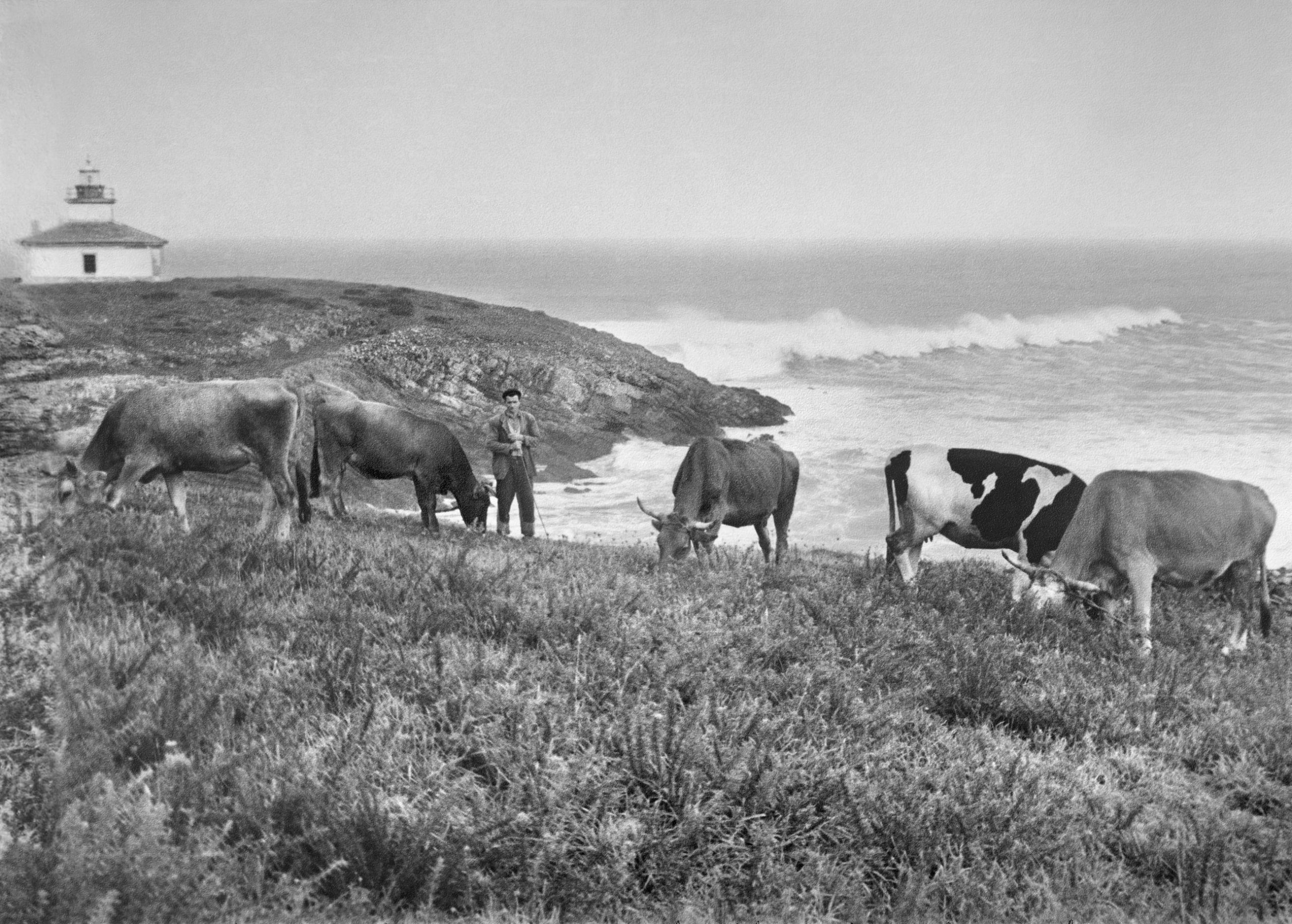
In 1955, she married and moved to Ribadeo in the province of Lugo. There, she came into possession of a Kodak Retina 1955 camera, which had been intended for her husband. He did not want it. She kept it.

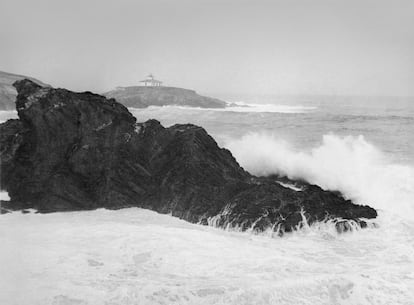
Her first photos were images of the rooftops she could see from her window — the beauty of rain falling on them. Then came the lighthouse, the fishermen, the estuary at low tide, with women gathering razor clams.

Her first child was born, and she photographed motherhood. Back in León, the streets became the stage for her images. Later came experimentation, nudes, Barcelona and the cultural effervescence of rock. And her collages, which addressed issues such as violence against women.

Belita opened the way for all of us and did something revolutionary: she lived with passion and enthusiasm until her last day. Because, as she said, “You only begin to grow old when you lose your enthusiasm.”

Sign up for our weekly newsletter to get more English-language news coverage from EL PAÍS USA Edition

Continue Reading

Donald Trump

Republican Sheriffs In Maryland Rebel Against Ban On Cooperating With ICE: ‘It Does A Lot Of Damage To Public Safety’

Published

on

republican-sheriffs-in-maryland-rebel-against-ban-on-cooperating-with-ice:-‘it-does-a-lot-of-damage-to-public-safety’

Sheriff Chuck Jenkins has been facilitating the deportation of undocumented immigrants from his jurisdiction, Frederick County, Maryland, for the past 18 years. Thanks to an agreement with Immigration and Customs Enforcement (ICE), under Section 287(g) of the U.S. Immigration and Nationality Act, undocumented immigrants held in his jails were transferred to the immigration agency after serving their sentences.

However, this arrangement no longer applies. A state law, passed in February of this year, prohibited the practice. The legislation made it illegal for local police departments and sheriff’s offices to hand over detainees to immigration authorities. This prompted counties that still had these agreements in place to terminate them immediately. And, last month, the Democratic-led state increased protections for migrants by passing the Community Trust Act, which prohibits local officials from asking people about their immigration status, informing immigration authorities about individuals detained in local jails, or holding them after they’ve served their sentences in order to hand them over to federal agents without a warrant.

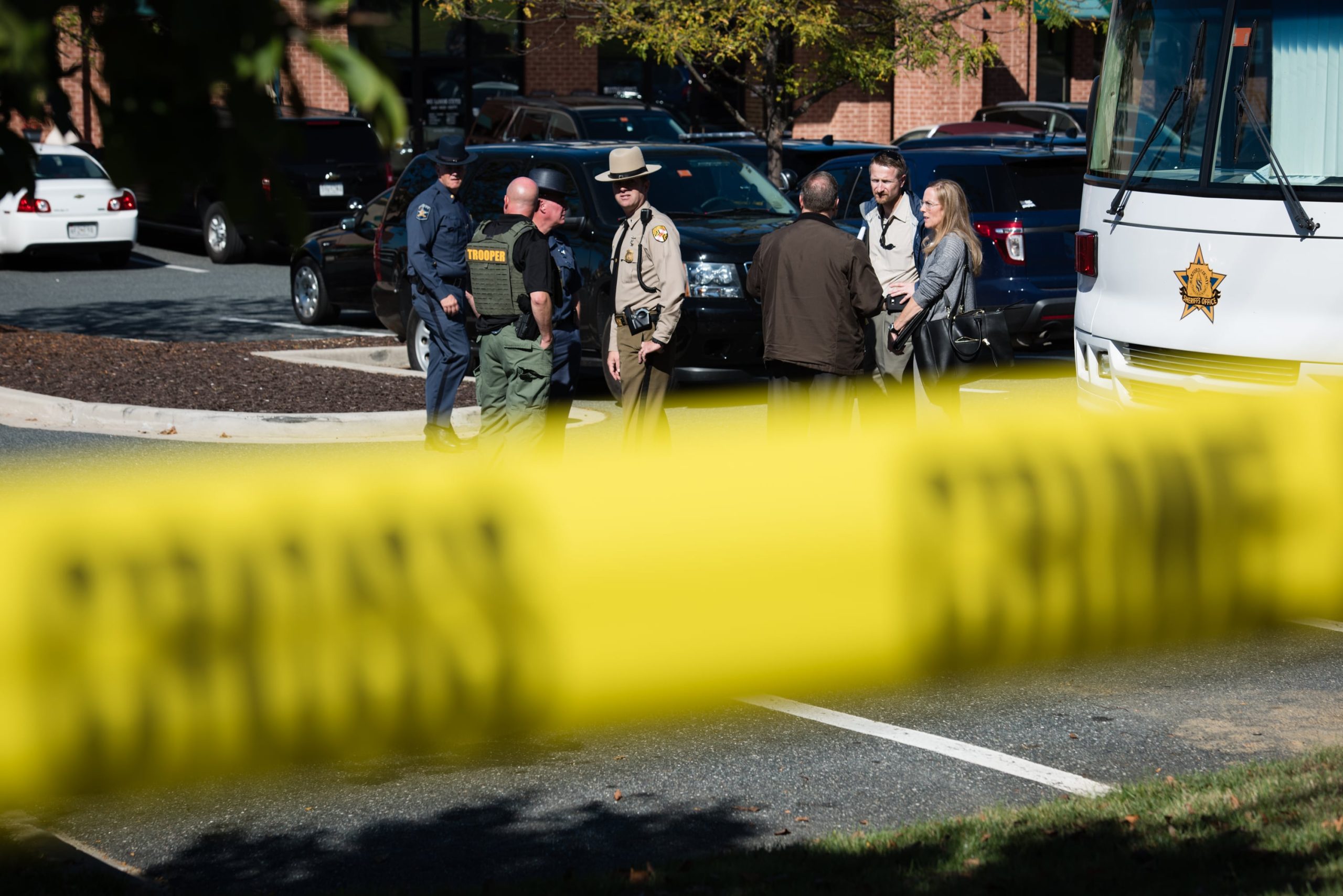
Jenkins believes that the new legislation will make it harder for him to maintain order in his county. That’s why he has joined 16 other sheriffs across Maryland in taking the Community Trust Act to court. “[The original legislation] in itself was bad enough; [it] did a lot of damage to law enforcement and public safety. But then, to [follow up] with this Community Trust Act, what that did was basically take away every other means that we had available to us to cooperate and work with ICE, so we felt it was a step too far. We felt that sheriffs were placed in a position where we either had to obey federal law, or obey state law. We felt it was an untenable position,” he explains.

Sheriffs from 17 of Maryland’s 24 counties filed a lawsuit against Democratic Governor Wes Moore and Attorney General Anthony Brown in federal court in Greenbelt, Maryland. They argue that the law violates the U.S. Constitution and places their officers in a difficult legal position, due to the conflict between state and federal law. The plaintiffs are Republicans, a minority in a state with a Democratic majority.

Sarah Staudt is the Policy and Advocacy director at the Prison Policy Initiative, a nonprofit organization that supports the legislation. According to her, before February, there were only eight formal 287(g) agreements in the state: migrant detentions were based on informal collaborations, which are prohibited under the new law.

“Most ICE arrests in jails and other lock-ups occurring in Maryland are occurring not through formal 287(g) agreements, but through informal collaboration by local and state law enforcement with ICE. These collaborations are not targeting ‘dangerous criminals,’ but everyday Maryland residents,” Staudt told Congress this past February.

According to data from the Prison Policy Initiative, approximately one in three ICE arrests (29%) that have taken place in Maryland during the second Trump administration have occurred in jails or other detention facilities. Of these arrests, 81% have been carried out through informal collaboration with ICE, with only 19% occurring through formal 287(g) agreements. “Legislation that only addressed 287(g) agreements, therefore, would not address the bulk of the problem,” Staudt noted.

When Trump returned to the White House with the promise of a historic deportation effort, the focus of migrant detentions shifted. While the previous administration concentrated on carrying out deportations at the border, the Trump administration deployed thousands of ICE agents to inland cities. To facilitate these arrests, 287(g) agreements with immigration authorities were signed.

The ICE website has a section promoting these agreements: “How can I convince my chief or sheriff to participate in 287(g)?” one section asks. At the end of Joe Biden’s presidency, there were 139 such agreements nationwide. Today, there are 1,986 agreements in effect, spread across 39 states.

Trump’s anti-immigration agenda has prompted states to push for legislation concerning ICE. There are three main approaches. Some Republican-led states, like Florida, encourage cooperation; their ICE arrest rates are very high. Democratic-led states like New Jersey have taken a first step toward limiting cooperation with the agency by prohibiting these types of agreements. However, some Democratic-led states have allowed informal collaboration to continue, while some local sheriffs grant ICE access to their detention centers.

The Democratic-led state of Illinois has adopted the most stringent stance against arrests. According to a 2025 directive, local law enforcement agencies cannot transfer individuals to immigration custody; they cannot allow ICE agents access to any person in custody; they cannot authorize immigration agencies to use facilities or equipment, including electronic databases, nor can they provide any additional assistance to federal agents. Illinois is considered a “sanctuary” state, a term used for states that refuse to participate in immigration operations.

Divided opinions

The debate around public safety continues to divide public opinion. Immigrant advocates celebrate Maryland’s new law, arguing that it makes it easier for people to report crimes without fear of arrest. “When community members can interact with local police without fear of being turned over to federal immigration authorities, they are more likely to report crimes, cooperate with investigations and engage with public officials. That makes all our communities safer,” the American Civil Liberties Union (ACLU) said, in a statement released following the law’s publication.

Jeff Gahler, the sheriff for Harford County and one of the plaintiffs in the lawsuit against the state of Maryland, views public safety from a different perspective. “Nearly 25 years ago, our nation saw the devastating results when the 9/11 attacks came to our country. It was very clear that when federal, state and local law enforcement agencies operate in silos, void of communication and partnership, the impact is deadly. It is unconscionable that we not only repeat these mistakes, but [also] that there are Maryland legislators and a governor who [have] created such a public safety divide.” he wrote, in an email response to EL PAÍS.

Maryland Governor Wes Moore, a Democrat, neither signed nor vetoed the Community Trust Act, which went into effect this past May. Moore stated that he agrees with the bill’s objective of keeping local police focused on local crimes and that the state should not “let untrained, unqualified and unaccountable ICE agents deputize our law enforcement officers to do immigration work.” However, he noted that the bill “presents real implementation challenges.”

“Protecting our communities,” he continued, “requires seamless coordination among federal, state and local partners… and the bill creates ambiguities around joint investigations that we are working with the attorney general’s office to clarify.”

The law includes exceptions. For instance, local law enforcement agencies can alert immigration authorities about a person in custody if that person has been convicted of a felony, has been required to register as a sex offender, or has served at least five years in prison in another state.

Gahler and Jenkins argue that the issue has been politicized because criticism of cooperation with ICE has surged following Trump’s return to power. The 287(g) agreements were created in 1996, during the administration of Democratic President Bill Clinton, and have been in effect under both Democratic and Republican administrations. However, they never received the momentum that Trump has given them.

Both sheriffs are Republicans, as are the other signatories of the lawsuit against the Community Trust Act. But their counties had contrasting results in the 2024 presidential election: Harford County voted overwhelmingly for Trump, while Frederick County which is part of the Washington, D.C. metropolitan area, voted for the Democratic candidate, Kamala Harris.

Jenkins believes that, in addition to releasing criminals onto the streets, the new legislation will encourage more ICE raids. “[Right] now, ICE agents are in Frederick… and they’re apprehending people on the street that we would have turned over to them in jail. So, we’re seeing the presence of more ICE officers,” he says.

According to data from the Prison Policy Initiative, only 36% of people arrested by ICE in Maryland — broken down into 44% arrested through informal collaboration with law enforcement and 51% through the 287(g) agreements — had prior criminal convictions, including immigration and traffic violations.

Sign up for our weekly newsletter to get more English-language news coverage from EL PAÍS USA Edition

Continue Reading

Trending

Copyright © 2017 Spanish Property & News