
Barcelona
Another rail scare in Spain as three runaway wagons crash into Renfe train

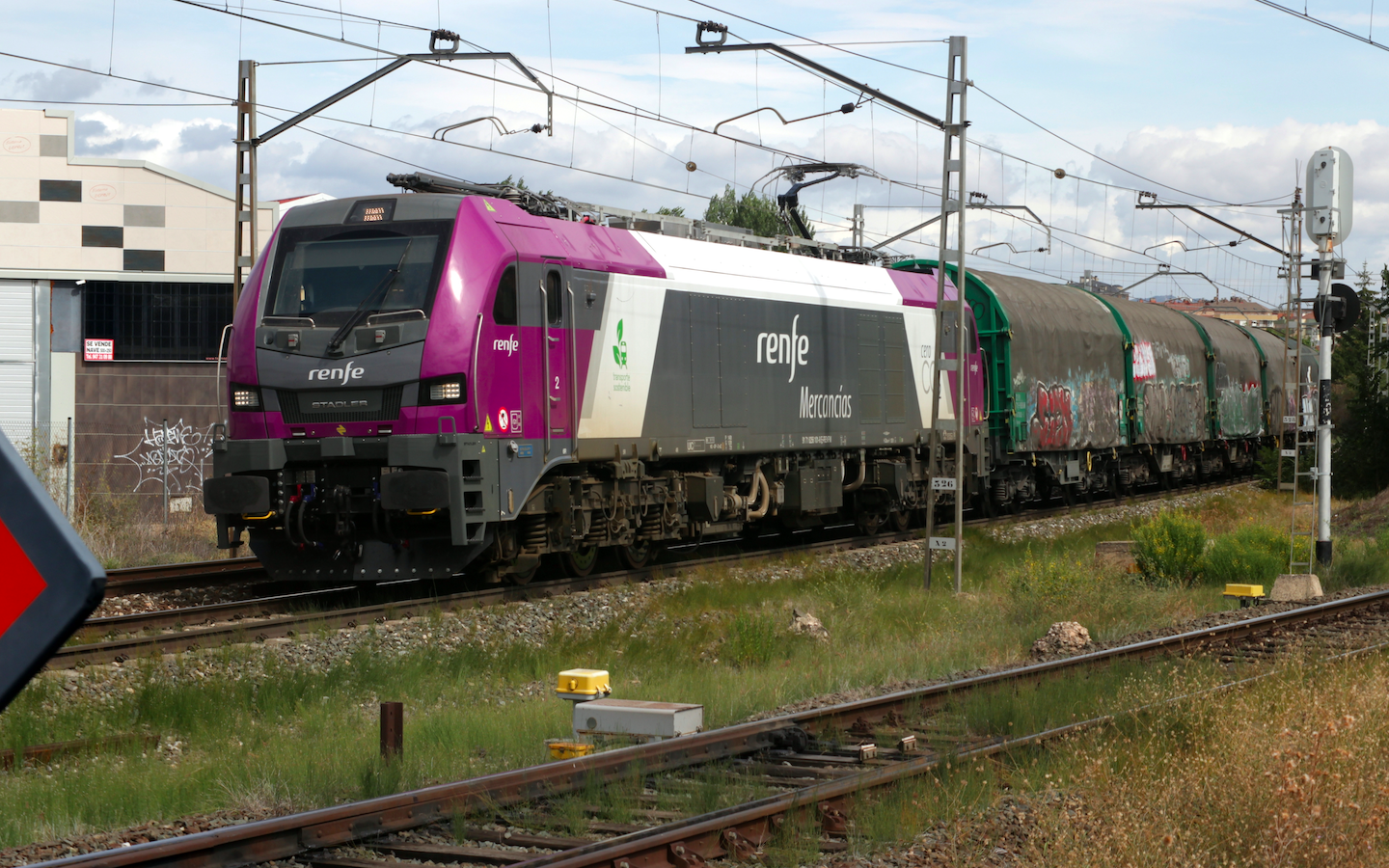
The wagons came loose from a private railway siding. Photo credit: Victor Martin Dorronsoro/Shutterstock
Spain’s railway problems have been making headlines for weeks, but Tuesday brought another worrying incident, this time involving a freight train in Martorell. Three wagons carrying cereal broke loose, derailed and crashed into a locomotive, sending its driver to hospital. The collision happened at around 3.20pm on November 3, on a railway connection serving Cargill, an international agricultural company with facilities in the Barcelona town.
The wagons came loose from a private railway siding and travelled onto the main railway network, where they struck a Renfe Mercancías locomotive. The impact caused the three wagons to derail. The driver was inside the locomotive‘s cab when the collision happened. He was taken to hospital following the incident, although Renfe said he was in good condition and that the hospital visit was carried out as a precaution under its safety protocol. He was later discharged. No other injuries were reported.
Three wagons escaped from private railway line
The incident took place on the private railway connection belonging to Cargill, which links the company’s industrial facilities to the wider railway network. Adif confirmed that the three wagons had become detached and left the private siding before reaching a section of the general railway network known as the Red Ferroviaria de Interés General (REFIG). They then struck the Renfe locomotive.
Renfe said its freight train was carrying out a manoeuvre when the incident occurred. The wagons were loaded with cereal, although the exact circumstances in which they became detached have not been established. There has been no confirmed explanation of why the wagons moved away from the private siding or what caused them to collide with the locomotive. The accident began on infrastructure connected to Cargill’s premises, rather than on one of the main passenger routes through Martorell.
Rodalies passengers escape disruption
Despite the collision taking place in a busy railway area, commuter services continued to operate normally. Renfe confirmed that the incident had not affected Rodalies services, while Adif also reported no disruption to railway traffic.
That meant passengers using the R4 and R8 lines were not faced with cancellations or delays as a result of the accident. The collision was confined to the freight operation and the private railway connection. The affected locomotive belonged to Renfe Mercancías, the company’s freight division, which operates goods trains across Spain’s railway network.
Another railway incident under scrutiny
The Martorell collision comes just days after the deadly high-speed train disaster near Urda, Toledo, on October 28, which claimed 69 lives. That accident involved passenger trains and has prompted intense scrutiny of railway safety and infrastructure.
The circumstances in Martorell are different and the latest collision involved freight wagons on a private railway connection rather than a high-speed passenger service. However, the fact that three loaded wagons were able to leave their siding and reach a locomotive on the main network raises questions that still need answering.
Right now the task is to establish how the wagons became detached during the railway operation and why they were not stopped before reaching the other train. Until those details are confirmed, the cause of the Martorell accident remains unknown.





Barcelona
More Than 450 Barcelona Restaurants And Bars Slash Their Prices For Foodie Black Week – But Diners Will Have To Be Quick


 The food world’s answer to Black Friday has spread beyond the city for the first time, to Badalona, Sant Cugat, Gava and Santa Coloma.
Barcelona
Blow To Mango Murder Case As Police Admit They Cannot Prove ‘other People’ Were Involved In Billionaire Isak Andic’s Fatal Mountain Fall


 The officers stood by their original report, which stated: “We cannot determine the cause of the fall, nor the participation of other people in the events that caused the death.”



More Than 450 Barcelona Restaurants And Bars Slash Their Prices For Foodie Black Week – But Diners Will Have To Be Quick

Campaña Elecciones 29N Y Actualidad Política, En Directo | Sánchez Pide “el Voto De Todos Los Que Quieren Más Europa” Para Frenar A Abascal

Toto Wolff Mercedes exit plan revealed as F1 commentator tips successor


-
DGT4 weeks ago
Viral video in Spain sparks fury over drivers who ‘have no idea how to drive’
-

 New Developments3 weeks ago
How To Get A Tourist Rental Licence In Andalusia (Spain) – Step-By-Step Guide 2025
-

 New Developments2 weeks ago
Luxury Villas For Sale, Estepona – ProjectL1
-
Age Concern Marbella - San Pedro3 weeks ago
Halloween lunch sells out as 51 join Marbella get-together
-
Consumer Rights Spain4 weeks ago
EU offers extra year of warranty on phones, but Spain faces delays
-

 %4 weeks ago
Santa Pola Museo Del Mar
-

 %3 weeks ago
Spain Orders Replacement Of Eight Million Gas Meters: New Rules, Costs And Deadlines
-
Barcelona riots3 weeks ago
Looting and street violence hit Barcelona as El Corte Inglés customers are trapped