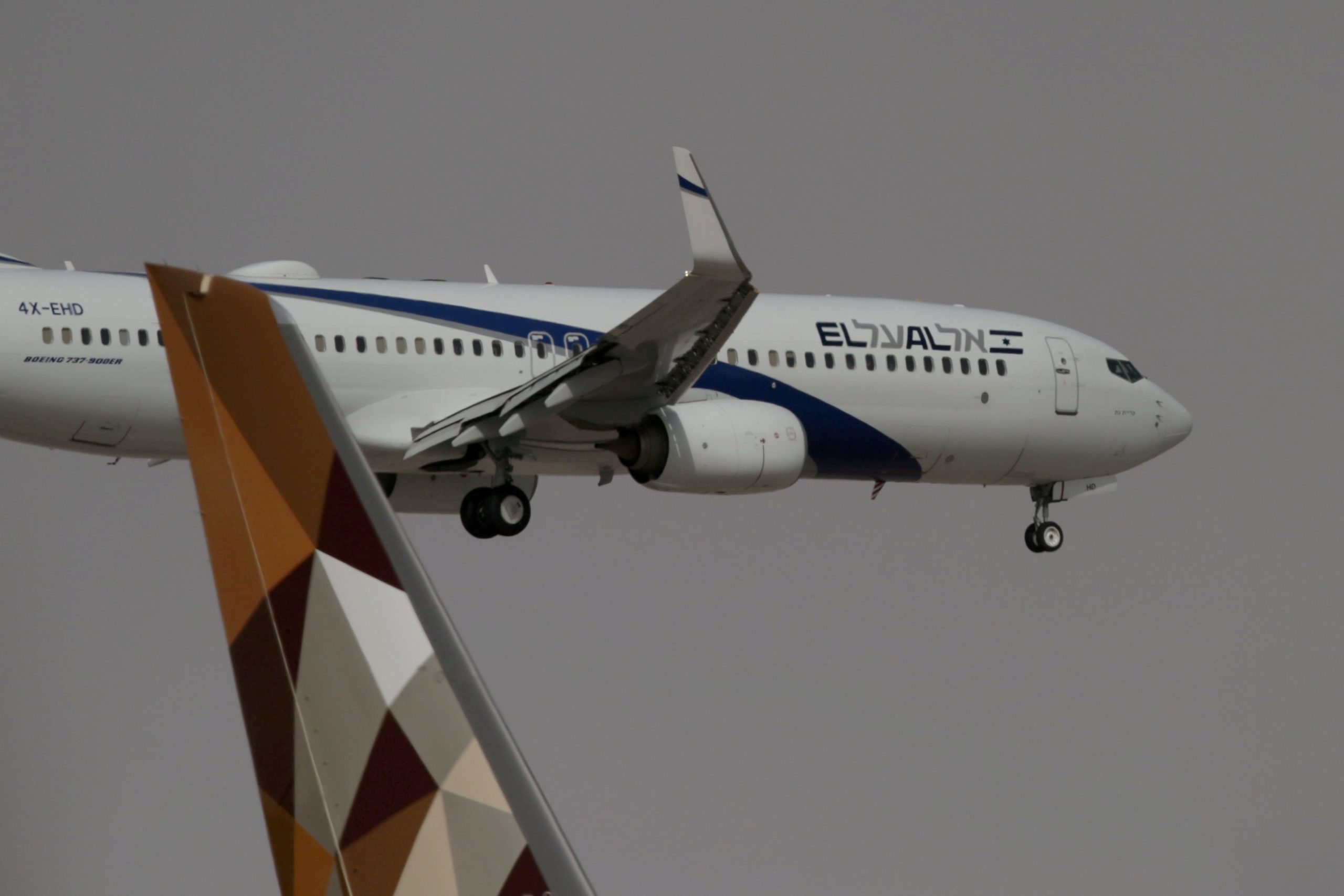
The foiled hijacking of a flight from Dubai to Tel Aviv carrying 174 passengers — 166 of them Israelis — on Wednesday has revived the specter of earlier hijackings (mostly attempted) of aircraft bound for Israel, especially during the 1960s and 1970s.
Although associated with the past, Israel still treats such attempts as a current threat. Its flag carrier, El Al, maintains strict security measures, ranging from plainclothes security officers on board, a double-door system to access the cockpit, and extensive passenger interrogations conducted by its own staff at departure airports. If an interrogation raises even the slightest suspicion, some travelers are forced to board stripped of their personal belongings.
The precedents involve planes from that airline, although only the first, in 1968, succeeded. The flight, which operated between Rome and Tel Aviv, departed late due to technical problems with just 38 passengers aboard — seven of them El Al employees or their relatives — and 10 crew members. Near Naples it was hijacked by three members of the Popular Front for the Liberation of Palestine, a Marxist-inspired armed group that forced the aircraft to divert to Algiers. They demanded the release of more than 1,000 Palestinian prisoners in Israeli jails in exchange for the hostages.
Barely 24 hours later, it released the 23 passengers of other nationalities. Later, it freed the 10 women and children. Thus, 12 Israeli men remained as prisoners of the Algerian government (which was technically at war with Israel). Aligned with the Palestinian cause, and in the midst of the Cold War, Algerian authorities eventually demanded the release of all Palestinian prisoners held in Israeli jails.
The Israelis who had been hijacked were finally moved to a luxurious villa where they could follow news of the negotiations for their release on radio and in newspapers. Meanwhile, the Israeli military devised a rescue plan under the orders of the famed defense minister, Moshe Dayan. The hijacking lasted 40 days and ended with the release of 16 Palestinian prisoners, a move Israel described as a “humanitarian gesture.”
In 1970 one of the most notorious attempts occurred, notable for the status its perpetrator attained (Leila Khaled, the first woman to hijack a plane) and because she carried it out alongside Patrick Argüello, a member of the Nicaraguan Sandinistas who later helped overthrow the Somoza dictatorship.
Six years later, at the end of June 1976, an Air France plane flying the Tel Aviv–Paris route with a stop in Athens, carrying 248 passengers and 12 crew, was hijacked by the Popular Front for the Liberation of Palestine and diverted to Entebbe airport in Uganda. After the initial release of non‑Israeli passengers, most of those who remained on board were freed by Israeli commandos in the early hours of July 4. Four passengers were killed, in addition to the hijackers and one Israeli soldier.
Since then, and until this Wednesday, there had been no new hijacking attempts. Largely, that is because security measures at Israeli airports and on Israeli aircraft have increased exponentially decade by decade, unparalleled anywhere else in the world. There have been attempts to attack planes with explosives, or to fire projectiles at aircraft originating from or destined for Israel. But not hijackings.
In 1986, a Syrian intelligence agent tried to blow up a London–Tel Aviv flight using explosives carried — unbeknown to her — by his girlfriend, who was traveling on that flight. Security agents thwarted his plans.
Sign up for our weekly newsletter to get more English-language news coverage from EL PAÍS USA Edition