Connect with us

%

Bomb Scare In Greece

Published

on

bomb-scare-in-greece

Cruise ship evacuated after bomb threat sparks major security alert in Greece Credit: Wikipedia

An Israel-bound cruise ship was evacuated at a Greek island port after an anonymous bomb threat sparked an extensive security operation, leaving more than 1,500 passengers and crew waiting for the all-clear.

The incident unfolded on Tuesday, November 3, when Greek authorities received a warning claiming an explosive device had been attached to the hull of the Crown Iris, which was docked at the port of Syros in the Aegean Sea.

The Panama-flagged vessel, operated by Israeli company Mano Maritime, was preparing to depart for Haifa in northern Israel when the threat was reported.

A total of 940 passengers and 597 crew members were on board, prompting an immediate security response.

Passengers forced to leave cruise ship

Authorities ordered passengers and crew to disembark while specialists began inspecting the vessel.

The operation involved Greek Coast Guard personnel, an explosives-detection dog and a private diver, who helped investigate the possibility of a device being attached to the ship’s hull.

A specialist Coast Guard diving unit was also deployed to carry out further checks.

Initial inspections found no suspicious objects or evidence of explosives. However, authorities continued with additional security procedures before allowing the vessel to resume its journey.

Passengers were left waiting ashore during the operation, with some reportedly taking shelter in a nearby hotel.

According to accounts from passengers reported by Israeli media, crew members distributed water and chairs to those waiting, while elderly travellers and families with children were accommodated indoors.

Despite the disruption, passengers reportedly remained calm as they awaited confirmation that it was safe to return.

Full search finds no explosives

A subsequent, more comprehensive inspection of the Crown Iris also failed to uncover any suspicious devices.

Passengers and crew were subsequently permitted to return aboard, with the ship expected to continue its journey to Haifa.

Greek authorities have not publicly identified the person responsible for the anonymous warning, and no confirmed link has been established between the cruise ship incident and other security alerts reported across Europe.

Wave of bomb threats disrupts European travel

The cruise ship scare came amid an unusual series of bomb threats affecting passenger transport across Europe on Tuesday.

At least seven commercial flights travelling to destinations in Poland, Italy, Spain and Bulgaria were targeted by similar warnings, triggering aircraft inspections, diversions and temporary disruption at airports.

Among the incidents was a Ryanair service travelling from Manchester to Murcia in southern Spain, which underwent security checks after a bomb threat was reported.

A flight from Dublin to Rome was also escorted by Italian Air Force fighter jets before landing safely, while another aircraft travelling from London Heathrow to Warsaw was diverted to a nearby airport.

Authorities inspected the affected aircraft, but no explosives were discovered. Investigators have yet to establish who made the threats or whether the incidents were connected.

The unusual concentration of security alerts has raised questions about potential coordinated disruption, although officials have cautioned against drawing conclusions before investigations are completed.

%

Hackers Tried To Turn Blood Bank Fridges Into Ovens In Chilling Cyberattack

Published

on

hackers-tried-to-turn-blood-bank-fridges-into-ovens-in-chilling-cyberattack

The identity of the hackers has not been disclosed. Photo credit: Peter Porrini/Shutterstock

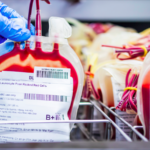
Patients needing transfusions and medicines made from donated plasma could have been affected by a cyberattack on France’s national blood service, after hackers tried to tamper with refrigeration systems at three sites.

The attempt was detected before any blood products were damaged, and the French Blood Establishment (EFS) says no supplies were lost and no health consequences have been identified. But the incident has exposed a disturbing weakness: equipment responsible for keeping vital medical products safe can be put at risk through a supplier’s computer systems.

Hackers targeted blood storage facilities

The attack took place on Monday, November 2, and targeted refrigeration equipment used at three EFS sites storing plasma. The blood service said temperature and defrosting settings had been changed to extremely high levels. The affected cold rooms normally keep products at around minus 30°C.

French media reported that hackers attempted to raise the temperature to 110°C. The EFS has not confirmed that precise figure, saying only that the settings were pushed to very high levels.

The cold rooms held bags of plasma intended for transfusions, as well as plasma used in the manufacture of medicines. Plasma is the liquid part of blood and contains proteins used in treatments for a range of serious conditions. It must be stored under carefully controlled conditions to remain suitable for medical use.

Alarms stopped the attack before products were damaged

The EFS said its monitoring and alarm systems quickly detected the abnormal settings. Staff were then able to intervene, securing the products or transferring them to other storage facilities before they were compromised.

Blood collection and distribution continued without interruption, according to the service. Hospitals and patients were therefore not left facing a disruption to supplies, and the EFS reported no loss of blood products or samples.

Attack came through refrigeration supplier

The hackers did not directly break into the EFS’s own computer network. The attack affected equipment supplied by Coolworld, a company providing refrigeration services. Coolworld acknowledged a cybersecurity incident involving a limited number of its units.

In a statement, the company said the vulnerability reported in the media related to a component supplied by a third party and was outside its direct control. It said it had responded promptly and taken appropriate measures. Coolworld did not provide further details about the affected customer or the method used by the attackers.

French authorities are investigating how the incident happened and how many refrigeration units may have been exposed. The Health Ministry said technical investigations were continuing, while remote access to the affected refrigerators was disabled.

Could similar attacks put other essential supplies at risk?

The identity of the hackers has not been disclosed, and there is no confirmed link between this incident and recent attacks on supermarket refrigeration systems elsewhere in Europe. Those attacks have caused serious disruption for retailers, with hackers remotely altering the settings of fridges and freezers. Food had to be discarded after temperatures rose, leaving businesses with substantial losses. The targeting of blood storage facilities brings the potential consequences into sharper focus: instead of spoiled groceries, a successful attack could have put medical supplies needed by hospitals at risk.

The incidents also raise questions about the security of equipment connected to the internet for remote monitoring and maintenance. A refrigeration system may appear far removed from the digital networks used to manage patient records, but it still relies on software and remote access. If those systems are compromised, the consequences can move beyond computers and into the physical world.

For now, the EFS says its blood supplies remain safe and its services are operating normally. The alarms worked, staff acted in time and no plasma was lost. Investigators still need to establish how the attackers gained access and whether other equipment could be vulnerable. The attempted attack did not cause a shortage or interrupt treatment, but it showed how quickly a cyber incident can threaten something hospitals cannot do without.

Continue Reading

%

Hannah Murray: The Familiar Voice Winning Hearts On The Costa Del Sol

Published

on

hannah-murray:-the-familiar-voice-winning-hearts-on-the-costa-del-sol

The voice of the Costa del Sol, Hannah Murray. Credit: HM

From interviewing famous faces to entertaining listeners across southern Spain, radio presenter Hannah Murray has built a loyal following among English-speaking residents on the Costa del Sol. Whether on Talk Radio Europe, discussing books with well-known authors or appearing on Good Morning Spain, she has become a reassuring presence for many. Behind the microphone is a broadcaster who has crossed paths with celebrity chefs, Hollywood personalities and more than a few unexpected moments.

We caught up with Hannah to talk about her career, the people she has interviewed and what keeps her busy on the Costa del Sol.

Learning the art of interviewing

You started at Talk Radio Europe as a producer and researcher before stepping in front of the microphone. What did that journey teach you about interviewing people, and what do you know now that you wish you’d known at the beginning?

Starting as a researcher and producer was really great grounding, and I’m so grateful for it. Mary Harboe was the best person to learn from. Getting guests for other presenters gave me a real understanding of what the presenter wanted, and didn’t want. Producing outside broadcasts, before I ended up doing them regularly myself, also taught me the importance of constant communication between the person in the studio and the person on location.

I remember watching Mary and asking her how she knew what to ask someone if they didn’t have much to say. She told me something I’ve never forgotten: “The key to being a good interviewer is to be a good listener.” People think it’s all about knowing what to say, but if you’re actually listening, the conversation flows naturally. That’s how an interview should sound. I never prepare questions beforehand, just like you don’t in life.

Famous faces and unexpected answers

You’ve interviewed some famous names over the years. Has there been a guest who completely surprised you?

I’ll never forget chatting to the late Gary Rhodes. I mentioned some of his career highlights, from cooking for Manchester United to cooking for the Royal Family, and asked him what he was most proud of. He said, without hesitation: “Without question, I am most proud of marrying my wife.” What a nice man he was.

Food critic Michael Winner was also a real character. Off air, before interviews, he could be quite abrupt and would say “Five minutes!” before hanging up, even though the timings had been confirmed the day before. When I eventually got him on air, he was so charming, calling me darling, and happily said, at my request: “Calm down dear, it’s just a radio show!”

The interview she would love to do

If you could spend an entire day shadowing any fictional character, historical figure or celebrity, with no restrictions on time or budget, who would you choose, and what would you most want to find out about them?

The person who springs to mind is Nadia Comăneci, the Romanian gymnast. I did gymnastics as a child and watched the film Nadia over and over again. I would love to have been there when she achieved the first-ever perfect 10 at the 1976 Montreal Olympics. It was quite a moment – people thought she had been given a score of one because they had never seen a 10 before. I’ve tried many times over the years to interview her properly but haven’t managed to. I did get her on as a guest before I was a presenter myself. I called in from home and went on air, asking her if she was still friends with her former teammate Teodora. After I hung up, I burst into tears. Thankfully, that’s the only time that’s happened.

A surprising side to the familiar voice

What is something about you that would genuinely surprise people who listen to you regularly?

Something people might not know is that I’ve jumped out of a plane … twice. I did a skydive on my 21st birthday in Australia, and another about a week before my 30th birthday in Seville. I was hoping I’d enjoy it more the second time around, but nope. I’ll stick with just doing it twice, thanks.

What’s next for Hannah Murray?

Where’s Hannah going from here?

I’m pretty busy. I’m back to booking my own guests for my radio shows … TRE in the Afternoon and The Book Show … which is fun to do again. I really enjoy joining Nicole King on Good Morning Spain each week. My husband and I also host a weekly podcast called Marbella with Him & Her about our lives here. I still host a weekly quiz at The Hogan Stand in San Pedro every Thursday, something I’ve been doing for nearly 16 years.

I love singing in the choir, The Del Sol Singers, and being an active member of the International Theatre Studio. I’m also excited about going to Sri Lanka next year with The Sisterhood, an amazing group of women I went to India with last year. We’ll be driving tuk-tuks across the country, raising money for women and girls. When we did the India trip, we raised over £100,000, which was incredible. I’m looking forward to doing more with these women and getting more involved with event hosting in the UK.

Where to hear Hannah

You can catch Hannah every Monday to Thursday on Talk Radio Europe from 4pm to 6pm, with The Book Show every Friday from 2pm, repeated on Sundays from 1pm. Her weekly podcast, Marbella with Him & Her, is free to listen to and download on all major podcast platforms. You can also follow her on Instagram at @radiohannah.

Continue Reading

%

Wizz Air Launches New Bases In Madrid And Valencia With Millions Of Seats And New Routes

Published

on

wizz-air-launches-new-bases-in-madrid-and-valencia-with-millions-of-seats-and-new-routes

Wizz Air expands Spanish operations with new bases, routes and connections. Photo Credit: Paréj Richárd / Unsplash

Wizz Air, the popular low-cost Hungarian airline, launched two new operational bases in Spain this week in Valencia and Madrid, as part of a growth and expansion plan. The airline will also add another base in Santiago de Compostela beginning in December, giving residents and visitors in Spain a chance to travel for the winter holidays.

Wizz Air opens its first Spanish bases

The company opened its first-ever base in Valencia on Monday, November 2, and followed up with a new operational base in Madrid-Barajas on Tuesday, November 3. The latter boasts two Airbus A321neo, in order to increase the airline’s capacity to meet demand in the Spanish capital.

Madrid gains new routes and flight capacity

Along with these new bases, Wizz Air has put 2.6 million seats up for sale, distributed across 27 routes. Madrid is now connected with 12 different countries through the airline, and according to Wizz Air, the Madrid base is expected to generate more than 80 direct jobs.

In the Madrid base, the domestic routes include flights to Asturias; Palma de Mallorca; and Santiago de Compostela.

Madrid has been a particular focus for the initiative of this airline. According to the general director of Wizz Air Malta, Mauro Peneda: “Madrid occupies a fundamental place in Spain’s tourism and business landscape, and we want to make it easier for its residents to travel to more European destinations, while attracting a greater number of visitors to the city.”

Valencia: Connecting residents, expats and holidaymakers to the Spanish hub

In Valencia, the airline will operate a total of 23 routes to eight different countries, increasing capacity by 76 per cent at the Valencia airport and reaching 3.6 million seats offered. More than 80 direct jobs are expected to be created thanks to this new base as well.

The Valencian base opened with domestic routes to Asturias, with five weekly frequencies; Santiago de Compostela, with four; Brașov, with three; and Santander, with two. In December, Bilbao, Palma de Mallorca and Naples will be added, totalling seven destinations.

Wizz Air’s summer of success in Spain

The launch of these bases is a direct result of Wizz Air’s successful first half of the year; the airline transported 8.6 million travellers and carried out an impressive 28,000 operations in Spain from January to June 2026. Additionally, the airline just closed a record peak season in Spain, moving 3.8 million travellers during the summer, representing a 51 per cent increase compared to the summer of 2025.

Over its 22 years of operation, the low-cost airline has transported more than 15 million passengers. Currently, the airline is present in 16 Spanish airports, with a network of 151 routes connecting 15 countries, although this is the first time the Hungarian company has operated a base from Spain.

Thanks to these new bases and connections, residents will have more direct access to a greater number of destinations, while tourists and business travellers have new options to fly to the Spanish hubs of Madrid and Valencia.

Wizz Air’s Santiago de Compostela base is expected to open on December 17 and will permanently station an aircraft operating seven routes: five domestic and two international.

Standing in solidarity with victims of Spanish railway tragedy

In addition to these exciting new ventures, Wizz Air is also standing in solidarity with the people in Spain affected by the recent railway tragedy: the company will launch two new domestic routes that will link Madrid with Malaga and Sevilla starting on Friday, November 6. Two daily frequencies will be operated on each connection, allowing more options for those who need to meet with their families, travel for work reasons or make other essential trips. These trips will begin at €45.99, and will not exceed €99.99.

Continue Reading
Advertisement
Advertisement

Spanish Real Estate Agents

Tags

Trending

Copyright © 2017 Spanish Property & News