Connect with us

%

Diane Kruger Shines In Mallorca

Published

on

diane-kruger-shines-in-mallorca

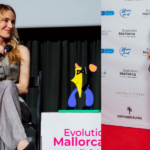
Diane Kruger has opened up about the defining moments of her acting career, from her unexpected journey into Hollywood to the role that changed everything, during a special appearance at the Evolution Mallorca International Film Festival.

The acclaimed actress received the Evolution ICON Award at Palma’s Cine Rívoli on Sunday, November 1, before sitting down with festival founder and director Sandra Lipski for a conversation about her life in cinema.

Kruger, whose career has crossed European cinema and Hollywood, described storytelling as the driving force behind her work.

“Storytelling has been my life’s purpose,” she said, as she accepted the award in front of an audience at the festival’s 15th edition.

The event brought one of international cinema’s most recognisable actresses to Mallorca, with the conversation offering a rare insight into the experiences behind some of her most memorable performances.

From childhood dreams to the big screen

Kruger’s journey into acting began long before she became a familiar face in international cinema.

As a child, she watched Mary Poppins and recalled being struck by the idea that someone could make a living telling stories. However, acting was not her immediate career path.

After working as a model, she moved into acting and trained in France, where she began building a career that would eventually take her from European productions to major Hollywood films.

Her family was initially uncertain about the decision. Kruger recalled how her mother worried that she was putting her future at risk, only gradually becoming more supportive as her daughter began finding success.

Her breakthrough came with Wolfgang Petersen’s epic Troy, in which she played Helen alongside Brad Pitt.

The scale of the production was a significant challenge for the young actress, who admitted that the sudden attention and criticism were difficult to navigate.

Despite the pressure, the role helped establish her internationally.

Fighting for her Tarantino breakthrough

One of the most revealing moments of the conversation concerned Kruger’s experience working with Quentin Tarantino on Inglourious Basterds.

The actress explained that she had to actively pursue the role of Bridget von Hammersmark, with the filmmaker initially having another performer in mind.

After auditioning in Germany, Kruger prepared extensively, learning 15 pages of dialogue by heart before meeting Tarantino.

Her determination paid off, securing her a role in one of the director’s most celebrated films.

The performance further cemented her reputation as an actress capable of moving between languages, genres and international productions.

A career spanning continents

Kruger’s work has continued to move between European and American cinema, with the actress also reflecting on the importance of the television series The Bridge in developing her craft.

Her performance in Fatih Akin’s In the Fade marked another defining moment. The German-language film earned her the Best Actress award at the Cannes Film Festival in 2017.

Presenting the ICON Award, Lipski praised Kruger’s distinctive performances and her ability to bring different cultures together through her work.

The festival’s wider programme also featured industry talks, screenings and conversations with filmmakers, including a discussion with director Edward Berger.

Kruger’s appearance was a highlight of the event, celebrating a career built on determination, versatility and a lasting passion for storytelling.

She also expressed her gratitude for being welcomed to Mallorca, describing film festivals as valuable opportunities to connect directly with audiences.

Her visit added another memorable chapter to Evolution Mallorca’s 15th edition, which continues to bring international cinema and local audiences together in Palma.

%

Another Day Of Commuter Train Chaos

Published

on

another-day-of-commuter-train-chaos

Cercanias commuter train broken down again on the Fuengirola line.

Repeated breakdowns raise questions over investment (or a lack of), reliability and whether a change of government could make a difference. Costa del Sol citizens are at the end of their tether.

Passengers travelling between Malaga and Fuengirola faced another day of disruption and waiting on Thursday, November 5, after a technical fault on a Cercanías (commuter) train caused widespread delays, cancellations and overcrowding.

The latest problems affected the C1 line, with passengers reporting waits of up to an hour at Plaza Mayor. Some trains were running late, while passengers reported smoke and an unusual smell around the wheels of a train at La Colina in Torremolinos. Some services were cancelled and others required passengers to change trains.

According to Málaga Hoy’s report on the latest Cercanías disruption, the problems also affected the C2 service between Malaga and Alora.

A difficult week for Malaga commuters

Thursday’s disruption followed three consecutive days of problems reported across the network, with delays, cancelled services and compulsory changes of train.

On Sunday, November 1, around 20 passengers were left stranded after a technical failure stopped the last train travelling towards Fuengirola. Renfe eventually arranged taxis to take them home. EWN previously reported the late-night breakdown which left Malaga passengers stranded.

The following night, a man died after being struck by a train near Torreblanca, forcing the suspension of services between Benalmadena and Fuengirola. This was a separate and tragic incident, rather than a mechanical failure. Even more operational problems followed on Tuesday and Wednesday, before Thursday’s technical fault brought another round of passenger complaints.

Spanish newspaper El Español counted 37 service disruption notices on Thursday alone, covering delays, cancellations, partial interruptions and a compulsory passenger transfer. Renfe attributed the latest C1 problems to a technical fault affecting one train, while the C2 experienced separate difficulties.

Why the Fuengirola railway is significant

The 32-kilometre C1 connects Malaga city with the airport, Torremolinos, Benalmadena and Fuengirola. It is an essential transport link for residents commuting to work, tourists travelling between resorts and airport passengers avoiding increasingly congested roads.

Renfe’s 2025 passenger figures show that Malaga’s two Cercanías lines carried 15.54 million passengers last year, with the bulk of demand concentrated on the C1. At some points, passenger numbers reach 150 per cent of available seating capacity.

Renfe plans to invest €66.7 million in seven new high-capacity trains for the Fuengirola route, expected to enter service from 2028. A further €40 million is earmarked for a new maintenance workshop.

Meanwhile, Adif has been working on a project to add 2.8 kilometres of double track between Malaga Airport and Campamento Benitez, helping to address infrastructure limitations that restrict how frequently trains can run.

Could we do with a change?

Responsibility for Spain’s state railway network ultimately falls on the national government through the Transport Ministry, Adif and Renfe. A change of administration in Madrid could therefore bring different investment priorities, management decisions and expectations for service improvements.

However, replacing the government would not automatically solve the railway’s problems. The infrastructure limitations, maintenance requirements and growing passenger numbers would still need to be addressed. For thousands of people who depend on the C1 every day, the promised new trains and infrastructure improvements offer some hope, but they will not arrive overnight.

Whether under the present administration or a future government, the question remains the same: how can a railway serving one of Spain’s busiest coastal areas provide a service passengers can actually rely on?

Continue Reading

%

Brits In Spain With Old UK Workplace Pensions Left Guessing As Britain Rewrites How Pensions Pay Out

Published

on

brits-in-spain-with-old-uk-workplace-pensions-left-guessing-as-britain-rewrites-how-pensions-pay-out

Old UK pension pots are among those covered by the plans. Credit: Lucigerma / Shutterstock

If you left a workplace pension behind in England and now live in Spain, you could one day be offered a ‘pension for life’ on it. The catch is that the plans don’t mention savers living abroad, and Spain taxes the money in its own way.

Old pots are covered, not just new ones

Brits who left a workplace pension behind in England are included in the plans Pensions Minister Torsten Bell announced on Tuesday November 3, and not just people who are still paying in. Under the Guided Retirement proposals, workplace pension providers would have to offer a default pension, which is a ready-made income that carries on for life, whenever a saver asks to start taking their money.

The consultation says that includes deferred pots (old pensions left behind after changing jobs) and people already in drawdown (taking money out of the pot bit by bit), as long as they aren’t in a default pension already. Final-salary schemes are left out, and so are tiny deferred pots of £1,000 or less.

Savers could still say no

Savers could turn the default down and choose something else, and nothing would be paid out until they ask for it and confirm their bank details. If they never get in touch, the money would simply stay invested. 

For pots above £10,000, the default would have to keep paying for life, so taking the money out bit by bit would be unlikely to count on its own. Some defaults could come from new collective schemes, which pool savers’ money so nobody carries the risk of outliving their pot alone. However, the government’s response says the pension increases wouldn’t be guaranteed and benefits may fluctuate.

The reason for all of this is that around 46 per cent of first-time pension withdrawals in 2025/26 emptied the whole pot, the government says.

Nothing in the paperwork mentions savers abroad

The obvious question for anyone living in Spain is ‘does this apply to me?’, and so far the paperwork doesn’t answer it. Neither the consultation nor the government’s separate response on collective schemes mentions savers who live overseas.

It’s early days, though. The consultation is open until Tuesday December 22, with the collective schemes rules open until Tuesday December 15, and the indicative timetable has providers complying from summer 2029. Those dates could still change. 

Spain will tax the money in its own way

Unfortunately for brits in Spain, Britain’s plan can’t change Spanish tax rules. Under the UK-Spain tax treaty, most UK pension income, including lump sums, received by someone living in Spain is taxed here, and the UK’s 25 per cent tax-free lump sum has no Spanish equivalent once you’re a tax resident. 

So emptying a whole pot, as so many UK savers do, could mean paying Spanish tax on all of it as ordinary income, without the quarter that’s tax-free in Britain. Spain already treats the UK State Pension as income for residents too, as EWN has previously reported.

Until the rules are final, anyone in Spain with an old UK workplace pot should speak to their provider and a cross-border tax adviser before taking money out, because the Spanish tax bill depends on Spain’s rules, whatever Britain decides.

Continue Reading

%

Aldi Mandarin South African Fruit Label

Published

on

aldi-mandarin-south-african-fruit-label

Shopping and eating local produce has become a priority for many people, a fresh vegetable that hasn’t travelled across the world to get to your plate is far less preferable to something grown and harvested just on your doorstep. One customer has now challenged the well known supermarket over an apparent labelling discrepancy in Spain, raising questions about food origins and shoppers’ right to know where their fresh produce comes from.

Mandarins from thousands of miles away

Aldi is facing questions after a shopper reportedly discovered that mandarins displayed as Spanish at one of its Spanish supermarkets were delivered in boxes identifying South Africa as their country of origin. The complaint concerns an Aldi store in Oropesa del Mar, in Castellon province, and was reported by Spanish publication Merca2 on November 3, 2026.

According to the report, the customer shared an image on X, formerly Twitter, showing the delivery-box label along with the supermarket’s fruit display. The shopper claimed that the store was advertising the mandarins as Spanish, despite the packaging stating that they came from South Africa. The apparent contradiction prompted the customer to challenge Aldi publicly and demand that the information be corrected.

Mandarins in aldi box
Advertised as Spanish but the box says otherwise
Credit: RRSS/XTwitter

What did Aldi say about the mandarin complaint?

Merca2 reports that Aldi asked the customer to provide further details so that the matter could be investigated internally. No outcome has been reported, and is still unclear whether the discrepancy resulted from an incorrect shelf label, a stock change or another administrative mistake. There is also no evidence that Aldi deliberately misled shoppers, but it raises a question of do we really always know where our food comes from.

What do EU rules say about fruit origins?

Supermarkets in Spain must provide customers with accurate information about the origins of fresh fruit and vegetables.

Under EU Delegated Regulation 2023/2429, which applies to fruit marketing standards, country-of-origin information must be clearly displayed and must not mislead consumers. Article 7 requires retailers to show this information prominently and legibly next to the produce. If mandarins grown in South Africa are presented as Spanish, this could breach the applicable consumer information rules..

Why the origin matters to shoppers

Spain has a long-established citrus industry, particularly in Valencia, Andalucia and Murcia, where oranges and mandarins are important agricultural products. Imported citrus is perfectly legitimate, and South African mandarins are regularly sold in European supermarkets. The important issue is that customers should be told accurately where their fruit was grown.

For shoppers who prefer to support Spanish farmers and local producers, clear labelling makes it easier to choose home-grown produce. British residents living in Spain may also find it useful to check the country-of-origin information on supermarket shelf labels rather than relying on the fruit variety or packaging. A mandarin variety such as Tango does not necessarily indicate where it was grown.

Shoppers should be able to trust the information provided by their supermarket and be able to confidently source produce grown close to home.

Continue Reading

Trending

Copyright © 2017 Spanish Property & News