Connect with us

%

Using Google Maps While Driving In Spain? One Mistake Could Cost You €200 And Six Licence Points

Published

on

using-google-maps-while-driving-in-spain?-one-mistake-could-cost-you-e200-and-six-licence-points

Using Google Maps while driving in Spain is legal, but handling your phone could result in a €200 fine and six licence points. Credit: ardiwebs / Shutterstock.com

You are driving through Spain, following Google Maps, when a quicker route suddenly appears. Do you tap the screen to check it or pick up your phone to take a closer look? It is something many motorists do without thinking, but that split second decision could cost you €200 and six licence points. Spain’s traffic authority, the DGT, makes an important distinction between following directions and handling your phone while driving, and it is one every motorist should understand.

Can you legally use Google Maps while driving in Spain?

Using Google Maps while driving in Spain is perfectly legal. The problem is not the navigation app itself, but how you use it once you are behind the wheel.

Spain’s Directorate General of Traffic (DGT) permits GPS navigation through a mobile phone or a built in dashboard system, provided it does not distract the driver or obstruct their view of the road. Ideally, your destination should be entered and your route checked before setting off.

The biggest mistake is picking up your phone to check or change directions. Under Spanish traffic law, simply holding a mobile phone while driving can result in a €200 fine and the loss of six licence points, even if you are only looking at Google Maps rather than making a call.

And there is another detail worth knowing. Being stopped at a red traffic light does not mean you can start using your phone. The same restrictions apply while you are temporarily stopped in traffic.

What happens if you need to change your Google Maps route?

Google Maps has a habit of changing its mind halfway through a journey. One minute you are following the fastest route, the next it is offering to save you seven minutes by sending you down another road. The temptation to tap the screen is obvious, but that small action could turn an ordinary journey into an expensive one.

Under Spain’s traffic regulations, manually operating a navigation system while driving is a serious offence, carrying a €200 fine and the loss of three licence points. Holding a mobile phone is treated more severely, with six points deducted.

The distinction matters. A phone secured in a dashboard mount does not automatically make it legal to interact with Google Maps while driving. Even without picking up the device, manually changing the route can still result in a penalty.

The safest approach is to programme your journey before leaving and follow the spoken directions. If you need to change your destination, find somewhere safe and legal to park before adjusting the navigation.

The DGT’s official guidance on driving offences explains the penalties motorists can face for using mobile phones and navigation devices incorrectly.

And these are not simply rules that exist on paper. During the DGT’s October campaign against distracted driving, officers reported 49 cases involving improper use of navigation systems, alongside 3,816 involving mobile phones.

EWN previously highlighted the scale of the problem in its report on thousands of drivers caught during Spain’s mobile phone crackdown.

How to use Google Maps in Spain without risking a fine

Avoiding a fine does not mean giving up Google Maps or your favourite navigation app. A few simple precautions can help you reach your destination without an unexpected penalty.

Before setting off, enter your destination, check the suggested route and make sure your phone is securely mounted somewhere that does not obstruct your view. Switching on voice navigation also allows you to follow directions without constantly looking at the screen.

If Google Maps suggests a faster route, there is no need to respond immediately. Allow the app to recalculate automatically or find somewhere safe to park before making changes yourself. Remember that sitting in a traffic jam or waiting at traffic lights does not give you permission to pick up your phone.

For British residents and tourists driving in Spain, the rules apply whether you are using your own vehicle or a hire car. Motorists should also be aware that other everyday driving habits can lead to penalties, as explained in EWN’s guide to Spain’s driving fines and what the law actually bans.

The next time Google Maps offers you a shortcut, remember that saving five minutes is hardly worth risking €200 and your licence points. In Spain, the app can guide you wherever you want to go. Just make sure you are not trying to guide it while driving.

%

Brits In Spain With Old UK Workplace Pensions Left Guessing As Britain Rewrites How Pensions Pay Out

Published

on

brits-in-spain-with-old-uk-workplace-pensions-left-guessing-as-britain-rewrites-how-pensions-pay-out

Old UK pension pots are among those covered by the plans. Credit: Lucigerma / Shutterstock

If you left a workplace pension behind in England and now live in Spain, you could one day be offered a ‘pension for life’ on it. The catch is that the plans don’t mention savers living abroad, and Spain taxes the money in its own way.

Old pots are covered, not just new ones

Brits who left a workplace pension behind in England are included in the plans Pensions Minister Torsten Bell announced on Tuesday November 3, and not just people who are still paying in. Under the Guided Retirement proposals, workplace pension providers would have to offer a default pension, which is a ready-made income that carries on for life, whenever a saver asks to start taking their money.

The consultation says that includes deferred pots (old pensions left behind after changing jobs) and people already in drawdown (taking money out of the pot bit by bit), as long as they aren’t in a default pension already. Final-salary schemes are left out, and so are tiny deferred pots of £1,000 or less.

Savers could still say no

Savers could turn the default down and choose something else, and nothing would be paid out until they ask for it and confirm their bank details. If they never get in touch, the money would simply stay invested. 

For pots above £10,000, the default would have to keep paying for life, so taking the money out bit by bit would be unlikely to count on its own. Some defaults could come from new collective schemes, which pool savers’ money so nobody carries the risk of outliving their pot alone. However, the government’s response says the pension increases wouldn’t be guaranteed and benefits may fluctuate.

The reason for all of this is that around 46 per cent of first-time pension withdrawals in 2025/26 emptied the whole pot, the government says.

Nothing in the paperwork mentions savers abroad

The obvious question for anyone living in Spain is ‘does this apply to me?’, and so far the paperwork doesn’t answer it. Neither the consultation nor the government’s separate response on collective schemes mentions savers who live overseas.

It’s early days, though. The consultation is open until Tuesday December 22, with the collective schemes rules open until Tuesday December 15, and the indicative timetable has providers complying from summer 2029. Those dates could still change. 

Spain will tax the money in its own way

Unfortunately for brits in Spain, Britain’s plan can’t change Spanish tax rules. Under the UK-Spain tax treaty, most UK pension income, including lump sums, received by someone living in Spain is taxed here, and the UK’s 25 per cent tax-free lump sum has no Spanish equivalent once you’re a tax resident. 

So emptying a whole pot, as so many UK savers do, could mean paying Spanish tax on all of it as ordinary income, without the quarter that’s tax-free in Britain. Spain already treats the UK State Pension as income for residents too, as EWN has previously reported.

Until the rules are final, anyone in Spain with an old UK workplace pot should speak to their provider and a cross-border tax adviser before taking money out, because the Spanish tax bill depends on Spain’s rules, whatever Britain decides.

Continue Reading

%

Aldi Mandarin South African Fruit Label

Published

on

aldi-mandarin-south-african-fruit-label

Shopping and eating local produce has become a priority for many people, a fresh vegetable that hasn’t travelled across the world to get to your plate is far less preferable to something grown and harvested just on your doorstep. One customer has now challenged the well known supermarket over an apparent labelling discrepancy in Spain, raising questions about food origins and shoppers’ right to know where their fresh produce comes from.

Mandarins from thousands of miles away

Aldi is facing questions after a shopper reportedly discovered that mandarins displayed as Spanish at one of its Spanish supermarkets were delivered in boxes identifying South Africa as their country of origin. The complaint concerns an Aldi store in Oropesa del Mar, in Castellon province, and was reported by Spanish publication Merca2 on November 3, 2026.

According to the report, the customer shared an image on X, formerly Twitter, showing the delivery-box label along with the supermarket’s fruit display. The shopper claimed that the store was advertising the mandarins as Spanish, despite the packaging stating that they came from South Africa. The apparent contradiction prompted the customer to challenge Aldi publicly and demand that the information be corrected.

Mandarins in aldi box
Advertised as Spanish but the box says otherwise
Credit: RRSS/XTwitter

What did Aldi say about the mandarin complaint?

Merca2 reports that Aldi asked the customer to provide further details so that the matter could be investigated internally. No outcome has been reported, and is still unclear whether the discrepancy resulted from an incorrect shelf label, a stock change or another administrative mistake. There is also no evidence that Aldi deliberately misled shoppers, but it raises a question of do we really always know where our food comes from.

What do EU rules say about fruit origins?

Supermarkets in Spain must provide customers with accurate information about the origins of fresh fruit and vegetables.

Under EU Delegated Regulation 2023/2429, which applies to fruit marketing standards, country-of-origin information must be clearly displayed and must not mislead consumers. Article 7 requires retailers to show this information prominently and legibly next to the produce. If mandarins grown in South Africa are presented as Spanish, this could breach the applicable consumer information rules..

Why the origin matters to shoppers

Spain has a long-established citrus industry, particularly in Valencia, Andalucia and Murcia, where oranges and mandarins are important agricultural products. Imported citrus is perfectly legitimate, and South African mandarins are regularly sold in European supermarkets. The important issue is that customers should be told accurately where their fruit was grown.

For shoppers who prefer to support Spanish farmers and local producers, clear labelling makes it easier to choose home-grown produce. British residents living in Spain may also find it useful to check the country-of-origin information on supermarket shelf labels rather than relying on the fruit variety or packaging. A mandarin variety such as Tango does not necessarily indicate where it was grown.

Shoppers should be able to trust the information provided by their supermarket and be able to confidently source produce grown close to home.


Continue Reading

%

Driving In Spain? Make Sure You’re Up To Date With The Latest Traffic Rules

Published

on

By

driving-in-spain?-make-sure-you’re-up-to-date-with-the-latest-traffic-rules

By Penny • Published: 05 Nov 2026 • 10:32 • 1 minute read
Person driving car, driver at the wheel

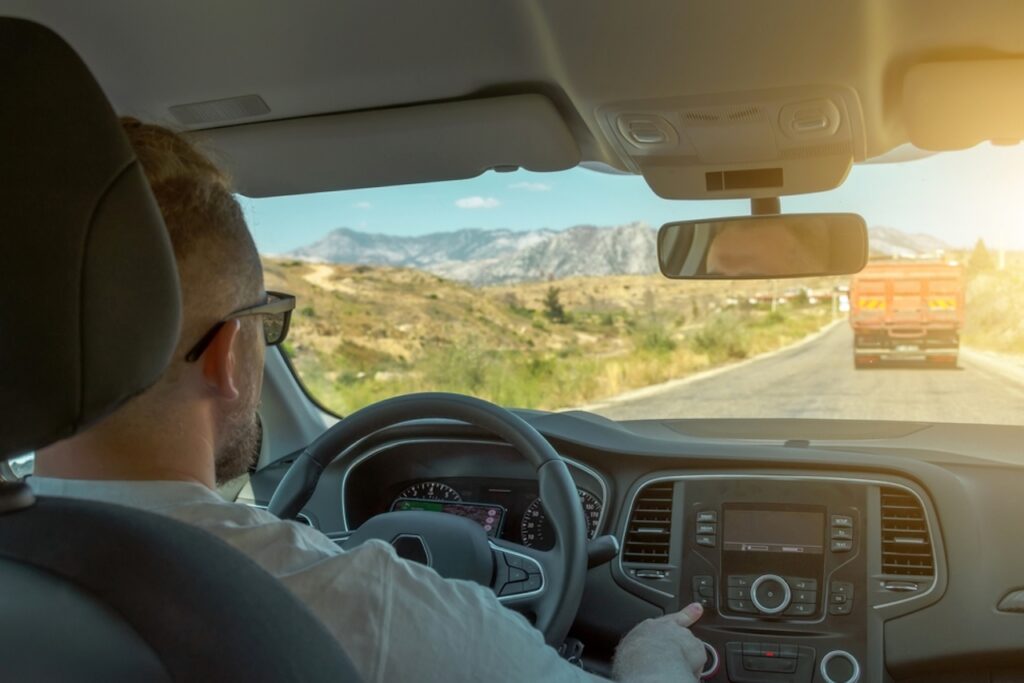
Keep up to date with traffic rules in Spain. Credit: aapsky, Shutterstock

New traffic regulations came into force in Spain on 1 October 2026, introducing changes that affect motorists, motorcyclists, cyclists and electric scooter users.

The updated rules aim to improve road safety, particularly for vulnerable road users. Here are some of the main changes:

  • Overtaking vulnerable road users: Drivers must leave at least 1.5 metres of space when overtaking cyclists and other vulnerable road users. On roads outside urban areas, they must also reduce their speed to at least 20 km/h below the speed limit. On roads with more than one lane in each direction, drivers must change lanes completely when overtaking.
  • Motorcycle safety: Motorcyclists and moped riders, including passengers, must now wear protective gloves on roads outside urban areas and closed footwear on all roads.
  • Electric scooters: The minimum age for riding an electric scooter is now 15. Helmets are compulsory, and riders must use reflective or illuminated equipment at night or in poor visibility.
  • Seat belt requirements: Previous exemptions for certain professional drivers, including taxi drivers, goods vehicle drivers and driving instructors, have been removed.
  • Driving in snowy conditions: Overtaking is now prohibited on motorways and dual carriageways when snow makes driving conditions difficult. Drivers must keep to the right, leaving lanes clear for emergency services and snow-clearing vehicles.

At Generali Expatriates, we make insurance easier for international residents in Spain, with multilingual support and a network of over 200 agents and brokers.

Until 15 December 2026, both new and existing customers can benefit from €30 cashback on every new qualifying car or home insurance policy. The more policies you take out, the more cashback you receive. Terms and conditions apply.

To request a personalised quote, visit www.generaliexpatriates.es/en/quote or call 913 422 549.

Google News

Follow Euro Weekly News on Google News

Get breaking news from Spain, travel updates, and expat stories directly on your Google News feed.

Follow on Google News

Sign up for personalised news

Subscribe to our Euro Weekly News alerts to get the latest stories into your inbox!

By signing up, you will create a Euro Weekly News account if you don’t already have one. Review our Privacy Policy for more information about our privacy practices.

Continue Reading


Continue Reading

Trending

Copyright © 2017 Spanish Property & News