The Donald Trump administration has done with Ukrainians and Sudanese this week what it did last month with Salvadorans: it has not terminated Temporary Protected Status (TPS), but it has not renewed it either. The program that provides legal immigration status to 101,000 Ukrainians and 1,800 Sudanese citizens was set to expire on Monday, but the Department of Homeland Security (DHS) has declined to comment, which for now leaves them protected from deportation.
The decision not to terminate TPS represents a 180-degree turn in the Trump administration’s immigration policy and comes amid the campaign for the midterms, to be held on November 3, in which the Republican Party is fighting for control of Congress. In a context expected to be unfavorable for the conservative party, some experts are speculating about the timing of this break with the trend of recent months, when TPS protections were ended for 13 of the 17 countries that had benefited from the program.
“I think it’s related,” says José Palma, national coordinator of the National TPS Alliance. “Republican strategists are trying to minimize the impact and confuse people into thinking they are changing course and will be more lenient in the future,” he says.
In an election in which all seats in the House of Representatives, one-third of the Senate and 36 governors’ offices are at stake, Trump’s falling popularity has become a burden for many Republican candidates. Only 37% of voters approve of President Trump’s performance, while 60% disapprove, according to the latest polls. In addition to the high cost of living, voters are concerned about the administration’s aggressive immigration policy. Most people believe the government has gone too far on immigration.
“Americans are very upset about the violence committed by U.S. Immigration and Customs Enforcement (ICE) against U.S. citizens, and about ICE’s violence in general,” says Julia Gelatt, associate director of the Migration Policy Institute’s immigration policy program. Gelatt notes that it cannot be known for certain whether the policy change on TPS is due to the proximity of the elections, but she concedes it could benefit the Republican Party.
Todd Schulte, president of FWD.us, a migrant advocacy organization, shares the same view. “I can’t say exactly all the reasons they kept it, but we can say with certainty that maintaining TPS is the right thing to do and, moreover, it’s a measure with popular support; by contrast, ending it would have been extremely unpopular in places like Ohio, where we saw the public deeply disturbed by the termination of TPS for Haitians,” he says.
TPS is a program that allows citizens of countries experiencing a crisis due to armed conflict or natural disasters to live and work temporarily in the United States. In Ukraine’s case, TPS was granted in April 2022 after Russia’s invasion two months earlier. The Joe Biden administration extended it. The most recent extension was in January 2025, when DHS authorized an additional 18 months of protection, in effect until October 2026.
On Monday, when the program was due to expire, DHS merely said in a statement that “an announcement regarding TPS for Ukraine will be made in due course. Until that announcement is made, Ukrainian citizens in the United States under TPS remain protected.” A month earlier, on September 9, DHS issued a similar statement for Salvadoran citizens. Until then, the government had chosen to end TPS for Afghans, Venezuelans, Nicaraguans, Hondurans, Haitians and eight other nationalities.
In limbo
Ukrainians and Sudanese are now left in limbo, like Salvadorans. The uncertainty about their future is total. In theory, not terminating the program extends their stay by six months, but the government has reserved the option to make a decision at any time. “In real life, many families are suffering because of that lack of clarity in protection. What is happening is just another extension of the psychological torture the TPS community is enduring,” Palma criticizes.
The activist says that in practical terms, the failure to renew the program means, for example, that someone who needs to obtain a driver’s license cannot do so in states that require proof of immigration status, such as Texas. It also hurts them when looking for work, renewing a lease, or collecting retirement benefits, because federal databases are not updated pending a DHS announcement and they show no immigration status. Palma says that for many the anxiety caused by uncertainty about renewal is worse than the certainty of termination, and he criticizes that “they are using them as political pawns.”
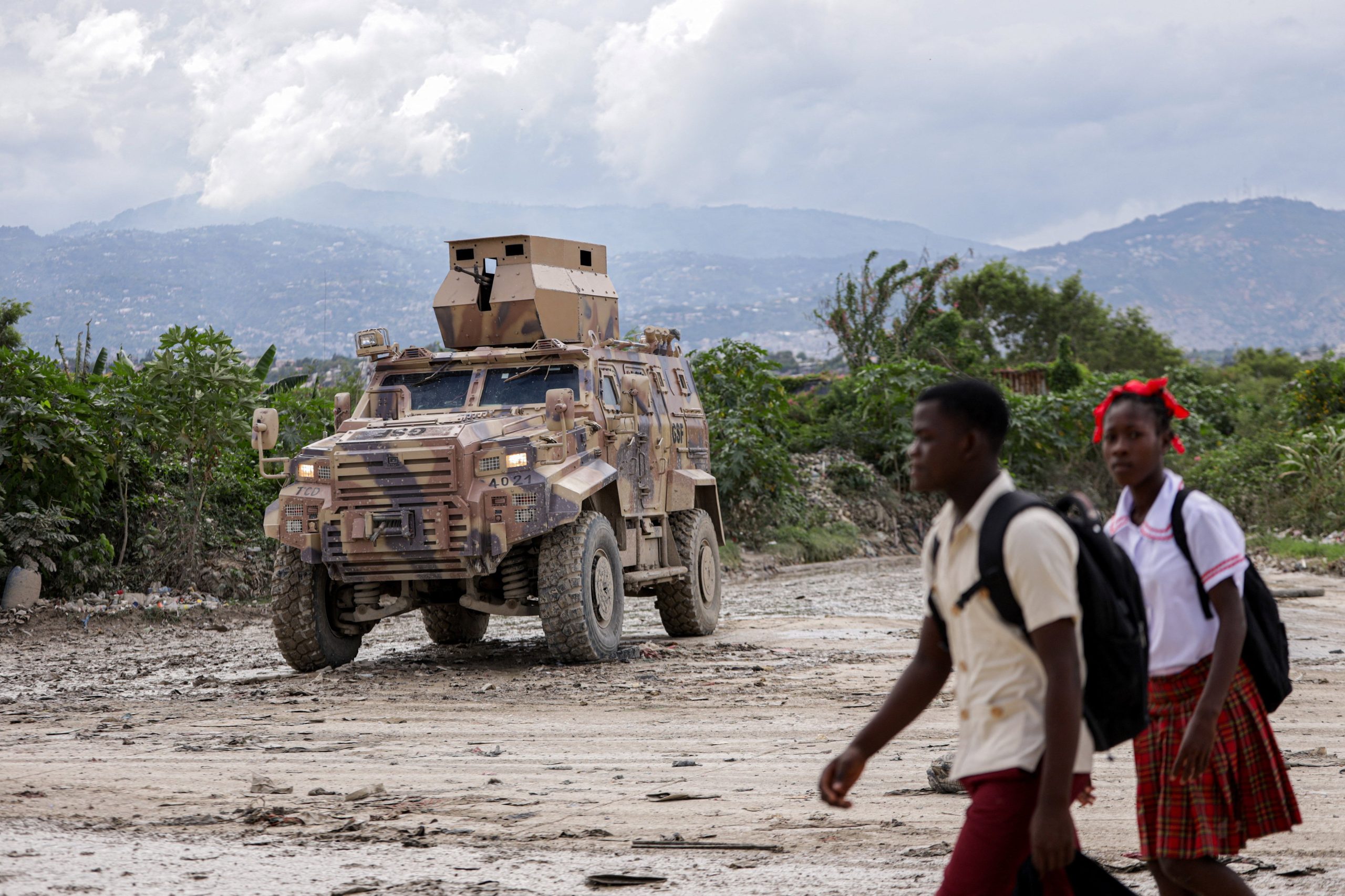
TPS beneficiaries renew their permits every 18 months, when the government evaluates whether the country continues to suffer the conditions that led to the program’s creation. The last country whose TPS was not renewed was Haiti, leaving 170,000 Haitians on the brink of deportation despite the continued violence by criminal gangs that control parts of the Caribbean nation.
“The Trump administration has indicated that conditions in the country of origin are not a primary concern. They consider TPS is not aligned with the national interests of the United States,” Gelatt says.
In Ukraine’s case, however, it has always received preferential treatment because of the U.S. stance in the war with Russia, and it was also allowed to maintain a humanitarian parole program that was denied to other countries. Now, the recent agreement signed with Russian President Vladimir Putin for the export of diesel has prompted speculation about whether Washington’s support will continue.
Letter from senators
In September, 31 Democratic and Republican senators sent a letter to DHS Secretary Markwayne Mullin and Secretary of State Marco Rubio urging renewal of TPS for Ukraine, calling it “a humanitarian imperative, but also a sound economic decision.” “In states such as Illinois, thousands of Ukrainian TPS beneficiaries strengthen our communities, not only through their valuable cultural contributions, but also through their participation in essential sectors such as transportation, health care and construction. Ending TPS for this group could destabilize those sectors and increase costs for American consumers by forcing thousands of experienced workers to leave their jobs,” the letter said.
As for Sudan, TPS was established in 1997 and successive U.S. administrations have continued to extend it because of the armed conflict and political instability that have plagued the African nation.
“The idea of returning people to these countries, falsely claiming it is safe to do so, is wrong; politically, it would be a totally mistaken approach at any time, and especially in the period leading up to elections,” adds Schulte.
The next country with TPS up for renewal is Lebanon, whose program expires on November 27, after the midterms.
Sign up for our weekly newsletter to get more English-language news coverage from EL PAÍS USA Edition








 Uncategorized4 weeks ago

 New Developments4 weeks ago

 New Developments3 weeks ago

 Uncategorized4 weeks ago

 Housing access / crisis / affordability3 weeks ago