
Donald Trump
Cambridge Analytica, 10 Years On: Meta Still Struggles To Shake Off The Specter Of Political Interference


2016 was a pivotal year in the 21st century. In June, Britons voted in a referendum to leave the European Union. In November, U.S. voters elected Donald Trump as president, a figure widely regarded as a bad joke by both Democrats and establishment Republicans. Both events marked the beginning of a far-right wave that, a decade later, continues to sweep across much of the world. And both were aided, perhaps decisively, by a small London-based political consultancy: Cambridge Analytica. The company collected data from 87 million Facebook users without their consent and used it to create personalized political propaganda to boost the campaigns for Trump and Brexit, among others.
It was the first warning that the vast amount of information platforms collect about users through their likes, interactions and browsing histories can be used not only to sell them products, but also to manipulate them psychologically and try to influence how they vote.
A decade later, the shadow of Facebook and Cambridge Analytica still looms large. The issue returned to the spotlight last week, fueled both by the record fine imposed on Meta and the elections taking place around the world.
In Brazil, the Superior Electoral Court spent last week sparring with Mark Zuckerberg’s company in an effort to make it demonstrate that the algorithms of Instagram and Facebook treat equally the two candidates competing in Sunday’s presidential runoff: Luiz Inácio Lula da Silva, of the left-wing Workers’ Party (PT), and Flávio Bolsonaro, of the right-wing Liberal Party. In recent weeks, the Brazilian government has accused Meta’s platforms of giving preferential treatment to the Bolsonaro campaign.
Brasília complains that Lula’s account was temporarily suspended, that his rival’s content was being promoted and distributed more widely than his own, and even that images generated by Meta’s artificial-intelligence tool appear less sharp when depicting Lula than when depicting Bolsonaro. Similar biases were also reported in WhatsApp searches. Meta, for its part, has blamed technical errors, although a group of employees allegedly acknowledged that the problems in every case were detrimental to Lula’s campaign.
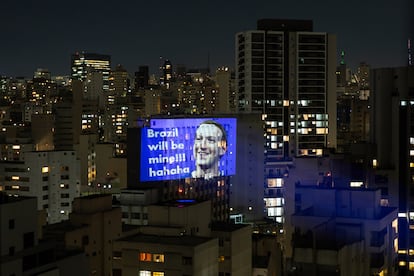
The shadow of Cambridge Analytica
As it happened, while Brasília was locked in that dispute with the technology giant, a court in New Mexico on Wednesday ordered Meta to pay a record fine of around $25 billion for violating privacy laws, on top of the $5 billion it had already paid to the Federal Trade Commission (FTC).
This year, Meta has also suffered a string of legal setbacks on another major front: the impact of social media on minors. These have included additional fines and a settlement with 52 state attorneys general, under which the company agreed to pay up to $18 billion in exchange for the withdrawal of their lawsuit.
That issue — the mental health of young people exposed to social media platforms — has dominated the debate about the societal influence of Big Tech. But in an election year for countries such as the United States, which will hold its midterm elections in November, Spain and Israel, it is worth remembering what Cambridge Analytica revealed about how social networks can be used to influence elections.
“We used Facebook to harvest data from millions of people and build models that appealed to their preferences and private demons,” Christopher Wylie, an analyst at Cambridge Analytica and the whistleblower who exposed the scandal to the world, told EL PAÍS. Wylie was one of the main architects of the digital machinery that propelled the early far right of the 21st century in both the United Kingdom and the United States.

“We played with a nation’s psychology,” said the young Canadian engineer. How did they extract so much value from Facebook data? Users’ likes, posts and comments were used to build psychological profiles. Cambridge Analytica did so using five traits: openness, extroversion, conscientiousness, agreeableness and neuroticism. From there, the consultancy grouped those profiles into categories. The next step was to use that information on each individual to allow political parties to send different ads to different potential voters, tailoring the message, whether more emotional, inflammatory, or informative, according to what was known about them. In this way, the impact could be far greater than that of a generic advertisement.
The scandal led to inquiries in both the British Parliament and the U.S. Senate. “The Electoral Commission described the pernicious nature of micro-targeted political adverts: ‘Only the voter, the campaigner and the platform know who has been targeted with which messages. Only the company and the campaigner know why a voter was targeted and how much was spent on a particular campaign,’” stated a 2019 House of Commons report on disinformation and fake news. The report concluded that Zuckerberg’s company had acted in “bad faith” and described social media platforms as “digital gangsters.”
Backlash and rollback
The Facebook–Cambridge Analytica scandal was huge. The British consultancy collapsed; Mark Zuckerberg faced his first hearings before investigative committees. And social networks responded.
“Platforms took action,” explains Carmela Ríos, a journalist who specializes in social networks and disinformation. “I think we won in that sense, because we gained transparency and that also forced social networks to act. It was after that that Facebook decided to open its political ad library, for example, and launched CrowdTangle [the free tool to detect the spread of hate speech].”
That period did not last long. When Elon Musk bought Twitter in 2022, the rollback began. The billionaire fired content moderators at the newly rebranded X, which shifted toward community moderation, a model that Meta later adopted on its own platforms. Algorithms became more influential, and researchers and journalists were no longer given access to information about how the platforms operate.
“Now social networks act with great opacity,” says Ríos. “What little we know about them does not come from their willingness to disclose but from legal obligation.”
In recent years, new methods have been developed to exploit people’s digital footprints for political ends. In the U.S., Trump advisers used geofencing (a marketing practice that exploits cellphone location data) to detect people attending Catholic or evangelical churches on Sundays in key states for the 2020 presidential election. Just as retailers track customers’ phones in stores to offer personalized ads, the organization CatholicVote identified 200,000 Catholics in Wisconsin who had attended Mass at least three times in the previous 90 days and, by cross-referencing IP addresses with other databases, found they had not registered to vote.
The legacy of Facebook and Cambridge Analytica is still with us. Brad Parscale, the digital strategist who designed Trump’s micro-targeted advertising campaign in 2016, joined the team of advisers to Israeli Prime Minister Benjamin Netanyahu last year. He was tasked with winning over Generation Z across all platforms and ensuring that ChatGPT returns information favorable to Netanyahu’s cause. A decade later, Cambridge Analytica’s influence can still be felt.
Sign up for our weekly newsletter to get more English-language news coverage from EL PAÍS USA Editio









Aranceles
Audi Trasladará A Su Futura Planta En EE UU Toda La Producción Europea De Grandes Todocaminos



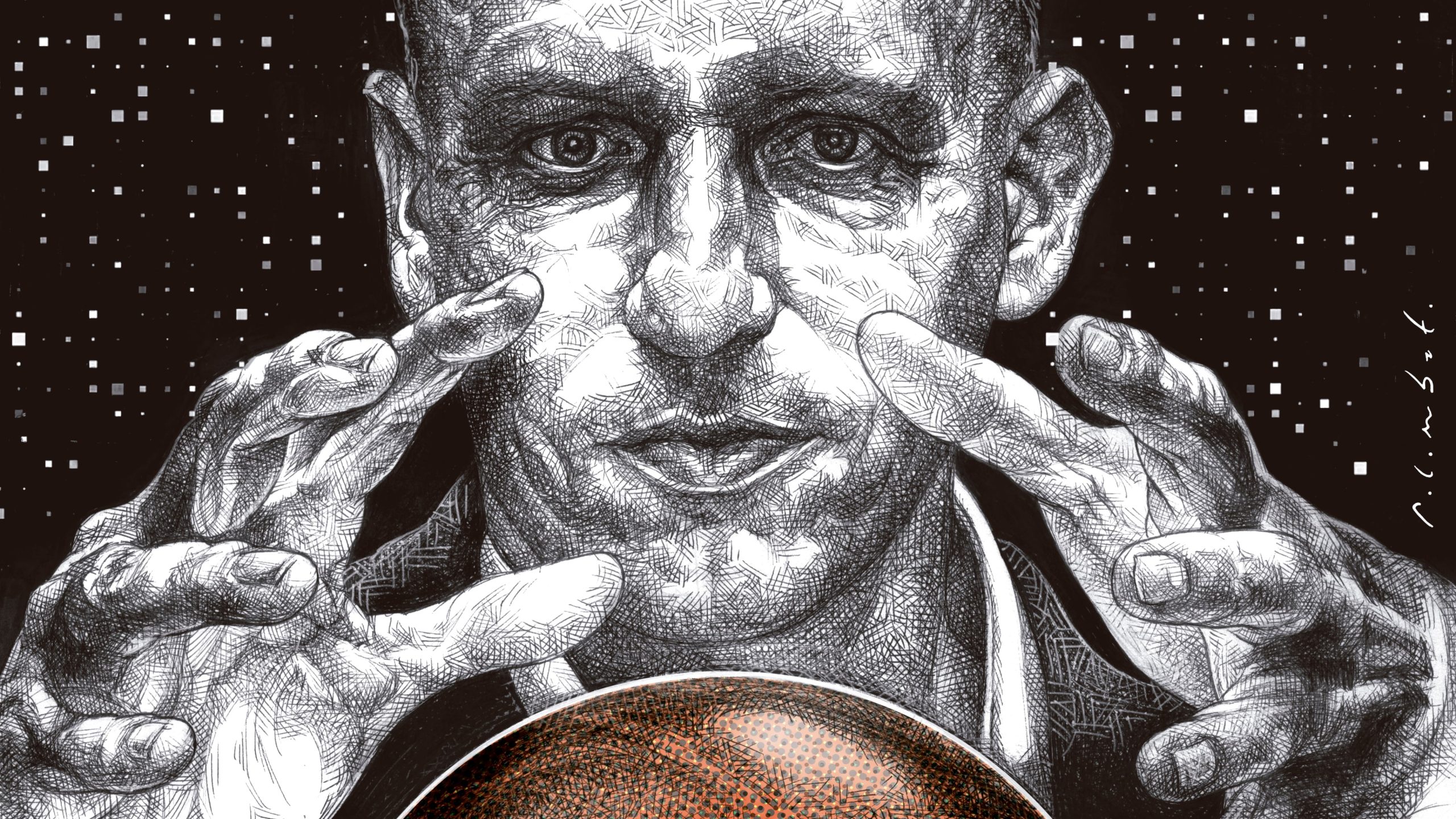
When Hulk Hogan sued the tabloid Gawker in 2016 for publishing a sexual video without his consent, no one gave him a chance of winning. But Hogan won the case and was awarded $140 million in damages, which led to the online outlet’s demise. Peter Thiel, one of Silicon Valley’s most shadowy figures, tipped the legal battle: he secretly funded Hogan’s lawyers. He wanted revenge on Gawker because it had ridiculed him for years and outed him as gay.
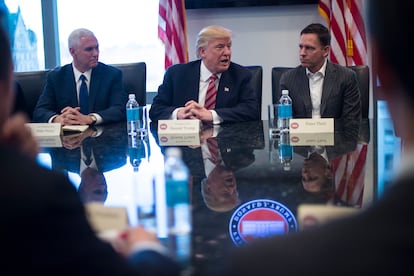
After that legal victory Thiel, the founder of PayPal, believed the jury’s support for Hogan signaled a deep social shift. He foresaw, before most, the victory of a New York real estate developer with a reputation as a womanizer in that year’s election. At the time, Donald Trump was still an unlikely candidate. “Wow, he might win the election,” Thiel thought, he later told The Atlantic. A few weeks after that he delivered a speech at the Republican National Convention that helped launch Trump’s political career.
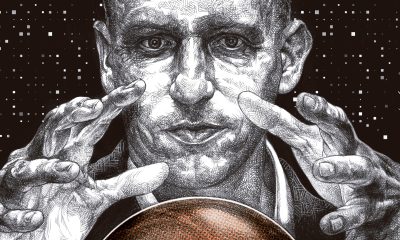
A decade later, Peter Thiel, 58, is the most influential figure in Silicon Valley since Steve Jobs emerged in the late 1970s. A libertarian, anti-establishment promoter of technoconservatism, he is behind the rise of political figures such as Vice President J. D. Vance, who worked for him at Mithril Capital, one of his investment funds, and Ted Cruz, the senior Republican senator from Texas. He has inspired the United States’ technological nationalism and opposes international organizations born after World War II, such as the United Nations and NATO. In late September he took part in a lecture series in Nashville in which he warned about the “Antichrist” and the dangers of regulating artificial intelligence. This is not the first time he has cloaked attacks on those who would regulate Big Tech in religious rhetoric. He did the same last year at similar conferences in San Francisco, Rome and Paris.
“He is the father of a small but powerful sect that pursues these extremist, antidemocratic ideas in Silicon Valley,” says Gil Durán, a writer and journalist and author of The Nerd Reich: Silicon Valley Fascism and the War on Democracy, in an email interview. “For 30 years, he has preached against democracy and government, which he called ‘fundamentally evil,’ while investing in companies that provide surveillance to the government.” He adds: “His hijacking of Christian rhetoric conceals Silicon Valley’s true religion, where many believe they are creating a god called AI that will grant eternal life, let them travel to the heavens in spacecraft and enjoy an endless, abundant paradise. Silicon Valley is reshaping Christianity in its own image.”
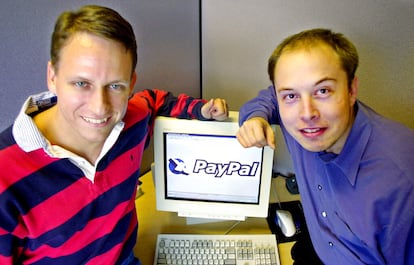
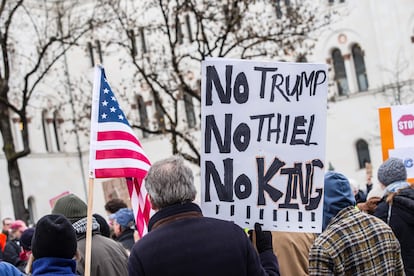
His intellectual baggage alarms the left. He opposes taxes, has set up a corporate apparatus with residency in multiple countries to minimize his tax burden; rejects the woke movement, including climate change; loathes universities; and encourages start-up founders to flout regulatory limits.
A few months ago, he traveled to Argentina, where he has bought a mansion. He has forged close ties with Javier Milei’s government and is scouting land in Patagonia to revive his dream of creating autonomous cities that operate under their own laws, independent of other administrations. It’s something similar to what he promoted in Próspera Zede, an urban settlement on the Honduran island of Roatán that he wants to expand to other parts of the world.
Thiel is also the founder of Palantir, one of the darkest companies in the global tech landscape. Founded three years after the 9/11 attacks, when the Bush administration prioritized security over civil liberties, Palantir processes massive databases that search for patterns and vulnerabilities. The company, named after an object in J. R. R. Tolkien’s The Lord of the Rings, was born thanks to a CIA contract. Today, governments around the world use its services.
“He does not believe in democracy, nor that human beings can live together peacefully without some authority,” explains philosopher Mark Coeckelbergh, a professor at the University of Vienna who studies the relationship between ethics and technology. “Thiel believes in the role of elites; he thinks that if you don’t keep people under an authoritarian regime, episodes of violence will occur. He believes there is an elite of visionaries like himself who should lead the world. He thinks the tech companies that created AI should operate freely, without regulation or limits, to accelerate progress.”
He is an eccentric man full of contradictions. As Max Chafkin, author of The Contrarian: Peter Thiel and the Rise of the Silicon Valley Oligarchs, describes him, he is very intelligent but also socially awkward. Thiel was born in Frankfurt, Germany, in 1967, the son of an engineer whose work took the family around the world. After spending a few years in apartheid South Africa, the family emigrated to the U.S. when Thiel was still a child. They settled in Foster City in the San Francisco Bay Area. There, in the early 1980s, with Republican and evangelical Christian parents, Thiel grew up amid chess pieces and science fiction books. In school, he was considered a brilliant student by teachers and a nerd by classmates. He read fantasy and science fiction endlessly — Robert A. Heinlein, Isaac Asimov, Arthur C. Clarke — but his favorite work was The Lord of the Rings, which he admitted he had reread a dozen times.
When he arrived at Stanford University in 1985, he was the target of jokes and taunts that bordered on bullying because of his arrogant, introverted character. There he became acquainted with the libertarian philosopher Ayn Rand and discovered René Girard and his theory of mimetic desire. “We desire what others desire because we imitate their desires,” the French thinker wrote; Thiel attended Girard’s Stanford classes and read works such as To Double Business Bound: Essays on Literature, Mimesis and Anthropology. It was during this period that he developed his anti-communism and his distrust of universities and intellectual elites. His views gave free rein to the resentment he had built up over the years.
Girard’s work profoundly marked him. Thiel developed disturbing political, social and technological theories around the French philosopher and anthropologist’s thought, which holds that mimetic desire leads to envy, social rivalry and the emergence of scapegoats who serve as a release valve to avoid mass conflict. From this comes his theory about the Antichrist, Armageddon and the Katechon, a Greek term meaning that which restrains the Antichrist.
“He has an unhealthy obsession with the Antichrist, the figure around which his personal theology revolves,” says Gil Durán. “It is anti-Christian, and his sermons accuse all his political enemies of being possible vectors of the Antichrist. He encourages people to view our current politics as an existential battle between good and evil. He accuses Greta Thunberg, Alexandria Ocasio-Cortez, critics of AI and even the Pope of being possible Antichrists. It’s pure gibberish, but it’s also a kind of confession. If Silicon Valley billionaires want to see the face of evil, they should look in the mirror.”
He also drew on the work of conservative political theorists such as Leo Strauss and Carl Schmitt, the latter a former member of the Nazi party. He mixed their theses on the deficiencies of liberal democracy with Girard’s theory of mimetic desire. As Coeckelbergh explains, “Girard’s influence on Thiel manifests in the threat of violence under civilization, under democracy. From Carl Schmitt, he takes this friend-versus-enemy thinking, where there is really no place for democracy” because we must always be ready to defend ourselves from the enemy. In 2009, Thiel wrote a controversial essay: “Since 1920, the vast increase in welfare beneficiaries and the extension of the franchise to women — two constituencies that are notoriously tough for libertarians — have rendered the notion of ‘capitalist democracy’ into an oxymoron.” After being harshly criticized for the piece, he issued an apology of sorts that did not settle the matter.
Professor Roberto J. González, author of War Virtually, which analyzes how tech companies are arming the military for a new kind of war, believes Thiel’s philosophical reflections have little impact beyond convincing some investors and executives “that they are part of a noble, even sacred, mission to rescue Western civilization.” But Thiel does have “immense impact through his investment firms. Thiel’s venture capital firm, Founders Fund, financed Palantir, Anduril, Clearview AI, Flock Safety and other defense and surveillance start-ups that have received massive, multibillion-dollar government contracts,” he concludes, highlighting the contradiction between Thiel’s libertarian ideas and his dependence on public contracts.
After leaving Stanford and failing in Wall Street and Washington, Thiel returned to the San Francisco area disillusioned, and raised money from family and friends to start a fund to invest in tech start-ups. In 1998, he met a young Russian-born engineer, Max Levchin, who was experimenting with software to exchange IOUs. Together they created PayPal, an electronic payments platform between users that allowed them to evade government control — an idea that anticipated some of the principles of cryptocurrencies he would later champion.
A few months after PayPal launched, another young engineer joined them: Elon Musk. After a period of internal wars at the company, Thiel became chief executive. He skirted banking regulation and allowed unchecked financial movements, a strategy that became the seed of Thielism. Around that time, the group known as the PayPal mafia — former employees and founders of the company — emerged as investors in major tech firms such as Tesla, SpaceX, OpenAI and YouTube. In 2002 they sold the company to eBay for more than $1.5 billion.
Ber Tarnoff, co-author with Quinn Slobian of Muskism, a study of the Tesla founder’s thinking, does not believe Thiel borrowed libertarian ideas from Musk. Thiel “has long been interested in exit strategies from the state, unlike Musk, whose emphasis has always been on state symbiosis.”
Thiel’s example at PayPal, his boldness in investing in emerging companies and his aggressive style were crystallized in a book, Zero to One: Notes on Startups, or How to Build the Future, a bestseller in which he argues that entrepreneurs are nearly divine, that monarchies are more efficient than democracies, and that sects are a good organizational model. Thiel encourages breaking rules to create successful companies that achieve monopolies, his true obsession, Chafkin notes in his biography. For Thiel, the goal is not to be more productive or competitive: it is to create monopolies from entirely new concepts or ideas.
Thanks to the proceeds from selling PayPal, in 2004 he decided to invest $500,000 in a start-up founded by a Harvard sophomore named Mark Zuckerberg. In exchange for his investment, he received 10% of the nascent social network, which eventually made him a visionary, and he imposed his disruptive vision for managing the company on Zuckerberg. The entrepreneur must be untouchable, retain power, and rules must be broken to succeed. In this way, Zuckerberg rose at Facebook, considered one of the most harmful companies of the new economy.
The year after investing in Facebook, he founded Founders Fund, a venture capital firm aimed at discovering disruptive companies with the potential to change the world. The fund’s portfolio includes SpaceX, Palantir, Anduril, Airbnb, OpenAI and Polymarket. The fund outlines the characteristics such companies must have: “The best companies create their own industries. They are not popular, they are hard to evaluate, they have technological risks, but not insurmountable technological risks, and if they succeed, their technology will be extraordinarily valuable.”
He wraps it all in a philosophical cloak. In an interview with The New York Times, he argued that humanity’s biggest problem is technological stagnation. “We should have colonies on the Moon, robots, flying cars, cities on the ocean, under the ocean,” he said in a speech. “We should have organic agriculture. We should have turned deserts into arable land. There are a lot of incredible things people expected to happen in the fifties and sixties that would have transformed the world.” But none of that happened. He argues that since the 1960s humanity has not produced major technological breakthroughs: the rise of the internet lost momentum and the iPhone was not a technological revolution but a commercial one. He is skeptical about AI’s transformative power, though he admits it is the only thing that could break the stagnation. For Thiel, true innovation comes from “creating markets where none existed before.”
Kim Phillips-Fein, author of Country of Lords, a book that examines how tech magnates contribute to inequality, recalls a statement from Thiel in her work: “I was growing up, I wanted to be the best, I wanted to go to these elite institutions. I went to law school, I had the straight and narrow path, but then I realized that all that was wrong, and actually you had to disrupt everything, create your own monopoly, a monopoly of one: nobody else can ever be you, and then the people who are kind of blessed with this genius to recognize how to create something completely new in the world, those are the people who will deserve to win in this race and deserve to command the resources of society.”
Sign up for our weekly newsletter to get more English-language news coverage from EL PAÍS USA Edition

Cambridge Analytica, 10 Years On: Meta Still Struggles To Shake Off The Specter Of Political Interference

The Race For Los Angeles Mayor: Two Democrats Battle Over Housing, Affordability And The Olympics

Age Care Costa Del Sol Pop-Up Shop


-

 Uncategorized4 weeks ago
F1 Bahrain Grand Prix will be live and FREE on TV this weekend
-

 New Developments4 weeks ago
How To Get A Tourist Rental Licence In Andalusia (Spain) – Step-By-Step Guide 2025
-

 New Developments3 weeks ago
Luxury Villas For Sale, Estepona – ProjectL1
-
Blackout preparedness4 weeks ago
Brussels takes action against Spain over failure to update blackout plan
-
EU3 weeks ago
EU nicotine crackdown sparks warning that ex-smokers could be driven back to cigarettes
-

 Uncategorized4 weeks ago
Lewis Hamilton F1 wish could come true as stunning plans for new track revealed
-
 Housing access / crisis / affordability3 weeks ago
Radical Housing Decrees Defeated As Snap Election Talk Grows
-
Catalonia3 weeks ago
Why the rain opened a hole in front of Granollers’ courts