
Costa Blanca North
Calpe transforms historic old town into open-air art gallery this November

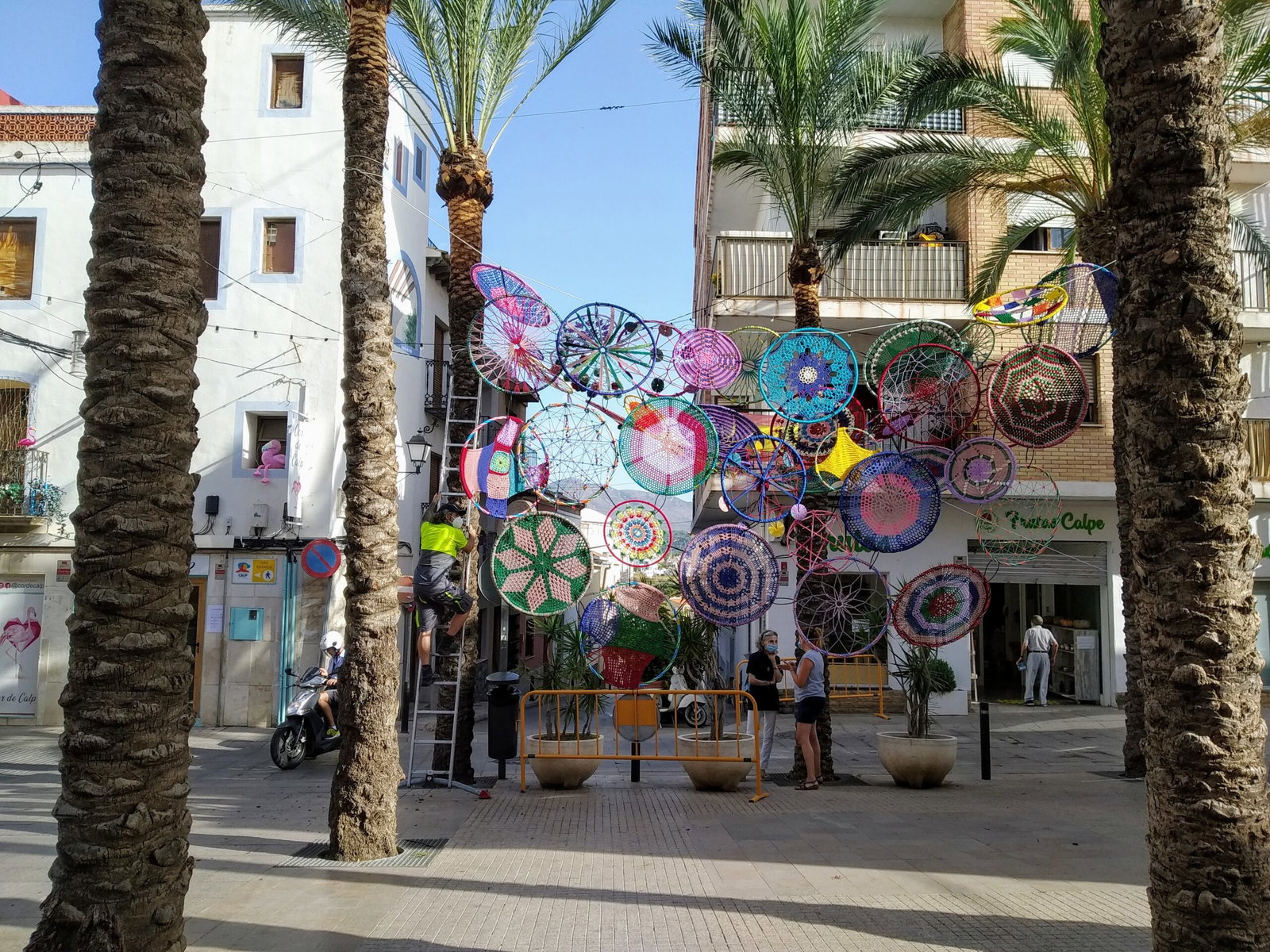
Calpe’s historic centre welcomes an outdoor art market this November.
Photo Credit: Calpe Town Hall
Calpe’s historic centre will be transformed into an open-air art gallery this November as the town welcomes another edition of La Calle del Arte, a cultural initiative bringing art and creativity directly to its charming streets. The event, which kicks off on Saturday, November 7 and will last until Saturday, November 21, will give residents and visitors an opportunity to explore the beautiful artistic displays while enjoying a chilly month in the town’s old quarter.
An outdoor gallery in the historic centre
Organised by Calpe Council’s Department for the Revitalisation of the Old Town, La Calle del Arte will bring cultural activity into the historic centre by turning part of its streets into an outdoor exhibition space. The market will be held along Calle Santísimo Cristo, running from 10:00am until 2:00pm during the event.
Bringing creativity into Calpe’s old town: Supporting the historic quarter through culture
The initiative offers a different way to experience Calpe’s old town, encouraging people to explore its historic streets while discovering art in an accessible, public setting. Rather than keeping exhibitions within traditional gallery walls, La Calle del Arte takes creativity outdoors, making the historic surroundings part of the cultural experience. Visitors can combine a stroll through the old quarter with an opportunity to appreciate the artistic activity taking place along the street.
The event is also part of the town’s efforts to encourage activity in the historic centre and make its streets attractive spaces for both residents and tourists.
A vibrant November for art lovers on the Costa Blanca
Residents and visitors looking for a relaxed cultural activity in Calpe will have the month of November to enjoy this unique artistic initiative and discover a different side of the town’s historic centre.
With vibrant art, talented local artists, and a passion for bringing culture to the beautiful streets of Calpe, this November is set to be a particularly colourful one in this charming Costa Blanca town.

Costa Blanca North
Calpe welcomes acclaimed Italian pianist for special autumn music festival recital

Special performance is part of the 15th edition of the Festival Internacional de Música de Otoño
Credit: Facebook/SebastianoBruscoPianista
Music lovers in Calpe will have the opportunity to enjoy an evening of live classical music this November as the town’s International Autumn Music Festival continues with a special piano recital by Italian musician Sebastiano Brusco.
The performance forms part of the 15th edition of the Festival Internacional de Música de Otoño, an established cultural event bringing classical music to the Costa Blanca and offering residents and visitors the chance to experience live performances in the town.
For those looking for something different to enjoy this autumn, the recital promises an opportunity to discover the work of an internationally recognised pianist in an intimate concert setting.
An international career spanning Europe and beyond
Born in Rome, Brusco developed an early passion for the piano and went on to study at the Conservatory of F. Morlacchi in Perugia, where he trained under pianist Valentino Di Bella.
He further developed his musical skills through studies with several respected figures in classical music, including Aldo Ciccolini, Ennio Pastorino and Katia Labèque.
His career has taken him well beyond Italy, with performances in countries including the United States, Canada, Mexico, France, Switzerland, Belgium and Spain. He has also appeared alongside prominent orchestras, including I Solisti Veneti and the Orchestra Verdi of Milan.
Brusco has received recognition in international competitions, including first prize at the Carlo Soliva International Competition in 1998. Alongside his work as a concert pianist, he is also a composer and has explored musical projects beyond traditional classical performance.
His repertoire and recording work include compositions by major classical figures such as Franz Schubert and Frédéric Chopin, with whom he has a particular association through recordings of Schubert’s complete Impromptus and ongoing work on Chopin’s piano compositions.
How to attend the Calpe piano recital
The concert will take place on Thursday, November 12, at 8pm at the Saló Blau, inside Calpe’s Casa de Cultura Jaume Pastor i Fluixà.
Tickets cost €15 and will be available from 7pm on the evening of the performance in the Saló Blau foyer. However, advance reservations are also possible by emailing info@pal-music.com.
The venue has a capacity of just 126 people, making early booking advisable for anyone hoping to attend.
The recital is organised by PAL-MUSIC SL in collaboration with Calpe’s Department of Culture, as part of the 15th International Autumn Music Festival.
For residents who enjoy classical music, or those simply looking to discover something new on the Costa Blanca, it offers an opportunity to experience an internationally performing pianist without having to travel beyond the local area.
Event details:
-
What: Sebastiano Brusco piano recital
-
When: Thursday, November 12, 2026, at 8pm
-
Where: Saló Blau, Casa de Cultura, Calpe
-
Tickets: €15
-
Reservations: info@pal-music.com

A British couple living in Benidorm have formally challenged proposed mobility scooter restrictions, warning that they could lose an important part of their independence if the new rules do not account for people with disabilities.
A & A, who have lived in Spain for 20 years, have written to Mayor Toni Perez and town councillors after Benidorm approved an amendment to its Municipal Mobility Ordinance that would prohibit mobility scooters and powered chairs designed to carry more than one person.
Their objection comes as the council prepares to open a further 30-working-day public consultation before the proposed changes can receive final approval and enter into force.
British couple fear losing access to essential services
A & A have lived in Benidorm for seven years. Their circumstances changed dramatically this year following serious health problems that left both struggling to walk. They can now walk only with the help of a rollator. One suffered acute pancreatitis, which also substantially reduced their mobility.
The couple say they spent almost €4,000 on a two-seat electric mobility scooter, which now allows them to travel to local shops and the pharmacy. Steep inclines around their neighbourhood make getting around on foot particularly difficult. Without their scooter, they fear that even everyday errands could become much harder.
Why Benidorm wants to restrict tandem scooters
Benidorm Council approved the initial amendment to its mobility rules unanimously on October 26. Officials say the changes are intended to improve pedestrian safety and prevent multi-seat mobility vehicles from being used as recreational transport in busy public areas. The proposal follows earlier efforts to tackle misuse, including the police crackdown on holidaymakers using mobility scooters reported earlier this year, and goes together with broader national updates under Royal Decree 518/2026 on the protection of vulnerable road users.
Mobility Councillor Francis Muñoz has stressed that the measure is not intended to restrict people who genuinely need mobility assistance. However, the proposed wording prohibiting vehicles designed to carry more than one person has raised questions about how residents with legitimate needs will be treated. Euro Weekly News reported on the initial approval of the tandem scooter restrictions last week.
A & A argue that the council should distinguish between tourists hiring tandem scooters for leisure and people who depend on these vehicles because of health problems.
Their objection suggests that restricting rental businesses, rather than prohibiting every multi-seat model, could be one way to address complaints about misuse without affecting disabled residents.
Could Benidorm introduce exemptions?
The couple have asked councillors to consider a permit or identification system for residents who can demonstrate genuine mobility difficulties. Such an arrangement could, in principle, help the local police distinguish between people using a scooter as a necessary mobility aid and those using it for convenience or entertainment.
However, no specific exemption for tandem scooters used by disabled residents has been confirmed in the council’s published announcement. Benidorm has previously been recognised for accessibility efforts, including being named Spain’s most accessible city and expanding beach access for people with reduced mobility.
Whether such an arrangement would be legally or practically possible is therefore a question for the council to address during the consultation.
A & A have also raised the possibility of seeking compensation if they are forced to give up their scooter. This is a concern they have expressed, rather than an established entitlement to compensation.
What is likely to happen next?
The proposed amendment must pass through a further 30-working-day public consultation before the council can proceed to final approval and entry into force. That period gives affected residents an opportunity to raise concerns and ask councillors to consider their circumstances before the rules are finalised.
Key questions include whether exemptions could be introduced for people with demonstrable mobility needs, whether a permit system could work and whether restrictions on rental businesses could tackle irresponsible use without penalising disabled residents.
For A & A, the issue is about much more than a €4,000 purchase. Their scooter helps them reach essential services despite serious health difficulties.
Their case puts a practical question before Benidorm’s councillors: how can the town improve pedestrian safety without taking away a means of independence from residents who genuinely need it?
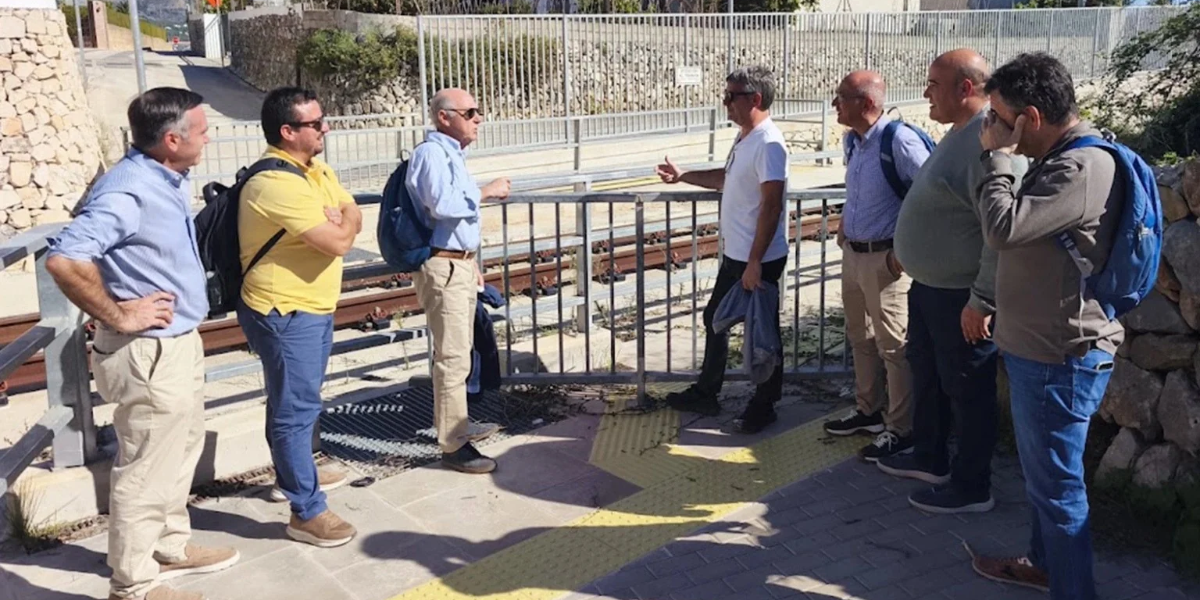
Gata de Gorgos is set for a major railway upgrade, with plans to renovate its historic station and reopen two level crossings as part of efforts to improve safety and transport links through the Costa Blanca town.
The local council and Ferrocarrils de la Generalitat Valenciana (FGV), the regional railway operator, have agreed on a timetable for the improvements, with the first works expected to begin taking shape in 2027.
The plans aim to make the TRAM railway line safer for pedestrians and motorists while improving its integration into the town centre.
Railway crossings set to reopen
The project to adapt the railway line to a more urban tram-style system will be carried out in two phases.
The first phase is expected to be completed in 2027 and will focus on reopening two level crossings that are currently closed.
The crossing at Miralbons will be reopened exclusively for pedestrians, while the crossing on Calle Jesús Pobre will be accessible to both pedestrians and vehicles.
Traffic lights will be installed at both locations to improve safety where road users and pedestrians cross the railway.
The changes are intended to improve movement around Gata de Gorgos while allowing the railway to operate more safely alongside everyday traffic.
The second phase will cover the remaining urban stretch, from Calle Jesús Pobre to the point where the railway leaves the town.
However, this stage will take longer because it requires further administrative procedures and a new technical project incorporating the planned improvements along the route.
Historic station renovation planned for 2027
Alongside the crossing improvements, FGV is preparing to move forward with the comprehensive renovation of Gata de Gorgos railway station.
The original project is currently being revised, with the regional operator expecting both the tendering process and the start of construction to take place during 2027.
The station forms part of the TRAM d’Alacant network, which connects destinations across the province of Alicante, including Dénia and Benidorm.
The latest agreement follows a meeting between Gata de Gorgos councillor for urban planning and management Josep Signes Costa, municipal technicians and an FGV delegation led by managing director Alfonso Novo.
The discussions were held to coordinate the next steps for both projects and establish a timetable for their delivery.
While the station renovation and railway changes will progress separately, both form part of a wider effort to modernise local transport infrastructure and improve the relationship between the railway and the surrounding urban environment.
Barcelona airport halts departures as baby’s medical emergency forces plane to land
Spain’s €17bn electricity grid overhaul aims to unblock housing, factories and major investment
Calpe welcomes acclaimed Italian pianist for special autumn music festival recital


-
DGT3 weeks ago
Viral video in Spain sparks fury over drivers who ‘have no idea how to drive’
-
Automated supermarket4 weeks ago
Spain’s 24-hour shop with no tills expands to Barcelona Airport
-
News4 weeks ago
Hundreds evacuated as huge fire erupts on Spain high-speed train route
-
Keeping cats and dogs outside3 weeks ago
Spain’s pet owners face fines of up to €200,000 for animal welfare offences
-
Council tax (IBI)3 weeks ago
Barcelona plans 150% property tax increase on tourist flats ahead of 2028 ban
-
Age Concern Marbella - San Pedro2 weeks ago
Halloween lunch sells out as 51 join Marbella get-together
-
airports3 weeks ago
Travelling between Spain and Italy? The extra border checks could soon end
-
Axarquia4 weeks ago
Torrox Oktoberfest gets a 1,500sqm beer tent for four-day festival