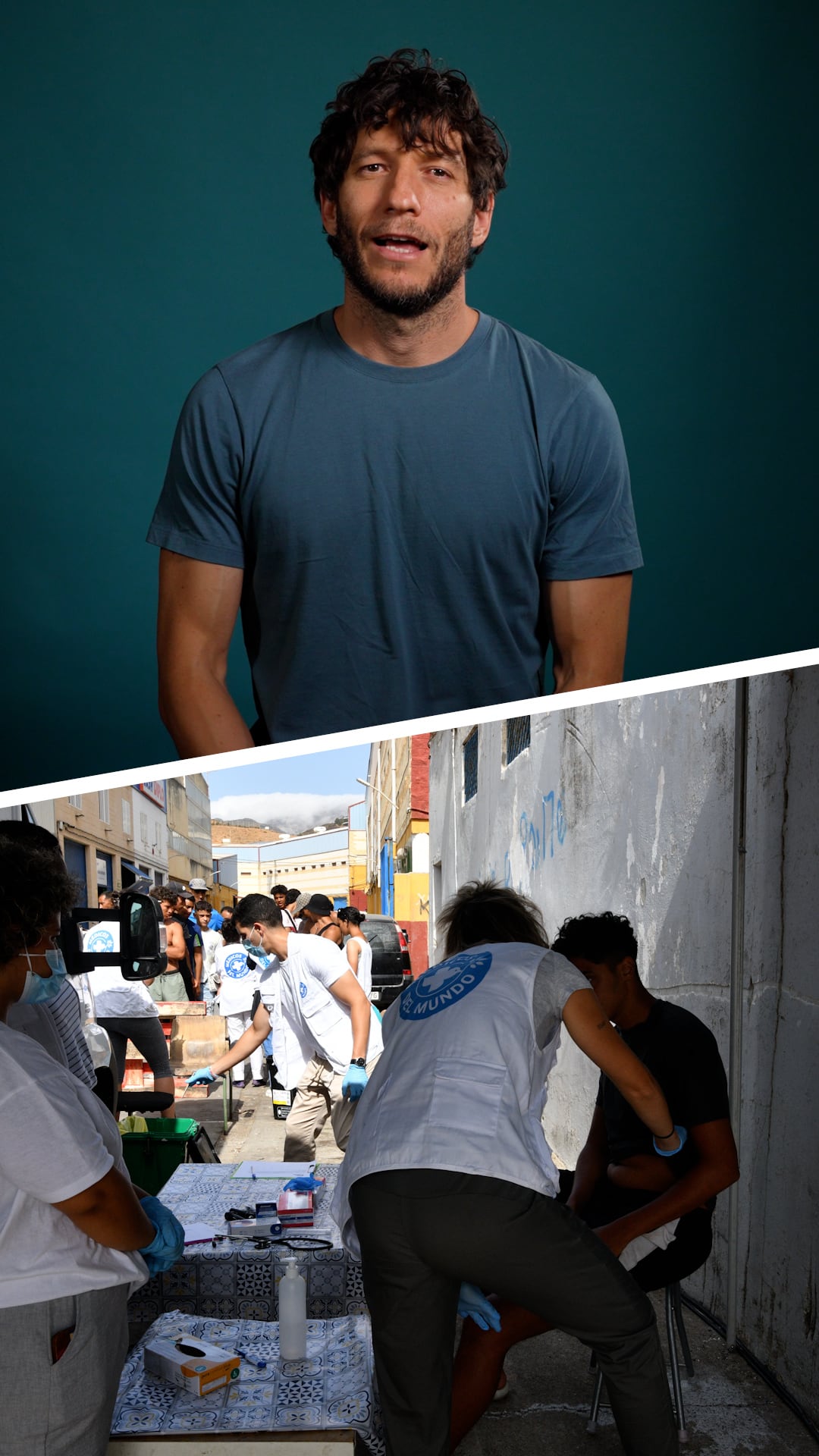
La crisis migratoria en Ceuta está teniendo también consecuencias sanitarias. Las enfermeras sobre el terreno cuentan ahora están tratando infecciones que tienen mucho que ver con el hacinamiento y la falta de higiene. Hay casos de,sarna tuberculosis, muchas gastroenteritis, impétigos, sarna, como se cuenta en este vídeo. La Sociedad Española de Epidemiología ha pedido no culpar a los inmigrantes de la propagación de enfermedades. Lo que las propicia son las malas condiciones en las que se ven obligados a vivir.
Two further sites are being prepared to provide shelter to over 2,000 more migrants. Credit: @KARIMPRIM / X
Three weeks of tents built from reeds, rope and cardboard are gone from Playa del Trampolín after a Thursday morning police operation left the beach almost empty for the first time since July. More than 1,200 people have been confirmed moved into shelters so far, migrants are being kept apart by nationality to prevent clashes, and none of them are being sent home yet.
Migrants split by nationality as police cleared the beach in stages
Officers from the Policía Nacional, Guardia Civil and Local Police surrounded Playa del Trampolín shortly after 7am on Thursday August 20, forming a perimeter with around 30 police vans before the transfer began.
Translators worked alongside officers throughout, moving people out in groups of roughly 30 at a time on foot under police escort. Migrants were also divided by nationality between the reception sites, a deliberate move officials said was meant to prevent the kind of clashes reported between different groups over the past two weeks.
By late morning, Spain’s Migration Ministry said the beach was empty for the first time since the settlement formed.
Thousands of people ended up sleeping on the beach after the irregular crossings
The camp grew out of the wave of irregular crossings that began on Thursday July 30, when tens of thousands of people entered Ceuta by sea after a Supreme Court ruling on July 8 stopped fast-track rejection procedures being applied to migrants intercepted while swimming into the territory. That ruling meant new arrivals had to go through Spain’s full immigration process rather than being returned immediately, and Ceuta’s reception centres, built for a fraction of that number, filled within days.
The majority of people returned across the border after a few days once supplies ran low and the hope of finding refuge dwindled, however, the few thousand that stayed with nowhere else to go built makeshift shelters on Playa del Trampolín. Conditions then deteriorated badly: the settlement had just two toilets and two showers between thousands of residents, and a scabies outbreak spread among Spanish troops housed nearby while the Red Cross distributed an estimated 4,000 meals a day.
Confirmed transfers still lag the numbers who were living on the beach
Ceuta’s Government Delegation confirmed more than 1,200 people had been moved into two temporary sites, Loma Margarita and El Embolsamiento, by late Thursday morning. Combined capacity at those two sites is about 1,800, short of the 3,500 to 5,000 people police estimated had been living across the beach and the neighbouring Loma Colmenar settlement.
Two further sites, including a former equestrian centre, are being prepared, and officials say total capacity across all four will eventually exceed 5,000 places. Separately, the government said 500 unaccompanied children would be transferred to reception centres on the Spanish mainland.
The charities Engloba and ACCEM are providing support at the new sites alongside the Red Cross. Spain’s inclusion minister said the operation was designed “to guarantee proper humanitarian care, protect people’s fundamental rights and preserve their dignity, while we help Ceuta get back to normality as soon as possible.”
No deportations, and a 30-day ultimatum still hanging over Madrid
Migrants moved off the beach were reportedly told they would not be deported to Morocco, consistent with the legal reality since the July 8 ruling: fast-track return is not available to most of those who arrived by sea, and each case now requires individual processing.
That leaves the political pressure on Madrid largely unchanged. Around 10,000 migrants are now estimated to remain in Ceuta, up from the more than 8,000 in place when the city’s president, Juan Jesús Vivas, gave the central government a 30-day deadline last week to speed up returns, warning he would take the crisis to Spain’s Supreme Court and Constitutional Court if nothing improved.
The far-right party VOX had separately been pressing Ceuta’s government for days to invoke the city’s beach-use bylaw, which bans tent camping on any beach year-round, to force the camp’s removal on public-health grounds rather than through immigration law.
The sand may now be empty, but with no deportations and Vivas’s deadline still running, Ceuta’s migration crisis has simply moved indoors.
Nurses working in the Spanish exclave city of Ceuta are at breaking point. Every day, they say, they have to deal with more than 200 cases with what they consider inadequate staffing levels, forcing them to work double shifts and excessive overtime. The situation comes amid the migrant crisis in Ceuta, where overcrowded reception centres and informal settlements have stretched healthcare services to their limits.
Some of the illnesses are typical of overcrowded conditions: more than 200 cases of acute gastroenteritis, 20 of scabies, 21 of impetigo and four of tuberculosis. These figures do not include cases in the makeshift settlements on the beaches, where monitoring is “more difficult,” according to the Ceuta Nursing Association.
A scabies outbreak has also been detected among the military personnel deployed in Ceuta. According to Spain’s Defence Ministry, it is unrelated to their role in Ceuta’s humanitarian emergency. Twenty-four cases of scabies have been diagnosed among soldiers, two of them predating the recent mass arrival of migrants.
“All of them are receiving the treatment recommended by the health authorities following confirmation of the diagnosis,” the ministry said. It described scabies as a “common infection in areas of high humidity” and said that “measures have been taken both to treat those infected and to sanitize the facilities.”
The Spanish Society of Epidemiology (SEE) has warned against scapegoating migrants for public health problems. “The idea that they bring diseases is medically wrong and, moreover, dangerous,” SEE president Maria João Forjaz told the Spanish news agency EFE.
The real problem, she argues, is the lack of basic resources. Overcrowding facilitates the spread of respiratory and skin diseases, while limited access to food and safe drinking water increases gastrointestinal illnesses. As a result, “outbreaks of scabies or impetigo, both highly contagious skin infections, are entirely to be expected.”
Although healthcare workers are familiar with these diseases, the workload has left nurses “physically and psychologically exhausted,” according to their professional association. Its president in Ceuta, Rosa Fuentes, says that “there are not enough resources to deal with the crisis” and has called on the central government to declare a state of emergency.
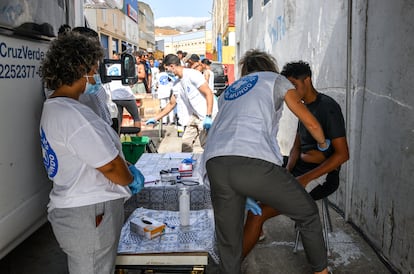
A nurse in Ceuta
Alejandro Artero, a nurse and doctor of health sciences working on the ground, says the illnesses have followed a pattern that is typical in crises of this kind: “First we saw trauma and wounds; then skin infections began, scabies, which is increasing, and respiratory illnesses.”
As the days have passed, other health problems have emerged. Artero points to chronic conditions such as diabetes and asthma that have worsened, mental health conditions whose treatment has been disrupted, and a growing number of gastrointestinal illnesses linked to poor sanitary conditions. “They are drinking irrigation water. It was obvious infections would appear,” he says.
Injuries that might initially have been straightforward to treat are, in some cases, becoming more serious. “Those trauma cases have now turned into cellulitis and impetigo because they cannot be treated properly. The patient shows up and disappears. What should have followed a normal course is becoming increasingly complicated,” he explains.
One of the biggest obstacles to providing healthcare, Artero says, is simply being able to locate patients and monitor their condition. Many are dispersed across the city, while some avoid identifying themselves accurately for fear of being traced by the authorities. “There are patients we see three times and each time they give a different name. That identification is essential when tests must be completed or follow-up maintained over several days,” he stresses.
“We can’t admit everyone who has a cough”
Artero cites tuberculosis as an example. Four cases have been diagnosed, but he suspects there may be many more. “We can’t admit everyone who has a cough. Diagnosis requires the usual tests and, in some cases, finding the patient again days later. Where are we supposed to find them if they have no fixed address?”
Against this backdrop, Florentino Pérez Raya, president of Spain’s General Council of Nursing, called on Wednesday for “a single command structure in Ceuta to lead these operations” and for the resources and planning that this territorial emergency requires. “This is not the time to shift responsibility or mask figures. Nurses are facing vulnerability, extreme fatigue and prolonged stress as a result of this situation, which, compounded by the disastrous management of summer staffing contracts, is pushing nursing care in Ceuta to breaking point. Nurses deserve to work with dignity and safety,” he said.
Medical unions had already warned of the pressure on the healthcare system. “Professionals have had to endure difficulties to guarantee adequate and minimally dignified care in exceptional circumstances,” the State Confederation of Medical Unions (CESM) said last week.
According to the union, Ceuta’s reception and healthcare facilities have been overwhelmed, pushing the city into what it called “a situation more typical of a national emergency.” CESM urged the Health Ministry to take responsibility through Ingesa, the body that runs healthcare services in Ceuta and Melilla. Unlike Spain’s regions, where healthcare powers have been devolved to regional governments, responsibility in the two North African exclave cities remains with the central government.
Spain’s Health Minister Mónica García, who visited Ceuta at the weekend, acknowledged the system there was “under strain,” but denied it had collapsed. She also warned against portraying migrants as carriers of disease, calling such claims “unfair and xenophobic.”
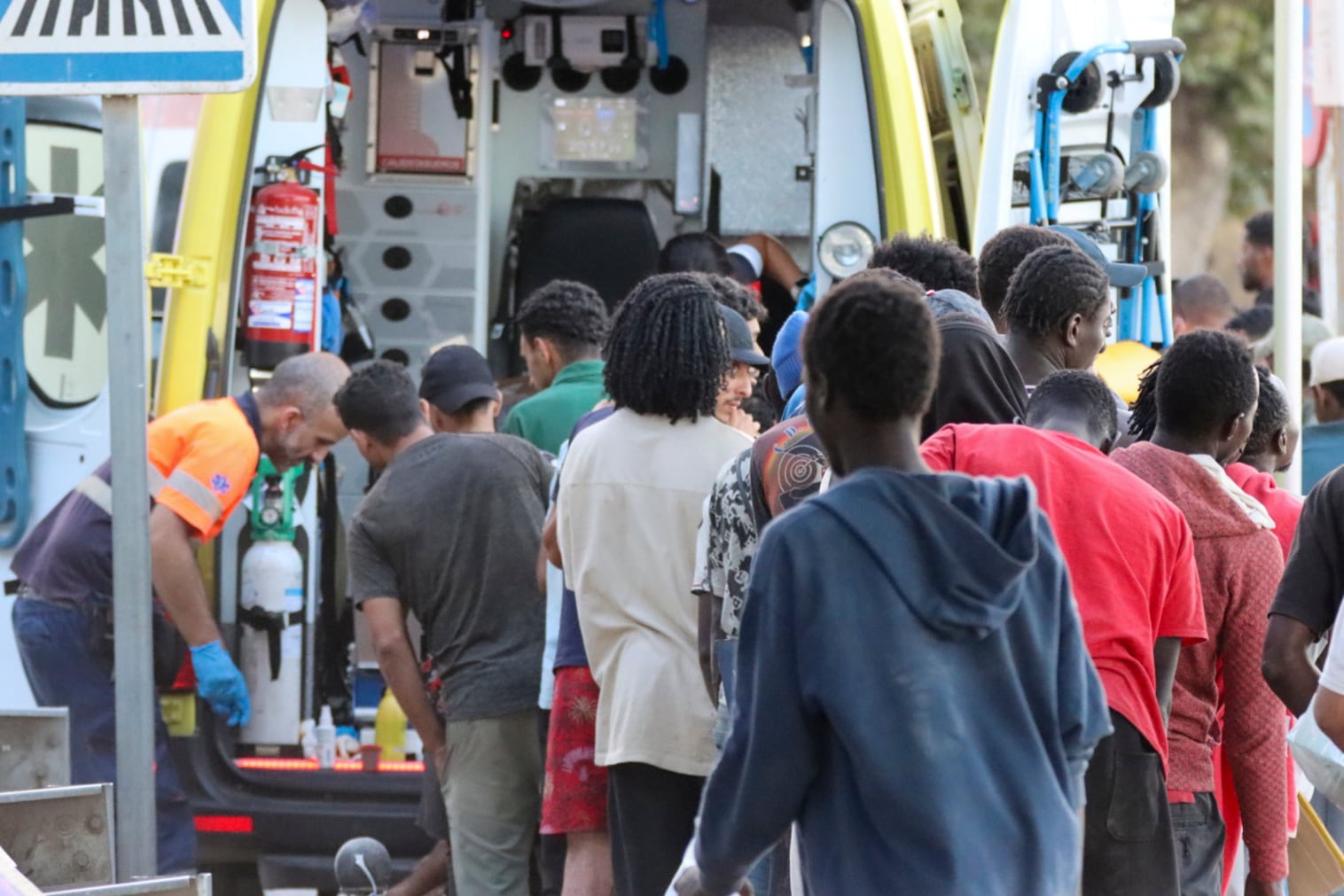
During the first 15 days of the crisis, Ceuta’s healthcare system treated 5,800 migrants. Of those, 3,500 were seen in primary care facilities and 2,300 at the hospital. According to Health Ministry figures, pressure on services eased over time, with the number of cases falling from 1,149 on the first day to around 300 a day in the following days.
Sign up for our weekly newsletter to get more English-language news coverage from EL PAÍS USA Edition
Defence has confirmed the cases but has not attributed them to the former K-8 facility. Photo credit: Shootdiem/Shutterstock
The troops that were sent to Ceuta to help deal with the migration crisis are now facing problems of their own, with at least 14 military personnel reportedly infected with scabies after being deployed to the Spanish territory.
Their military union says the infections may be connected to the conditions in which some of the troops were housed, including claims of overcrowding and poor maintenance at an old military facility. The Ministry of Defence has confirmed around a dozen cases, but has not established that the infections were caused by the accommodation or linked to the migration crisis.
Troops housed at abandoned facility
According to the Union of Military Troops (UMT), affected personnel from the 54th Regulares Group were housed on August 15 at the former K-8 Coastal Battery in García Aldave. The union claims the facility was normally unused and had not received adequate maintenance. It also alleges that there had previously been problems with pests and that troops were placed in crowded conditions.
Those claims have not been confirmed by Defence as the source of the infections. The circumstances have nevertheless raised questions about whether accommodation arranged during the emergency deployment was suitable for large numbers of personnel.
Why scabies can spread quickly
Scabies is caused by microscopic mites that burrow into the skin. It spreads mainly through prolonged skin-to-skin contact, although sharing clothing, bedding or towels can also transmit the infestation. Crowded living arrangements can make controlling an outbreak more difficult, particularly when people sleep in close proximity or share facilities.
Symptoms can take several weeks to appear after an initial infestation, meaning someone can carry the mites before realising they have been infected. That makes identifying cases and treating close contacts important when several infections appear within the same group.
Military associations want answers
The UMT says at least 14 personnel have been affected, while Defence has confirmed a figure of around 10 cases. Other military organisations are now seeking clarification over the extent of the outbreak. The Spanish Association of Troops and Sailors (ATME) has called for information about the number of infections, the units involved and the health measures introduced following the cases.
The association also wants to know whether other military personnel could have been exposed. UMT has asked whether cases have appeared in other units stationed in Ceuta, including the Legion, Montesa, Ramix, RING and ULOG.
Could it spread beyond the troops?
The concern is not limited to the affected soldiers, UMT has asked Defence what measures are being taken to prevent infections reaching military families or civilians. It has also called for information about the cleaning and disinfection of accommodation, gyms and military vehicles used by personnel who may have been exposed.
That matters because troops deployed to Ceuta live alongside other service personnel and may have contact with relatives and members of the wider community. An outbreak contained within one group presents a different challenge from infections spreading across several units.
Another problem for Ceuta
The cases have emerged while Ceuta is already dealing with the consequences of the mass migration crisis. The territory experienced a huge influx from Morocco at the end of July, prompting the deployment of additional security and military personnel.
Thousands of migrants remain in Ceuta, putting pressure on accommodation and public services. The military reinforcements were brought in to support the response. Now some of those personnel are dealing with an infectious condition that can be difficult to contain in shared accommodation.
What remains unclear
The exact source of the infections has not been established publicly, defence has confirmed the cases but has not attributed them to the former K-8 facility, while UMT has pointed to the accommodation and the conditions reported there. The difference between those positions matters.
If the accommodation played a role, identifying and treating anyone who may have been exposed will be important to prevent further infections. If the cases came from another source, the military will need to establish how personnel became infected and whether anyone else is at risk. For now, military associations are pressing Defence for more information about the outbreak and the measures being taken.
Troops face a new risk
The soldiers sent to Ceuta were deployed to reinforce the territory during an unprecedented migration emergency. They are now dealing with a health problem that could affect other personnel if infections are not contained. At least a dozen cases have been confirmed by Defence, while the military union puts the figure at 14.
The cause remains disputed, but the questions surrounding accommodation have added another layer to an already difficult deployment. Troops brought into Ceuta to help manage the migration crisis are now facing an outbreak of their own, and military associations want to know how it happened and whether more personnel could be affected.