Connect with us

CIA

CNN Report Claims CIA ‘facilitated’ Assassination Of A Sinaloa Cartel Operative In Mexico

Published

on

cnn-report-claims-cia-‘facilitated’-assassination-of-a-sinaloa-cartel-operative-in-mexico

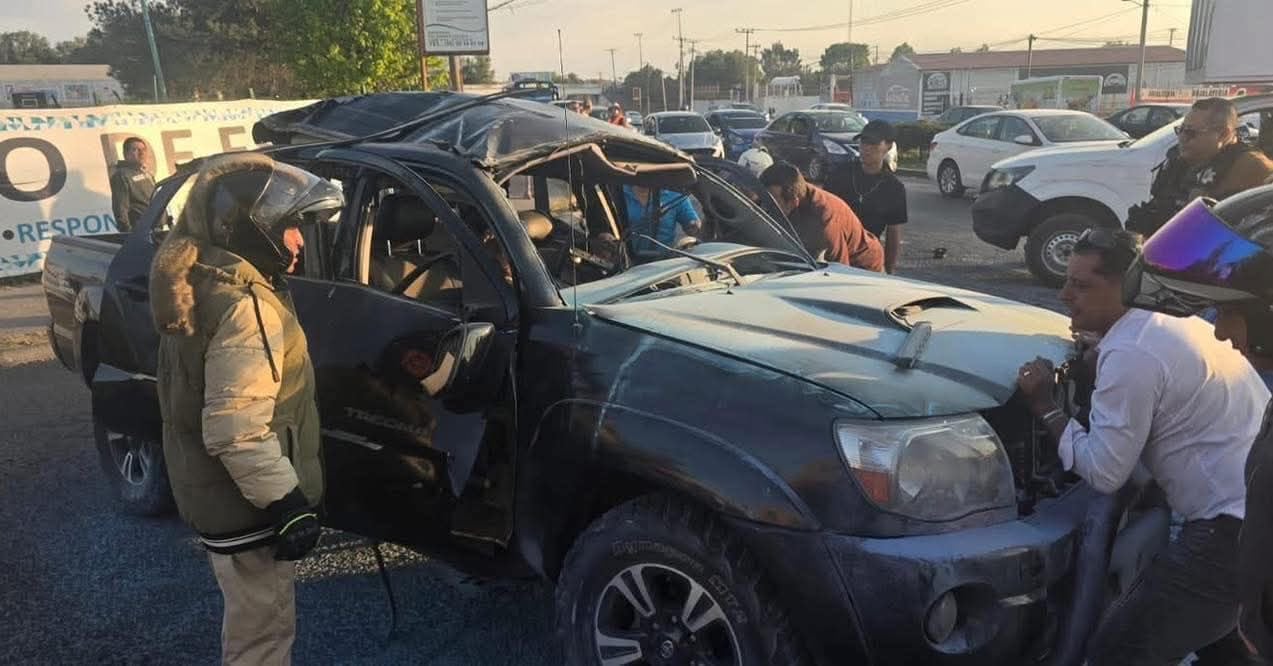
The U.S. Central Intelligence Agency on Tuesday denied that it was involved in the murder of a Sinaloa Cartel operative last March, as alleged in a CNN report. The media network claims that Francisco Beltrán, known as “El Payín,” did not die in an accident but was murdered, and that his death was “facilitated” by the CIA during a covert operation carried out in the State of Mexico, on the outskirts of Felipe Ángeles International Airport (AIFA), near the capital. The alleged assassination occurred in late March, when the car in which the cartel member was traveling exploded, also killing his driver.

Preliminary reports suggested they were transporting an explosive device that was accidentally triggered. CNN asserts that the device was intentionally planted in the vehicle, citing the State of Mexico’s Attorney General’s Office. CNN’s revelation fuels controversy at a time when Mexico is demanding that the Trump administration continue its war against the cartels through cooperation, not through direct incursions on the ground, which could be considered violations of national sovereignty. CIA spokesperson Liz Lyons called the report “false and salacious” and asserted that it “serves as nothing more than a PR campaign for the cartels and puts American lives at risk.”

“Mexican authorities have maintained extreme secrecy around the explosion, but multiple sources tell CNN that the attack was a targeted assassination, facilitated by CIA operations officers,” the U.S. news outlet reports. These officers are responsible for recruiting and managing foreign sources to gather national security intelligence. The operation against El Payín was not the only one in which CIA agents were directly involved, according to CNN. “The Beltran operation was part of an expanded, and previously unreported, CIA campaign inside Mexico — spearheaded by the agency’s elite and secretive Ground Branch — to dismantle the entrenched cartel networks,” the outlet reports. Without the express authorization of the Mexican federal government, the direct participation of foreign agents in security operations is prohibited by the Constitution.

Last week, Trump himself threatened to launch ground offensives against the cartels in Mexico, after praising attacks targeting vessels that Washington accuses — without evidence — of drug trafficking. “If they’re not going to do the job, we will,” the president said. During a hearing on Tuesday in the House of Representatives, U.S. Secretary of Defense Pete Hegseth called on Mexico to take action against the cartels so that his country “doesn’t have to do it.” Although Trump and Hegseth have discussed the issue in terms of a possibility, CNN reports that the CIA’s “deadly attacks” in Mexico have been occurring for at least a year, mostly targeting mid-level cartel members, such as El Payín. The network cites unnamed Mexican officials who claim that “the lethality of their operations has been seriously ramped up.”

Mexico’s Secretary of Security Omar García Harfuch has also rejected the CNN investigation, asserting that cooperation with the United States takes the form of intelligence sharing and institutional coordination. “The Mexican government categorically rejects any account that seeks to normalize, justify, or suggest the existence of lethal, covert, or unilateral operations by foreign agencies on national territory,” he stated via X. “In Mexico, operational actions are the exclusive responsibility of the competent Mexican authorities,” he added. García Harfuch emphasized that “cooperation without subordination” between the two nations has enabled the capture of key targets, the seizure of drugs and weapons, and the destruction of clandestine laboratories. Meanwhile, the State of Mexico Attorney General’s Office has denied having confirmed to CNN that an explosive device had been hidden in El Payín’s vehicle. “The Attorney General’s Office is conducting an investigation […] and has not yet reached a conclusion regarding the causes and circumstances that led to his death,” it stated.

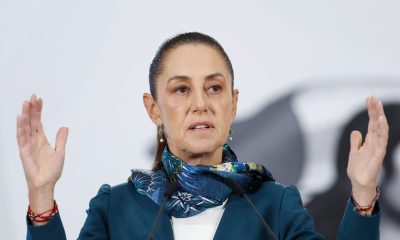
The level of involvement by U.S. security agencies without authorization from the Mexican federal government has strained bilateral relations. Mexican President Claudia Sheinbaum is convinced that the Trump administration’s actions should be viewed as foreign interference and a violation of national sovereignty, according to sources with access to the National Palace. For the president, they add, rather than a campaign against the cartels, this is a political maneuver ahead of the upcoming midterm elections in the United States. It is in this context that Washington’s explosive accusation against the governor of Sinaloa (currently on leave), Rubén Rocha, of allegedly collaborating with the Sinaloa Cartel, takes place. On Tuesday, Terrance Cole, the head of the DEA, warned that the accusation against Rocha is “just the beginning of what is to come in Mexico,” alluding to other officials and politicians allegedly linked to drug trafficking.

U.S. involvement in Mexico came to light following the deaths in a car accident of two CIA officers who had participated in the dismantling of a drug lab in Chihuahua. “The level of CIA involvement with operations has varied, according to the sources, from more passive intelligence sharing and providing general support to direct participation in assassination operations,” CNN reports. The network explains that the operation against El Payín, a mid-level cartel operative, is part of a strategy “to dismantle entire cartel networks, which involves not only removing those at the very top but also identifying vulnerabilities throughout the organization and systematically targeting lower-tier players who serve as key cogs in the trafficking enterprise.”

Sign up for our weekly newsletter to get more English-language news coverage from EL PAÍS USA Edition

Continue Reading
Click to comment

Leave a Reply

Your email address will not be published.

Canada

US Pressure On Mexico Ramps Up As Trump Sets His Sights On Narcopolitics

Published

on

us-pressure-on-mexico-ramps-up-as-trump-sets-his-sights-on-narcopolitics

Bilateral relations between the U.S. and Mexico have entered a new phase — more critical, and with increasingly little room for manoeuvre for Mexico. After the U.S. Department of Justice indicted the governor of Sinaloa and nine other senior officials last week, everything suggests this is only the prelude to a more aggressive U.S. campaign against the links between politics and organised crime.

In recent days, the White House has rolled out new plans, the president and acting attorney general have issued forceful statements, and there have even been moves aimed at tightening the net around Mexico’s diplomatic apparatus north of the border. The pressure is mounting, not only because of the scale of the narcopolitics allegations. In just a few weeks, two key dates for the North American triangle — with Canada included — will begin: the World Cup and, above all, the negotiations to renew the USMCA trade pact, Mexico’s economic lifeline.

Faced with this pressure, Mexican President Claudia Sheinbaum’s response has so far been defensive, trying to carve out some space by insisting on Washington’s own obligations: arms trafficking, the drug market, and even the indifference shown toward a handful of extradition requests.

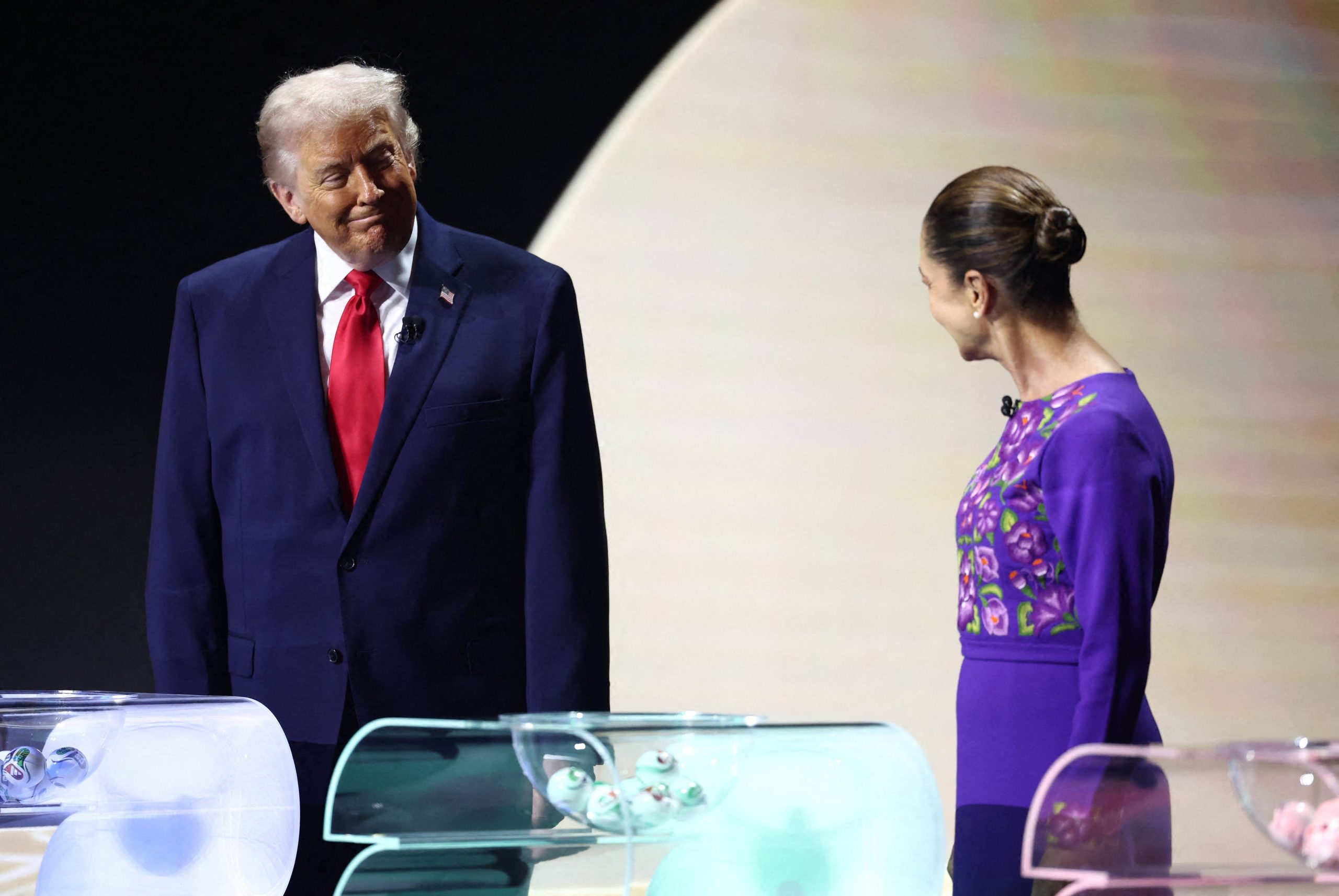
Since this new chapter in the fraught bilateral relationship began, Donald Trump had maintained an unusual silence. On Wednesday, he broke it with his characteristic bluntness: “If they’re [referring to Mexico] not going to do the job, we will.” The threat carries even more weight because it comes paired with the roadmap for his personal war on drugs. Both the Counterterrorism Strategy and the National Drug Strategy, presented this week, are the culmination of the White House’s military intervention campaign in Latin America.

In one of his first acts upon taking office, Trump designated drug cartels as terrorist organizations, a move that goes far beyond mere rhetoric, opening the door to military interventions in third countries. This has already happened in the Caribbean with the U.S. strikes on alleged drug boats. The documents released this week confirm and deepen this interventionist approach: “We will continue our military and law enforcement campaigns against all the cartels and gangs designated as terrorist organizations,” reads the 2026 Counterterrorism Strategy. “We will do so in concert with local governments when they are willing and able to work with us. If they cannot, or will not, we will still take whatever action is necessary to protect our country.”

For Mexico, the legal threat has already materialized with the indictment by a New York court against the governor of Sinalos Rubén Rocha Moya — now on leave — and nine other Sinaloa officials. The Department of Justice has requested their arrest and extradition on charges of working for the Sinaloa Cartel. And all signs suggest they will not be the last. On Wednesday, the acting U.S. attorney general, Todd Blanche, said — without offering details — that more charges are ready against Mexican politicians allegedly linked to drug trafficking. Sheinbaum has again insisted that Washington “send evidence,” while also opening the door to a Mexican judicial investigation into the accused.

The escalation also has a significant prequel. An accident three weeks ago in the mountains of Chihuahua revealed that two CIA agents were conducting joint operations with the state attorney’s office. According to Raúl Benítez Manaut, a researcher at the Center for Research on North America, that controversy was the trigger for everything that has followed.

“The president’s response, wrapped in a very pronounced nationalism, did not sit well with the White House,” notes the academic, who does not believe there will be any developments in the short term: “The extradition treaty with the United States gives Mexico 60 days to proceed with the request. Given the Attorney General’s Office investigation, the accused will almost certainly file for legal protection, which will give them even more time.”

The timeline also coincides with the start of the World Cup, which Mexico and the United States are co-hosting with Canada. According to the academic, the soccer tournament will be “a buffer against tension” — a pause for which preparations are largely complete and that will now take priority.

“The U.S. security apparatus is already here — the FBI, the CIA — overseeing the security protocols. They are concerned, for example, about the Guadalajara venue,” says Manaut.

He predicts that, until after the World Cup, there will be “no movement, no arrests, no destruction of laboratories, for example.” Regarding what might happen afterward, everything will depend on the evolution of the Rocha case in Sinaloa. “If there are no credible advances in the Mexican investigation, a mini-Maduro operation involving a governor from one of the northern states cannot be ruled out,” the expert notes, referring to the U.S. capture of the Venezuelan president from the Presidential Palace in Caracas.

The pressure also has another crucial variable. The Mexican economy is going through a dangerous period of weakness, and, coupled with Trump’s trade war, the USMCA has become more important than ever. “If the U.S. decides to walk away from the negotiating table, Mexico will have no alternative but to make some concessions on security,” Manaut adds. The Mexican government has stepped up its displays of effectiveness in the fight against crime, with a sharp rise in arrests — including the killing of “El Mencho,” the most‑wanted drug lord, in an operation — as well as increased drug seizures and the transfer of nearly 100 jailed cartel bosses across the border.

Acting U.S. Attorney General Blanche alluded to these extraditions during his recent, controversial statements. “One consequence of having a lot of the leaders of some of these cartels brought here over the past year […] is some of them will likely want to cooperate, and that cooperation could lead to additional charges.”

For analyst David Pérez Esperanza, who served on the Executive Secretariat of the National Public Security System during the administration of Mexican president Andrés Manuel López Obrador, “The U.S. is making political use of the statements made by these detainees, increasing the pressure and leaving very few alternatives.”

Another twist in the pressure campaign emerged on Thursday. According to CBS, U.S. Secretary of State Marco Rubio is considering closing some Mexican consulates, accusing the diplomatic network of trying to influence the November midterm elections, where Trump’s control of Congress is at stake.

Analyst Esparza believes Sheinbaum is up against a dilemma that is increasingly hard to avoid: “Either maintain a defensive nationalist discourse as leader of the Morena party, or act pragmatically against corruption, as she has already done by removing Attorney General Gertz and Adán Augusto López from their posts.” The fight against corruption, the academic concludes, “is the great unfinished business of the Fourth Transformation [the political movement launched by López Obardor], which has so far only been a narrative.”

Sign up for our weekly newsletter to get more English-language news coverage from EL PAÍS USA Edition

Continue Reading

America

Amid Questions Of US Interventionism In Mexico, 25-Story Ciudad Juárez Surveillance Tower Comes Under Scrutiny

Published

on

amid-questions-of-us-interventionism-in-mexico,-25-story-ciudad-juarez-surveillance-tower-comes-under-scrutiny

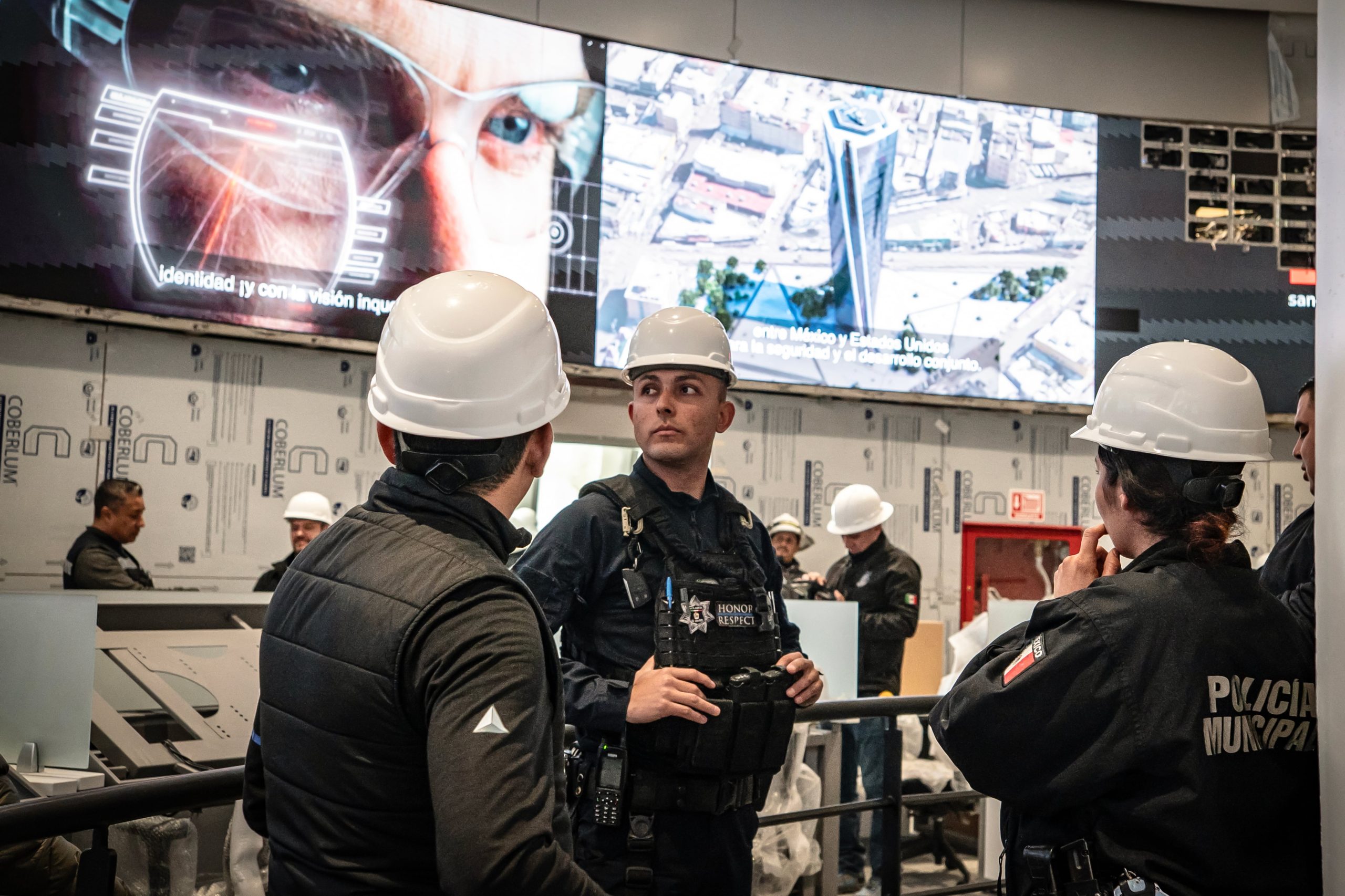
Its detractors call it the Eye of Sauron, and its defenders, “the guardian of Chihuahua.” The Sentinel Tower is a multi-million-dollar investment, a borderland’s bet on security. It’s the tallest building in Ciudad Juárez, that which best represents the fear of mass surveillance. And this week, it became a new battlefield in the political war between Mexican President Claudia Sheinbaum’s left-wing administration and the state government of the right-leaning political party PAN’s Governor Maru Campos. At 25 stories, the tower has come under scrutiny after the brutal car crash in which two CIA agents and two officials who were part of Chihuahua’s State Investigation Agency were killed. The death of the foreign agents, whose presence was unauthorized by the federal government, has led to the latest battle between the Morena administration and one of the few states still governed by an opposition party in Mexico. Since then, there’s been one question on everyone’s minds: how far is Donald Trump’s reach via operatives in Mexico, thanks to the country’s state governments?

The 18th floor of the Sentinel Tower is reserved for “something very interesting, very innovative,” Jorge Muro, director of the C7 Command Centers for Chihuahua’s Public Security Secretariat, told EL PAÍS on a January visit to the building, which was still under construction. “It’s where the national agencies will be — that is to say, all the national, state, and municipal forces, and the international agencies,” said the official. “Those international agencies will be everything from U.S. Customs and Border Patrol; the Bureau of Alcohol, Tobacco, Firearms and Explosives; part of the Attorney General’s Offices of Texas and New Mexico, with whom we have an excellent relationship; the El Paso police, with whom we obviously have a lot of coordination, communication and with whom we share information; and El Paso 911.”

Muro says that the building was going to house “their staff,” but then clarified: “It doesn’t at all enter into whether they will be in our database or us in theirs, no, no. They are simply going to work with their own tools, but from here. This coordinated work will allow us to have better coordination in real time. Because now we do have that coordination, but you have to call them, and then they have to consult… so time can be lost.” These declarations from the state official revealed a common practice in the border state: deep-seated collaboration with the United States.

This information had been practically unannounced until, at two in the morning on a Sunday, just under 500 miles from Ciudad Juárez, an official vehicle plunged down a ravine in the remote Sierra Madre Occidental. Now, under intense scrutiny, President Sheinbaum has commented on the presence of the agencies: “You request authorization, and it is confirmed with the Security Cabinet or with the National Security Council whether it is relevant and what kind of collaboration it should be, in order for a state government to be able to authorize it.”

Details of the operation

In the dawn of April 19, a convoy of five vehicles traveled from the town of Morelos to the city of Chihuahua. One of them skidded while driving through a mountain pass, falling 650 feet and killing all of its passengers. They were director of the State Investigation Agency Pedro Román Oseguera Cervantes, agent Manuel Genaro Méndez, and two CIA agents. They were coming back from having dismantled one of the most notorious narco-laboratories in Mexico. The Chihuahua attorney general, César Jáuregui, tried to deny the fact, but President Sheinbaum confirmed without a doubt that the four agents were “working in collaboration.”

Further details of the operation have not come from official sources, not the state government — which maintains its version that the Americans were drone instructors and that the State Investigation Agency was just assisting them with transportation to the capital — nor the federal government, which says that it doesn’t even know which agency they belonged to. It was The Washington Post and The New York Times that revealed a couple of days after the accident that the two dead agents were CIA officials. Later, the Los Angeles Times elaborated that the agents were even wearing State Investigation Agency uniforms and that there hadn’t been two of them, but rather four, who had been traveling in two different vehicles. The other two agents descended into the ravine hoping to save their coworkers, but it was “too late.”

Mexico’s Law of National Security states that foreign agents can only “enter the country temporarily for the purpose of exchanging information” and requires them to be accredited by the Security Secretariat, plus those of Defense, Foreign Relations, and the Navy. “The carrying out of any meeting, exchange of information, telephone calls, or communications with foreign agents” requires states and municipalities to send a written report within three days to federal authorities. In addition, a representative from the Foreign Ministry must always be present at such meetings.

The president says that none of this protocol was followed with the U.S. agents in Chihuahua. In fact, she sees the situation as having violated the Constitution and the Law of National Security. “We do not accept their participation in the field, in the operations. We have made it very clear,” said Sheinbaum, who since Trump’s return to the White House, has often invoked the defense of national sovereignty in response to the Republican’s interventionist tendencies.

The state government tried to shield itself by using the fact that the Secretariat of Defense participated in the operation, but Sheinbaum has rejected that argument, saying: “Evidently, Defense did not know there were people who were participating who were not Mexican citizens and who were not part of the security agencies of the state of Chihuahua.” In the face of these allegations, Governor Campos announced on Friday that she will “immediately” create a specialized unit to investigate the events that took place between April 17 and 19, including both the drug lab raid and the car accident. The purpose of this unit, which will be led by the former special prosecutor for Crimes Against Women, Wendy Paola Chávez Villanueva, is meant to “consolidate the investigative files related to the events,” “gather all the information, and shed light on the events.” Campos has made it clear that she will not make any further statement on the matter as long as the investigation remains active.

The eyes of the border

Even during her latest press conference, in which the PAN governor appeared to be trying to keep her head above water amid the scandal, Campos emphasized that she will maintain “whatever cooperation is necessary to fulfill the mission of ensuring peace” in the state in the face of crime.

Campos has made the fight against organized crime one of her government’s central crusades, and one symbol of that campaign has 25 floors and a helicopter landing pad. The Sentinel Tower is the visible face of a larger project called Sentinel Platform, which has cost the state more than $230 million. Its cost has been harshly criticized by civil society organizations, in addition to its incorporation of biometric data, artificial intelligence, and thousands of cameras.

Muro told this publication that there are currently 10,000 cameras installed throughout the state, a third of them in Ciudad Juárez, where 60% of crimes take place. They consist of fixed cameras, 360-degree cameras, and license plate readers. But that’s not all: the Platform also has the ability to request and connect to private cameras, which expands its capacity up to 30,000 devices.

Since its founding, the Sentinel Platform has been presented as a tool for collaboration with the United States. “The States have a mutual interest in ensuring that their shared border is secure,” was among the statements signed by Campos in an April 2022 memorandum of understanding with Texas Governor Greg Abbott. In a presentation, the Mexican governor’s administration added, “The state of Texas will be able to have eyes on this side of the border.” This had led Abbot to describe the PAN-led strategy as “the best border security plan of any Mexican governor.” The collaboration aroused doubts among experts when it was signed into effect four years ago, given that such agreements are typically the purview of the federal government. Now, the question has enveloped the Chihuahua government.

Continue Reading

Trending

Copyright © 2017 Spanish Property & News