Connect with us

%

Could La Manga Become The Next Spanish Resort To Push Cars Aside?

Published

on

could-la-manga-become-the-next-spanish-resort-to-push-cars-aside?

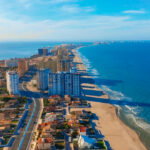
Anyone who has visited La Manga during July or August knows the frustration. Photo credit: aerophoto/Shutterstock

For decades, summer in La Manga has followed a familiar pattern, the beaches fill before midday. The restaurants buzz. Then the traffic begins. Long queues of vehicles crawl along the Gran Vía, parking spaces disappear and pedestrians squeeze along pavements built for a very different era. Now, a growing number of business leaders and local organisations believe it is time to ask a question that would once have seemed unthinkable: does La Manga need fewer cars? 

The debate has been launched by representatives of business and community associations from La Manga and Cabo de Palos, who recently met with Spanish MEP Marcos Ros to discuss what the resort should look like over the next 20 to 30 years. Rather than focusing on short-term fixes, the meeting explored how one of Spain’s best-known holiday destinations could become easier to move around, more sustainable and better prepared for the future. 

A different vision for La Manga

No decisions have been taken, and no formal plan has been approved. Instead, the meeting marked the beginning of a wider conversation about whether La Manga can continue relying so heavily on private cars during the busy summer months. Among the ideas discussed were reducing vehicle dependence, improving public transport, creating more space for pedestrians and cyclists, expanding green areas and rethinking how residents and visitors move around the narrow strip of land that separates the Mediterranean from the Mar Menor. 

Supporters argue that the resort’s popularity has outgrown its infrastructure. Every summer, tens of thousands of visitors arrive, placing huge pressure on roads, parking and public spaces. Congestion has become an accepted part of the holiday experience, but many believe it does not have to stay that way.

Looking beyond the next summer

Rather than introducing isolated projects, those involved want to create a long-term strategy that could guide La Manga’s development for decades. The proposal could bring together public administrations, urban planners, mobility experts and the Universidad Politécnica de Cartagena to design a model capable of attracting European funding while improving quality of life for residents and visitors alike. 

The discussion also examined how the resort manages its capacity during peak season. Improving collective transport, reorganising parking and making walking a more attractive option were all identified as possible ways of easing pressure without harming tourism. 

A challenge every visitor recognises

Anyone who has visited La Manga during July or August knows the frustration. A journey of only a few kilometres can take far longer than expected as traffic builds along the Gran Vía, while pedestrians often compete with vehicles for limited space.

The issue has already prompted closer cooperation between the municipalities of Cartagena and San Javier this summer, with local authorities strengthening coordination on traffic management, road safety and emergency planning during the busiest weeks of the holiday season.  For many residents, the latest debate recognises something they have experienced for years.

A resort at a crossroads

La Manga has reinvented itself before, from its rapid development in the second half of the twentieth century to its growing focus on sustainable tourism, the resort has continually adapted to changing demands. Now another question is emerging, should the future belong to more cars, or more people? 

The answer remains some way off, and any major changes would require years of planning, consultation and investment. But one thing is already clear, the conversation has begun, Whether it leads to greener streets, better public transport or wider pedestrian areas, the discussion could shape how millions of people experience La Manga for decades to come.

%

Santa Pola Castle Fortress Reopens

Published

on

santa-pola-castle-fortress-reopens

Temporary scaffolding installed at Santa Pola Castle. Credit: Ayuntamiento de Santa Pola.

Visitors can once again enter Santa Pola’s historic Castle Fortress through its main gateway after a temporary protective structure was installed to allow safe access. The reopening marks an important step in preserving one of the town’s best-known landmarks while preparations continue for restoration work on the historic clock tower.

Main entrance welcomes visitors once again

Visitors can once again use the main entrance to Santa Pola’s Castle Fortress after a temporary protective structure was installed to allow it to reopen safely.

The entrance has been closed since January after cracks were discovered in the clock tower, known locally as “La Peineta”. During that time, anyone visiting the Chapel of Our Lady of Loreto, the Sea Museum or the Tourist Office had to enter through the rear entrance.

The temporary scaffolding has now been installed while the Town Hall waits for approval from the Regional Heritage Department to begin restoration work on the historic tower.

The protective structure allows the main gateway to reopen safely until a permanent solution is put in place.

Restoration plans move forward

Reopening the entrance also means cultural events can once again be held in the castle’s central courtyard. Civic and religious events linked to Santa Pola’s patron saint celebrations in September can now go ahead, having previously been affected because emergency evacuation requirements could not be met while the entrance remained closed.

Over the coming days, the scaffolding will be covered with a printed canvas designed to match the section of the castle hidden behind the structure, helping to preserve the appearance of the historic building while restoration work is prepared.

The Castle Fortress remains one of Santa Pola’s most important historic attractions, welcoming residents and visitors throughout the year. The temporary measures ensure that public access can continue safely while work progresses towards the long-term conservation of this landmark building.

Continue Reading

%

Woman Nearly Hit On Puerto De Mazarrón Crossing Residents Say Has Been Ignored For Six Years

Published

on

woman-nearly-hit-on-puerto-de-mazarron-crossing-residents-say-has-been-ignored-for-six-years

The crossing sits outside one of the busiest supermarkets in Puerto de Mazarrón. Photo credit: rootstock/SHutterstock

A routine trip to the supermarket almost ended in tragedy, after a woman was nearly knocked down while using the pedestrian crossing outside the Consum supermarket on Avenida Doctor Meca in Puerto de Mazarrón, reigniting residents’ anger over what they say is a dangerous problem that has been ignored for years.

According to neighbours, the zebra crossing has not been repainted for around six years. The once-bright white markings have faded so badly that, from behind the wheel, they are now barely distinguishable from the road surface. For those living nearby, the latest near miss came as no surprise. Their concern is no longer that drivers are refusing to stop. They say many motorists simply don’t realise they are approaching a pedestrian crossing until the last moment.

‘You can barely see it from a car’

The crossing sits outside one of the busiest supermarkets in Puerto de Mazarrón, used every day by families carrying shopping, elderly residents, children and visitors unfamiliar with the area. Residents say they have watched the markings disappear year after year, leaving what should be one of the road’s most visible safety features almost invisible.

With thousands more vehicles arriving during the summer holidays, they fear the danger only increases. What should be one of the safest places to cross the road has, they say, become one of the most worrying.

Six years of complaints

The latest incident has reignited calls for the crossing to be repainted without further delay. Residents argue that restoring the road markings is neither a complex nor expensive job, yet they claim the crossing has continued to deteriorate despite years of concern.

Their frustration is fuelled by the belief that the problem is entirely preventable. A few hours of maintenance, they say, could dramatically improve visibility for approaching drivers and reduce the risk of a serious collision. Instead, another pedestrian has narrowly escaped injury.

Summer traffic leaves little room for error

Puerto de Mazarrón changes dramatically during the summer months. Its streets become busier, supermarkets fill with holidaymakers and traffic along Avenida Doctor Meca increases throughout the day.

That also means more people crossing the road. Locals say many visitors are unfamiliar with the area, while drivers are often concentrating on traffic, parked cars and finding directions. If a pedestrian crossing cannot be clearly seen until the last second, they argue, the margin for error disappears, near misses become more likely.

A legal duty, not a cosmetic one

Under Spain’s road traffic regulations, local councils are responsible for maintaining municipal roads, including ensuring that road markings, pedestrian crossings and traffic signs remain clearly visible and properly maintained. These markings are not simply painted lines on the road.

They are legal traffic signals designed to warn motorists, protect pedestrians and reduce the risk of collisions. When they become worn to the point that drivers struggle to recognise them, residents argue the protection they are meant to provide is weakened.

‘Don’t wait until someone is killed’

For neighbours, this is no longer just a complaint about faded paint, it is a plea for action before a preventable accident changes lives forever. The latest woman walked away unharmed, next time, residents fear, someone else may not.

As Puerto de Mazarrón enters its busiest weeks of the year, locals are calling on Mazarrón Town Council to repaint the crossing outside Consum before another near miss becomes the tragedy they say has been waiting to happen for far too long.

Continue Reading

%

Drunk Lorry Driver Caught Weaving Through Murcia With 25,000 Litres Of Corrosive Chemicals

Published

on

drunk-lorry-driver-caught-weaving-through-murcia-with-25,000-litres-of-corrosive-chemicals

officers intervened before the journey ended in tragedy. Photo credit: Guardia Civil/MInistro del Interior

It could have ended in catastrophe, a lorry carrying 25,000 litres of caustic soda was intercepted on a motorway in Murcia after traffic officers spotted it weaving unpredictably across lanes, with the driver later found to have an alcohol level more than six times the legal limit for professional drivers. 

The articulated lorry was travelling along the A-7 near Alhama de Murcia, transporting the hazardous chemical from Sevilla to Murcia when a Guardia Civil traffic patrol noticed something was seriously wrong. Instead of holding a steady course, the heavy goods vehicle repeatedly drifted between lanes and even veered onto the hard shoulder, creating what officers described as a serious danger for everyone sharing the motorway. 

A dangerous load and an even more dangerous driver

Its cargo consisted of 25,000 litres of caustic soda, also known as sodium hydroxide, a highly corrosive chemical widely used in industrial processes. While it can be transported safely under strict regulations, any collision involving such a load has the potential to create a major emergency for motorists and emergency services alike. Recognising the immediate risk, officers from the Guardia Civil’s Lorca Traffic Unit moved quickly to stop the vehicle before anyone was injured.

Once the lorry had been brought safely to a halt, officers carried out a breathalyser test on the driver. The results were startling. The man recorded readings of 1.04 and 1.03 milligrams of alcohol per litre of exhaled air. Professional drivers in Spain are limited to 0.15 mg/l, meaning he was driving at more than six times the maximum legal limit. 

Disaster avoided on one of Murcia’s busiest motorways

The A-7 is one of Spain’s busiest transport corridors, carrying thousands of cars and heavy goods vehicles every day. A fully loaded articulated lorry already requires greater stopping distances and careful handling. Add alcohol to the equation, together with a tanker transporting dangerous chemicals, and the consequences could have been devastating.

Fortunately, officers intervened before the journey ended in tragedy. The Guardia Civil has now opened an investigation into the driver for an alleged offence against road safety after his exceptionally high alcohol reading. 

Why caustic soda demands extreme care

Caustic soda is an essential industrial product used in the manufacture of paper, cleaning products, textiles and water treatment. Despite its everyday uses, it is classified as a dangerous substance because it can cause severe chemical burns if released and comes into contact with skin or eyes.

For that reason, vehicles transporting the chemical are subject to strict safety rules, while drivers must meet additional professional standards. Those standards include the much lower legal alcohol limit that applies to professional drivers compared with private motorists.

A reminder of the risks on Spain’s roads

Drink-driving remains one of the leading causes of serious road collisions across Spain, despite years of awareness campaigns and tougher enforcement. When large commercial vehicles are involved, the risks become even greater because of their size, weight and the type of cargo they often carry. The Guardia Civil regularly carries out roadside checks targeting alcohol, drugs and dangerous driving, particularly on routes used by heavy goods vehicles.

In this case, officers believe their intervention prevented a potentially serious incident before it had the chance to unfold. For motorists travelling along the A-7 that day, the weaving lorry may have looked like just another reckless driver. What they could not have known was that it was carrying 25,000 litres of a hazardous chemical, and that the man behind the wheel had allegedly been driving while heavily over the legal alcohol limit. 

Continue Reading

Trending

Copyright © 2017 Spanish Property & News