
Donald Trump
Death Of Young Haitian Migrant Highlights Psychological Harm Of ICE’s Ankle Monitors









This story is a collaboration between the Puente News Collaborative, a bilingual, nonprofit newsroom and funder dedicated to high-quality, fact-based news and information from the U.S.-Mexico border, and Public Health Watch, a nonprofit investigative newsroom based in Texas.
By the time Evelyn Morales learned that her brother, Alberto, had been diagnosed with kidney failure in the United States, she knew the disease well. One of her sisters had died of the same condition four years earlier.
Alberto worked on construction crews and painted houses across the U.S. for more than a decade. But one day, the 37-year-old’s body gave out. Struck by fever and pain, he could no longer work.
“My mother told him to come back to El Salvador,” Evelyn said in an interview in her home, which borders a sugar cane plantation in Jiquilisco. “She told his wife to find a way to buy his ticket, because if he died, she wanted to bury him in his homeland.”
Mesoamerican nephropathy, a form of chronic kidney disease, represents a growing health crisis among Central Americans, at home and in the U.S.
The illness, whose exact cause remains unknown, appears to have a common origin: It strikes people mostly along the Pacific coast of Central America, from Costa Rica to Guatemala. Experts studying the disease point to a combination of likely causes, including exposure to agrochemicals, heat stress from prolonged hard labor in hot weather, and inadequate hydration.
Ramon García Trabanino, vice president of the Latin American Society of Nephrology and Arterial Hypertension, who has studied the disease since the 1980s, said the illness follows the heat. With climate change, the region is only getting hotter.
“The illness is here to stay. Global warming and heat will continue complicating things,” he said. “There’s no hope; every year it will get worse.”
A young migrant’s disease
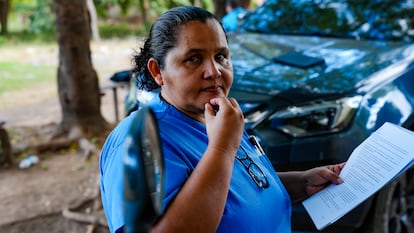
In El Salvador’s eastern Usulutan department, one of the areas most affected by the disease, young laborers – some of them minors – put in long hours in farm fields under the sun or in construction. Young police officers on the beat and monitoring traffic also face heat stress.
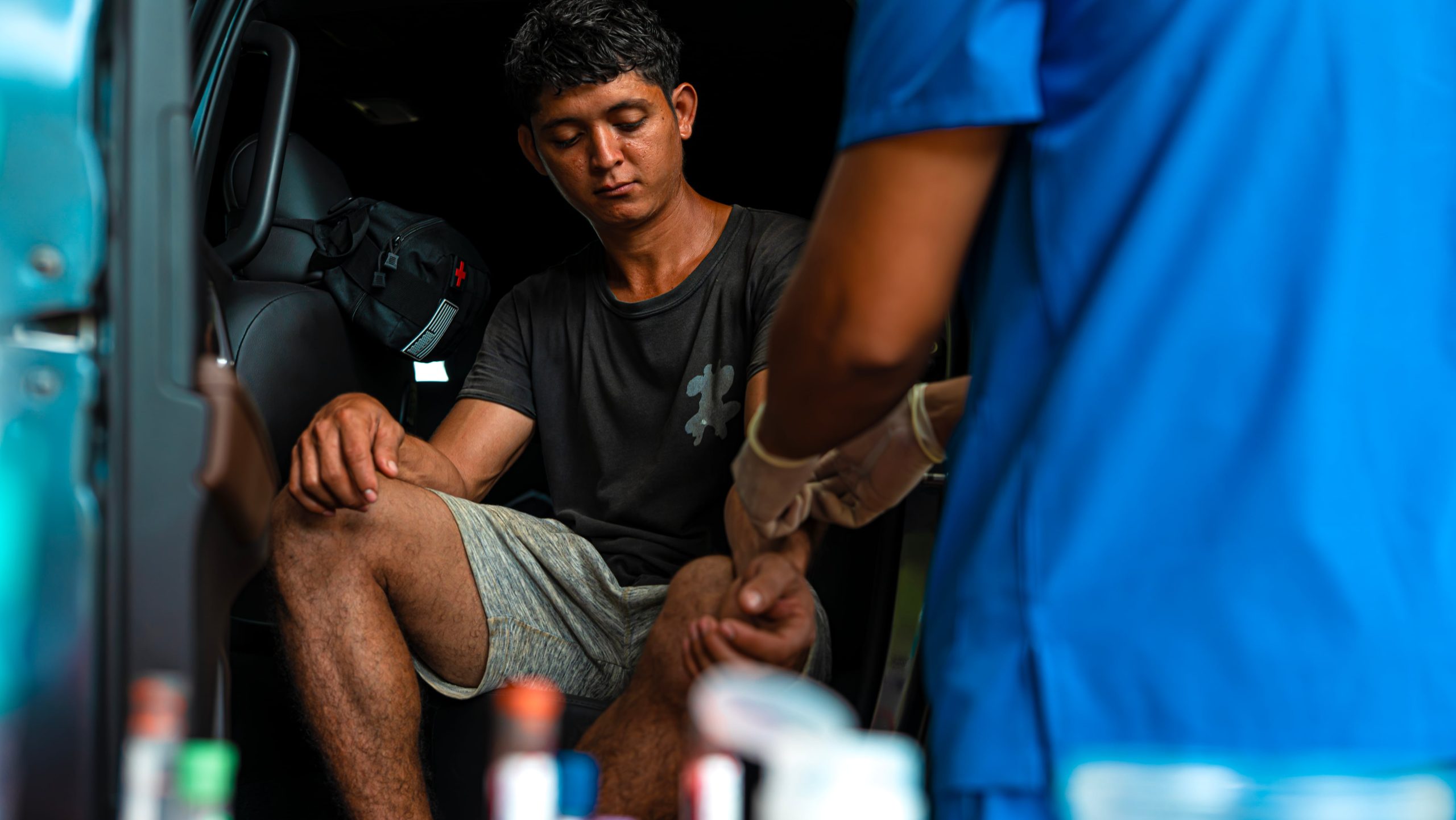
Without proper health care, kidney damage can start in adolescence. Yet the symptoms take time to appear, usually after repeated heat stress has damaged the kidneys. Because migration from the region has been significant in recent decades, symptoms often appear when young workers who once toiled under a Central American sun show up in clinics and emergency rooms — in the U.S.
If they get sick in the U.S., they can seek expensive treatment, or return to countries where public clinics are saturated and private medical care is accessible to the wealthy and those who receive remittances from relatives living and working abroad.
Hard work, tragic consequences
At age 14, siblings Alberto and Evelyn began working side by side in the sugar cane fields that dominate the landscape around the town of Jiquilisco, some 70 miles southwest of San Salvador. Under a blazing sun, they worked long shifts, often skipping water breaks to finish faster. In 2016, Alberto decided to migrate to the United States, just as thousands of Salvadorans had since the 1980s. When he left, his community was caught in the middle of a gang turf war.
Alberto jumped into arduous jobs in the U.S., but it wasn’t long before his body began showing signs of trouble: He often ran unexplained fevers, and his muscles constantly ached.
Nonetheless, he labored on, finally stopping in 2024, when he could no longer stand.
“In the U.S., you can’t afford to get sick, because if you don’t pay rent, they’ll put you out on the street,” Evelyn said.
After an examination, a doctor delivered the grim news. “He said [Alberto’s] kidneys were no longer working,” Evelyn said.
That year, Alberto faced the difficult choice: stay in the U.S., where health care was beyond his means, or return home to seek a spot at a government-supported hospital.
“These are workers that are doing the jobs that no one else wants to do [in the U.S.], and they have limited or no access to health care,” said Roxana Chicas, associate professor at the School of Nursing at
Emory University in Atlanta. “And they get sick, and there’s no mechanism in place to take care of this workforce.”
Chicas said that many of those who fall ill do not remain in the U.S. to receive treatment. “Probably around half go back to their home countries in search of affordable care,” she said, noting that the number is difficult to pin down because there’s no good system in the U.S. to track undocumented migrants with renal dysfunction.
U.S. research on non-traditional causes of renal failure aims to identify gaps in care for agricultural workers and construction crews. Chicas believes it will add insights into how rising temperatures affect laborers.
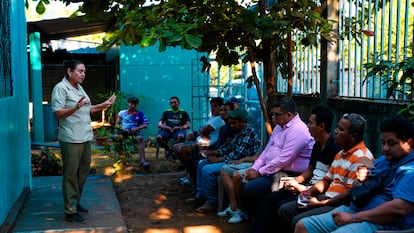
A multinational crisis
According to university and hospital reports in the U.S., Mesoamerican nephropathy disproportionately affects migrants between 22 and 45 years old, mostly men who’ve emigrated from high-risk areas, from southern Mexico to El Salvador and Nicaragua. The two Central American countries have reported the highest number of deaths linked to the disease. The latest reliable numbers, from a 2019 report by the Pan American Health Organization, show 67.4 deaths per 100,000 population in El Salvador. Globally, the region ranks among the highest in renal failure rates and the lowest in treatment rates.
Government health data from El Salvador estimates that chronic kidney disease from non-traditional causes affects about 3.8% of the population, rising to 6% among men. Official mortality rates for all forms of chronic kidney disease increased from 45 deaths per 100,000 population to 60 per 100,000 in 2022. The Health Ministry says about half of those deaths occurred in the Bajo Lempa region. Nationwide, more than 7,300 patients are registered in public dialysis programs.
Doctors working in affected communities say the official numbers underestimate the scale of the disease. They point to local studies dating back to 2014 that found much higher rates of kidney failure and death, registering an annual average incidence rate of 1,410 cases per million people, two-thirds of whom did not report diabetes or hypertension — the usual precursors to kidney trouble. Salvadoran clinicians said government figures mainly include patients who make it into the public health system, while many others die at home or never receive treatment because of the cost or a lack of access to medical care.
Dr. Raúl Guevara, who works at the CURE Consortium, an international initiative focused on finding causes of chronic kidney disease of uncertain origin, said that when researchers began recruiting study participants in El Salvador, they sought people who had participated in earlier studies and had elevated creatinine levels, a leading early indicator of the disease. But when they arrived in communities to follow up with study subjects, they were told the individuals were gone; they’d migrated north.
“Because of the economic hardship people face here, the disease ends up reaching other countries’ medical systems, like those of the United States and Mexico,” Guevara said.
The study into the risk factors of renal disease, which will last at least 10 years, is being conducted with experts in the affected countries and at U.S. universities.
“These pathologies belong to other hemispheres, other latitudes,” said Emmanuel Jarquin, one of the study’s lead researchers. “But our population migrates [to other countries], and the disease arrives in their health systems.”
The study’s goal is to prevent the disease, a silent killer detectable only by regular testing. But by the time symptoms appear, kidney damage is irreversible and requires dialysis or transplants.
Survival with a price tag
For Salvadoran migrants who show symptoms in the U.S. and seek treatment, options are limited. Without health insurance, treatment in the U.S. is out of reach for many migrants. Those who go back to El Salvador face a tough reality; treatment at home for chronic kidney disease is also a struggle. Public healthcare systems are overwhelmed, and private treatment costs remain beyond their reach.
In rural El Salvador, Pablo Rivera faced the limits of treatment after he learned his kidneys were failing. At age 37, he was told he needed renal replacement therapy. He said he felt like his world had collapsed. He had seen his father and his favorite childhood teacher in El Salvador die from the same disease.
Filled with fear and under pressure from his wife, he began seeking treatment openings in the Salvadoran public health system, but found none. In the U.S., his brother-in-law began sending money to pay for private treatment at a nearby clinic. (In 2025, remittances from migrants in the U.S. totaled $9.9 billion — a cash flow the Salvadoran Central Bank says has steadily grown over the years.)
For two years, remittances from Rivera’s brother-in-law covered one of the two private clinic treatments that ran up to $120 each. When he could no longer work, his wife and eldest daughter took jobs in cornfields and sold home-made cakes, joining the many women caring for kidney patients who’ve had to take on extra work.
In El Salvador, a single dialysis treatment costs around $120, while in the U.S., the price can reach $500 without insurance. But the minimum wage in El Salvador is about $409 a month for industrial and service jobs, and just $273 in agriculture, the sector employing most people affected by kidney disease.
What’s worse is the shortage of hospital beds, mainly in parts of El Salvador where the disease is most prevalent. In Usulutan, the small town near Rivera’s home, only one public hospital offers dialysis. To reach others, patients must travel two hours to San Miguel, the nearest big city, or almost four hours to the capital, San Salvador.
The weight of the treatment became too heavy for Rivera’s family. After two years of remittances, his brother-in-law could no longer send money.
“That day I told my wife I was going to die, because we didn’t have the economic means for me to live,” he said. “We put our hopes in God’s hands.”
An overcrowded system
Renal replacement therapies, like dialysis, have overwhelmed hospitals in El Salvador, where there are only half the number of kidney disease specialists as the global average. Denis Calero, a doctor at the National Jiquilisco Hospital, said the country is faced with a double burden; apart from the young patients, there’s also chronic kidney failure in older adults with diabetes or hypertension.
“This is a disease that cannot be cured, but it can be prevented,” said Calero, who today treats about 1,000 patients whose renal troubles are “under control,” and more who are on deeper replacement therapy in the hospital and his private practice in the town of Jiquilisco.
For now, Rivera and Alberto are medically stable. Two days a week, they travel to the hospital in Usulután, where they finally found free public treatment after spaces became available.
But each visit seems to bring a new loss. Rivera says that almost every time he arrives for treatment, he notices another familiar face is missing. These are friends who lost their fights against the disease. Those moments make him mentally count the number of years and months they had lived with the disease, a habit he tries hard to push from his mind.
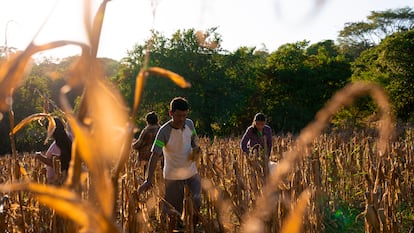
He keeps himself busy to avoid dwelling on his condition. In late afternoons, when the heat eases, Rivera still works his family’s corn plot. The routine is a distraction, he said.
“It’s very hard because I already have a wife and kids, and I love my family,” he said. “It’s hard to think that I’m going to leave them one day.”
Sign up for our weekly newsletter to get more English-language news coverage from EL PAÍS USA Edition
Donald Trump
A Cartel Tortured Julio: The US Denied His Family Asylum And Wants To Send Them To A Third Country

Julio thought that he had found his dream job. He was a driver for a wealthy family in Guadalajara, Mexico’s second-largest city.
At first, his tasks were simple: taking his employer to the beauty salon, shopping, or for tea with her friends. He dropped her children off at school and then took them to their English, piano and swimming lessons. But everything changed when he discovered that they were the wife and children of a drug trafficker. “I can’t get out of here,” Blanca Hernández recalls her son saying, when he confessed that organized crime had recruited him. “The boss has already started asking me to deliver packages,” he told her, horrified, back in 2016.
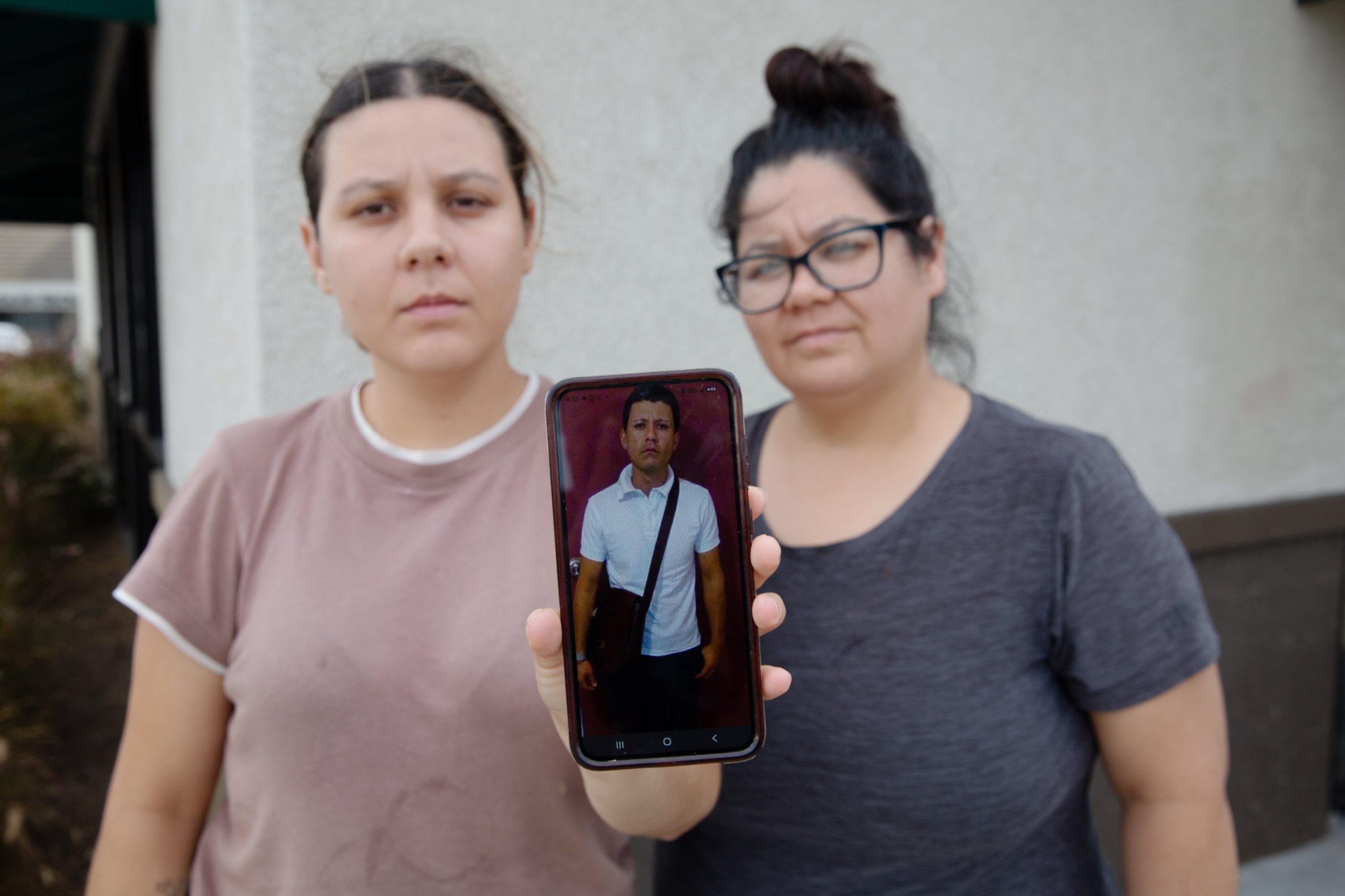
Ten years later, Julio Alfredo De Ávila Hernández is missing. And several of his relatives now live in the United States: they fled the state of Jalisco without imagining that, by seeking asylum, they would enter a legal labyrinth. Their case has become intertwined with the Trump administration’s harsh immigration policies, which mandate the transfer of asylum seekers to third countries deemed “safe.” This is in order to avoid forcing them to return to their countries of origin, where their lives would be in danger.
In April of 2026, an immigration judge presented options to Julio’s parents and siblings: they could continue their asylum process in Ecuador, Honduras, or Guatemala (in that order). They’ve since initiated an appeal process to try to remain in the United States. “They want to send us to Ecuador, but it’s worse than Mexico,” says Alondra De Ávila, Julio’s younger sister.
Back in 2024, she crossed the border with her son — now four years old — to surrender to immigration authorities and tell her story. “We want to stay here. I don’t want my son to experience what I went through,” the 26-year-old pleads.
Julio’s life in Mexico’s criminal underworld
The day Julio accepted the first package his boss handed him, he knew there would be more to come. When he refused to carry out one of the assignments, the threat was immediate. “He told me that, if I quit working for him, he would kill my family, my wife and my children,” recalls Blanca Hernández, 59, describing a conversation she had with her son.
She says Julio was forced to work for a cartel, and that there came a point when a hitman accompanied him everywhere. They knew where he lived, who his relatives were and what his daily routines looked like. By that point, Julio had no way out.
“He saw them making the cocaine bricks. At parties, my son said, instead of putting out bottles [of alcohol], they would put out a tray with just lines [of cocaine]. They started forcing him to do drugs. If he didn’t want to, they pulled out guns. My son started becoming addicted to drugs,” his mother recounts. “He told me that he had stopped visiting us for our own good, so as not to involve us in his life.”
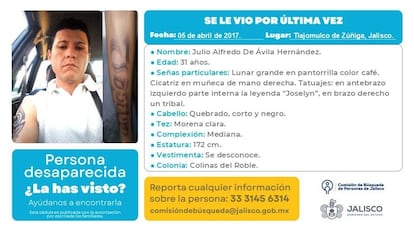
Blanca’s fears came to pass in the early hours of April 5, 2017. Julio was 31 at the time. A phone call alerted her that something had happened at her son’s home in Tlajomulco de Zúñiga, 20 miles south of Guadalajara. When she arrived, she found a heartbreaking scene. “There were pieces of flesh, already dried. I believe they were my son’s. There was a lot of blood in both bedrooms and in the kitchen. I had never seen so much blood,” she recounts.
Some witnesses told her that, hours earlier, armed men had arrived, wearing what appeared to be police badges. They were traveling in two pickup trucks. “They took out a person [from the house], wrapped in a blanket. It looked like a dead body. They threw him in the truck. Then, they took out a woman and, finally, my son, covered in blood, semi-conscious,” she says.
The family sprang into action. They filed a complaint with the Jalisco Attorney General’s Office, called everyone they knew, plastered Julio’s photograph around the city, spoke to the media and even offered a reward for information that might help locate him. But their efforts had an unexpected consequence: they angered the cartel. Vehicles carrying hooded men armed with assault rifles began following them. Then came direct threats, first through anonymous phone calls.
“They told me that they were the ones who had taken Julio and that they wanted me to hand over what Julio owed them,” reads the statement that Blanca Hernández gave to the Jalisco State Police’s Investigative Division. “If I didn’t, they said that they would cut off my head,” she continues.
Two weeks after Julio’s disappearance, one of his sisters received a video call: she saw her brother being tortured.
“He was covered in blood. They had him tied up. They pulled his hair to lift up his head. My son was covered in bruises. His face was swollen from the punches and covered in blood. His white tank top was completely red with blood,” his mother describes.
That was the last time the family saw him alive. Some time later, a video began circulating on El Blog del Narco, a website that publishes uncensored content related to organized crime in Mexico, showing a horrific act. This is how Jéssica, Julio’s younger sister, describes it: “They were cutting off his hand, from the wrist down. The police in Mexico showed us that video.” The family was able to identify him by a tattoo with his daughter’s name on one of his forearms.
Persecution in Mexico
The cartel made it clear that its threats were serious when several gunmen showed up at the family’s home. They pounded on the door and demanded that Julio’s mother hand over “what Julio had left behind,” according to her statement to investigators. “I couldn’t even speak; I was so scared,” she recounted.
The harassment soon spread to their workplaces and the streets of their neighborhood. One afternoon, the gunmen did not even hesitate to approach two of Julio’s sisters as they were accompanied by small children. “We grabbed the baby from the stroller and ran,” Alondra De Ávila recalls. “When we got home, we locked everything up. We put the sofas in the doorways.”
As soon as they had the chance, they fled to the Guadalajara airport, considering it to be the safest place in the city. Thus began a long journey, passing through the homes of relatives in the states of Jalisco, Aguascalientes and Baja California.
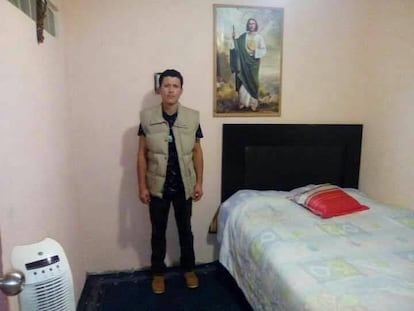
Blanca Hernández lost all hope of finding her son alive the day she spoke with someone connected to drug trafficking. “He told me, ‘Please, ma’am, don’t look for him anymore. You’re in grave danger. They’re going to kill you all.’”
Officially, Julio is one of the approximately 135,000 missing persons in Mexico, a crisis that has reached record numbers in recent years (with organized crime playing a central role). Only a year ago, this family laments, the Jalisco State Attorney General’s Office issued its first missing person report for Julio. “My brother became just another missing person, but for us, he will always be our family member,” Jessica says.
“It’s all been very hard”
The family fled to Tijuana, but even there, they didn’t feel safe. In 2024, they decided to cross into the United States to surrender to the Border Patrol. They all passed the first hurdle in their asylum application: the credible fear interview. Afterward, they remained in immigration custody — some for days, others for months — until they were released and able to reach their destination.
The process continued. They began to get settled in the United States, like so many other migrants. They attended hearings, confident that they had enough evidence to win their case. They even had copies of the complaints they had filed in Mexico. But on April 13, 2026, the family received a devastating blow: an immigration judge granted the government’s request to close their asylum application and denied them protections against deportation. She ordered that they be sent to Ecuador or, failing that, to Honduras. Guatemala was left as a third option.
These three nations have cooperation agreements with the Trump administration, functioning as “safe third countries,” meaning they receive migrants and process their asylum claims there. Human rights and immigrant advocacy groups, however, have questioned whether they genuinely meet the protection standards required under U.S. law. The agreements were initially signed during Trump’s first term, but were suspended during Joe Biden’s presidency. Trump reactivated them after returning to the White House. In the case of Ecuador, the agreement came back into force in July, 2025.
“It’s all been very hard,” Blanca Hernández laments. “I told the judge that we were in grave danger in Mexico, but that, between going to Ecuador or returning to Mexico, I’d rather die in Mexico.” She adds: “It’s not right that, just because of a mistake my eldest son made, more people are going to die. I am asking the U.S. government to give us a chance. We’re not bad people. We didn’t come here to steal. We didn’t come here to take anything from you.”
Her daughter, Alondra De Ávila, agrees that, if they’re deported to their home country, “we would have to live in hiding; there’s nowhere safe for us there.”
Their appeal against the immigration judge’s ruling has given them a glimmer of hope. The family is determined to pursue the legal fight through every possible level of appeal. “My family isn’t asking for money. We just want to be allowed to stay in this country,” Jessica insists. “It’s unjust to deny us that protection.”
Sign up for our weekly newsletter to get more English-language news coverage from EL PAÍS USA Edition

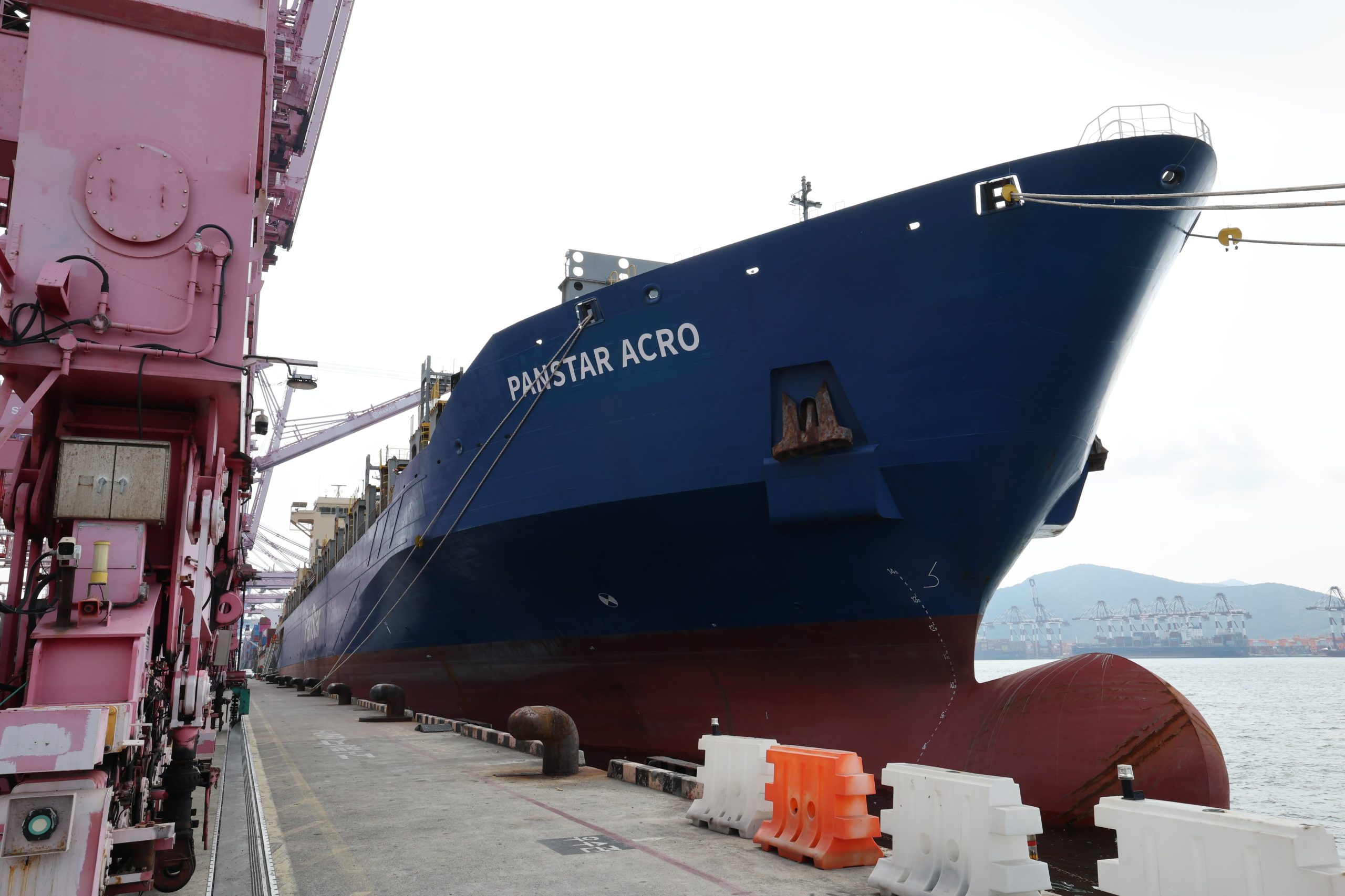
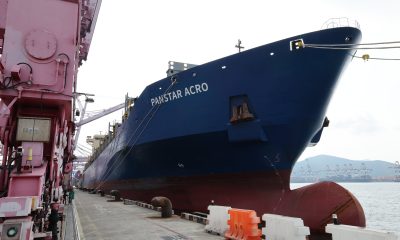
On August 26 and August 29, in the bustling port cities of Qingdao and Busan, located in China and South Korea respectively, two medium-sized cargo ships cast off. The Dubai Tower and the PanStar Acro headed for the British ports of Teesport and Felixstowe via the Arctic, before sailing to other destinations in Northern Europe.
This significant double move in the ever-frenetic world of maritime trade is redrawing the economic and geopolitical map. It shifts power and influence toward the Northern Hemisphere, at the expense of the Southern Hemisphere, and it grants yet another dangerous advantage to Vladimir Putin’s Russia.
Regular connections between Asia and Europe via the North Pole were unimaginable just a couple of decades ago. Even though global warming was already wreaking havoc back then, ice still covered the bulk of the Barents Sea. Today, however, the Chinese company Sea Legend intends for the new link between Asia and Europe to result in a weekly route. Its South Korean counterpart, meanwhile, is still in the testing phase.
The shipping sector estimates that navigability in the area will last around three or four months each year, from August to October (although there’s the possibility of an extension toward the end of that period). This means that a new route is now viable, one that drastically brings down shipping times when compared to the most-used alternative to connect Asia and Europe — the one that crosses the Suez Canal — and reduces them exponentially when compared to the route that crosses the Indian Ocean and rounds the Cape of Good Hope, at the southern tip of Africa.
“If the 20th century was the century of the Strait of Malacca, the 21st century will be the century of the Bering Strait,” predicts Arancha González Laya, dean of the Paris School of International Affairs at Sciences Po, in her recently published book, Solos en el Mundo (Alone in the World). “One of the greatest reconfigurations of global logistics has begun,” Spain’s former foreign minister adds.
With the Red Sea, the gateway to the Suez Canal, under constant Houthi pressure and the Strait of Hormuz doubly blocked by the U.S.-Israeli conflict with Iran, the situation could not be more favorable for the so-called Northern Sea Route. It shortens transit times by up to 40%, according to Kjell Stokvik, managing director of the Center for High North Logistics. And, he adds, this figure“will be reduced even further in the future, with transpolar routes.”
The Northern Sea Route allows for greater ship turnover. It reduces fuel consumption — which is crucial in times of scarcity — and it avoids the risk of armed attacks. Additionally, even though the premiums demanded by insurers are high, these have also grown significantly in Middle Eastern waters, which will level the playing field between the two routes.
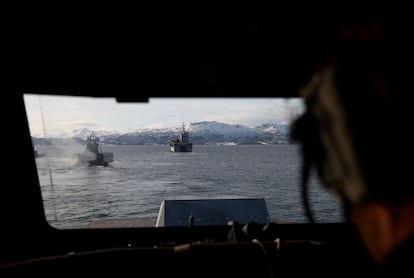
However, there are significant drawbacks to this new route. The first is the environmental damage: if this route is feasible today, it’s precisely because of the unchecked advance of ocean warming and the continuous melting of the Arctic Circle. Nowadays, icebreakers are only needed in the final stretch of the season, well into October. And, despite the ships’ lower fossil fuel consumption on a shorter journey, the opening of this new route could exacerbate pollution. It could also further damage the biodiversity in a unique region, one that’s a natural sanctuary of incalculable value.
“These cargo ships risk collisions with mammals and other species in an area that also depends heavily on fishing,” notes Javier Arnaut, a professor at the University of Greenland-Ilisimatusarfik.
Anjali V. Bhatt, a research fellow at the Peterson Institute for International Economics (PIIE), points to a second challenge: the control that Russia exerts over the route. If Iran (and now the U.S.) wants to seize control of the Strait of Hormuz, charging tolls at will, it’s Rosatom — the Kremlin-owned nuclear corporation — that issues navigation permits in the far north. Naturally, this generates larger and larger sums of money for the Russian government, at a time of pressing economic need in Moscow. The opposite is true in Egypt: if the Arctic route becomes established, it will represent a financial drain on the already-strained coffers of the North African country, which are heavily dependent on ships transiting through the Suez Canal.
“From Shanghai northward, any ship taking the Arctic route reaches Europe faster [than via the Suez Canal]. But there will always be a drawback: there are no points where ships can make intermediate stops,” explains Jordi Torrent, a consultant and secretary general of the MEDPorts Association. “From Asia to Algeciras [in Spain], ships can call at four or five ports [including Singapore, Dubai, Egypt, Malta]. In contrast, there’s nothing when you pass through the Arctic, and that’s a structural limitation.”
Spain has benefited from the diversions around the Cape of Good Hope, reinforcing its role as a gateway to Europe via the Strait of Gibraltar, one of the few remaining open shipping lanes. The cities of Valencia and Barcelona have seen their business boom, while Algeciras has established itself as a critical port on a global scale. The Arctic route could diminish this influence.
Although there’s still no regular service, a total of 103 transits (outbound or return journey) were recorded last year via the Arctic route. That’s six more than in 2024 and 60 more than in 2022, according to figures from the Center for High North Logistics, based in Kirkenes, Norway. Most of these vessels were Russian and Chinese. Those numbers, however, still pale in comparison to the more than 24,000 ships that passed through the Suez Canal in 2024, the last year before the war in the Middle East reached its peak.
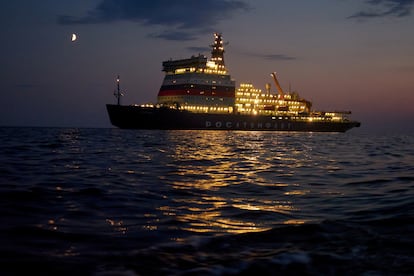
Neither North America nor Europe remains untouched by these commercial shifts (as well as military and energy-related ones) in an Arctic that has become one of the world’s hottest flashpoints in terms of clashes between global powers. The Trump administration has combined repeated annexation threats against Greenland with the announcement of a major purchase of Finnish-built icebreakers, bringing its fleet to over 50. Canada, not wanting to be left behind, has just announced the construction of six more of these vessels.
“The opening of these routes is generating anxiety in the U.S. to use the other Arctic route, the Northwest Passage, which Greenland has the rights to,” Arnaut explains. “It increases the value [of the island that’s under Danish sovereignty] for Trump and demonstrates that the gradual commercialization of the Arctic goes far beyond monetary value: it has strategic value.”
Meanwhile, in the next few weeks, the European Union is preparing to unveil the main points of its Arctic strategy for the coming years. It holds a strong hand: the continent has the advantage of geographical proximity, while Finland, Denmark and Sweden have historical hegemony in the area. But, as in so many other areas, many argue that it lacks ambition, that its instinctive caution risks holding it back at a time when the major powers, from Russia and the United States to China, are baring their teeth.
Summit in Lapland
Aware of the urgency, Helsinki (perhaps the EU capital with the most influence in a region where its future is at stake) has convened a high-level summit, to be held on September 13 and 14 in Rovaniemi, a town in Lapland, the northernmost region of Finland. “The Arctic region is an increasingly important part of Europe’s security environment. The European Union has direct interests in its stability, security and sustainable development,” said Finnish Prime Minister Petteri Orpo, while extending an invitation to several EU leaders.
“Europe’s challenge isn’t a lack of involvement. Rather, it’s about ensuring greater coordination and a clearer strategic direction,” Stokvik argues, from the Center for High North Logistics.
Michael Bravo, from the Scott Polar Research Institute at the University of Cambridge, also believes that the 27 member states can “benefit from these advances [in Arctic navigation].” The EU, he says, “has both the opportunity and the capacity to contribute constructively to shaping the region’s future, ensuring adequate environmental protection and economic stability.”
However, Alla Pozdnakova, from the Scandinavian Institute of Maritime Law at the University of Oslo, is more skeptical. “It’s fascinating to see China and South Korea’s plans, but I doubt these routes will have positive implications under the current circumstances, either for Arctic states or for the rest of Europe.”
On the contrary, she writes to EL PAÍS in an email, “Geopolitical tensions are likely to increase. And Arctic coastal countries, like Norway, will be exposed to greater risks of polluting accidents in the harsh conditions of Arctic waters. The ecological damage that a container ship accident can cause to the marine environment is enormous.”
Moscow’s leverage
“Russia not only uses natural gas to exert pressure on Europe, it can also use the Arctic as leverage: it can raise or lower the fees it charges shipping companies to transit the route, and it has the ability to shut it down whenever it chooses, much as Iran can with the Strait of Hormuz,” Vasco Sánchez Rodrigues, an associate professor at Cardiff University, warns by phone.
He also stresses the importance of the route as an outlet for Russian oil and gas exports, as well as a regular corridor for the movement of troops and military equipment to and from the Eurasian power.
In the words of Carlos Santana, director of IE University’s Advanced Supply Chain Management Programme in Madrid, the shift represents “a changing of the guard,” with a new lord and master of shipping routes. And it means more power for Moscow and Beijing. “For China,” he notes, “the Arctic isn’t just a potentially shorter route; it is, above all, a new strategic option.”
And for the Kremlin, concludes Torrent, the Arctic has been an obsession for four centuries. “Russia’s only maritime outlets were through the Black Sea, controlled by Turkey, and the Baltic. That is why access to the Arctic was one of Putin’s five priorities for this century. Thanks to climate change, that goal has now been achieved.”
Sign up for our weekly newsletter to get more English-language news coverage from EL PAÍS USA Edition

Why The Guardia Civil Says To Take Photos Of Your Car

‘A Shocking Moment’: Far-Right AfD Makes History In Germany As Political Tide Shifts In Spain And Britain

Italian Restaurant Bans Phones At The Door


-

 Antonio Hidalgo2 weeks ago
El Deportivo Agua La Fiesta Del Málaga En Su Debut Liguero En Casa
-
Costa del Sol2 weeks ago
Mijas police step up rubbish patrols as residents complain about dumped waste
-
Celebrity News2 weeks ago
The world bids farewell to Dolly Parton: The voice behind Jolene is gone
-
European News2 weeks ago
Spain faces potato price uncertainty as France loses nearly a quarter of its crop
-

 Uncategorized2 weeks ago
McLaren launch FIA appeal as result saga takes new twist:
-
Almeria2 weeks ago
The revamped Paseo hosts Almería’s Feria for the first time since its €11.2m transformation
-
Latest2 weeks ago
As Iceland Votes On The EU, Which Countries Could Be Next To Join?
-
Latest2 weeks ago
At Least 50 Injured After Fireworks Explode At Spanish Fiesta