
ElPais
Dining Outdoors In Spain: From Popular Custom To Neighborhood Protest Against Mass Tourism And The Privatization Of Public Space

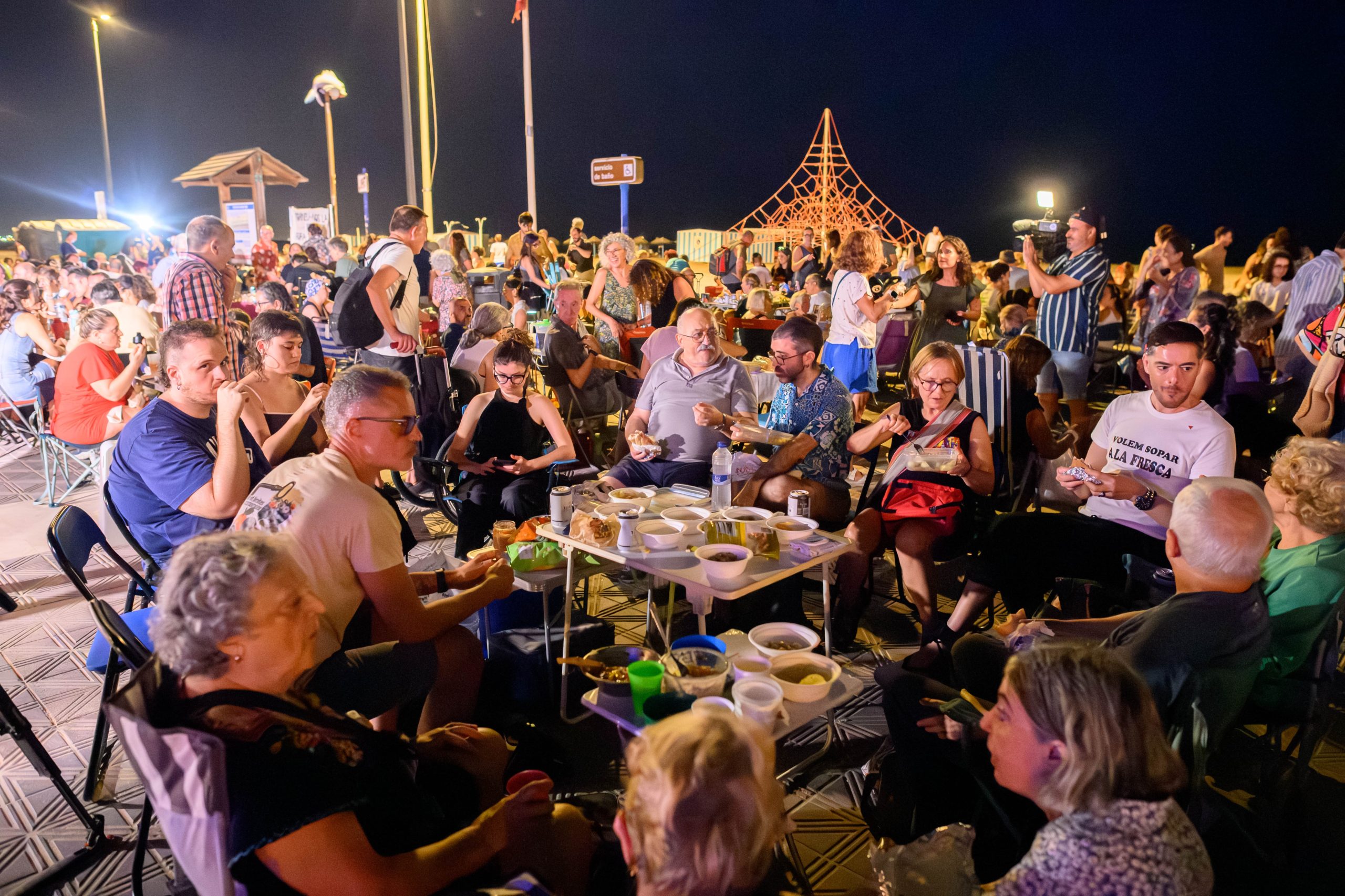
Taking out a table and chairs and sitting in the street to have dinner in the fresh air with friends, family or neighbors, especially in the hottest months of the year, has recently assumed the character of protest in several parts of Spain. As cities and municipalities are increasingly stressed by mass tourism and public spaces are progressively privatized, the option of being on the street to socialize free of charge has become akin to a revolutionary act by locals aiming make their demands visible.
Among those making an impact this summer are the Mallorcan collective Brunzit, which filled Palma’s Plaza Mayor with people dining al fresco on August 19. This dinner was christened Sopars a la Llesca — eating al fresco in Catalan — which they have been organizing since the summer of 2025 to flag up the fact that the city’s spaces can also be inhabited by the people who live in it. In this collective event, there are not only beach coolers, folding tables and plastic chairs but also music, dance, poetry and games. It is part of a wave of demonstrations and protests that have been taking place in recent years in Mallorca against mass tourism.
In Valencia, where the residents of the maritime districts usually dine al fresco in the summer months, locals have recently mobilized in the face of a threat to this popular custom. “This summer, a hotelier criticized people going out to the Paseo Marítimo to dine because they left a mess which looked bad for the tourists,” explains Pau Diaz, a member of the Veïns Amics de la Malva neighborhood association, one of the five that convened the great sopar a la fresca protest on September 5 on the Paseo Marítimo.
In view of such statements — made after the mayor of Valencia, María José Catalá, announced the plan to reform the waterfront, which will include the renovation of the promenade — several associations in the maritime districts began to mobilize to make it clear that public spaces belong to the citizens. “The promenade does not belong to the hoteliers, it belongs to the people and to everyone who wants to use it,” says David Verdoy, president of the Veïns Amics de la Malva association. Verdoy says that dining al fresco has been done in Valencia by locals “all their lives” and they never had any problems with the hoteliers before. In fact, he knows that many hoteliers do not even agree with the statements that triggered the neighborhood protests.
The local laws on the use of beaches and adjacent areas in Valencia do not ban outdoor dining. The only reference to food regarding these laws has to do with the leaving of waste and the regulation of the sale and consumption of alcoholic beverages. Addressing the controversy, the Valencia City Council announced that it has no plans to restrict the use of public spaces for picnics. “Neighborhood associations need to be aware that this is the case,” says Diaz.
Diaz also stresses the importance of al fresco culture: “These are spaces that neighborhood associations reclaim within the context of an increase in mass tourism,” he said while pointing out another reason to defend the custom. “We are in a moment of climate crisis and it is necessary to look for spaces where we can be cool. In these seafront districts, there is energy poverty and not all homes are air-conditioned. So there are vital factors at play other than coexistence and the occupation of public spaces by citizens.”

In Madrid, this August, the Lavapiés neighborhood also hosted an outdoor dinner during the San Lorenzo festivities. On Dos Hermanas Street, a long table was set up covered with a colorful polka dot tablecloth where neighbors sat down to feast on what they had brought to the gathering. The Lavapiés al límite platform was behind the event which brings together several groups united “in the face of the alarming institutional abandonment of the neighborhood”, as Lucía López, one of its members, explains. “It seems that they want us all in our homes, so we do not protest against the fact that the city is increasingly hostile, with fewer places for meeting and citizen participation,” says López, who adds that residents feel they are being robbed “even of the popular fairs.” The result has been the slogan: “Without neighbors there is no verbena [fair]” and the launch of the Lavapiés al fresco dinner.
The dinner is actually one of a series of actions that the platform carries out once a month to “recover the public space as a place for neighborhood meetings,” either through demonstrations, games in the street, or planting trees. It was not the first time that an outdoor dinner had taken place in Lavapiés. The Vecinas a la Fresca collective had already organized similar activities in its streets and squares, such as neighborhood competitions using seasonal vegetables for making snacks, tortilla, gazpacho, and tapas in 2023 and 2024. “In those cases, we did not formally request authorization as we did for this summer’s dinner, so the police always ended up coming, because apparently we were super dangerous wielding our tortillas,” López says.
During the dinner in August, the platform organized a “neighborhood bingo” testing participants on how well they knew the area. “It was a way to get to know each other, to talk and enjoy ourselves. And it was a wonderful, glorious, incredible night,” López recalls.
Getting to know your neighbors
“The potato omelet is always a hit at these dinners,” says Diaz from the Associació de Veïns Amics de la Malva, who says that the idea of these al fresco feasts is to bring things to share. “Potatoes, breaded meat, maybe a ratatouille…” he says. “Very interesting dynamics are generated, which have nothing to do with the commodification of public spaces. For us that is one of the keys, because we are committed to the common good but also because shared food tastes better.”
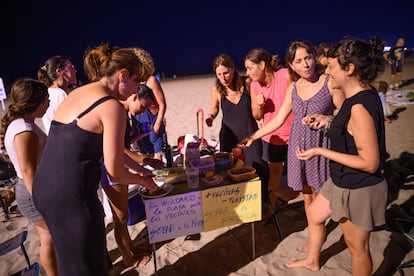
Lucía López remembers how wonderful it was to see the residents of Lavapiés go down to the street with their plates and lunchboxes. “There were even those who brought a fideuá dish in a frying pan,” she says. The diverse cultures that inhabit this Madrid neighborhood were also at the table: “There was food from Bangladesh, from Senegal… The Panifiesto bakery gave us the bread, the La Barra Dulce pastry shop the dessert. That is, the merchants, the fabric of the neighborhood, were also involved in this dinner,” López adds.
López is clear that sharing food in a place like Spain, where people usually meet to eat and drink, is a way of creating bonds and community. “The fact that each one brings something generates conversation,” she says, adding that in the days after the dinner, many people talked to members of the association about dinners al fresco they remembered from the past. “There’s nothing like being on the street and having a drink with your neighbors. There’s no better plan,” she says.
Sign up for our weekly newsletter to get more English-language news coverage from EL PAÍS USA Edition











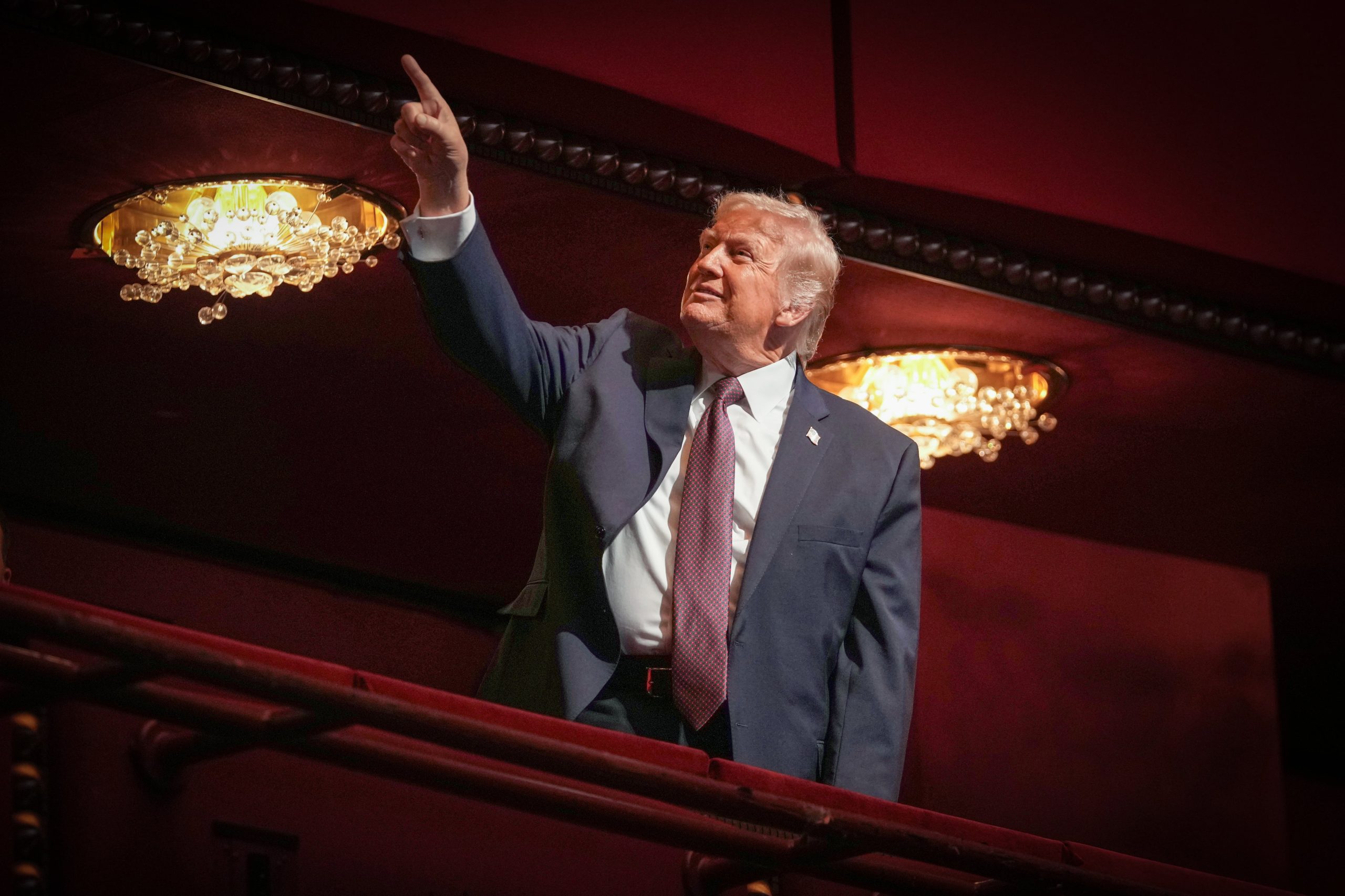
For the past 96 days, a huge tarp has hung over the facade of the Kennedy Center, a fitting symbol of Donald Trump’s assault on Washington’s cultural institutions.
Those attacks intensified on Wednesday with the announcement that Interior Secretary Doug Burgum is preparing to place a series of signs at the entrance to the National Museum of American History (NMAH) warning visitors about the “personal viewpoints” of those who curate its exhibitions. The White House accuses the museum, which is part of the Smithsonian network, of having “explicitly adopted an ideological framework that no longer treats the American story as a shared national inheritance to be taught or celebrated, but as a political instrument to divide, dispirit, and discourage” U.S. citizens.
Once installed, the signs, priced at $7,000 apiece, will join the tarp at the Kennedy Center as symbols of Trump’s determination to turn culture into a vehicle for advancing his MAGA agenda, burnishing his legacy and feeding his ego.
The tarp is a relic of the battle over Trump’s move to add his name to the Kennedy Center. A board of Trump loyalists had approved the name change, but in June, a judge ordered that the giant letters be removed. Dozens gathered to watch in person while tens of thousands followed online, expecting to see the white facade revealed once more. But the tarp never came down.
On Tuesday, the board voted, during a meeting that witnesses said ended with Trump shouting, to proceed with the closure of the institution that the president first announced in February. At the time, he argued that the center required a complete reconstruction because it was “tired, broken, and dilapidated.” Now, after the White House released a video apparently showing part of the grand foyer ceiling collapsing, Trump is threatening to withhold approval for the $257 million renovation unless the institution once again displays his name alongside that of John F. Kennedy, the president in whose honor the center opened in 1971.
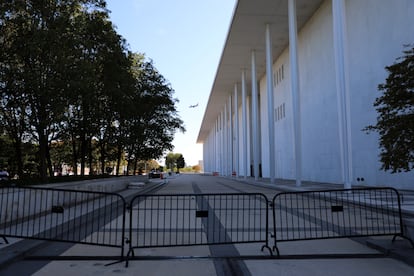
On Wednesday, with the Kennedy Center closed since the previous afternoon, a new symbol had been added to the growing list of evidence of Trump’s cultural crusade: barriers workers erected around the institution to block access to the complex on the banks of the Potomac.
The latest chapter in the saga comes less than 50 days before the midterm elections. Polls suggest voters would rather see Trump focused on issues such as inflation and gasoline prices than on the skirmishes of his culture war.
‘Ideological cleansing’
It also comes just a week after Lonnie Bunch III, president of the Smithsonian Institution, announced his resignation. He cited personal reasons, but his departure followed a year and a half of pressure from the Trump administration on the Smithsonian network of 21 national museums and a zoo. The White House set its sights on the institution in March last year with an executive order titled Restoring Truth and Sanity to American History, which called for what critics described as an “ideological cleansing” of the Smithsonian.
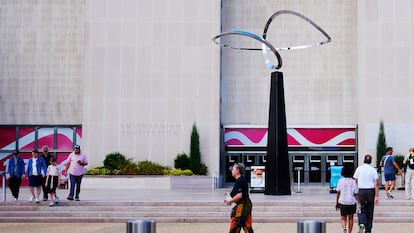
Days after Bunch’s departure, Trump, who had already successfully pushed the National Portrait Gallery to alter how it presented him, ordered the Smithsonian to replace Infinity (1967), José de Rivera’s abstract sculpture outside the National Museum of American History, with a 10-meter-tall statue of George Washington.
In an unprecedented blurring of the roles of president and museum curator, Trump also demanded in a social media post that the institution mount an exhibition devoted to the first U.S. president and keep it on display for “five years.”
Beyond its artistic value, Infinity is a symbol of Washington’s modernization. It was the first work of modern sculpture to break into the then overwhelmingly neoclassical landscape of the National Mall, an aesthetic Trump has repeatedly sought to revive.
Nor is it the only piece of public art in the capital to make political headlines in recent days. The order to dismantle and remove Joel Shapiro’s Blue (2019) from the plaza outside the Kennedy Center earlier this month provided yet another example of the president’s hostility toward modern and contemporary art.
The warnings that Burgum is preparing to place at the entrance to the NMAH stem from a 160-page report, complete with 500 footnotes, released on July 4, the nation’s 250th birthday. Its anonymous authors accused the museum of focusing too heavily on the Founding Fathers’ contradictions, slavery and the genocide of Native Americans. They also faulted it for presenting an unflattering account of Christianity’s role in the nation’s founding and for engaging in activism “against white people” and in favor of transgender people and “illegal” immigrants.
In a phone interview, M. J. Rymsza-Pawlowska, a public historian at American University in Washington, described the White House report as “ridiculous and absurd” and Trump’s attacks on cultural institutions as “classic authoritarian tactics.” “In the Smithsonian’s case, they also show ignorance about how it functions,” she added.
“NMAH exhibitions host an immense range of ideological viewpoints,” the expert said. “And during their development they undergo multiple peer reviews and consultations with communities and stakeholders. They are never at the whim of curators, who, moreover, are historians of the highest caliber who leave positions at prestigious universities to serve the public.”
Rymsza-Pawlowska also rejected the need for an exhibition about Washington. “There is already a museum entirely dedicated to him, Mount Vernon, a twenty-minute drive away,” she noted.
She also trusts that NMAH visitors will understand how much of Trump’s attacks are “political pantomime.” For regulars of the Kennedy Center — an institution with which many of the city’s music lovers have almost emotional ties — it is already too late.
Shortly after returning to the White House, Trump moved to put the center at the service of MAGA ideals. He dismissed its board, installed himself as chairman and replaced members with loyalists with no experience in cultural management or philanthropy. He then added his own name to the center’s. And when boos during visits by Trump and members of his administration, together with artist boycotts, subscriber cancellations and falling ticket sales, compounded the turmoil, he concluded that the institution should be shut down for a sweeping renovation, one he now says depends on the courts ruling in his favor.
Toni Codinas, one of such patron, says that over these 18 months he has felt, in order, “incredulity,” “anger” and “sadness.” Incredulity “at how easily he took control of the center” with “brazen disregard for norms and a politics of faits accomplis.” Anger when he turned it “into a MAGA party venue and an example of his administration’s rampant corruption, using the opera to screen Melania’s documentary or to throw a FIFA party [for the World Cup draw].”
The sadness, says Codinas, a board member of the Washington Bach Consort, stems from seeing how Trump “has pummeled the remnants” of the Kennedy Center, whose facade remains shrouded, 96 days later, by a giant tarp that stands as a reminder of Trump’s attacks on the capital’s cultural institution.
Sign up for our weekly newsletter to get more English-language news coverage from EL PAÍS USA Edition
Donald Trump
The Federal Reserve Defies Trump With A Unanimous Rate Hike Six Weeks Before The Midterms


Alzhéimer
Mice With Millions Of Human Neurons In Their Brains Bring Scientists Closer To Understanding Mental Disorders

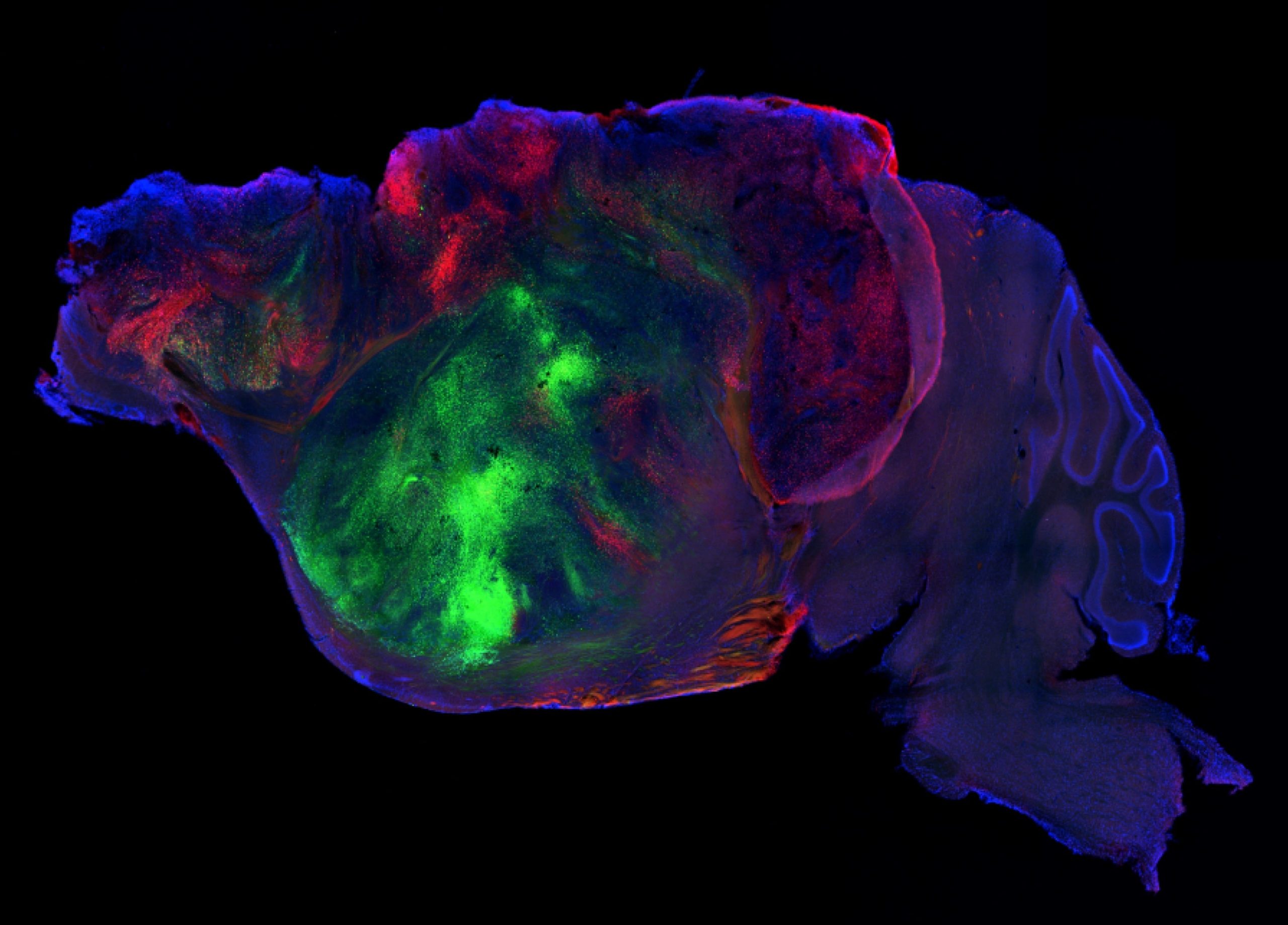
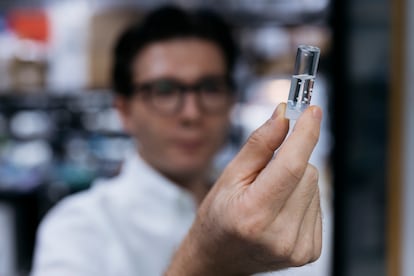
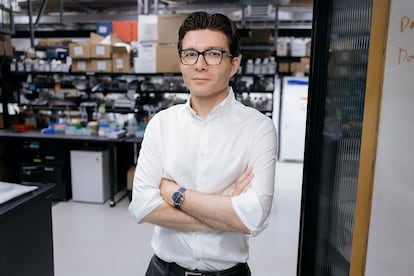
Neuroscientist Sergiu Pasca, 44, holds up a transparent vial filled with tiny white spheres floating in liquid. Each one is a cortical organoid, a millimetre-scale replica of the part of the brain responsible for complex thought, language and the mystery of the human mind. Pasca’s team implanted these seeds into the brains of mice that had been genetically altered so they would not develop a cerebral cortex of their own. The experiment, unique in the world, has produced healthy animals with brains that are an integrated blend of human and mouse. These animals contain more transplanted human neurons than any others ever born, the scientist tells EL PAÍS.
For the first time, these animals make it possible to investigate “features of the human brain that until now were inaccessible,” says Pasca, a physician and researcher at Stanford University in the United States. Specifically, they allow scientists to study the human neurons most characteristic of our species at the molecular and cellular level within a living organism, rather than in a cadaver sample or a laboratory cell culture, as has been the case until now. Pasca, who was born in Romania, believes the advance paves the way for new treatments for autism, schizophrenia, cerebral palsy and dementia. In the future, he says, it may be possible to create a mouse with a cerebral cortex made from an individual patient’s own neurons.
The details of the experiment, published on Wednesday in Nature, read like science fiction. It begins with skin cells taken from healthy volunteers. Scientists apply a cocktail of proteins that reprograms the cells back to an embryonic state, when they can become any tissue in the body. The cells are then guided to develop into the type of stem cells that give rise to neurons in the cerebral cortex, eventually forming organoids: the tiny white spheres with a three-dimensional structure that Pasca displays during the video interview.
In earlier experiments, the same team successfully implanted human neurons into the brains of rats and used laser light to influence their behavior. Growth, however, was limited by the lack of space inside the skull, as human neurons are much larger than those of rodents. Pasca had also shown that organoids from different regions of the brain can be created and fused together, like pieces of a living puzzle.
These spheres, each containing hundreds of thousands of human neurons, are implanted into the mice two days after birth. They then begin to grow, become vascularized and connect with the rest of the mouse brain, which controls functions such as sensory processing and movement. Because the animals lack their own cerebral cortex, the human neurons expand to make up more than 90% of the cortex and roughly half of the mice’s entire brain. Timing is crucial: this window of “plasticity,” during which the cells can integrate with their host, closes about two weeks after implantation.
The cerebral cortex that develops in these mice is comparable to that of a human fetus in the sixth month of gestation, Pasca explains, although there are important differences. At that stage, the human brain already contains more than 16 billion neurons, whereas the modified mice have around four million such cells in their cortex. A normal mouse brain, by contrast, contains about 14 million neurons, because its neurons are much smaller. What exists inside the brains of these engineered animals is not exactly a human cerebral cortex, as some cell types are still missing and neither the structure nor the size is fully equivalent. Even so, Pasca argues that it provides an invaluable model for studying our “most inaccessible organ.”
Cerebral palsy
In a proof-of-concept experiment, the researchers cut off the oxygen supply to the brains of their humanized mice. Ordinary mice are remarkably resistant to this kind of injury, whereas in humans even a brief period of oxygen deprivation can result in lifelong cerebral palsy.
The lesions observed in the animals with humanized brains resemble those seen in patients with cerebral palsy, a condition that affects around 18 million people worldwide. The team argues that these mice make it possible, for the first time, to study the effects of these currently irreversible injuries in a living brain, and perhaps even to identify ways of treating them.
In 2024, Pasca’s team implanted human brain organoids derived from the cells of a child with Timothy syndrome — a rare genetic disorder associated with severe autism and epileptic seizures — into rats. The work enabled the researchers to develop a genetic therapy that reversed the condition in the implanted animals. Pasca says the team plans to begin testing the treatment in humans in a clinical trial later this year or early next year.
Garikoitz Lerma-Usabiaga, an Ikerbasque researcher at the Basque Center on Cognition, Brain and Language (BCBL) in San Sebastián, contributed to the study by characterizing the brain’s microstructure using diffusion MRI. This technique measures the movement of water molecules to determine tissue organization and map neuronal pathways. “The technique finds that water molecules prefer to travel in the direction from the human organoid to the mouse brain, suggesting connectivity between the two,” the neuroscientist explains.
The researchers were in for another surprise. These mice generated a type of neuron that had never before been isolated in a living organism: Von Economo neurons, a rare class of neural cell first described in 1925. Initially thought to exist only in humans, they were later identified in primates and in other mammals with large, complex brains, including elephants, whales and dolphins.
These neurons are found in regions of the cortex associated with social behavior and decision-making, and their premature degeneration is a hallmark of frontotemporal dementia, a rare form of the disease that appears between the ages of 40 and 60.
The researchers believe these unusually large neurons may have emerged in the humanized mouse brains because, for the first time, they had sufficient space to develop. Their presence could now provide a valuable platform for testing treatments for the disease.
Despite having a cortex made up of human neurons, these animals do not behave very differently from ordinary mice, Pasca says. If anything, they are slightly slower in tests of memory and reflexes, because the connection between the human and mouse components of the brain “is not perfect.” That is due to the fact that the two species have been evolving separately for more than 70 million years.
Ethical issues
The outcome would likely be very different if these human organoids were implanted into monkeys, something that should not be done for ethical reasons, according to Pasca. Before carrying out the mouse experiments, his team submitted the project to an independent oversight panel made up of bioethicists, lawyers, evolutionary biologists, patient advocates and philosophers, all of whom approved the work.
“It is a very delicate subject, and it is easy for misunderstandings to arise if we do not convey the nuances well,” says Pasca, who argues against replicating this experiment in apes: “In species closer to us, human neurons would have much more space to grow, and integration would be much better. I think we should be very cautious about this kind of experiment and not carry them out unless there is a very clear justification.”
Daniel Tornero, head of the Stem Cell and Brain Injury Laboratory at the University of Barcelona, is well acquainted with Pasca’s work and describes it as “incredible.” “Psychiatric illnesses are the hardest to model because mice do not suffer them, and their cerebral cortex is much smaller,” he explains. “This new work is interesting because it allows you to model human diseases with human cells.”
In 2019, a Chinese team that included the Spanish biologist Juan Carlos Izpisua created the first human-monkey chimera: a macaque implanted with stem cells derived from humans. The aim was to explore whether animals could one day be used to grow human organs for transplantation. The term chimera comes from the fire-breathing creature of Greek mythology, with a lion’s head, a goat’s body and a dragon’s tail.
For Tornero, the animals created by Pasca are also chimeras, although the Stanford researcher is careful to avoid the term, perhaps to steer clear of controversy. Tornero notes that it is difficult to know whether there is anything human in the behavior or thought of these mice.
“Human neurons send axons [projections] into the mouse brain, but there is not enough data yet to know whether those connections are superior,” he says.
The possibility is not purely theoretical. In 2013, a research team demonstrated, on a much smaller scale, that injecting 300,000 human glial cells, which provide support and immune protection in the brain, into mice could enhance their cognitive abilities. The modified rodents had better memory and learned faster than normal ones.
For now, however, these new animal models can only be used to study disorders that arise during embryonic development. Human neurons grow about 20 times more slowly than those of mice. Even if one of these animals lived to the age of two, the upper limit of a mouse’s lifespan and roughly equivalent to old age in humans, its cerebral cortex would still resemble that of a two-year-old child.
Sign up for our weekly newsletter to get more English-language news coverage from EL PAÍS USA Edition

Trump Escalates His Campaign Against Washington’s Cultural Institutions
Crisis En Ceuta Y Actualidad Política, En Directo | Feijóo Pide A Europa “reconocer El Fracaso Del Gobierno De España” En Ceuta Y “presionar Para Que La Crisis No Se Enquiste”

Fast Food Chain Soaring Beef Costs

Max Verstappen works with new race engineer at Italian Grand Prix

One Critically Injured And Nine Others Hurt After Carbon Monoxide Leak Aboard Ship Docked In Barcelona Port

EXPLAINER: Inside The Row Over The Right-Wing Mayor Of Madrid’s €6m Penthouse – And Why It Could Offer A Lifeline To Pedro Sanchez


-
 Uncategorized2 weeks ago
Max Verstappen works with new race engineer at Italian Grand Prix
-
 Barcelona2 weeks ago
One Critically Injured And Nine Others Hurt After Carbon Monoxide Leak Aboard Ship Docked In Barcelona Port
-
 Chamberi2 weeks ago
EXPLAINER: Inside The Row Over The Right-Wing Mayor Of Madrid’s €6m Penthouse – And Why It Could Offer A Lifeline To Pedro Sanchez
-

 ElPais2 weeks ago
A Traveling Circus For The Horror Of Gaza
-
bravery2 weeks ago
10-year-old jumps from burning French farmhouse, saves two dogs and teddy
-
Central European Time2 weeks ago
Spain’s 2026 plan to end clock changes has failed, and the next change is already locked in
-

 Uncategorized1 week ago
Max Verstappen hails
-
Holiday rentals7 days ago
Ibiza council hits illegal tourist rental with €793,000 fine – but will the owner pay that much?