Connect with us

%

Tornado In Sicily Overturns Cars & Hits School

Published

on

tornado-in-sicily-overturns-cars-&-hits-school

Tornado hits neighbourhood in Sicily. Credit: Viral spread images

A terrifying double waterspout swept ashore in western Sicily on Friday, October 9, turning into a destructive tornado that damaged buildings, overturned cars and left children injured at a school in Marsala.

Dramatic footage filmed from the seafront at Biscione, in nearby Petrosino, shows two rotating columns forming over the Mediterranean before one moves towards land. The violent weather system then tears through parts of the province of Trapani, leaving a trail of destruction.

🌪️ Imatges impressionants d’un tornado a Marsala (Sicília).

📸 Rosalba Pipitone

#Projecte4Estacions

https://t.co/nYVNbrIBle

— Projecte 4 Estacions (@P4Estacions) October 9, 2026

The tornado struck at around 10am local time as thunderstorms battered the island. Emergency crews were dispatched to Marsala, Petrosino and surrounding areas to deal with damage to homes, vehicles and public buildings.

According to Sicily’s regional Civil Protection department, the storm caused widespread damage along the SS115 road and nearby areas, with trees and electricity poles brought down and cars left overturned.

School badly damaged with 300 children inside

One of the worst-hit buildings was the Alcide De Gasperi school in the Terrenove area of Marsala, close to the SS115. Around 300 pupils were inside when the violent weather struck, but staff moved quickly to evacuate them.

Regional Civil Protection officials initially reported eight children with minor injuries, with some taken to Paolo Borsellino hospital in Marsala for medical checks and treatment.

Terrifying footage of a violent tornado ripping through the city of Marsala in Sicily, Italy earlier this morning. Heavy damage reported in the area. https://t.co/Wg9JNFS9pg

— Nahel Belgherze (@WxNB_) October 9, 2026

Italy’s ANSA news agency subsequently reported that six children had suffered minor injuries at the school, while other people were hurt elsewhere in the affected area. The school principal said the building had been severely damaged, with windows broken, fixtures torn away and classroom materials scattered by the force of the wind.

Fortunately, there were no reports of fatalities in the initial updates. Emergency services worked to establish the full extent of the damage and assist those affected.

Cars overturned and homes damaged

Damage was not confined to the school. The tornado swept across parts of Marsala and neighbouring Petrosino, damaging houses, public facilities and vehicles. Several parked cars were overturned by the powerful winds. In Petrosino, one vehicle was reportedly struck and thrown into a ravine, leaving two people injured and requiring hospital treatment.

Homes in Petrosino also suffered heavy damage, with some properties reportedly left uninhabitable. Local authorities began arranging temporary accommodation for residents unable to return to their houses.

The council waste collection centre was among the other sites affected, while a wall around the local football stadium was reportedly brought down. Damage to electricity poles and other infrastructure added to the disruption.

Firefighters from across Trapani province were deployed, with additional teams called in from Palermo and Agrigento to help with rescue operations and the assessment of damaged buildings.

Roads and railway services disrupted

The storm also caused problems for people travelling through the area. Fallen trees, debris and damaged infrastructure obstructed roads, while railway services were affected by the closure of several level crossings.

Drivers were called on to exercise caution around damaged areas while emergency teams worked to clear routes and make buildings safe. Authorities also warned residents against relying on unverified messages circulating on social media. The town of Mazara del Vallo issued a statement urging people to follow official communications after false reports attributed to local officials began circulating online.

🌪️ Més imatges del tornado de Marsala (Sicília).

📸 Terenzio Bono

#Projecte4Estacions https://t.co/5OWjBr6H1s

— Projecte 4 Estacions (@P4Estacions) October 9, 2026

Why did a waterspout become a tornado?

Waterspouts are rotating columns of air that form over water, usually beneath storm clouds. Although many weaken before reaching land, some can move ashore and produce destructive winds similar to those of a tornado. In this case, the unusual double vortex formed near the port of Marsala before moving inland. The combination of thunderstorms, atmospheric instability and powerful rotating winds produced a localised but damaging event.

Waterspouts are not unheard of in the Mediterranean, particularly during unsettled weather in late summer and autumn. However, an event capable of causing this level of destruction in populated areas is a serious hazard.

Euro Weekly News previously reported on dramatic waterspouts off Italy’s Ligurian coast in March, when funnel-shaped columns formed over the sea but dissipated before reaching land.

More storms possible across the central Mediterranean

Weather conditions improved across parts of Sicily after Friday’s violent episode, but the wider central Mediterranean continued to face the possibility of further rain and thunderstorms. Not every area is expected to experience the same conditions, and the development of severe weather can vary considerably over short distances. Residents and visitors should follow local forecasts and official warnings rather than assume that improving conditions in one town mean the risk has passed elsewhere.

Bè dai, che esagerati!!1! Ci sono sempre state le trombe d’aria multiple a Marsala!!1!
La colpa è dei tombini otturati e dell’abusivismo!!1!1
#cambiamenticlimatici #climatechanges #Sicilia #Marsala https://t.co/GMdgyzweTj

— Dr. Stellario Marulanda🏳️‍🌈🇮🇹 (@doctorgis84) October 9, 2026

%

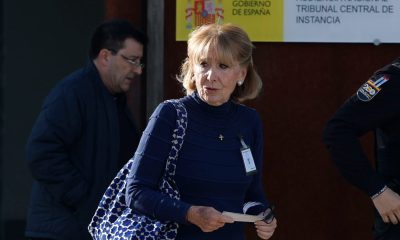
Spain’s New Menopause Sick Leave Rules

Published

on

spain’s-new-menopause-sick-leave-rules

Spain introduces new sick leave protections for menopause-related conditions from December 1 Credit : Miljan Zivkovic, Shutterstock

Women working in Spain who suffer from certain debilitating menopause-related conditions will soon be entitled to enhanced sick leave protection, with payments starting from the day after they stop working and no minimum contribution period required. The changes form part of a new Social Security reform published on Wednesday, October 21, and will take effect on December 1, 2026.

The measure is intended to support women whose menopause-related health conditions prevent them from carrying out their jobs. Unlike ordinary sick leave for common illnesses, which generally requires a minimum contribution history and does not provide statutory payments for the first three days, the new arrangement offers financial protection from the beginning of a medically certified absence.

However, the reform does not introduce automatic paid leave for every woman experiencing menopause. Eligibility depends on a qualifying medical condition, an inability to work and the relevant Social Security requirements.

The change is included in Royal Decree-law 31/2026, published in Spain’s Official State Gazette, alongside other measures expanding protection for families and workers.

Who qualifies for Spain’s new menopause-related sick leave?

The new provision recognises a specific category of temporary incapacity, known in Spanish as incapacidad temporal, for women affected by a medically recognised, limiting condition associated with a secondary menopausal disorder.

Under the legislation, the condition must be sufficiently serious to prevent the woman from performing her work, and she must be receiving medical care through Spain’s public health service.

The legislation refers specifically to a qualifying condition identified through the appropriate medical coding. This distinction matters because menopause itself is a natural stage of life and does not automatically establish an entitlement to sick leave.Women experiencing symptoms that interfere with their work will therefore need a medical assessment to determine whether their condition meets the requirements for the new category.

The measure is designed to address circumstances in which menopause-related health problems have a substantial impact on a woman’s ability to continue working. The reform comes as women in Spain continue to face difficulties accessing some menopause treatments, following shortages of several hormone replacement therapies.

The legislation also introduces a separate special sick leave category for women whose injuries resulting from gender-based violence prevent them from working. Both changes form part of a wider reform of Spain’s temporary incapacity system.

According to the Spanish government’s announcement on October 20, the aim is to provide more appropriate protection in circumstances where existing sick leave arrangements may not adequately reflect particular health and social situations.

How much will workers receive during sick leave?

One of the most significant changes concerns when payments begin.

Under the ordinary rules for sick leave caused by a common illness, statutory benefits generally begin on the fourth day of absence. Sick leave has become an increasingly significant issue for Spain’s Social Security system, with its financial cost and impact on employers attracting growing attention.  Workers must normally have contributed to Social Security for at least 180 days during the preceding five years to qualify.

For the new special category covering qualifying menopause-related conditions, no minimum contribution period will be required.

The employer will pay the worker’s full salary for the first day of medically certified absence. From the following day, the statutory temporary incapacity benefit will become payable through the responsible Social Security managing or collaborating body.

The amount will be calculated using the worker’s base reguladora, or regulatory base, which is determined according to the applicable Social Security contribution rules.

The government has confirmed the following payment rates:

  • 60 per cent of the regulatory base until the twentieth day of sick leave.
  • 75 per cent of the regulatory base from the twenty-first day onwards.

These percentages do not necessarily correspond to the same proportion of a worker’s usual take-home pay, because the regulatory base is calculated using contribution information rather than simply the net salary received each month.

For someone with a regulatory base of €1,500 per month, a simplified illustration would be €900 per month at the 60 per cent rate or €1,125 per month at the 75 per cent rate. Actual payments would depend on the duration of the absence, the relevant daily calculation and individual circumstances.

The new arrangement does not mean workers will automatically receive their full salary throughout the absence. Any additional payments would depend on applicable employment agreements or other relevant provisions.

The main improvement is that qualifying workers will no longer have to wait until the fourth day for statutory sick leave payments, nor meet the usual minimum contribution requirement for common illness.

When do the new rules take effect in Spain?

Although Royal Decree-law 31/2026 was published in the Official State Gazette on October 21, the new special temporary incapacity provisions will apply from December 1, 2026 and until the relevant provisions take effect, existing temporary incapacity rules continue to govern cases according to the circumstances involved.

The reform was approved by Spain’s Council of Ministers on Tuesday, October 20. As a decree-law, it is also subject to the parliamentary validation process required under Spanish law.

The government has presented the changes as part of a broader package intended to strengthen Social Security protection, including additional measures concerning family benefits, survivors’ pensions and support for people caring for seriously ill children.

For women who may be affected, the practical starting point is a medical assessment. A qualifying diagnosis and medically certified inability to work will be essential to determining whether the new special category applies.

Workers should also distinguish between the medical justification for taking sick leave and the financial conditions governing the benefit. The reform improves the latter for eligible cases, but it does not remove the need to establish that a medical condition prevents the person from working.

The new rules mark a change in how Spain’s Social Security system recognises certain menopause-related health conditions. From December 1, eligible women will have access to statutory payments from the day after their absence begins, without the usual minimum contribution period required for ordinary sick leave.

Continue Reading

%

Britons Over 55 Offered New Route To Gibraltar Residency As Government Changes Rules

Published

on

britons-over-55-offered-new-route-to-gibraltar-residency-as-government-changes-rules

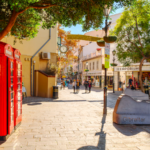
The government is now proposing a separate route specifically for people over 55. Photo credit: Kirk Fisher/Shutterstock

British retirees and financially independent people aged over 55’s could soon have another way to make Gibraltar their home after the government announced plans to change its new residency rules. The proposal would reopen a route for older applicants who can support themselves financially but do not necessarily qualify through employment or business activity. 

Under the planned arrangements, they would need private medical insurance, make a financial contribution to Gibraltar’s healthcare system and spend at least six months a year living there. The government expects to publish the amendments by the end of October, following consultation with relevant stakeholders. Until the changes are published, however, the final eligibility requirements remain unclear. 

Why Gibraltar is changing its residency rules

The announcement follows a major change to Gibraltar’s residency framework in July, when new regulations introduced stricter requirements for people seeking permission to live on the Rock. The rules placed greater emphasis on economic contribution, including employment and business activity, while normally limiting new residency applications to people aged 55 or younger. 

The government’s stated aim was to ensure new residents contribute to the local economy and do not place undue pressure on housing and public services. However, the changes attracted criticism because they made it harder for financially independent older people to relocate without taking up employment or qualifying through an alternative category.

The government is now proposing a separate route specifically for people over 55 who have sufficient financial means to live in Gibraltar. For British pensioners who had considered retiring on the Rock, the announcement offers a potential alternative to the arrangements introduced in July. It does not, however, mean that applications under the new route are already open. 

What will applicants need?

The proposed route will come with three stated conditions, applicants must hold private medical insurance, make a financial contribution to Gibraltar’s healthcare system and spend at least six months of each year living on the Rock. The residence requirement means the route is intended for people who genuinely want to make Gibraltar their home, rather than those seeking residency while spending most of their time elsewhere.

The government has not yet published the full eligibility criteria, including any minimum income or financial thresholds. The amount applicants will have to contribute towards healthcare has also not been specified in the announcement. Anyone considering a move should therefore wait for the amended regulations before making financial commitments or assuming they will qualify.

Health, Care and Business Minister Gemma Arias-Vasquez announced the proposal at the GibLink London event on Tuesday, October 20, held as part of Gibraltar Day in London. She said the new route would allow people who had been considering Gibraltar as a place to spend the next stage of their lives to make that move, while contributing to the territory from the outset. 

New business think tank to shape Gibraltar’s future

The residency announcement was made alongside plans for a new business think tank intended to help determine Gibraltar’s long-term economic direction. Led by Peter Montegriffo KC, the group will report directly to Arias-Vasquez and bring together experienced figures from Gibraltar’s business community to examine opportunities for future growth. The initiative comes as Gibraltar adjusts to the new arrangements following the treaty with the European Union and the removal of the physical frontier barriers on July 15.

Speaking at the London event, Arias-Vasquez said Gibraltar had spent years responding to events outside its control, including Brexit, the pandemic and lengthy treaty negotiations. She argued that the territory could now take a more active role in deciding its economic future. The think tank is expected to explore where Gibraltar’s economy should focus its efforts in the years ahead. Its detailed membership, work programme and timetable for recommendations have not yet been announced. 

When will the new route be available?

The next step is publication of the amended residency regulations, which the government expects before the end of October. Those rules should establish the precise conditions for applicants, including the financial requirements and the contribution towards healthcare.

For older Britons who had ruled out Gibraltar following the July changes, the proposal could put the territory back on their list of retirement destinations. But until the final regulations are published, the announcement remains a plan rather than an available residency option.

Continue Reading

%

Madrid Transport Cards Fall 23.5%

Published

on

madrid-transport-cards-fall-23.5%

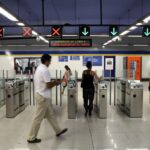
Madrid transport card issuance falls 23.5% following new residency checks. Credit : Tupungato, Shutterstock

Madrid has recorded a 23.5 per cent fall in the number of personal public transport cards issued this summer, following the introduction of stricter residency checks. The change could affect students, commuters and foreign residents who use the capital’s metro, buses and trains but are not officially registered in an eligible municipality.

The decline emerged in figures obtained by Spanish newspaper El País and published on Wednesday, October 21. They show that the number of cards issued between June 15 and September 1, 2026, was 23.5 per cent below the average for the same period across the previous three years.

The figures come after Madrid began requiring proof of registered residence, known in Spain as empadronamiento, for new personal transport cards and replacements. However, the regional transport authority says the available data do not establish that the rule caused the decline.

Importantly, the requirement does not prevent people without an eligible registered address from using public transport in Madrid. It affects access to personal transport cards used for certain travel passes and discounts, rather than ordinary tickets available to passengers.

Madrid transport card issuance falls after June rule change

According to El País, which obtained the figures through a transparency request, Madrid’s Regional Transport Consortium (CRTM) issued 183,583 personal transport cards between June 15 and September 1, 2026.

That was an average of 56,521 fewer cards than during the equivalent periods in 2023, 2024 and 2025, representing a decline of 23.5 per cent.

The change followed the introduction of stricter checks on June 15, when the CRTM began requiring applicants to demonstrate that they were registered as residents in an eligible municipality.

The requirement was set out in an official notice published in Madrid’s regional gazette on June 12.

Under the instructions, applicants seeking a new Tarjeta Transporte Público Personal, or a duplicate of an existing card, must provide a valid municipal registration certificate or authorise the authorities to verify their registration where that service is available.

The rule applies to residents of the Community of Madrid and certain municipalities covered by existing transport arrangements with neighbouring regions.

Who can still apply for a Madrid personal transport card?

The distinction between a personal transport card and an ordinary travel ticket is particularly important for visitors and people who travel regularly to Madrid.

Madrid has also been developing a digital version of its personal transport pass, allowing eligible passengers to use their smartphones instead of a physical card.

According to the CRTM’s official ticket and fare information, the personal card is linked to its holder’s identity and is used for products such as 30-day travel passes and certain concessions.

Since June 15, applicants generally need to demonstrate registered residence in the Community of Madrid or in an eligible municipality covered by the relevant interregional arrangements.

These include certain municipalities in Castilla-La Mancha and Castilla y León, although eligibility depends on the applicable agreements and the specific location.

The official instructions also provide an exception for qualifying large families, allowing personal cards to continue being issued under the relevant rules while the necessary technical arrangements remain in place.

For other applicants, the documentation normally includes proof of identity, a photograph and evidence of municipal registration.

The CRTM’s frequently asked questions explain which documents are required and when registration details can be checked electronically.

The change may create difficulties for students who move to Madrid for university but remain registered in their home region, as well as workers who commute from areas not covered by the existing agreements.

Foreign residents who live in Madrid but have not yet completed their municipal registration may also encounter problems when applying for a new personal card.

However, the residency requirement does not mean that tourists or unregistered passengers are banned from Madrid’s transport network.

Ordinary single tickets, ten-journey tickets and tourist travel cards remain separate from the personal card arrangements. Travellers who do not qualify for a personal pass can still use the appropriate non-personal tickets, although frequent journeys may become more expensive.

Why Madrid’s transport card restrictions are causing controversy

The residency requirement has prompted criticism over its potential impact on people who depend on public transport but do not have an eligible municipal registration certificate.

Students arriving from other Spanish regions, cross-border commuters and people facing administrative difficulties with empadronamiento have been among the groups highlighted in the debate.

Madrid’s regional government maintains that the restriction reflects an existing legal framework governing publicly subsidised transport passes.

The authorities argue that the regional transport system should primarily subsidise eligible residents and people covered by financial agreements with neighbouring autonomous communities.

The restrictions come at a time when public transport discounts remain in place across Spain in 2026, making access to subsidised travel particularly relevant for regular commuters.

The requirement is linked to provisions that have existed for years, although the stricter verification procedures only began operating in June 2026.

For passengers, the practical consequences depend on their circumstances. Someone already holding a valid personal card is in a different position from a new applicant or a traveller who needs a replacement.

Those applying for a card should check whether their registered municipality is eligible and whether they can provide the documentation required by the CRTM before starting the process.

The latest figures raise questions about the impact of Madrid’s residency checks, but the number of cards issued alone cannot determine how many people have lost access to subsidised travel.

Continue Reading
Advertisement
Advertisement

Spanish Real Estate Agents

Tags

Trending

Copyright © 2017 Spanish Property & News