Connect with us

%

Drivers In Spain Could Save €300 A Year By Choosing These Petrol Stations

Published

on

drivers-in-spain-could-save-e300-a-year-by-choosing-these-petrol-stations

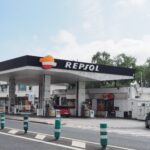
Choosing the wrong petrol station in Spain could cost drivers hundreds each year. Credit: Engin Akyurt / Unsplash

Families, commuters and summer travellers in Spain could cut hundreds of euros from their annual fuel bill by choosing cheaper petrol station chains, according to a new OCU comparison of more than 12,000 service stations. But the biggest savings depend heavily on where drivers live.

Why one petrol stop can quietly push up Spain’s yearly car costs

Fuel prices are already one of the car costs drivers in Spain feel most sharply. But a new comparison by the Organisation of Consumers and Users (OCU) suggests the difference between one petrol station chain and another could still be larger than many households realise, with some drivers able to save hundreds of euros a year by changing where they fill up.

The Spanish consumer association says choosing cheaper fuel chains can mean annual savings of up to €300 for petrol drivers and €250 for diesel drivers, compared with filling up at many of the larger, more expensive chains.

Fuel is no longer a small background expense for many households in Spain and across Europe. OCU says its annual family solvency study found that 45 per cent of people in Spain have serious difficulty meeting car-related costs, including fuel.

For British residents in Spain, workers who rely on a car, families driving between towns, and tourists renting vehicles for summer holidays, the difference is not just about finding a bargain for a quick refill. It can decide whether a weekly shop, airport run or weekend trip costs noticeably more than it needs to.

Which cheap fuel chains drivers should keep an eye on in Spain

OCU compared prices at more than 12,000 petrol stations across Spain and found that the cheapest chains were, unsurprisingly, not the biggest names on the roadside.

BonÀrea was named as the cheapest chain for both diesel and 95 petrol, although its stations are concentrated mainly in Cataluña and nearby areas. It was followed by Alcampo and low-cost self-service chain GM Oil.

OCU said filling up at BonÀrea, Alcampo and GM Oil could bring savings of more than 11 per cent on petrol and more than 10 per cent on diesel compared with many major chains.

The consumer group also highlighted AN Energéticos, Petroprix, Esclatoil, Plenenergy and Ballenoil as chains where drivers may find slightly smaller, but still worthwhile, savings.

At the other end of the ranking, OCU listed big names like Moeve, Repsol, Petronor, BP and Eni among the more expensive chains, along with IDS, Valcarce and Iberdoex. However, the group warned that loyalty cards, points schemes and discounts can change the final price paid.

Where cheaper petrol is easier to find across Spain

The size of the savings depends heavily on geography. A driver lucky enough to be in an area with several low-cost chains nearby has far more choice than someone in a province dominated by larger traditional operators.

OCU found the best chances of saving in Navarra, Teruel, Lleida and Barcelona, with the wider north-east of Spain benefiting from the presence of cheaper operators such as BonÀrea, AN Energéticos and Esclatoil.

By contrast, the consumer group pointed to Baleares, Palencia, Asturias and Ávila as more expensive areas, with petrol stations around 5 per cent dearer on average.

For drivers in rural Spain or on the islands, this is especially relevant. The nearest station may be chosen out of convenience rather than price. A cheaper brand ten minutes away may make sense for a planned weekly fill-up, but not for a small emergency top-up.

Canary Islands drivers may have a slight advantage

The Canary Islands are a special case. OCU notes that fuel prices are generally lower than on the peninsula because the islands apply the Canary Islands General Indirect Tax (IGIC), rather than mainland Spain’s Value Added Tax (IVA).

According to OCU, diesel prices in Canarias are around 11 per cent lower than on the peninsula, while petrol is around 6 per cent lower. Even there, the organisation said drivers can still save by choosing the cheapest chain, with Canary Oil again standing out in its ranking.

How to check prices before the next refill

OCU offers a petrol station calculator where drivers can search by postcode to find cheaper stations near home or work.

For live fuel prices, Spain’s official Geoportal Gasolineras and Ruta-e app can also be used to compare nearby stations.

With fuel still squeezing household budgets, many drivers in Spain are already thinking twice before filling up. OCU’s latest ranking suggests that checking nearby prices and chain names before a long journey, airport run or weekly refill could still leave more money in the monthly budget.

%

Lorry Snags Power Cable On A-7 In Mijas

Published

on

lorry-snags-power-cable-on-a-7-in-mijas

A lorry became tangled in overhead power lines on the A-7 near Mijas on Tuesday, June 30 morning, leaving drivers exposed to live cables on the road and triggering tailbacks that disrupted residents and commuters for hours.

What happened on the A-7 near Calahonda

Emergency services received calls from members of the public at around 8.20am after a lorry struck overhead cables on the Marbella-bound carriageway near kilometre 1022, close to Calahonda. Officials believe the downed cable affected four vehicles in total, with drivers forced to stop suddenly close to a live wire on the carriageway.

Both the right-hand and left-hand lanes were shut at the scene, causing massive congestion stretching up to four kilometres back from the first Mijas junction. Commuters faced lengthy delays during the busy morning rush, unable to pass the danger zone safely.

Major risk to drivers and nearby residents

Live overhead cables falling onto a motorway carry an obvious electrocution risk to drivers and to anyone attempting to move stranded vehicles or assist others nearby. Residents in surrounding areas faced disruption too, with the closure cutting off a key route through Mijas during peak travel hours.

Guardia Civil officers, firefighters and Endesa technicians attended the scene to secure the area, given the danger of wires remaining energised after such a collision. Thankfully, despite the nature of the incident, no injuries have been reported among those involved.

Emergency response and clean-up

Endesa staff worked to assess and remove the damaged cabling with traffic officers managing stranded vehicles and rerouting drivers around the hazard. Authorities have not yet confirmed what caused the lorry to make contact with the lines, nor how long repairs to the damaged power infrastructure may take.

Separate lorry incident near Marbella

Elsewhere on the A-7, a lorry tyre blew out shortly before 7am near kilometre 1045, on the Cadiz-bound carriageway towards Marbella. Debris partially blocked the right-hand lane, producing a separate jam of roughly 1.5 kilometres during peak rush hour traffic, not a good morning for drivers across the Costa del Sol.

Continue Reading

%

Petrol Station In Spain Sparks Chaos After Wrong Fuel Is Mistakenly Dispensed For Hours

Published

on

petrol-station-in-spain-sparks-chaos-after-wrong-fuel-is-mistakenly-dispensed-for-hours

Fuel contamination incidents like this are rare. Photo credit: Dayow/Shutterstock

Imagine pulling into a petrol station to do something as simple as refuelling your car, then a few kilometres down the road, your engine check engine light turns on, followed by the engine failing in what was previously a perfectly functional vehicle. This is what has happened to dozens of drivers after visiting a petrol station in the Galician town of Ribadeo.

What should have been a routine stop turned into an extended fuel error that left vehicles being filled with the wrong fuel for several hours, with motorists unknowingly continuing their journeys until problems began to appear.

At a time when every litre matters and fuel prices remain a daily pressure across Spain, the incident has carried particular weight. For those affected, it is not just the mistake itself, but the disruption that followed and the frustration of something so routine turning into an avoidable problem.

A routine stop that turned into a hidden problem

The incident took place at the Repsol El Jardín station in Ribadeo, where a fuel delivery error during tanker unloading led to diesel contaminating the petrol 95 supply tanks. For over hours four hours, the pumps labelled as petrol were dispensing fuel that was not what drivers believed they were buying.

Because the issue originated in the underground storage system rather than at the pump itself, customers and employees had no way of knowing anything was wrong at the time of refuelling. Many simply carried on with their day as normal. It was only later, when engines began to behave differently, warning lights appeared or vehicles broke down, that the scale of the issue started to become clear.

Drivers now facing disruption at a difficult time

For those affected, the problem goes beyond inconvenience. Modern engines are sensitive to fuel contamination, and even a short drive with the wrong mixture can lead to mechanical issues that require draining systems, replacing filters or carrying out full diagnostics. That means the aftermath of a few minutes at the pump can turn into days without a car, unexpected garage bills, and disruption to work and family life.

Even though the station has confirmed it will cover repair costs linked to the incident, drivers are still left dealing with the immediate reality of being without transport and the uncertainty that comes with waiting for assessments and repairs. But for many compensation does not remove the stress of breakdowns, missed commitments or the time lost trying to resolve the situation.

What happens when diesel enters a petrol system

Fuel contamination incidents like this are rare, but when they occur, the impact on vehicles can vary significantly depending on how far the car was driven before the issue was discovered. In petrol engines, diesel can interfere with combustion, leading to poor performance, engine misfires or complete failure to start.

In some cases, the fuel system must be fully flushed before the vehicle can be safely used again. In other cases, the car needs to be completely scrapped. That uncertainty is part of what makes incidents like Ribadeo so disruptive. Some drivers may escape with minimal damage, while others face more extensive mechanical work, with no immediate way of knowing which category they fall into.

Rising fuel prices make the impact harder to absorb

The frustration among the motorists is being felt but for many other reasons. Fuel prices remain a constant concern for many households in Spain, and transport is one of the few unavoidable necessary expenses in daily life. When costs are already high, any additional burden, even temporary, feels heavier.

A routine refuel is supposed to be predictable, instead, some drivers in Ribadeo are now dealing with an unexpected chain of consequences that started with what should have been a normal stop. For many, it is not just about what went wrong, but how quickly everyday stability can be disrupted by a single operational failure.

Station response and investigation

The petrol station has acknowledged the incident and confirmed that it will take responsibility for the costs associated with repairs resulting from the error. Efforts are also underway to identify affected customers and manage claims, including reviewing transaction records and CCTV where necessary. The cause has been traced to a fuel delivery issue during tanker unloading, which led to diesel entering the petrol 95 storage system and affecting multiple pumps for a period of around four hours before being detected and resolved.

A quick stop for fuel turned into a situation that has left drivers dealing with inconvenience, financial uncertainty and disruption that no one plans for when they pull into a petrol station. As the investigation continues and repairs are handled, those affected are left with a simple reminder: even the most routine parts of daily life are only ever one mistake away from becoming something far more difficult to manage.

Continue Reading

%

Councils Battle Invasion Of Asian Seaweed

Published

on

councils-battle-invasion-of-asian-seaweed

Local councils are battling a massive invasion of Asian seaweed (Rugulopteryx okamurae) that has prompted the Junta de Andalucia to declare the situation one of “force majeure and extreme necessity.”

Heavy machinery and night shifts battle beach invasion

Marbella council teams have been working intensively to clear the invasive brown seaweed from local sand. Environment councillor Diego Lopez reported that the town hall had removed roughly 10,000 tonnes of seaweed so far this year, nearly double the approximate 5,300 tonnes removed in all of 2025. Earlier in the year, a single-day operation cleared 374 tonnes from Nueva Andalucia beach alone, proving how fast the algae accumulates even outside peak summer season.

In Estepona, town hall figures show 1,100 tonnes collected at La Rada beach over five days of emergency operations, with more than 1,000 additional tonnes estimated across Buenas Noches, Guadalobon, La Cala, El Velerin and El Saladillo. The operation runs on continuous shifts (noon to midnight) using 35 cleanup workers, 7 tractors, 3 tanker trailers, a 4×4 truck, 2 backhoes, 7 seaweed-removal machines and a dump truck. Further along the coast, Malaga city cleaning teams have also reported a heavier-than-usual workload at popular beaches.

Town halls demand urgent financial support

Lopez confirmed that Marbella has already spent more than €1 million of public money on seaweed cleanup this year. He said the council has raised the issue six times in recent years, but there is still no state funding or national action plan. A motion passed in June 2026 calling on Spain’s central government to provide emergency funding and develop a coordinated national strategy. According to reports from the June 26 plenary session, the local PSOE group voted against the motion, a decision criticised by the ruling PP group.

On April 29, 2026, the Junta de Andalucia formally declared the seaweed invasion a situation of “force majeure and extreme necessity”. This legal status exempts councils from paying Spain’s €30-per-tonne landfill tax when disposing of the seaweed. The measure was welcomed by hard-hit areas such as Tarifa, which spent more than €100,000 last year transporting the algae to landfill.

The scale of the problem is regional, the Junta estimates an annual biomass of around 100,000 tonnes of fresh seaweed in the Strait of Gibraltar area alone, with the volume taken to landfill in some towns (e.g. Rota) tripling in 2024 and multiplying eightfold in 2025.

Ruined fishing nets and smelly beaches cause alarm

Rotting seaweed piles continue to cause problems for local businesses and wildlife. Thick mats of the algae alter marine habitats, reduce biodiversity and disrupt local ecosystems. Local fishermen face torn nets and rising costs from repairs, with beachfront businesses fearing lost summer trade as the weed rots quickly in the heat, producing a strong smell and attracting flies.

Continue Reading
Advertisement
Advertisement

Spanish Real Estate Agents

Tags

Trending

Copyright © 2017 Spanish Property & News